Why art is important – on the diverse function of art
Art has existed since the beginning of humankind. Throughout history, people have always created and appreciated art.
It will always be an inseparable part of human life, regardless of ethnicity, political beliefs, or cultural background. This manifested itself in the earliest days of humanity in a wide variety of forms of expression, such as prehistoric cave paintings or ancient musical instruments.
Whether it is a musical composition, a dance, a poem, a drawing, a painting or even graffiti – there has always been and always will be some form of artistic expression.
Through the diversity of art forms and techniques, as well as the efforts of philosophers and artists to explain them and give them meaning, art has developed rapidly.
From the perspective of artists, art primarily serves as a means of communication, enabling them to express their ideas, feelings, and emotions through aesthetic and innovative presentations. In doing so, they strive to establish a deeper intellectual connection with their audience.
When we hear the word "art," some people immediately associate museums or framed paintings . Many then think: "I'm not really a big fan of it. I just don't understand some works."
What about you? Do you also believe that art is only for intellectuals or art lovers?
Art is open to everyone who wants to experience it, photographed by adrianna geo @adrigeo_, via Unsplash
In truth, art is open to everyone who wants to experience it. You can find it in many places: in songs you like; in films you watch; in poems and theater performances – even in your grandfather's hand-carved wooden works or your grandmother's batik creations, created in the seventies.
Art is also always a reflection of our society and offers a creative escape from the hectic, postmodern world, which regularly overwhelms us with its omnipresent stimuli.
From abstract art to sculptures, music and literature – works of art offer us the opportunity to discover new perspectives and connect with other people.
a gallery , browsing a book or trying your hand at an acrylic painting – there are many ways to distract yourself from the hectic everyday life and enjoy the beauty of the arts.
All this and much more can be considered art.
An overview of art history
Works of art are a reflection of cultural and social developments at different times in history.
They do not merely serve as representations, but act independently and have a function. Art represents a kind of coping strategy through which the thoughts and feelings of artists are revealed – both those who grappled with the processes of their time and those who engage with them today.
By looking at art, one gains insights into historical processes of change as well as into the diversity and migration of various signs, symbols and images.
Art history can be roughly divided into seven major historical periods:
The Stone Age and prehistoric art (approx. 30,000 – 1800 BC)
The Art Movement of Antiquity / Ancient World (approx. 3000 – 1150 BC)
Art in the Middle Ages (approx. 500 – 1400 AD)
Renaissance (approx. 1420 – 1600)
Baroque (approx. 1600 – 1780)
The Age of Modern Art (c. 1790 – 1990)
Postmodern / Contemporary Art (since 1990)
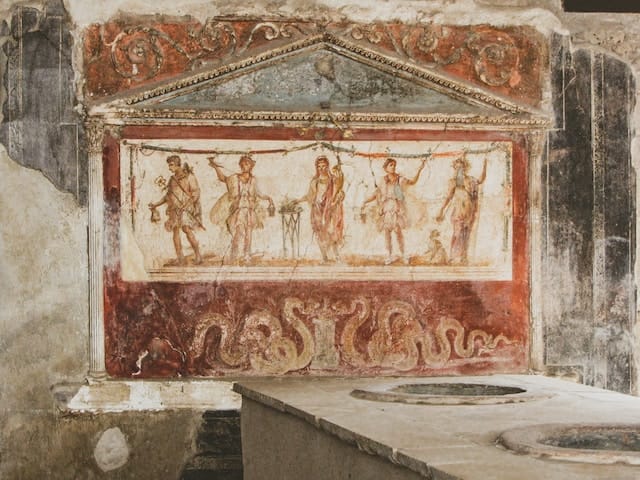
In ancient art, religious themes and the depiction of ideals were paramount. Greek sculptures were distinguished by their perfection in proportions.
Ancient wall painting in the sprawling archaeological site of Pompeii in the southern Italian region of Campania, photographed by Casey Lovegrove @clovegrove7, via Unsplash
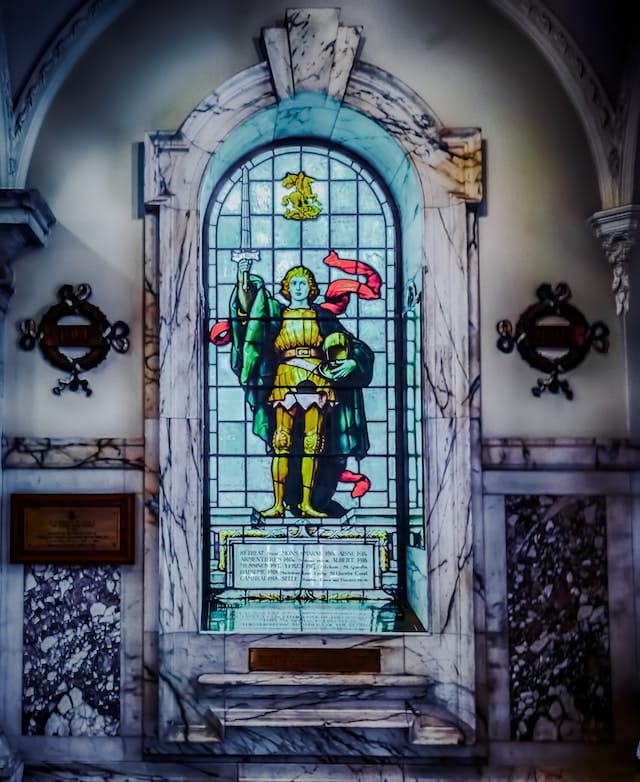
In the Middle Ages , by contrast, it was primarily sacred art such as church paintings or altarpieces. The Renaissancebrought with it a revival of the classical heritage – artists once again oriented themselves towards the ideals of the Greco-Roman world and created works full of harmony and beauty.
Sacred stained-glass windows in Belfast City Hall, Northern Ireland, photographed by K. Mitch Hodge @kmitchhodge, via Unsplash
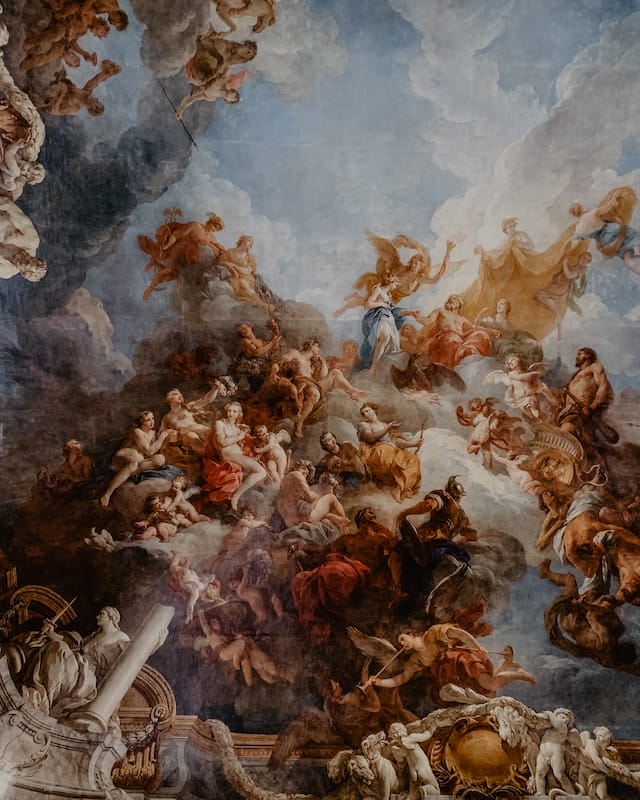
The Baroque period emphasized drama – scenarios were often exaggerated to evoke emotions. The Rococo period followed the same stylistic principle, but placed more emphasis on lightness than on heaviness.
The 19th century is characterized by the emergence of new artistic movements such as Romanticism or Impressionism , which broke new ground by depicting not only a representation but also feelings.
Modernism, beginning around the start of the 20th century, moved away from traditional techniques towards abstraction. Examples of this movement include Cubism, Expressionism , and Surrealism.
Contemporary art today deals with, among other things, social issues of our time and new media technologies.
While each era has its own unique character, they all share the common thread of continuously developing art. This remains true today: artists experiment with new techniques, materials, or themes to present something new to the world.
Art is an important part of cultures and eras because it conveys messages, emotions, and thought patterns. It reflects artists' engagement with their own world. In this sense, both past and present artists have grappled intensely with their culture and the spirit of the times.
Culture , and customs within a society. Both art and culture express diverse ways of thinking and attitudes and cannot be hierarchically ordered like different eras. Art is the result of cultural and societal conditions and an expression of human creativity, sometimes imbued with profound emotion.
It remains true that art has been an important part of our society since time immemorial – it can inspire us, entertain us, and also stimulate reflection. Whether as an escape from everyday life or a reflection of it – art has many facets and offers everyone the opportunity to find themselves within it.
What is art? What does art mean to us?
You've probably come across the saying "Art comes from skill." Some might chuckle at this somewhat polemical statement, but it's not without reason. The origin of the term "art" lies in the Latin word "ars,"which can be translated as follows:
Can
Craftsmanship
skill
skill
Originally, the focus in defining art was on the manner of acting and the activity itself, rather than on the finished work. Over time, however, the definition of this term has changed significantly and taken on different meanings depending on the context.
In abenteuer philosophie– the magazine for practical philosophy – we find a very apt approach by the editor-in-chief , Mag. Dr.Hannes Weinelt.
According to him, too, the origins of art lie in skill, but also simultaneously in knowledge. The intention of art has always been to change the world. Whether it actually succeeds in doing so depends not only on the artist's abilities, but also on our ability as viewers. To make this possible, we must evolve from passive spectators to active participants.
Art comes from skill or knowledge (nosse aut posse), perhaps from both, at least it must combine both to a proper degree. He who knows without being able is a theorist, whom one can hardly trust in matters of skill; he who can do without being able is a mere practitioner or craftsman; the true artist combines both.
This is what we read in Johann Gottfried von Herder'sKalligone in 1800. Unfortunately, Herder's statement sounded different in the Berliner Morgenpost on February 25, 1938. For the etymological derivation of the term "art" from "ability" became, under National Socialism, a formula for defamation of so-called "degenerate art . "
Art comes from skill; if it came from desire, it would have to be called "Wunst." The first images with which the "Degenerate Art" exhibition at Königsplatz 5 in Berlin now presents itself to visitors seem like an illustration of this wordplay. It really is "Wunst" that looms towards us here. And just as meaningless as this word sounds, so too do the scribbles stare back at us meaninglessly, having nothing to do with painting except in terms of the materials used
Even today, the saying "art comes from skill" is often invoked in art debates , without any awareness of its devastating connotation under National Socialism. But to truly make art —as so often in history—a driving force for change, neither political instrumentalization, as practiced in totalitarian regimes, nor the complete destruction of all traditions, as sought by activists in the 1970s, is sufficient.
Mag. Dr.Hannes Weinelt concludes his excursions into the darker chapters of recent art history with three powerful pleasthat are capable of uplifting anyone who feels touched and inspired by art:
"It is beauty that, despite all the imperfections in the world, shows humankind the attainability of truth. This task, therefore, falls to the 'fine arts': they are meant to raise the human soul back to its heavenly origin. To create such works, the artist must 'know' and 'be able'. [...] It is essential to promote beauty and aesthetic education."
“In antiquity, beauty had a meaning that transcended all aesthetics, a meaning connected to the essence of things (to being). And it is precisely this approach—seeking the meaning and significance of a work—that the German philosopher Hans-Georg Gadamer (1900–2002) chooses as a bridge to modern, or ultimately to every form of art. He speaks of three prerequisites for experiencing beauty, which he places in our hands like three ‘tools’: play, symbol, and festival. […] With these, we can transform ourselves from passive observers of art into active participants in experiencing it.”
"The positive effects of making music, acting, or creating visual arts on the development of intelligence, concentration, creativity, social skills, inner peace and balance, and much more are undisputed. [...] The third plea is therefore directed at everyone: that we make more music, sing together, engage in creative activities, read and write poetry, dance, play, paint, craft, and create more, that we enable our children to do this and do it with our children, and that we demand it in kindergartens and schools or consciously choose school types that make this possible for our children."
Beyond Weinelt's observations—or perhaps even enriched by them—it becomes clear that art also functions as a means of communicating love, truth, and beauty . Its purpose includes reaching higher planes of existence and expanding consciousness. A successful work of art, therefore, presupposes successful communication between the work and the viewer.
Without this connection, one could critically argue that the artwork does not exist. If there is no impetus that creatively motivates it, then it is not authentic art: it serves, so to speak, as a means of expression.
During the Renaissance, artists emphasized the importance of technical skill for art.
Nowadays, this view is no longer so narrow: A simple idea or an original concept can already be considered artistic (frequently found in performance art or conceptual art). However, if one wanted to give a concise and general definition of "what is art," one could say that it is a human activity or its result that evokes sensations, emotions, or reflections in the viewer.
In order to exist, therefore, an artist and at least one viewer are required.
Why art is so important
, cultural manager and owner of Konzeptfreun.de , Steffen Peschel, wonderfully summed it up with his formulation:
Culture provides stability, art breaks new ground. Both are intertwined and cannot exist without the other. We need both to live, like the flow of blood in the vessels of our body. We need certainty and a defined horizon, but at the same time also the freedom and the temptation to discover something new beyond all ultimately imagined boundaries
Art goes far beyond its practical applications and has a profound influence on our mental state, our financial status, and the identity of our society.
Both in the present and in the past, the value of art is immeasurable.
Art and culture are of paramount importance to society. They reflect social debates, they offer points of friction for engaging with reality, they point beyond everyday events. Art and culture are an expression of human existence
For anyone who still has doubts about its importance, I would like to present a list of arguments that make an irresistible case :
We are artistically inclined by nature
Art transcends boundaries
It allows artists to express themselves
Art is crucial for physical, emotional, and mental well-being
It enables self-expression, self-reflection, and self-knowledge
Art makes it possible to break down and/or visually represent complex ideas
Documentary function: It helps in recording history
Culture provides space for identity and serves as a personal calling card
Art creates something new, aesthetic and beautiful
Art creates variety
It fosters the development of imagination and creativity
Culture creates understanding, fosters connections and leads to a sense of belonging
It provides inspiration, imparts knowledge, and stimulates reflection
Art is an experiment; it can inspire and fascinate
Art creates a market and secures economic livelihoods
Art teaches us to argue and to build bridges
Art and culture help us humans to develop further
List of sources:
Literature:
The Great Oxford Dictionary, Third Edition, Cornelsen Publishing, ISBN-10: 0194406067
Michael Hauskeller: What is Art?: Positions of Aesthetics from Plato to Danto, ISBN-10: 3406657095
Reinold Schmücker:What is Art? A Foundation, Klostermann Red Series, Volume 70, ISBN-10: 3465041976
Owner and Managing Director of Kunstplaza . Publicist, editor, and passionate blogger in the fields of art, design, and creativity since 2011. Graduated with a degree in web design from university (2008). Further developed creative techniques through courses in freehand drawing, expressive painting, and theatre/acting. Profound knowledge of the art market gained through years of journalistic research and numerous collaborations with key players and institutions in the arts and culture sector.
Like any subject area, art a wealth of subject-specific terminology, expressions, abbreviations and foreign words.
In this section, we would like to introduce you to some of the most important and common terms from time to time.
Here you will learn and deepen your understanding of a range of information, definitions, liturgical terms, notes, common technical terms and their abbreviations, as well as concepts from art theory, art history and art philosophy
The art style or style of artworks refers to the uniform expression of the artworks and cultural products of an era, an artist or group of artists, an art movement or art school.
This is a tool for classifying and systematizing the diversity of art. It denotes similarities that differ from others.
The term is thematically related to the Art Movement, but it should not be viewed solely within a temporal framework and is therefore much broader.
In this section, we would like to help you gain a better understanding of styles and movements in art.
We use technologies such as cookies to store and/or access device information. We do this to improve your browsing experience and to display (non-)personalized advertising. If you consent to these technologies, we can process data such as browsing behavior or unique IDs on this website. Refusal or withdrawal of consent may adversely affect certain features and functions.
Functional
Always Active
Technical storage or access is strictly necessary for the legitimate purpose of enabling the use of a specific service expressly requested by the subscriber or user, or for the sole purpose of carrying out the transmission of a message over an electronic communications network.
Preferences
The technical storage or access is necessary for the legitimate purpose of storing preferences that were not requested by the subscriber or user.
statistics
Technical storage or access that is solely for statistical purposes.Technical storage or access that is used solely for anonymous statistical purposes. Without a subpoena, the voluntary consent of your internet service provider, or additional recording by third parties, the information stored or retrieved for this purpose cannot generally be used to identify you.
marketing
Technical storage or access is required to create user profiles, to send advertising, or to track the user on one or more websites for similar marketing purposes.




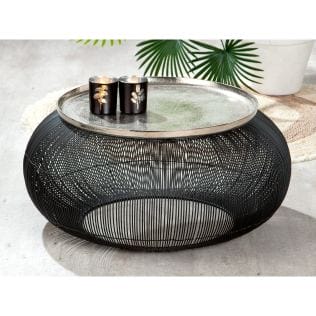
 Modern table "Puntual" in black grid design with aluminum tabletop
398,00 €
Modern table "Puntual" in black grid design with aluminum tabletop
398,00 €