Fashion art can be seen as a crossover between fashion and art, offering a symbiosis of creative expression and aesthetic innovation. In this form, clothing is not merely viewed as a functional piece of fabric, but rather as a canvas for artistic ideas and intellectual concepts.
Through collaboration and co-creation between artists and fashion designers, a unique cultural space emerges, intertwining identity, self-expression, and social reflection. Quality transcends mere clothing: it is a reflection of contemporary values, philosophies, and aesthetics.
Andy Warhol's famous statement "Fashion is more art than art is" gains renewed relevance here, as Fashion Art blurs the lines between fashion and art in an inspiring way and creates space for critical discussions in an increasingly consumer-oriented world.
Starting with fashion sketches – Fashion Art blurs the lines between fashion and art. Photo by Clarissa Watson @issaphotography, via Unsplash
In the current issue of KUNSTFORUM International , guest editor Pamela C. Scorzin to reflect on the contemporary relationship between fashion and art in her introductory essay. She raises the question of whether the current separation is still relevant and when we can begin to speak of 'fashion art' . Using examples such as Chanel, Beyoncé, and Yayoi Kusama , Scorzin dissects how closely these two fields can be intertwined.
Loving art often means integrating this enthusiasm and passion directly into daily life – so much so that one almost wants to wear art on one's person. This striking idea is particularly evident to Pamela C. Scorzin when she visits art fairs, galleries, and museums. It also becomes apparent when one takes a closer look at the fashion preferences of art collectors and artists .
It is easy to see how they present themselves in the art world, subtly emphasizing their social standing. Their fashionable appearance is often not just an expression of style, but also a significant performance of personal identity and individuality.
Fashion Art – The intertwining of fashion and art has a long history. Image source: McGill Library @mcgilllibrary, via Unsplash
Indeed, one's own creativity and sophistication are often displayed as a fashion statement of distinction. It's as if each garment tells its own story and simultaneously opens a window to an individual perspective. In a time when tattoos have become a common form of personal expression—many young people proudly display their body art , which is often elaborate and meaningful—clothing represents, for Scorzin, the most obvious level of self-presentation.
Here, colors, shapes, patterns, and ornaments unfold in a remarkable interplay. Each piece of fabric can not only flatter the body's form but also express .
It is the intersection between art and everyday life where clothing becomes a medium – a means of expressing aesthetics, identity, and philosophy, combined in a single outfit. On closer inspection, one realizes that fashion is far more than mere clothing ; it is part of an artistic dialogue that challenges existing conventions while simultaneously creating new social narratives.
Fashion has the power to challenge conventions while simultaneously creating new social narratives. Photo by naeim jafari @naeimj, via Unsplash
The viewer not only perceives what is being worn; they also feel a certain attraction to the values and ideals embodied by this fashion. Clothing thus becomes a vibrant palette of inspiration and creativity that extends far beyond the boundaries of classical art.
This visual language offers both access to and incentive for engaging with art in general. By expressing their personal connection to art through fashion, people actively contribute to creating a cultural discourse that is both stimulating and accessible. This interplay of identity and expression powerfully demonstrates how deeply intertwined the relationship between art and fashion is—a relationship that both excites and inspires.
The entanglements of fashion and art since postmodernism: An analysis by Natasha Degen
Since postmodernism, this relationship has evolved into a fascinating dialogue and a finely branched network. Natasha Degen is a professor and chair of art market studies at FIT in New York City. She earned an AB from Princeton University and an MPhil and PhD from the University of Cambridge. In the current issue of KUNSTFORUM International, she takes us on an analytical journey deep into the complex relationship between fashion and art.
Postmodernism and its significance
To understand the fusion of fashion and art since postmodernism, we must first understand what postmodernism actually is. Beginning in the late 1960s, postmodernism is a movement that rejected the clear rules and norms of modernism. With a touch of irony, it bid farewell to the idea of absolute truth and embraced polyphony and fragmentation.
Imagine entering an art gallery and suddenly hearing not only the whispers of other visitors, but also the unintelligible murmur of the artworks themselves. Postmodernism invites us to celebrate diversity and dissolve the boundaries between high culture and popular culture, between art and everyday objects.
Fashion as an expression of art
Fashion has always been understood as a form of self-expression. But since postmodernism, it has entered into an even deeper symbiosis with art. The first milestone in this development was undoubtedly the influence of Pop Art , which shattered all conventions in the 1960s. Andy Warhol, the master of Pop Art, was known for working not only with paint and canvas, but also with fabric and needle. His famous Campbell's soup cans can be found not only in museums, but also on dresses, T-shirts, and bags.
Warhol's studio, The Factory , was a vibrant hotspot where artists, musicians, actors, and fashion designers mingled like a creative beehive. One example of this creative synergy is Warhol's collaboration with fashion designer Halston , which resulted in a collection that captured the glamour of Studio 54 .
Another interesting example is the collaboration between designer Yves Saint Laurent and painter Piet Mondrian . Fascinated by Mondrian's geometric abstractions, Yves Saint Laurent designed the iconic Mondrian dress in 1965. With its clean lines and vibrant primary colors of blue, red, and yellow resting on a white background, the dress became a seminal example of the fusion of fashion and art.
Fashion as a canvas
A major shift occurred in the 1990s when fashion houses began directly collaborating with artists to design their collections. This gave rise to something entirely new: fashion as a canvas.
Fashion as a canvas Photo by Nicolas Ladino Silva @nicolasladinosilva, via Unsplash
In the 1990s, Japanese designer Issey MiyakeIkko Tanaka . Together they created dresses where Tanaka's intricate calligraphy met Miyake's elegant cuts. Such collaborations open new horizons and demonstrate that a dress can be just as much an expression of artistic voice as a painting.
Another time-shattering example is Jean-Paul Gaultier from the early 2000s, which was directly inspired by Vincent van Gogh's"Starry Night ." Gaultier transferred the swirling starry skies that Vincent captured on canvas onto the finest silk, thus transforming a work of art into a Terms & Conditions masterpiece.
Common themes and motifs
A deeper understanding of the fusion between fashion and art reveals that both worlds are often driven by similar themes and motifs. Here are some that have been particularly striking since postmodernism:
Identity and self-presentation: Both art and fashion revolve around who we are and how we present ourselves. The artistCindy Shermanused herself as a canvas to explore different identities, much like many fashion house collections that address identity and transformation.
Boundaries and Transgression: Since postmodernism, art and fashion have constantly challenged the limits of what"acceptable." The notorious works ofDamien Hirst, such as his shark preserved in formaldehyde, andVivienne Westwood'sprovocative clothing are examples of this.
Technology and craftsmanship: Digitization and technological advancements have evolved both art and fashion. This can be seen inBurberryor the digital artworks of artists likeBeeple.
Fun facts and curiosities
The “Tattoo Designer”: Korean designerKimmy J.surprised the world with a collection inspired by tattoos. Her clothes resembled human skin adorned with traditional and modern tattoos. This artwork was strongly reminiscent of the work of tattoo artistHenk Schiffmacher.
Fashion in the museum: The exhibition"Savage Beauty,"shown at the Metropolitan Museum of Art in New York after the death of Alexander McQueen, broke all visitor records. More than 600,000 people attended – a testament to how highly fashion is valued as an art form.
Fashion Meets Installation ArtHussein Chalayan's artistic installationsare among the most extraordinary fusions of fashion and art. A highlight of his career was the"flowing dress," which could change its shape and color through mechanical devices—a masterpiece of technology and design.
The history of the relationship between fashion and art is rich and multifaceted. What clearly stands out is that these two worlds not only run parallel but also frequently overlap and mutually enrich each other. Since postmodernism, this dialogue has gained in depth and complexity. Artists see fashion as an extended medium, while fashion designers find a source of inspiration in art.
My personal experiences and observations in museums and fashion shows have taught me that this close relationship offers us a new perspective on both disciplines. It is an ongoing dialogue that constantly reveals new facets and possibilities.
How art, fashion, design and photography merge in scenography
When open-minded fashion labels join forces with contemporary artists , fashion-conscious designers with progressive architects, and innovative scenographers with sophisticated art experts, something groundbreaking happens in this melting pot of creativity.
In the scenography, art, fashion, design, architecture, and photography merge into a unified whole. Photo by Adil Janbyrbayev @adekin, via Unsplash
According to architect and editorJanina Poesch,one of the numerousFashion Weeksin the world's major cities, celebrating the latest trends and creative visions. Or perhaps the Milan Furniture Fair opens its doors, showcasing how functionality can be reinterpreted through artistic design traditions. And let's not forget the annual benefit gala at the Metropolitan Museum of Art in New York, where art and society engage in a particularly impressive dialogue.
But in an era of rapid change, it's often difficult to pinpoint exactly which event is taking place. The boundaries between disciplines are no longer as clearly defined as they once were; they are increasingly blurring. Fashion, design, architecture, photography, and art are merging into a creative whole, whose impact is reaching new heights. This transdisciplinary blend not only creates new forms of expression; it also attracts a discerning audience that values innovation and is willing to pay for unique experiences.
It is precisely here, in Poesch's view, that the rise of the "experience economy" evident, illustrating that fashion is no longer solely intended for our bodies. Rather, it is conceived as part of a broader cultural experience. In this context, design is much more than just a functional necessity – it becomes a medium for emotions and stories.
And art? It no longer takes place exclusively in museums; it permeates all areas of life and prompts us to question our usual perspectives.
These diverse genres have discovered each other as sources of inspiration . In doing so, they have not only converged but also acquired a new shared means of expression: scenographic space. Within this space, every event—be it a fashion show, a design presentation, or an art exhibition—becomes an immersive experience. The interplay of light, color, and proportion creates an atmosphere that engages the senses and captivates the audience.
The vision of such a creative symbiosis is not only unfolding on stages and exhibition spaces; it is simultaneously heralding a cultural paradigm shift.
If we follow Poesch's arguments, we are at the beginning of an exciting era. In this era, the interplay of disciplines is not only considered possible, but also one of the most exciting options for artistic expression and reshaping our world. By transcending boundaries and forging new paths together, these creative thinkers are envisioning a future filled with inspiring experiences. These experiences can challenge us, stimulate our thinking, and awaken our potential to take action ourselves.
Owner and Managing Director of Kunstplaza . Publicist, editor, and passionate blogger in the fields of art, design, and creativity since 2011. Graduated with a degree in web design from university (2008). Further developed creative techniques through courses in freehand drawing, expressive painting, and theatre/acting. Profound knowledge of the art market gained through years of journalistic research and numerous collaborations with key players and institutions in the arts and culture sector.
We use technologies such as cookies to store and/or access device information. We do this to improve your browsing experience and to display (non-)personalized advertising. If you consent to these technologies, we can process data such as browsing behavior or unique IDs on this website. Refusal or withdrawal of consent may adversely affect certain features and functions.
Functional
Always Active
Technical storage or access is strictly necessary for the legitimate purpose of enabling the use of a specific service expressly requested by the subscriber or user, or for the sole purpose of carrying out the transmission of a message over an electronic communications network.
Preferences
The technical storage or access is necessary for the legitimate purpose of storing preferences that were not requested by the subscriber or user.
statistics
Technical storage or access that is solely for statistical purposes.Technical storage or access that is used solely for anonymous statistical purposes. Without a subpoena, the voluntary consent of your internet service provider, or additional recording by third parties, the information stored or retrieved for this purpose cannot generally be used to identify you.
marketing
Technical storage or access is required to create user profiles, to send advertising, or to track the user on one or more websites for similar marketing purposes.



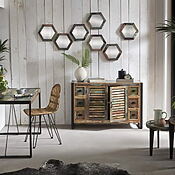




 Three-legged Wabi-Sabi coffee table "Seseh" made from recycled teak wood (size: S)
285,00 €
Three-legged Wabi-Sabi coffee table "Seseh" made from recycled teak wood (size: S)
285,00 €


