Clothing is far more than just protection from the cold or a means of protection from the wet. It accompanies us every day – whether consciously chosen or casually thrown on.
What we wear often says something About us : About us mood, our role in everyday life, or the image we have of ourselves and others.
We communicate without a single word about colors, cuts and fabrics.”
In this way, clothing becomes a silent but effective statement – day after day, almost without noticing.
Those who change into their workout clothes often feel their motivation increase even while getting dressed. Workout clothes create a clear transition from everyday life to activity – a small ritual with an uplifting effect.
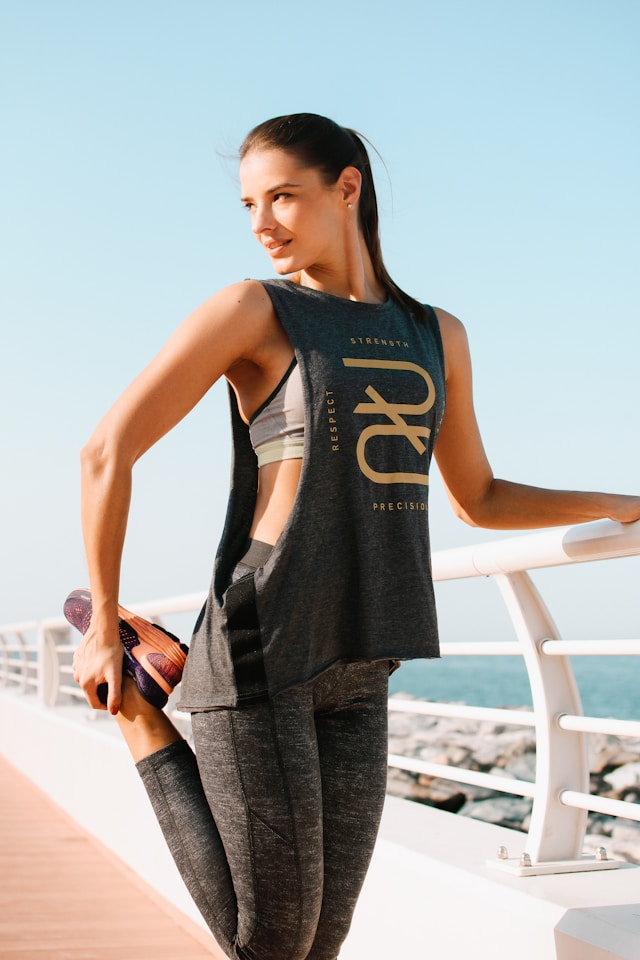
The choice of sportswear has a crucial influence on body awareness and self-image during training. Photo by Craig Lovelidge @craigology, via Unsplash
Whether it's a breathable shirt, well-fitting pants, or a Nike training jacket ordered online: the choice of sportswear not only influences how your body feels, but also your self-image during training. You feel prepared, dynamic, and capable.
Studies on enclothed cognition have shown for years that clothing shapes our self-image. For example, it makes us feel prepared, dynamic, and capable during sports. Photo by Christina Moroz @chrismoroz, via Unsplash
Especially in sports, it becomes clear how strongly clothing can shape one's inner attitude and outward appearance.
Fashion as nonverbal communication
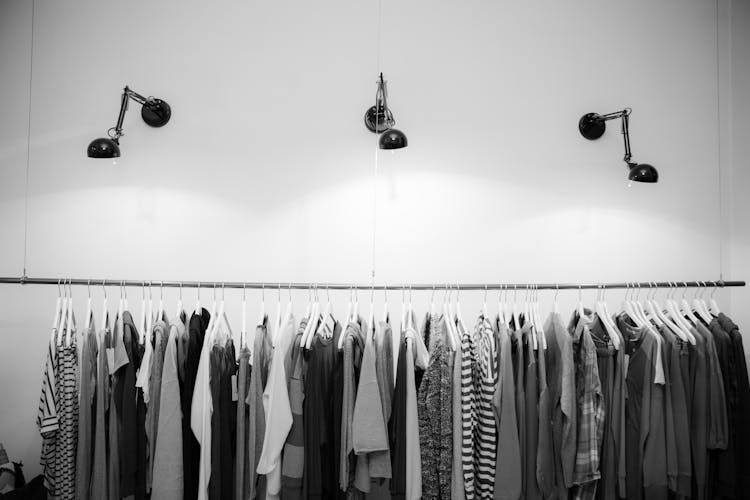
More than just fabric: How clothing shapes identity, attitude, and impact. Photo by Tembela Bohle, via Pexels
Clothing speaks volumes – even without words. What we wear constantly sends messages to our surroundings: About us , our style, our attitude, and often also About us , our intentions, or our social environment. Without us even realizing it, other people read into our appearance who we could be or want to be.
A classic suit signals seriousness, reliability, and a certain status. Streetwear, on the other hand, conveys youth, creativity, or rebellion – depending on the combination and context. Uniforms represent order, function, and group affiliation, while extravagant outfits can demonstrate self-confidence, a spirit of experimentation, or individuality.
Even subtle differences matter: brand logos, colors, accessories, and materials evoke different associations. A minimalist, monochrome wardrobe can convey a sense of style and control, while bright patterns and unusual cuts suggest openness or artistic freedom.
This communication usually occurs unconsciously. Impressions are formed in both the wearer and the observer without any need for explanation. Clothing thus becomes a silent means of expression – a language that everyone speaks, but doesn't always consciously understand.
Self-perception and psychological impact
A fascinating psychological effect, "Enclothed Cognition," demonstrates the connection between clothing and one's thinking . This term describes how strongly wearing certain clothes can influence one's perception and behavior.
A doctor's coat not only makes patients feel more trusting – studies show that the wearer also thinks more precisely. People who consciously dress formally for an important conversation often feel more competent. Conversely, a cozy hoodie can increase the need for retreat or comfort.
Even personal favorites can have a surprising effect. Someone wearing their "comfort jeans" or that one dress that always gets compliments usually moves with more confidence and openness. Clothing influences not only how you look, but also how you feel and how you present yourself.
Depending on the situation, clothing can therefore act as an amplifier: for concentration, for self-confidence, or even for relaxation. The outer shell shapes the inner state – sometimes more strongly than one might think.
Workwear in transition: social influences and fashion cycles
Clothing never exists in a vacuum. What is "modern" or "appropriate" is heavily influenced by society. Norms, role models, and trends affect what is worn—and often also what is perceived as aesthetically pleasing or successful.
Fashion styles are constantly changing. What was considered unconventional yesterday can be mainstream tomorrow. Jeans are a good example: originally workwear ,they are now accepted in almost all social classes. Sneakers, too, have made the leap from the gym to the office.
The functionality and straightforwardness of workwear have had a lasting impact on fashion. Alongside blue jeans, garments like flannel shirts, cargo pants, and dungarees are now considered fashion statement pieces. The exhibition "Workwear"at the NieuweInstituut in Rotterdam in 2023 illuminated the social and utopian motivations behind work clothing for the very first time in such a multifaceted way.
With its workwear exhibition, the Nieuwe Instituut offered a glimpse into the world of functional fashion. Curator Eldina Begic, who focused her doctoral research on workwear and its social significance, demonstrated that, unlike conventional fashion, workwear embodies equality and solidarity. She sees workwear as a utopian ideal that celebrates the history and functionality of garments originally designed for professionals. Today, workwear inspires designers worldwide and is worn by people from all walks of life.
From construction sites to street style: Highsnobietyeven describes workwear as the fashionable foundation for a new generation of style rebels.
Social media is accelerating this change. Influencers, pop culture, and digital platforms are spreading new styles at a rapid pace. Young people often pick up on trends more quickly, but they also use fashion to differentiate themselves – from their parents, from societal expectations, and sometimes even from each other.
Fashion is therefore not just about conformity, but also an expression of protest, belonging, or a spirit of experimentation. What someone wears can show which group they belong to – or that they consciously don't want to be associated with any group.
Clothing as a mirror and powerful tool
Clothing is far more than just an outer covering. It shapes impressions, creates identity, and influences both self-image and how others perceive us. Whether in everyday life, at work, or during sports – what we wear has an impact.
It's not just about style or trends, but about expression, belonging, and inner attitude. Clothing can motivate, soothe, empower, or define boundaries. It becomes a reflection of personality – but also a tool with which we shape our role in life.
Those who consciously choose their clothing not only shape their appearance, but also their impact on the world.
Owner and Managing Director of Kunstplaza . Publicist, editor, and passionate blogger in the fields of art, design, and creativity since 2011. Graduated with a degree in web design from university (2008). Further developed creative techniques through courses in freehand drawing, expressive painting, and theatre/acting. Profound knowledge of the art market gained through years of journalistic research and numerous collaborations with key players and institutions in the arts and culture sector.
We use technologies such as cookies to store and/or access device information. We do this to improve your browsing experience and to display (non-)personalized advertising. If you consent to these technologies, we can process data such as browsing behavior or unique IDs on this website. Refusal or withdrawal of consent may adversely affect certain features and functions.
Functional
Always Active
Technical storage or access is strictly necessary for the legitimate purpose of enabling the use of a specific service expressly requested by the subscriber or user, or for the sole purpose of carrying out the transmission of a message over an electronic communications network.
Preferences
The technical storage or access is necessary for the legitimate purpose of storing preferences that were not requested by the subscriber or user.
statistics
Technical storage or access that is solely for statistical purposes.Technical storage or access that is used solely for anonymous statistical purposes. Without a subpoena, the voluntary consent of your internet service provider, or additional recording by third parties, the information stored or retrieved for this purpose cannot generally be used to identify you.
marketing
Technical storage or access is required to create user profiles, to send advertising, or to track the user on one or more websites for similar marketing purposes.







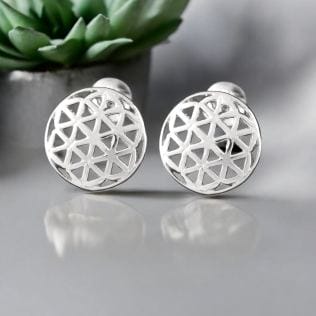
 "Flower of Life" stud earrings, 925 sterling silver
32,90 €
"Flower of Life" stud earrings, 925 sterling silver
32,90 €