The art forms of street art and pop art differ fundamentally in terms of origins, techniques and goals, but there is a closer connection between them than it might first appear.
In this article, we will examine how these two styles can combine and merge to create unique works of art. Is it a harmonious symbiosis or a competition? Together, we will get to the bottom of this question.
Many modern artists have begun to combine elements of both styles to create new and unique works of art and new design forms. Others, however, see a competition between the two styles, as they often vie for the same space and attention.
To talk about the relationship between street art and pop art, we first need to understand their definitions.
Street Art
Street art – also frequently urban art – is an art formcreated on public surfaces such as walls, streets, buildings, trains, and bridges. It is often political and socially critical and aims to reach a broad audience. Pop art, on the other hand, is an art movement that emerged in the 1950s and focused on mass culture.
She often uses images from advertising and popular culture and is known for her bright colors and clean lines.
Numerous examples come in the form of guerrilla art, which is intended to make a personal statement about the society in which the artist lives.
The work has evolved from its beginnings of graffiti and vandalism to new forms in which artists work to convey messages or simply beauty to an audience.
Some artists use "intelligent vandalism"to awareness of social and political issues , while others use urban space as an opportunity to display personal artwork. Artists may also appreciate the challenges and risks associated with installing illegal artwork in public places.
A common motive is the creation of art in a format that uses public space as a platform to make their works accessible to a wider audience, outside of galleries, fairs and exhibitions.
At the end of the 20th and beginning of the 21st centuries, street art evolved into complex, correlative forms of artistic expression. From graffiti, stencils ,prints, and murals to large-scale paintings, collaborative artistic projects, and street installations, street art has found its way into the heart of contemporary art .
Some of the earliest forms of street art were undoubtedly the graffiti that appeared on trains, cars, and walls. This was the work of gangs in New York City during the 1920s and 1930s. In the late 1960s, Cornbreadand a group of friends, including Cool Earl, began creating graffiti in Philadelphia by writing their nicknames on walls throughout the city.
The movement spread back to New York City and evolved into the modern graffiti movement. This reached its peak in the US in the late 1970s and early 1980s and then spread to Europe. Blek le Rat, born Xavier Prou in 1951 in Boulogne-Billancourt, Paris, was one of the first graffiti artists in Paris and the founder of stencil graffiti art.
Graffiti art in Europe had truly exploded. Afterwards, it began to spread throughout the world. During this time, artists like TAKI 183 and Keith Haring prominence in the world of street art.
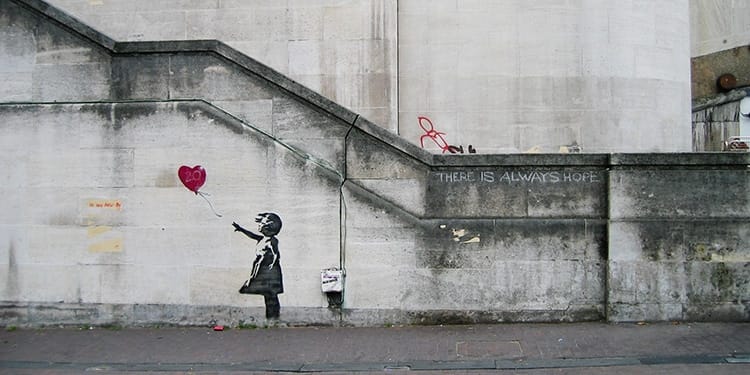
Today, Banksy the world's most controversial street artist. His works have become a subculture . Banksy's political statements and disruptive visions have influenced cities around the world at pivotal moments in modern history, provoking alternative perspectives and fostering revolutions in the art world.
Street art “Girl with Balloon” or “There is Always Hope” by Banksy, version in South Bank, UK Image source: Dominic Robinson from Bristol, UK, via Wikimedia Commons
His identity remains unknown, even after more than 30 years of involvement in the global graffiti scene. He has worked in many street art media and styles, breaking down the boundaries and expectations of street art critics. His work comprises powerful, often controversial images that have contributed to the rapid spread of his name and work online.
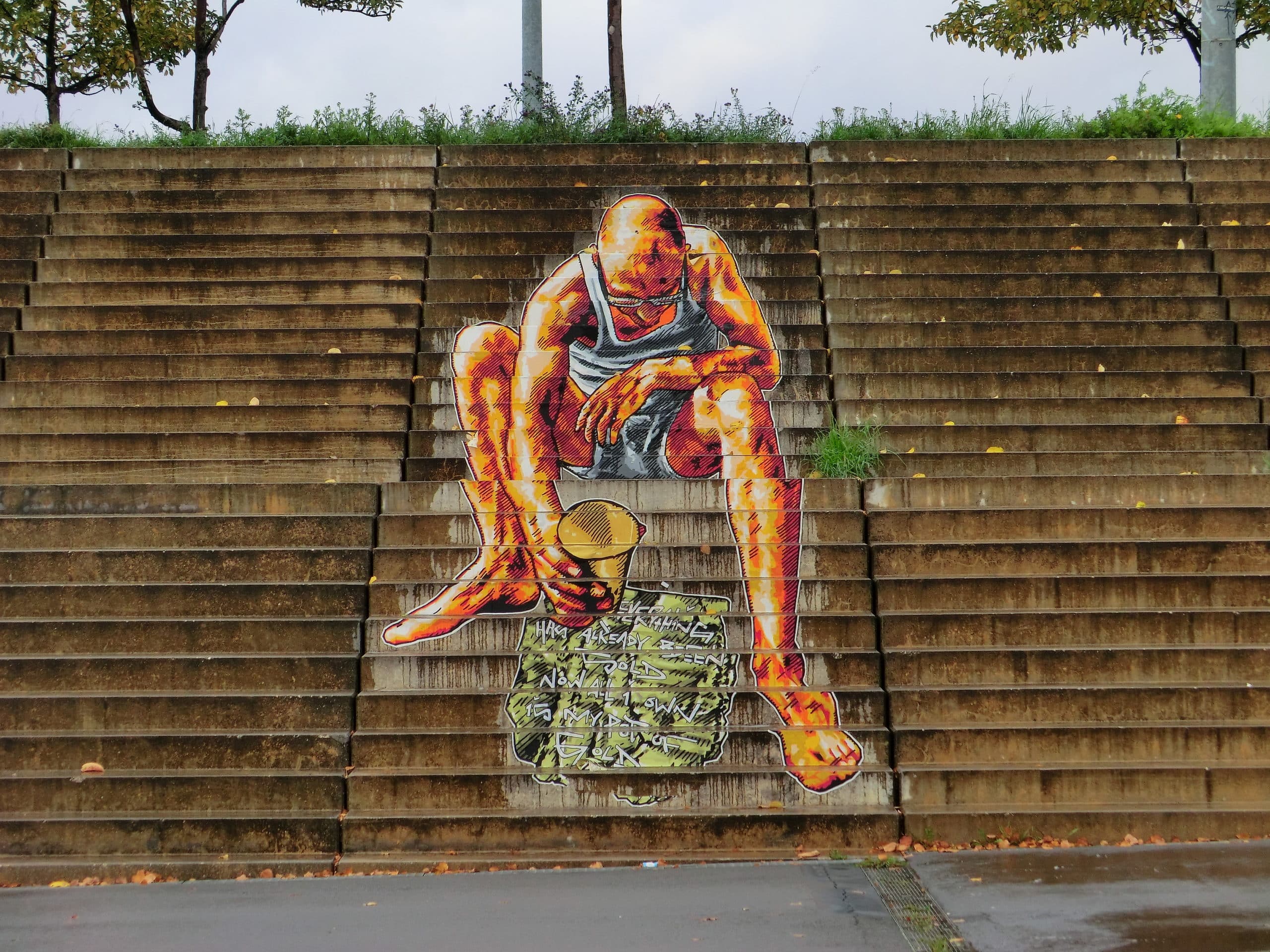
Urban art in Europe became deeply rooted in the revolutionary practices of those who identified with various subcultures associated with class, race, or gender during this period. From its inception, graffiti art evolved in several directions. Some artists began using stencils to create more elaborate works incorporating portraits and landscapes , while others continued to use spray paint to murals in their cities.
Street Art in Berlin – Friedrichshain Image source: Sivi Steys, CC BY-SA 2.0, via Wikimedia Commons
The stencil has established itself as an unmistakable trademark of street art, as it is the most frequently used technique in graffiti art. In galleries, this technique is often applied to portable surfaces such as paper, wood, cardboard, or metal in the form of unique mixed-media pieces .
This video is embedded using YouTube's enhanced Privacy mode, which blocks YouTube cookies until you actively click to play the video. By clicking the play button, you consent to YouTube placing cookies on your device, which may also be used to analyze user behavior for market research and marketing purposes. For more information about YouTube's use of cookies, please see Google's Cookie Policy at https://policies.google.com/technologies/types?hl=de.
Other impressive street artists such as Mr. Brainwash, who orchestrates the collision of street art and pop art, and Death Nyc from New York, who performs a balancing act between the two art forms, were also present.
This video is embedded using YouTube's enhanced Privacy mode, which blocks YouTube cookies until you actively click to play the video. By clicking the play button, you consent to YouTube placing cookies on your device, which may also be used to analyze user behavior for market research and marketing purposes. For more information about YouTube's use of cookies, please see Google's Cookie Policy at https://policies.google.com/technologies/types?hl=de.
To conclude the year 2022, the Kulturraum gallery in Speyer alongside Mr. Brainwash (real name: Thierry Guetta, born in 1966 near Paris), another internationally renowned artist from the pop art scene:
Michel Friess is undoubtedly one of the most renowned Pop Art artists in Germany and worldwide. His creative and artistic journey has been recognized with numerous awards and art prizes, including the Global Art Award in Shanghai, also known as the "Oscar of the art world,"which he won in November 2020 in the Mixed Media/Graffiti .
For six years, Michel Friess has been an integral part of the Kulturraum gallery and has demonstrated his artistic versatility with successful exhibitions in Speyer, Germany, Europe, America, and Asia. Each of his works is painstakingly handcrafted, with him making each screen himself from wood and stretching it by hand.
This elaborate method often requires more than 20 screens per image. Using painting, airbrush, spray paint, and paper collages, Michel Friess creates unmistakable works that bear his unique signature.
Today the world can see how this particular type of art has developed into a significant development in the history of urban culture.
Pop Art
Pop art, an art movement that originated in America and Great Britain in the 1950s , reached its peak in the 1960s. Pop art is often characterized as a reaction against the overtly intellectual abstract art and turned towards the trivial.
Inspired by Western consumer and pop culture, it began as a rebellion against traditional art. Pop artists were convinced that the art exhibited in museums or taught in schools had nothing to do with the real world.
Therefore, they sought their inspiration in contemporary mass culture. At its zenith, Pop Art was often described as "anti-art" .
To understand the concept of Pop Art, it is worthwhile to consider the fundamental ideas behind this movement. The artist Richard Hamilton the "characteristics of Pop Art" in a letter to his friends.
In simple terms, he explains that Pop Art is intended for a mass audience and is ephemeral and short-lived. Pop Art is quickly forgotten, cheap, and mass-produced. It is aimed at young people and is witty, sexy, sensationalist, glamorous, and highly commercial.
Important representatives of this art movement, besides Warhol and Lichtenstein, are primarily Jasper Johns, Robert Rauschenberg, Jeff Koons, James Rosenquist, Julian Opie, Damien Hirst, Robert Indiana, Tom Wesselmann, Günter Beier, Paul Thierry, James F. Gill, and Jan M. Petersen.
The influence of Pop Art on the visual and formal language in art and design remains significant to this day.
What are the defining characteristics of Pop Art?
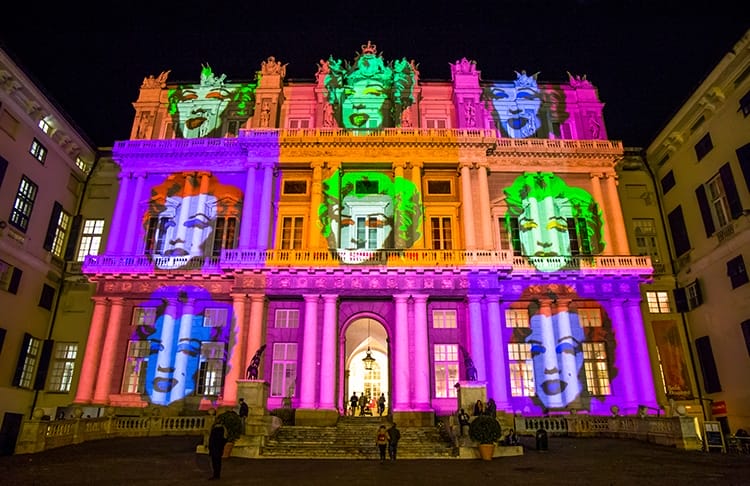
Pop art is often characterized by the use of popular symbols from the consumer sector , such as household items like Andy Warhol's Campbell's soup cans from 1962 or prominent icons like Marilyn Monroe in James Rosenquist's "Marilyn Monroe, I".
Andy Warhol's iconic Pop Art of Marilyn Monroe on the Palazzo Ducale (Genoa) Image source: Faber1893, CC BY-SA 4.0, via Wikimedia Commons
Andy Warhol defined Pop Art artists as those who created images of modern objects such as comic books, picnic tables, men's trousers, celebrities, shower curtains, refrigerators, and Coke bottles—objects instantly recognizable to anyone on Broadway. The use of brands and commercial symbols is a key aspect of Pop Art. This aspect underscores the idea that art can be inspired by anything, not just history, mythology, or morality.
Bright colors, especially the primary colors red, blue, and yellow, are a common feature of Pop Art. These colors often resemble the typical color palette of comic strips and are not intended to depict the artist's feelings or self, but rather to reflect the dynamic popular culture.
Angular compositions are a popular means of creating a counterpoint to the "painterly detachment" of styles such as Abstract Expressionism . Many Pop Art artworks therefore consist of striking or fragmented forms. Some artists enlarged objects to almost comical proportions in order to satirize them.
Connections between street art and pop art
If we take a closer look at the connections between street art and pop art, we can see that there are many similarities. Both art forms often use similar techniques and materials such as spray paint, stencils, and other similar materials. Furthermore, they also share similar themes such as consumer culture, advertising, and pop culture.
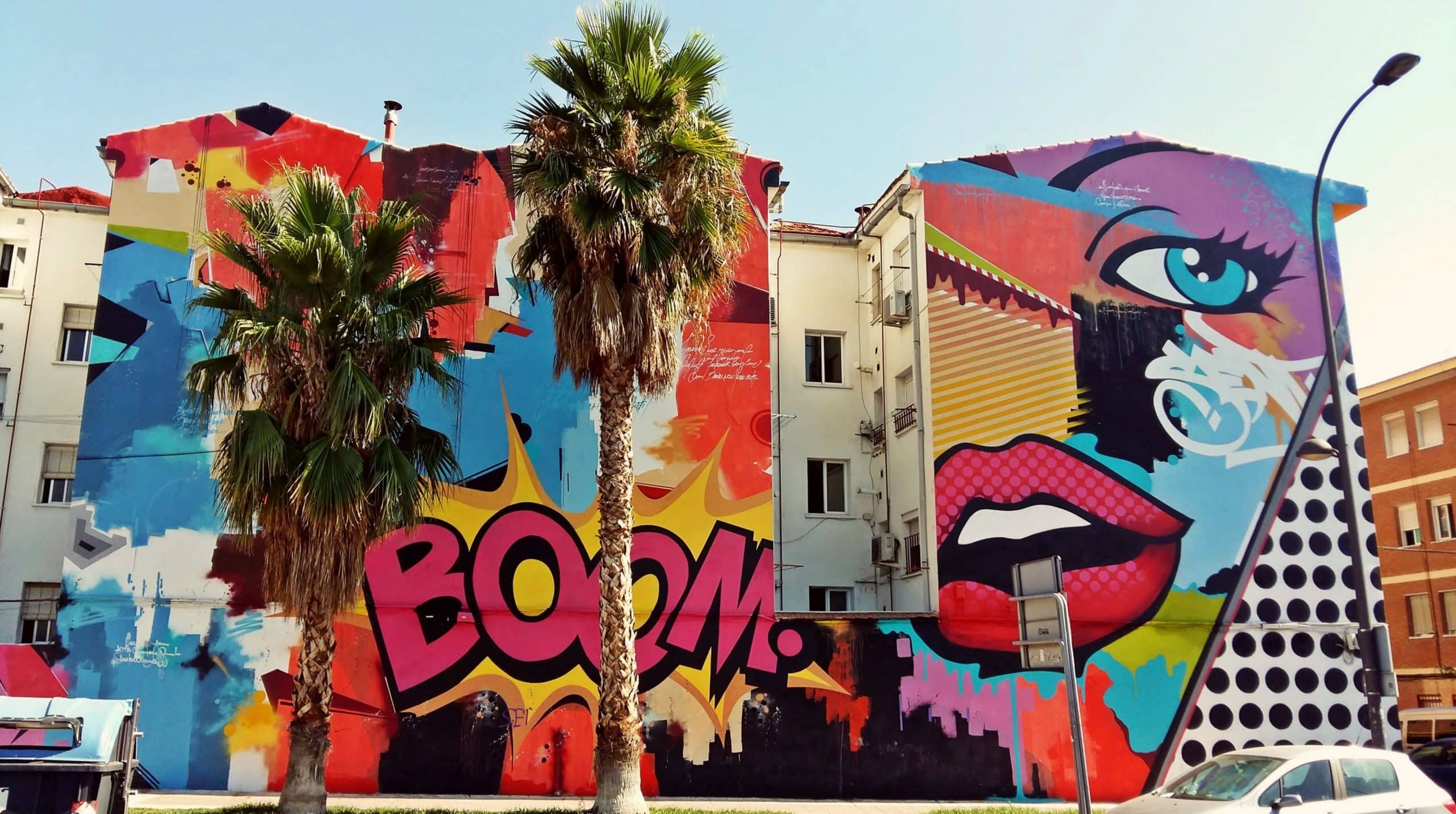
Some street artists have even directly referenced pop artists like Andy Warhol and Roy Lichtenstein , designing their works as a tribute to this art movement.
This pop art mural by street artist SEN2 in Getafe (Spain) shows a successful symbiosis of pop art and urban art. Image source: Justraveling.com, CC BY-SA 4.0, via Wikimedia Commons
Despite these connections, there are also differences between the two art forms.
The development of street art from Pop Art
It is interesting to know that the origins of street art can be found in the Pop Art movement.
Pop art began in the 1950s and continued to develop throughout the 1960s. It focused on popular culture and mass media. Artists such as Andy Warhol and Roy Lichtenstein were known for their pop art works, which often drew inspiration from comic strips and advertising.
Street art, on the other hand, emerged in the 1970s as a form of graffitithat appeared on public streets and buildings. Street artists of the 1970s drew on ideas from Pop Art and began presenting their artwork in public spaces. The artists wanted to make their art accessible to everyone, not just those who could see it in galleries.
Since then, street art has evolved and become an essential part of urban culture.
Although street art and pop art may seem like different art forms at first glance, they have many similarities. Both focus on popular culture and often use comic strips and advertising as inspiration. Many street artists also exhibit their work in galleries, thus immersing themselves in the world of pop art.
Similarities
There are more similarities between street art and pop art than one might initially think. Both art forms originated on the street and are an expression of a specific time and culture. They are often political and socially critical and appeal to a broad audience.
There are also similarities in terms of techniques and materials: spray cans, stencils, posters, and collages are used in both art forms. Another significant aspect is the use of familiar symbols and images from pop culture. Both art forms often employ bright colors and striking motifs to attract attention and convey a message.
Street art and pop art use these images to convey a message or to spark discussion . In summary, street art and pop art inspire and complement each other, creating a symbiosis.
Differences
Street art is often seen as rebellious and political, while pop art represents an ironic and critical but humorous engagement with consumer culture.
The two art forms also differ in technique: Street art is often sprayed onto walls and facades using spray cans and stencils, while pop art artists often use screen printing techniques on canvases.
How the two art forms influence each other
You're probably wondering how street art and pop art influence each other. The answer isn't so simple, as there are various aspects to consider.
Firstly, both art forms are part of urban culture and have many common roots.
On the other hand, they also differ in their approaches and techniques. Nevertheless, there are many artists who combine both street art and pop art in their works, thus creating a symbiosis. This combination results in new, unique artworks that enrich both the street art and pop art scenes.
However, there are also artists who choose one side and thus compete with each other. At this point, it is important to emphasize that there is no clear boundary between the two art forms and that they inspire and influence each other.
Ultimately, whether the two art forms compete with each other or form a harmonious symbiosis depends on the perspective of the artist and the viewer.
Conclusions
This examination of street art and pop art raises the question of whether these two art forms represent a symbiosis or a competition. Finding a clear answer to this question, however, proves difficult.
Both street art and pop art have their own advantages and disadvantages, their own fans and critics. But one thing is undeniable: both movements have an enormous influence on the art world and society in general.
They are an expression of a particular time and culture and will continue to play a significant role in art in the future. Whether they complement each other or compete with one another ultimately depends on the viewer.
But one thing is certain: both art forms are fascinating and inspiring and deserve to be examined in detail.
Owner and Managing Director of Kunstplaza . Publicist, editor, and passionate blogger in the fields of art, design, and creativity since 2011. Graduated with a degree in web design from university (2008). Further developed creative techniques through courses in freehand drawing, expressive painting, and theatre/acting. Profound knowledge of the art market gained through years of journalistic research and numerous collaborations with key players and institutions in the arts and culture sector.
Graffiti art/street art is an urban art formthat has evolved over time. It began in the 1970s in New York City when artists started spraying graffiti on public buildings and subway cars. Since then, graffiti art developed in many different directions.
Today, graffiti and street art are considered a vibrant art form that creates unique artistic expressions. Graffiti art has evolved into a global movement, connecting people from all over the world and having a major influence on popular culture and the art world in general.
In this section we feature numerous articles and information on the topics of Street Art, Mural Art, Graffiti Art and other urban art forms.
In art, artists and artworks are categorized into stylistic periods. These are based on common characteristic features of the artworks and cultural products of a given era.
The division into eras serves as a tool for structuring and classifying works and artists within a temporal framework and a cultural-historical event.
Knowledge of Art Periods And Movements plays a major role, especially in the art trade , as well as in art theory and classical image analysis.
In this section of the art blog, we would like to help you gain a better understanding of these eras, styles , and movements.
Art styles and movements
The art style or style of artworks refers to the uniform expression of the artworks and cultural products of an era, an artist or group of artists, an art movement or art school.
This is a tool for classifying and systematizing the diversity of art. It denotes similarities that differ from others.
The term is thematically related to the Art Movement, but it should not be viewed solely within a temporal framework and is therefore much broader.
In this section, we would like to help you gain a better understanding of styles and movements in art.
We use technologies such as cookies to store and/or access device information. We do this to improve your browsing experience and to display (non-)personalized advertising. If you consent to these technologies, we can process data such as browsing behavior or unique IDs on this website. Refusal or withdrawal of consent may adversely affect certain features and functions.
Functional
Always Active
Technical storage or access is strictly necessary for the legitimate purpose of enabling the use of a specific service expressly requested by the subscriber or user, or for the sole purpose of carrying out the transmission of a message over an electronic communications network.
Preferences
The technical storage or access is necessary for the legitimate purpose of storing preferences that were not requested by the subscriber or user.
statistics
Technical storage or access that is solely for statistical purposes.Technical storage or access that is used solely for anonymous statistical purposes. Without a subpoena, the voluntary consent of your internet service provider, or additional recording by third parties, the information stored or retrieved for this purpose cannot generally be used to identify you.
marketing
Technical storage or access is required to create user profiles, to send advertising, or to track the user on one or more websites for similar marketing purposes.






 Modern table "Puntual" in black grid design with aluminum tabletop
398,00 €
Modern table "Puntual" in black grid design with aluminum tabletop
398,00 €