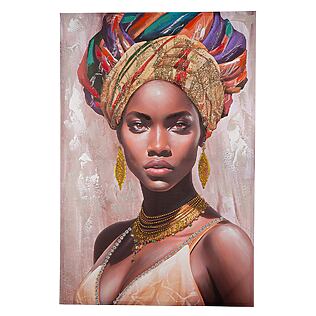
Art speaks – but not always in a language everyone understands. Art has many forms of expression that can impress, provoke, or stimulate thought. Yet sometimes works remain silent, unable to address the listener by reflecting an inner world. Creativity arises from the sensitivity, intuition, and creativity of the artist. Nevertheless, an artist's world can sometimes be translated so that it evokes intensity in the viewer.
In an era where the communication of culture is becoming a purely rational endeavor, artful, evocative texts are gaining in importance. Exhibition descriptions, wall texts, catalogs, and digital storytelling formats all help to transform art into an experience for the general public and experts alike. A ghostwriter, whose fees can prove to be a worthwhile investment in cultural understanding, tells stories, explains the background, and opens doors to works that might otherwise remain closed.
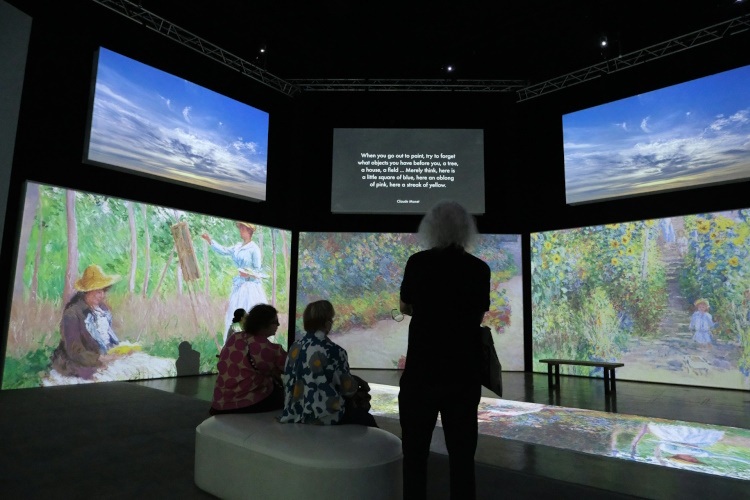
Immersive exhibitions – like this one on Claude Monet – allow visitors to delve deeply into the artists' worlds of experience and provide insightful context. Photo by Kwynett Bragado @kwynettbrgdo, via Unsplash
In this article, we show how powerful words bring art to life – and why museums, galleries and artists are increasingly relying on professional support to bring their vision to a wider audience.
Today, artworks are no longer merely silent entities in an exhibition. They intervene in society with a powerful voice. Artists use visual language, installations, or performative interventions to reflect on social issues such as environmental protection, gender equality, or displacement—without words, but with clear messages. Thus, artistic means are—or at least should be—used to make complex, current developments tangible: photographs, sculptures, projections, or performative actions.
For example, the 150th anniversary of the Museum für Gestaltung Zürich in 2025 offers a welcome opportunity to celebrate the impressive development of this institution. What began in 1875 as a museum of applied arts has evolved into one of Europe's most important design museums. This anniversary invites us not only to look back, but also to reflect on the present and develop visions for the future; participatory art forms thus create a direct connection between artwork, location, and viewer.
The Design Museum is, incidentally, the first public building in Zurich to be constructed according to the ideas and principles of the New Objectivity movement. A short virtual tour of the interior of the Kunsthaus is offered in the following video:
Today, the museum combines historical design with contemporary trends. Close collaboration with the Zurich University of the Arts enables the integration of trend research and interdisciplinary approaches. Exhibitions such as “Helmut Schmid Typography” demonstrate this bridging function between tradition and innovation.
For the anniversary year, the museum is planning a diverse program: The new permanent exhibition “Swiss Design Collection”, the pop-up exhibition “150 Posters by the Lake” and the “Design Lounge Talks” promise exciting insights into the past and future of design.
How can such an anniversary be appropriately celebrated? Communication and public relations play a crucial role here. Digital communication strategies via social media and online platforms expand reach. Target group analyses help to better understand visitor needs. Participatory formats such as workshops and discussions encourage the active involvement of diverse audiences. Special initiatives such as free admission for people under 20 break down barriers and increase participation.
To facilitate understanding of this interplay, professional writers support art education in formulating exhibition texts, press releases, and exhibition guides that reintroduce the visual meaning of an aesthetically impressive work. Art is brought back into the mind, not just looked at.
A particularly impressive example can be found under the term "Art" on the portal Kulturelle Bildung Online, where, in the publication "Art Education in the Ecological Crisis " (2021) by Cynthia Gavranic andMaren Ziese , it is described how participatory projects make ecological issues tangible locally.
Innovations in Art & Culture
Art and culture are changing, for example by expanding traditional exhibition formats to cover a broader range of interests. A contemporary understanding of culture generally aims to move from mere observation to a holistic experience through interaction and inclusion.
Participatory projects: Involving the audience in the creation of works to promote reflection on the environment and community.
Urban Media Art: Places like public squares or parks become canvases – art becomes an immediate part of everyday life.
Digital communication: QR codes, apps and virtual tours create interactive experiences.
Performative culture: Theatre, dance or sound installations add emotional dimensions to exhibitions.
Community events: Art walks, workshops and dialogue lead to local engagement.
These strategies make art tangible and allow people to actively engage with content – far beyond passive viewing.
Art Texts & Exhibition Guides
New exhibitions regularly raise questions: What did the artist have in mind when creating the work? This is precisely where word-creation professionals come in, helping to unlock context and convey it vividly. Art writers and ghostwriters craft exhibition guidesto help visitors navigate the exhibition effectively and understand its core message. They explain the motifs, techniques, and connections in concise, informative texts.
Ideally, communication experts are involved early in the curation and planning process of an exhibition. For example, a guide could then explain which techniques the artist uses, why they chose certain colors or shapes, and try to embed the work in a social context.
Through concise essays, precise captions, and emotionally charged opening speeches, they transform each exhibition into a journey of discovery, providing visitors with insights and an emotional connection to the artworks. The visit thus becomes an enriching experience, not merely an exercise in understanding.
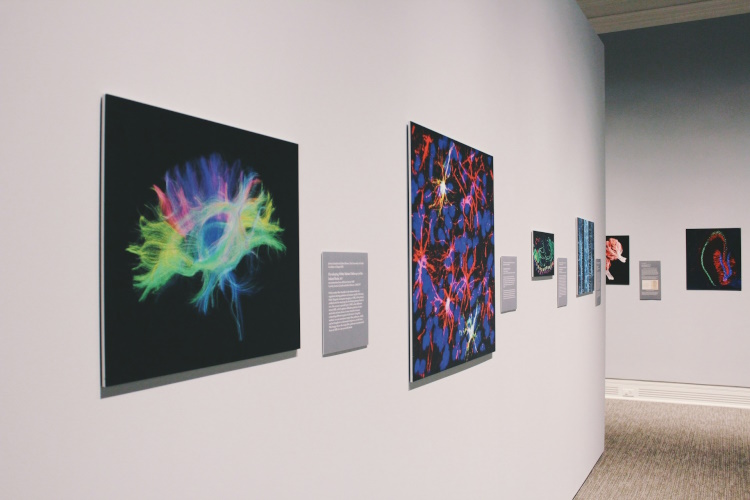
Image captions and textual context transform exhibitions into a journey of discovery, providing visitors with genuine insights. Photo by Alina Grubnyak @alinnnaaaa, via Unsplash
Ghostwriting in the arts and culture sector – bridging the gap to the public
By acting as intermediaries between artists and the public, ghostwriters aim to create art through language. Working closely with galleries and museums, they ensure that texts are not merely sources of information, but can themselves evoke emotions. Beyond traditional writing workshops and elaborate literary works, they produce individual descriptions based on interviews with artists and extensive research.
Accordingly, it is a clear and meaningful language that is understandable to everyone, even to the uninitiated. One gets the impression that the writers are giving the artists themselves a voice, without anyone receiving information in its purest form – a style of writing that allows themes related to art in some way to find a manifestation that makes them relevant in their own time.
Creative forms of communication
Today, artists rely on various creative methods to actively engage their audience:
Interactive installationswhere visitors become part of the artwork – for example through sound or projections.
Community mosaics: People create large-format murals together – a symbol of cohesion and identity formation.
Urban Walks: Public tours with curators or artists accompany visitors through exhibition venues in an urban context.
Workshops and performancesthat make art tangible – from painting actions to forms of discourse within the exhibition.
These formats create closeness, trust and relevance – they allow art to have an impact, instead of just showing it.
Art & Communication – a synergistic connection
Art is a dialogue fostered through words. Effective speakers are the ghostwriters and art copywriters who help us not only see art, but also understand and experience it. Art is made comprehensible to everyone through clarity, through its contagious nature, through its emotional impact, and through the art of communication.
A work of art in public space or in an exhibition should, supported by the discursive art of guided tour, become an experience that invites perception, reflection, and participation in the discussion. In contemporary art, these texts are not merely an explanation, but the key to its social relevance.
Owner and Managing Director of Kunstplaza . Publicist, editor, and passionate blogger in the fields of art, design, and creativity since 2011. Graduated with a degree in web design from university (2008). Further developed creative techniques through courses in freehand drawing, expressive painting, and theatre/acting. Profound knowledge of the art market gained through years of journalistic research and numerous collaborations with key players and institutions in the arts and culture sector.
We use technologies such as cookies to store and/or access device information. We do this to improve your browsing experience and to display (non-)personalized advertising. If you consent to these technologies, we can process data such as browsing behavior or unique IDs on this website. Refusal or withdrawal of consent may adversely affect certain features and functions.
Functional
Always Active
Technical storage or access is strictly necessary for the legitimate purpose of enabling the use of a specific service expressly requested by the subscriber or user, or for the sole purpose of carrying out the transmission of a message over an electronic communications network.
Preferences
The technical storage or access is necessary for the legitimate purpose of storing preferences that were not requested by the subscriber or user.
statistics
Technical storage or access that is solely for statistical purposes.Technical storage or access that is used solely for anonymous statistical purposes. Without a subpoena, the voluntary consent of your internet service provider, or additional recording by third parties, the information stored or retrieved for this purpose cannot generally be used to identify you.
marketing
Technical storage or access is required to create user profiles, to send advertising, or to track the user on one or more websites for similar marketing purposes.




 J-Line Sustainable Christmas Tree in Modern Style Made of Foldable Paper (White)
124,00 €
J-Line Sustainable Christmas Tree in Modern Style Made of Foldable Paper (White)
124,00 €