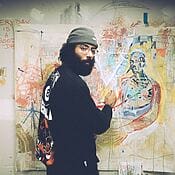
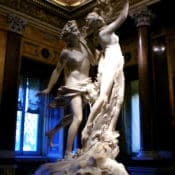
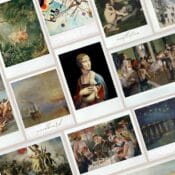
An essay on aesthetics, art theory, legal codes, and the artificial intelligence revolution.
Anyone who has ever wandered aimlessly through the imposing halls of a large museum knows this moment all too well. You stop abruptly, your gaze fixes on an object – be it a large-format painting, an intricate sculpture, or perhaps just a seemingly banal everyday object – and inevitably the question arises: Is this art? Or is it rather kitsch?
When reflecting on the deeper meaning of art, it's easy for viewers to lose sight of the actual subject. Even simply looking at a single painting can be overwhelming, especially if one spends excessive time and energy delving into the hidden story behind the work and the artist's biography. Art often presents such a multitude of details that persistently demand attention, and whose complex meaning needs to be explored.
When one seriously engages with this vast, sometimes intimidating field for the very first time, thoughts usually revolve around fundamental questions:
What exactly is meant by the term "art"?
Is this art? Or is it kitsch?
What different types of art are there?
Ultimately, what is their deeper meaning in our society?
What is art and what is not? Where is the invisible, often hotly debated boundary between what is art and what should not be considered as such?
When people hear the word "art," they instinctively think of paintings and drawings, which belong to the fine arts. This also includes photography, sculpture, architecture, and crafts. Theater, dance, and film, in turn, are part of the performing arts. Music and literature are also part of art
Besides these so-called fine artsand their cultural-historical considerations, there are also legal and philosophical levels of consideration, which we will learn about in the course of this article.
These questions and attempts at classification are also central to our interest as the editorial team of Kunstplaza . In this article, we delve into them. Our intellectual journey takes us deep into art theory and to differentperspectives on the concept of art.
For an entertaining yet scientifically grounded classification of the concept of art in audiovisual form, we recommend Ralph Casper's contribution in Quarks Dimension:
In this article, Caspers cites a frequently and often-cited example from 1917: At that time, the artist Marcel Duchamp a sensation. He submitted an ordinary, industrially manufactured urinal as an object to an exhibition in New York.
Although his provocative "artwork" was initially rejected by outraged critics, it has now found its undisputed place in the art museum. Casper impressively illustrates in his video how art was created from this mundane everyday object.
But to truly understand this intellectual leap, we must start from the very beginning…
Definition and etymology – the foundation of the concept of art
What is art? Join us on a journey into art theory for a nuanced examination of the concept of art. Image source: Freepik
The definition of art. When a critical mind embarks on an intellectual journey deep into art theory and explores the different perspectives on the concept of art, it is natural to begin with a general definition of the word itself.
From an etymological perspective, the Oxford dictionary provides us with a first, solid point of reference.
/kʊnst,Kúnst/
Noun, feminine [die] 1a. creative design using a wide variety of materials or with the means of language, sound, in interaction with nature and the world “the visual arts” 1b. [no plural] individual work, totality of works by an artist, an era , etc.; artistic creation “ancient, modern, medieval, European art”
A broader look at the encyclopedia Wikipediaopens up new horizons:
"The word art, in its broadest sense, refers to any developed activity that is based on knowledge, practice, perception, imagination and intuition (e.g., the art of healing, the art of public speaking).".
In a narrower sense, this refers to the results of deliberate human activity that are not clearly defined by function. Art is a human cultural product, the result of a creative process.
The artwork usually comes at the end of this process, but since the modern era, it can also be the process itself. Those who practice art in the narrower sense are called artists
The DWDS –- the Digital Dictionary of the German Language –- also provides us with an informative overview of meanings :
Reflection of the manifold relationships between man and his environment through the creative shaping of things and processes of reality using sensually perceptible means and the works created thereby, especially in painting, sculpture, poetry and music
the skill, acquired ability, proficiency in a particular field
[historically developed term]
Something artificially created and not naturally grown
A broader consideration of the concept of art in its historical context
For centuries, the approach of art historians was characterized by a strict, almost dogmatic hierarchy . For a long time, the art of antiquity was considered the absolute and authoritative art to which all subsequent movements and eras inevitably had to orient themselves. A formal perfection was always sought, one that in its purest form ultimately remains unattainable, with paintings and sculptures being used to express the highest level of idealization.
The “Fine Arts” and their forms of expression
Since the Age of Enlightenment (approximately from 1650 to 1800), an understanding of art has become established that primarily encompassed the diverse forms of expression of the so-called "fine arts" .
This includes, above all:
Fine arts with the classical genres of painting and graphic arts, sculpture, architecture and numerous smaller forms, as well as, since the 19th century, the applied arts or crafts, the border area to the applied arts.
Music with the main disciplines of composition and interpretation in vocal and instrumental music
Literature with the main genres of epic, drama, lyric poetry and essay writing
Performing arts with the main disciplines of theatre, dance and film
Opera as a union of all the arts: music, performing arts (acting), visual arts (stage design), literature (poetry)
During the socio-cultural upheavals of the Enlightenment, paintings and books gradually became more widely available to a much broader segment of the population. Musical, dance, and theatrical performances began to captivate audiences in specially designed venues, which were often equipped with technically sophisticated stages.
Literature increasingly emancipated itself as an independent field within and alongside art, significantly shaped by literary figures such as William Shakespeare, Johann Wolfgang von Goethe, and Friedrich Schiller. However, all these lists of classical categorization make no claim to completeness, as countless new art forms emerged in the modern era, including photography, radio broadcasting, and the internet.
Towards abstraction in modernity
During the 19th century, a gradual departure from idealized representations began in the visual arts. This led to a dynamic development that gradually escalated towards abstraction, with color and line becoming increasingly detached from the concrete object.
During this period, the artwork increasingly developed into something independent and autonomous, into art for art's sake, with artistic freedom being considered a central principle. Movements such as Impressionism, Expressionism , and Surrealism had a formative influence on painting from 1880 to 1920.
Even if abstract art might not be immediately comprehensible to many viewers at first glance, it has nevertheless secured a firm place and enormous significance in the contemporary art world. This development has brought about a profound shift in thinking within art history: art can no longer be hierarchically ordered. No era is inherently superior to another, and no artwork or style should be devalued, as they all arise from very specific artistic intentions.
In the 1920s, theatre director Erwin Piscator and playwright Bertolt Brecht made an exciting attempt to re-functionalize art by inventing the highly technological “epic theatre” .
Concepts in postmodernism
Today, in the realm of postmodernism, art is generally understood as any human activity or creation carried out with a communicative or aesthetic purpose. It expresses an idea, a feeling, or, more generally, a specific worldview. Art is a fundamental component of our culture and, in its multifaceted forms, usually reflects economic and social conditions.
The concept of art itself is now fluid, of global significance, and constantly allows for new interpretations – it has become so evolving that it simply cannot be stopped. Our contemporary appreciation of art reflects the present time but also actively participates in social and cultural developments. By translating emotions and complex ideas into visual representations and making them visible to others, art is not merely a passive mirror but actively involved in shaping our reality.
This creates a vibrant dialogue between the artwork and the audience, leading to a deeper understanding of historical and social contexts. A remarkable example of this dynamic is the Pop Art of the 1960s, which, using the vocabulary of mass media and contemporary advertising, pointedly reflected the emerging consumer culture and the rapid pace of modern society. Throughout history, artists have continually evolved their creative approaches and means of expression to comment on their time.
Philosophical context: From Plato to postmodernism
What did famous philosophers think? Image source: Freepik
At this point, the philosophy of art inevitably comes into play. What did history's greatest thinkers think about creative work?
According to Plato, art was merely the manual realization of a copy of an object, which in turn represented a copy of the idea of the object itself, visible only to philosophers.
Unlike Plato, who viewed it as a copy of an existing copy, Aristotle something new emerging in it: "Through art, all those things are created whose form previously existed in the mind."
Benedetto Croce viewed the work of art as a form of lyrical intuition that unfolds in the mind and is clearly distinct from its material implementation and realization.
Kant, on the other hand, was firmly convinced that art is defined by a multitude of clearly recognizable and formal characteristics. These characteristics can be recognized through specific intellectual faculties such as taste and aesthetics, and thus evoke pleasure.
These vastly different assessments and definitions, from Plato to Kant, impressively demonstrate that the concept of art has always evoked strong emotions, inevitably arouses great interest, and is inextricably linked to us humans, as it massively influences our perception of reality.
The legal perspective: Is the state allowed to define art?
Let us leave the philosophical ivory tower and look at the cold reality of the legal codes. Beyond the mere explanation of the words, it is essential to know that artists and their creative works enjoy so-called artistic freedom in Germany and many other Western countries . In Germany, this is a fundamental right explicitly protected by the constitution (Article 5, Paragraph 3, Sentence 1 of the Basic Law) .
Interestingly, several definitions of art coexist in legal scholarship. The legal assessment of a work depends significantly on which specific definition is applied and how it is ultimately interpreted. Fundamentally, we are of course free to personally designate as art whatever we consider to be art based purely on our individual opinion, even without this possessing objective, universal validity. However, the state explicitly lacks the authority to definitively define art.
In a vibrant democracy, there must be no state authority that decides from above what counts as art, which art forms are socially acceptable, or what level of quality they must exhibit.
Nevertheless, for legal reasons, the judiciary cannot avoid using a certain working definition in order to actually enable the exercise of artistic freedom in court.
Out of this legal necessity, various basic concepts were developed:
a) Formal concept of art
According to the formal definition of art, anything can be considered art if it can be assigned to a specific art form. Examples include painting, sculpture, and theater. Hybrid forms are also meant to fall into this category.
b) Material concept of art
The Federal Constitutional Court (BVerfG) has defined the concept of art in terms of its content. According to this definition, art is considered the creative process in which the artist's impressions, experiences, and perceptions are directly visualized through a specific formal language.
Or to put it another way:
Art is the free and creative expression in which the artist directly expresses his impressions, experiences and perceptions through a specific formal language
c) Open concept of art
According to the prevailing view, a flexible concept of art should be used. This open concept defines the characteristic feature of an artistic expression as its ability, based on its diverse message, to continually reveal further-reaching meanings through ongoing interpretation.
This results in a virtually inexhaustible and multi-stage transmission of information.
d) Doctrine of third-party recognition
Accordingly, art encompasses what a knowledgeable outsider would describe as such.
New horizons through artificial intelligence (AI): When machines paint and algorithms dream
This legal and philosophical framework is currently undergoing a historic test. Recent, almost exponential developments in digital technologies and artificial intelligence (AI) are significantly shaping the contemporary art landscape and fundamentally challenging our entire concept of contemporary art.
The burgeoning field of digital art, with its 3D worlds of augmented and virtual reality, immersive video and sound installations, and electronic literature—from computer poetry and mobile phone novels to expanded e-books—continually brings fresh, sometimes radical ideas to postmodernism. These new forms reflect the ongoing exploration of the boundaries of artistic production and a clear statement about technological progress. They present a constant challenge to continually rethink and expand our traditional understanding of art and creativity, and offer a compelling perspective on future artistic expression.
The question of whether AI can create true art is quite controversial
The question of the level of originality in creative design, as well as copyright, still needs to be clarified with regard to the production of art by machines and algorithms.
According to the Duden dictionary is an act of creative design. This does not exclude the use of algorithms, especially since Aristotle provided a comprehensive definition of the term over 2,000 years ago:
Art completes what nature cannot achieve, or imitates it
By clearly emphasizing imitation as a more important artistic activity, the Greek polymath refutes one of the main arguments against AI art – namely, the reflexive accusation that machines are not truly creative, but merely stubbornly imitate styles they have already learned.
Common definitions therefore do not inherently preclude the possibility that machines can also produce creative works. Furthermore, there is the startling reality that art consumers today are often no longer able to discern the subtle difference between "human-made, "machine-made," and hybrid forms – assuming we even consider this distinction necessary.
How does generative AI perceive art? An experiment in visualization
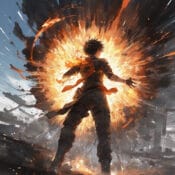
An exciting experiment illustrates the incredible potential of machine-generated aesthetics: the use of the generative AI tool "Neuroflash." By simply entering the text prompt "a visualisation of the definition of art itself from an aesthetic, formal and philosophical point of view, abstract, surrealistic, fantasy, open mind" into the text-to-image generator, three images were created that, as visualisations of such an abstract concept, offer a truly phenomenal level of detail. This depth only fully reveals itself to the viewer after prolonged, intensive engagement.
AI image created with Neuroflash's Generative AI (Version 1)
AI image created with Neuroflash's generative AI (version 2)
AI image created with degenerative AI from Neuroflash (version 3)
Groundbreaking studies on the interrelationship between AI and fine art
That this novel phenomenon is not only discussed in trendy studios and arts sections, but has long been the subject of rigorous research, is demonstrated by the study "AI and Visual Arts," published in June 2024 and conducted by Goldmedia GmbH on behalf of the Kunstfonds Foundation and the Copyright Initiative. It provides the latest journalistic fact check on the disruption perceived by artists.
Dr. Karin Lingl, a renowned expert in the field and managing director of the Kunstfonds Foundation, precisely contextualizes these empirical findings. She points out that a large number of visual artists are currently experimenting intensively with AI as a completely new medium. Nevertheless, there is a palpable unease within the creative sector: For a long time, there was simply a lack of a reliable database to assess who is accessing which works and to what extent AI will transform the market, the working realities, and the future incomes of artists.
The study calls for a societal framework and underlines the need to address technological dynamics in a legally and culturally appropriate manner
An additional, more in-depth perspective from the field of applied science is provided by Prof. Dr. Oliver Bendel, Professor of Business Informatics, Information Ethics, and Machine Ethics at the University of Applied Sciences Northwestern Switzerland (FHNW). In his interdisciplinary examination of the concept of art, he points out that art is always the artificially created by humans within a cultural context, fulfilling a social function in an aesthetic dimension.
Even when the machine generates the output, the artifact, structure, or process remains deeply embedded in the human-defined cultural and ethical framework.
The algorithm may guide the brush, but the conceptual spark still originates from the human intellect
The study "Compass: Artificial Intelligence and Competence 2023" by the JFF – Institute for Media Education in Research and Practice also documents the extent to which this transformation challenges us as a society. It impressively demonstrates that most users still find it extremely difficult to recognize genuine creativity in AI systems. Conceptions of artificial intelligence oscillate between vague utopia and dystopia. Therefore, new approaches are needed not only in the legal sphere, but above all in media education, to make the concept of art comprehensible to society in the age of algorithms.
List of sources:
Literature:
The Great Oxford Dictionary, Third Edition, Cornelsen Publishing, ISBN-10: 0194406067
Michael Hauskeller: What is Art?: Positions of Aesthetics from Plato to Danto, ISBN-10: 3406657095
Reinold Schmücker:What is Art? A Foundation, Klostermann Red Series, Volume 70, ISBN-10: 3465041976
Stefan Jordan / Jürgen Müller: Basic Concepts of Art History (Reclam's Universal Library), ISBN-10: 3150195594
Susanna Partsch: Introduction to the Study of Art History, ISBN-10: 3150143020
Hildegard Kretschmer: Lexicon of Symbols and Attributes in Art: 800 entries, ISBN-10: 9783150195666
Website:
Kraatz Academy – Understanding Law Made Easy: What is Art and What Isn't?, https://akademie-kraatz.de/de/was-ist-kunst-und-was-nicht.htm
DWDS – the Digital Dictionary of the German Language, https://www.dwds.de/
Laws on the Internet: Article 5 of the Basic Law – Individual provision, https://www.gesetze-im-internet.de/gg/art_5.html
Wikipedia: Art
Dr. Karin Lingl / Kunstfonds Foundation, kunstfonds.de
Bendel, Oliver. AI Art. Contribution to the Gabler Business Dictionary. Springer Gabler, Wiesbaden 2026, wirtschaftslexikon.gabler.de/definition/ki-kunst-177543
Cousseran, Laura/Lauber, Achim/Herrmann, Simon/Brüggen, Niels (2023). Compass: Artificial Intelligence and Competence 2023.Attitudes, Actions and Competence Development in the Context of AI. Published by the JFF – Institute for Media Education in Research and Practice. Munich: kopaed.
Owner and Managing Director of Kunstplaza . Publicist, editor, and passionate blogger in the fields of art, design, and creativity since 2011. Graduated with a degree in web design from university (2008). Further developed creative techniques through courses in freehand drawing, expressive painting, and theatre/acting. Profound knowledge of the art market gained through years of journalistic research and numerous collaborations with key players and institutions in the arts and culture sector.
Like any subject area, art a wealth of subject-specific terminology, expressions, abbreviations and foreign words.
In this section, we would like to introduce you to some of the most important and common terms from time to time.
Here you will learn and deepen your understanding of a range of information, definitions, liturgical terms, notes, common technical terms and their abbreviations, as well as concepts from art theory, art history and art philosophy
The art style or style of artworks refers to the uniform expression of the artworks and cultural products of an era, an artist or group of artists, an art movement or art school.
This is a tool for classifying and systematizing the diversity of art. It denotes similarities that differ from others.
The term is thematically related to the Art Movement, but it should not be viewed solely within a temporal framework and is therefore much broader.
In this section, we would like to help you gain a better understanding of styles and movements in art.
Manage privacy
We use technologies such as cookies to store and/or access device information. We do this to improve your browsing experience and to display (non-)personalized advertising. If you consent to these technologies, we can process data such as browsing behavior or unique IDs on this website. Refusal or withdrawal of consent may adversely affect certain features and functions.
Functional
Always Active
Technical storage or access is strictly necessary for the legitimate purpose of enabling the use of a specific service expressly requested by the subscriber or user, or for the sole purpose of carrying out the transmission of a message over an electronic communications network.
Preferences
The technical storage or access is necessary for the legitimate purpose of storing preferences that were not requested by the subscriber or user.
statistics
Technical storage or access that is solely for statistical purposes.Technical storage or access that is used solely for anonymous statistical purposes. Without a subpoena, the voluntary consent of your internet service provider, or additional recording by third parties, the information stored or retrieved for this purpose cannot generally be used to identify you.
marketing
Technical storage or access is required to create user profiles, to send advertising, or to track the user on one or more websites for similar marketing purposes.