Virtual galleries and museums are becoming not just a complement to traditional exhibitions, but an independent and significant part of the cultural landscape, representing a synthesis of technology and artistic expression.
One of the main advantages of VR galleries is the ability to create unique exhibitions that would be impossible to realize in a physical space. The Unreal Garden , for example, offers users immersive, interactive art spaces where artworks interact with the physical environment in real time.
In these spaces, viewers can observe how digital objects change and react to their actions, allowing for a deeper engagement with the art .
The Museum of Other Realities also illustrates the potential of VR to create unique art spaces. It is a virtual museum featuring works by digital artists and installations created specifically for the virtual environment.
Here, visitors can explore complex, dynamic installations that would be impossible to realize in traditional museums, and it becomes clear how VR expands the possibilities of artistic expression. Specialized software plays a crucial role in creating such spaces, as it enables the integration of various elements of the virtual environment and interaction with the user.
Technological Trends and Challenges
Today's VR galleries utilize advanced technologies like 5G and cloud computingto deliver a seamless, high-quality experience. 5G enables data transmission with minimal latency, which is crucial for maintaining real-time interactivity. Cloud solutions, in turn, allow for the scalability and availability of virtualized spaces without the need to store large amounts of data locally.
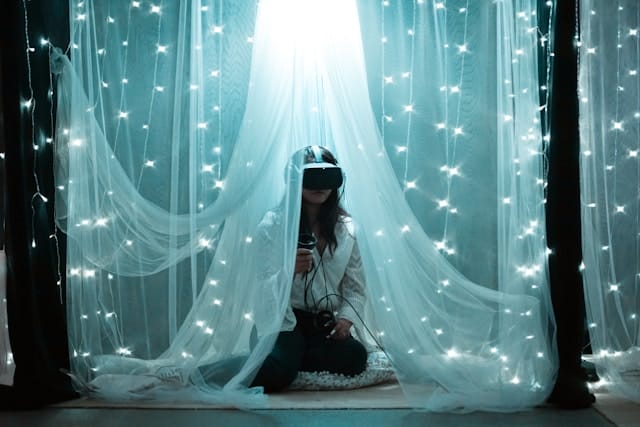
VR galleries utilize advanced technologies. Photo by Barbara Zandoval @barbarazandoval, via Unsplash
However, existing technologies also present developers with a number of challenges. For example, the high cost of the hardware required to create and access VR galleries can limit accessibility for a wider audience.
Furthermore, creating high-quality content requires significant effort and financial investment, which can be problematic for independent artists and small galleries
Accessibility and inclusion
Virtual galleries have the potential to significantly improve the accessibility of art. Platforms like Google Arts & Culture are already taking steps in this direction by offering virtual tours of museums and exhibitions worldwide. In this way, viewers from all over the world, including people with disabilities, can explore artworks and cultural landmarks that were previously inaccessible to them.
Furthermore, VR galleries can contribute to creating inclusive and diverse cultural spaces by showcasing works by artists from various cultures and social groups who are underrepresented in traditional museums. The application of VR technologies can diversify the representation of cultural contexts and offer viewers a richer and more multifaceted experience.
Study shows positive effects of virtual art galleries on our well-being
A wealth of research suggests that engaging with visual arts and visiting art museums has positive effects on personal well-being; however, less is known about the potential benefits of digital forms of participation.
Recent literature provides initial indications of the advantages of digital art engagement, but further studies on the mechanisms and potential influencing factors of these advantages are necessary.
A scientific study by researchers at the University of Pennsylvania examined the effects of repeated visits to a virtual art gallery and aimed to answer three key questions:
Are there differences in well-being, emotions, and immersion between people who visit a digital art gallery and those who read about art?
To what extent do personality and interest in art influence the quality of visiting a virtual art gallery (i.e., emotion and immersion)?
Can conclusions about well-being be drawn from the quality of visits and personal differences?
A sample of 890 adults from the USA was recruited. The results suggest that:
People in a virtual gallery exhibit higher levels of well-being, more intense immersion, and stronger aesthetic emotions than those who read about art
Openness to experience is strongly related to the quality of the visit
Immersion, positive and aesthetic emotions, extraversion, and neuroticism correlate with well-being.
Study shows: Immersion in virtual art worlds has positive effects on our well-being. Photo by Sophia Sideri @sophisid, via Unsplash
This study suggests that repeated exposure to art in digital format is beneficial and that future research should continue to investigate the underlying mechanisms and optimal design possibilities of digital art experiences as effective interventions for well-being.
Future prospects
The future of VR galleries depends on further technological developments and conceptual innovations. In the coming years, we can expect the emergence of new formats and methods for interacting with art, such as Augmented Reality (AR) and Mixed Reality (MR), which combine elements of the virtual and real worlds.
This will create new opportunities for hybrid exhibitions that integrate physical and digital elements to enable unique and diverse artistic experiences.
Owner and Managing Director of Kunstplaza . Publicist, editor, and passionate blogger in the fields of art, design, and creativity since 2011. Graduated with a degree in web design from university (2008). Further developed creative techniques through courses in freehand drawing, expressive painting, and theatre/acting. Profound knowledge of the art market gained through years of journalistic research and numerous collaborations with key players and institutions in the arts and culture sector.
We use technologies such as cookies to store and/or access device information. We do this to improve your browsing experience and to display (non-)personalized advertising. If you consent to these technologies, we can process data such as browsing behavior or unique IDs on this website. Refusal or withdrawal of consent may adversely affect certain features and functions.
Functional
Always Active
Technical storage or access is strictly necessary for the legitimate purpose of enabling the use of a specific service expressly requested by the subscriber or user, or for the sole purpose of carrying out the transmission of a message over an electronic communications network.
Preferences
The technical storage or access is necessary for the legitimate purpose of storing preferences that were not requested by the subscriber or user.
statistics
Technical storage or access that is solely for statistical purposes.Technical storage or access that is used solely for anonymous statistical purposes. Without a subpoena, the voluntary consent of your internet service provider, or additional recording by third parties, the information stored or retrieved for this purpose cannot generally be used to identify you.
marketing
Technical storage or access is required to create user profiles, to send advertising, or to track the user on one or more websites for similar marketing purposes.



 Gold-plated puzzle necklace in a twin pack - friendship necklaces for girlfriends
26,90 €
Gold-plated puzzle necklace in a twin pack - friendship necklaces for girlfriends
26,90 €


