Do you want to explore your artistic side without leaving home? A home studio could be the perfect solution for you. Imagine having a room entirely dedicated to your creativity, where you can paint, draw, or sculpt whenever you like. With a little planning and inspiration, this dream can become a reality.
Let's discover together how you can create your own creative space.
A home studio offers you the freedom and flexibility to pursue your art without being restricted by external factors. An art studio at home is a sanctuary for creativity. It provides a dedicated space where artists can focus on their craft without distractions. Whether you are a painter, sculptor, illustrator, or any other type of artist, a home studio gives you the freedom to be creative whenever inspiration strikes.
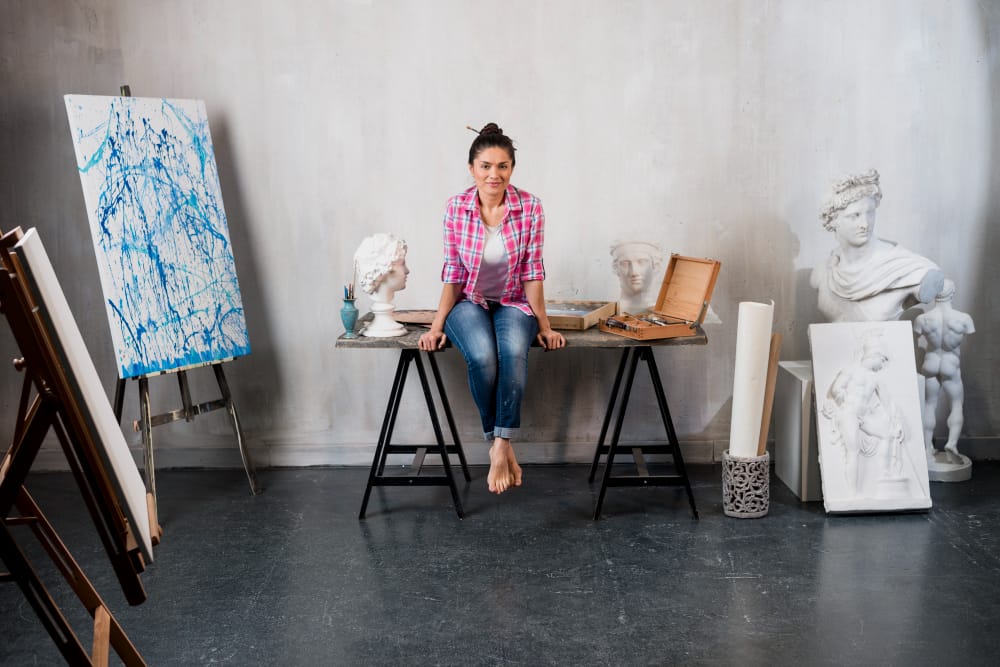
A home studio offers artists the opportunity to pursue their artistic vision and create unique works of art right in their own homes. Image source: Freepik
You save time and money, as you don't have to commute or pay rent. Furthermore, you can work undisturbed in your private studio and create an atmosphere conducive to your creativity.Artists likeVincent van GoghandGeorgia O'Keeffehad their own studios, which served as a source of inspiration. So why not you? A private space allows you to pursue your artistic vision and create unique works of art.
Furthermore, a well-designed art studio can significantly increase the value of your property. This is an attractive feature for potential buyers who appreciate the versatility such a space offers. It could serve as a workspace, hobby room, or storage space for your supplies.
The right planning
Before you begin building or furnishing your studio, you should consider some basic points.Think about your artistic needs and preferences. Do you need sufficient natural light for painting? Or perhaps soundproof walls for recording music? Identify your requirements in as much detail as possible and, if necessary, share them with professionals from a construction company specializing in residential interior design and renovation.
Therefore, if you do not have the necessary know-how and craftsmanship yourself, it is best to work closely with professionals to design a studio that fully meets your expectations.
The ideal place
Your first step to creating a home art studio is to identify a space you can claim for yourself. This might be a guest room that's largely unused, a section of your laundry room, a place where dirt accumulates, a corner of your garage, or even a backyard shed that mainly serves as a dumping ground.
If a conventional space isn't suitable for your studio project, broaden your considerations beyond the boundaries of a traditional room. Think about:
If you have a garage, use the space for your creative activities
Redesigning a wardrobe
Install a folding table that you can store when not in use
The use of a basement or attic
Many artists have transformed garden sheds into impressive art studios. This option will be the most expensive of the possibilities presented here, but is undoubtedly still cheaper than renting a studio or expanding your living space with an extension.
Regardless of the size of the room, in the most basic sense you only need a dedicated area where you can easily access your painting supplies, spread out your materials and find inspiration.
As a visual artist, you should ideally choose a spot in your home that plenty of natural light . Natural light is essential for many artists, as it best highlights the colors and details of your work. A room with large windows or a skylight would be ideal.
If you don't have a room with enough natural light, you can also special daylight lamps that simulate daylight. These lamps are available in art supply stores or home improvement centers and will help you view your work under optimal conditions.
The size of the studio
The size of your studio depends on the type of art you practice. If you create large-scale paintings, you'll need more space than a draftsman or a jewelry designer. Also consider whether you plan to occasionally host guests or students.
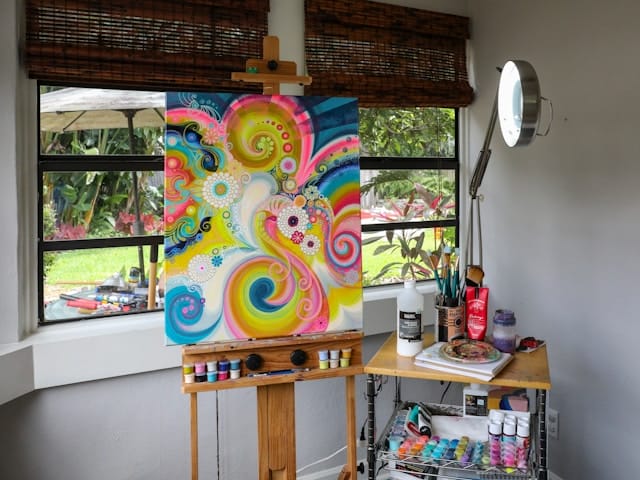
If you simply want to paint a picture now and then as a side job, a small niche might be enough. However, that won't suffice for a full-time career as an artist. Photo by Mick Haupt @rocinante_11, via Unsplash
As a rule of thumb, you can assume an average required area of approximately 20-30 square meters. If you are planning an extension to your house or the construction of a garden shed for this purpose, inquire about the building requirements and any necessary permits at your local building authority. A construction company can usually also assist you with this.
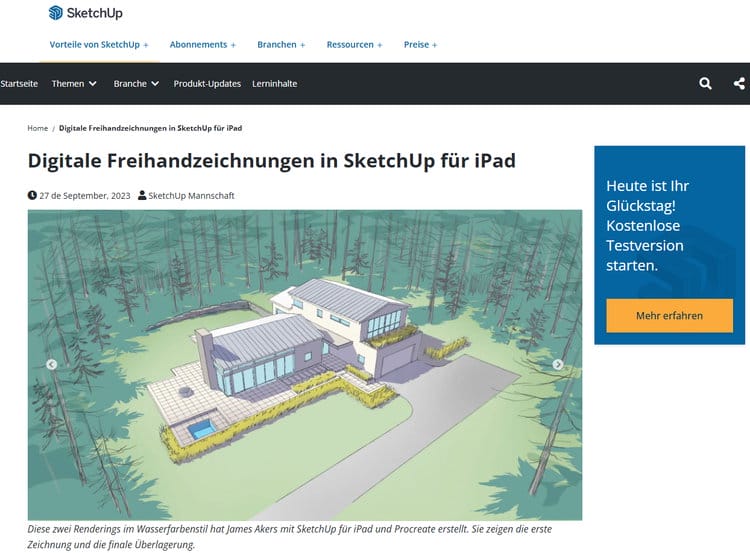
If you'd like to start planning and modeling how and where your home studio could be built, we recommend the free 3D modeling software Google SketchUp . We've only used Google SketchUp once before, but we found it extremely easy to learn and adapt it to our needs.
Since the release of SketchUp for iPad in 2022, (hobby) architects once again have the opportunity to create freehand drawings – but supported by all the advantages of digital 3D modeling. Source: blog-de.sketchup.com
A well-thought-out floor plan will help you make the most of the available space. Consider enough room for your workspace, storage options, and, if desired, a seating area for relaxation or conversation.
Let's take a look inside the studio of the celebrated British artist Flora Yukhnovich , who creates particularly large-format paintings and therefore needs correspondingly artistic space:
Storage and organization
A tidy studio fosters creativity. Invest in shelves, cabinets, and drawers to neatly store your materials. Transparent containers are especially useful, as you can immediately see what's inside.
We recommend using a mix of open and closed storage.”
Open storage options offer easy access to the items you need most often, while other things can be stored in closed containers.
For added organization, use baskets or opaque containers to store small items, jewelry, materials, or other objects you prefer to keep out of sight. Make sure these are clearly labeled so you never have to search for a specific item. Use open shelves to display your most attractive pieces. If space is limited, keep only the essentials in your studio and reserve another area of your home for additional storage .
A pinboard or magnetic board can also be useful for keeping track of inspirations, sketches, or important deadlines. Keep your tools and materials within easy reach so you can fully concentrate on your work.
Both the young artist JenniferBocian(youtube.com/@faunaonpaper) andJette(youtube.com/@jette) with her industrial design studio have wonderful tips for a well-thought-out organization of their work and activity areas:
Space for inspiration and creativity
A home studio should be an inspiring place. Decorate it with artwork you admire or objects that inspire you. Plants , scented candles , or relaxing music contribute to a pleasant atmosphere.
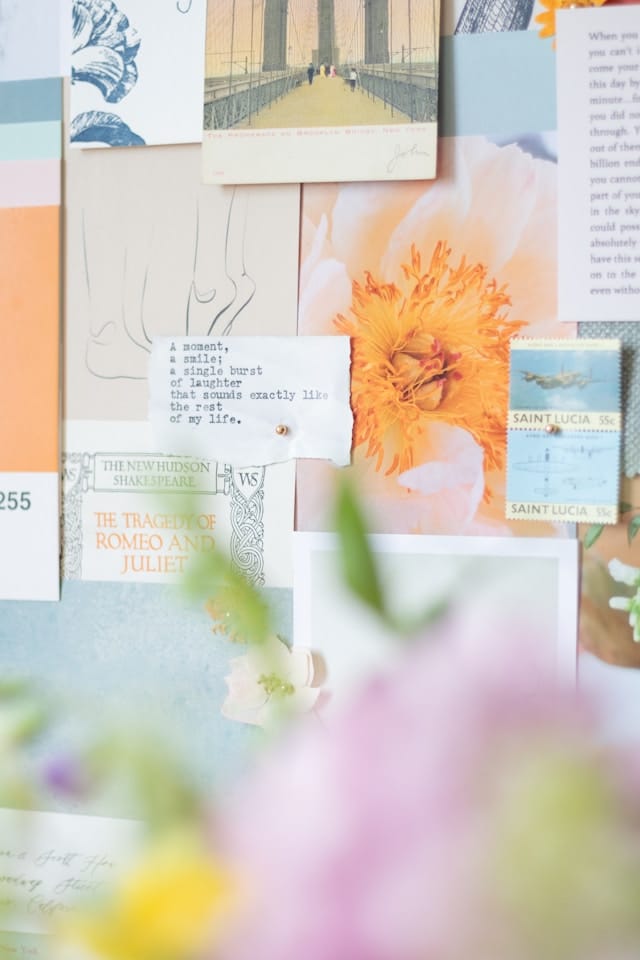
An exciting way to incorporate inspiration is to create a mood board wall . Here you can pin images, textures, and colors that inspire you to the wall.
A mood board is a visual compilation of your inspirations and ideas. Photo by Fiona Murray-deGraaff @fionamurrayphoto, via Unsplash
Take Claude Monet , who used his picturesque garden in Giverny as the main source of inspiration for his works. Such a personal touch can also give your studio a special character.
Important furnishings
An efficient and comfortable home studio requires some essential furnishings.
work surface
Your work surface is the heart of your studio. A sturdy table or work desk is essential. If you work standing up, a height-adjustable work table or an easel could be useful.
A tip: Make sure your table is large enough to comfortably accommodate all your materials and tools. You might also want to use a sturdy protective mat to shield your table from paint splatters or cuts.
Seating
Comfortable seating is also important, especially if you spend long hours in your studio. An ergonomic chair can prevent back pain and fatigue. Additional seating is also advisable if you plan to have guests or course participants.
lighting
Lighting plays a crucial role in the creation of artwork. Therefore, it's essential that your home art studio is equipped with adequate light sources. The most optimal light is natural light (without direct, harsh sunlight). Ideally, combine natural light with artificial light sources to ensure consistently optimal lighting conditions .
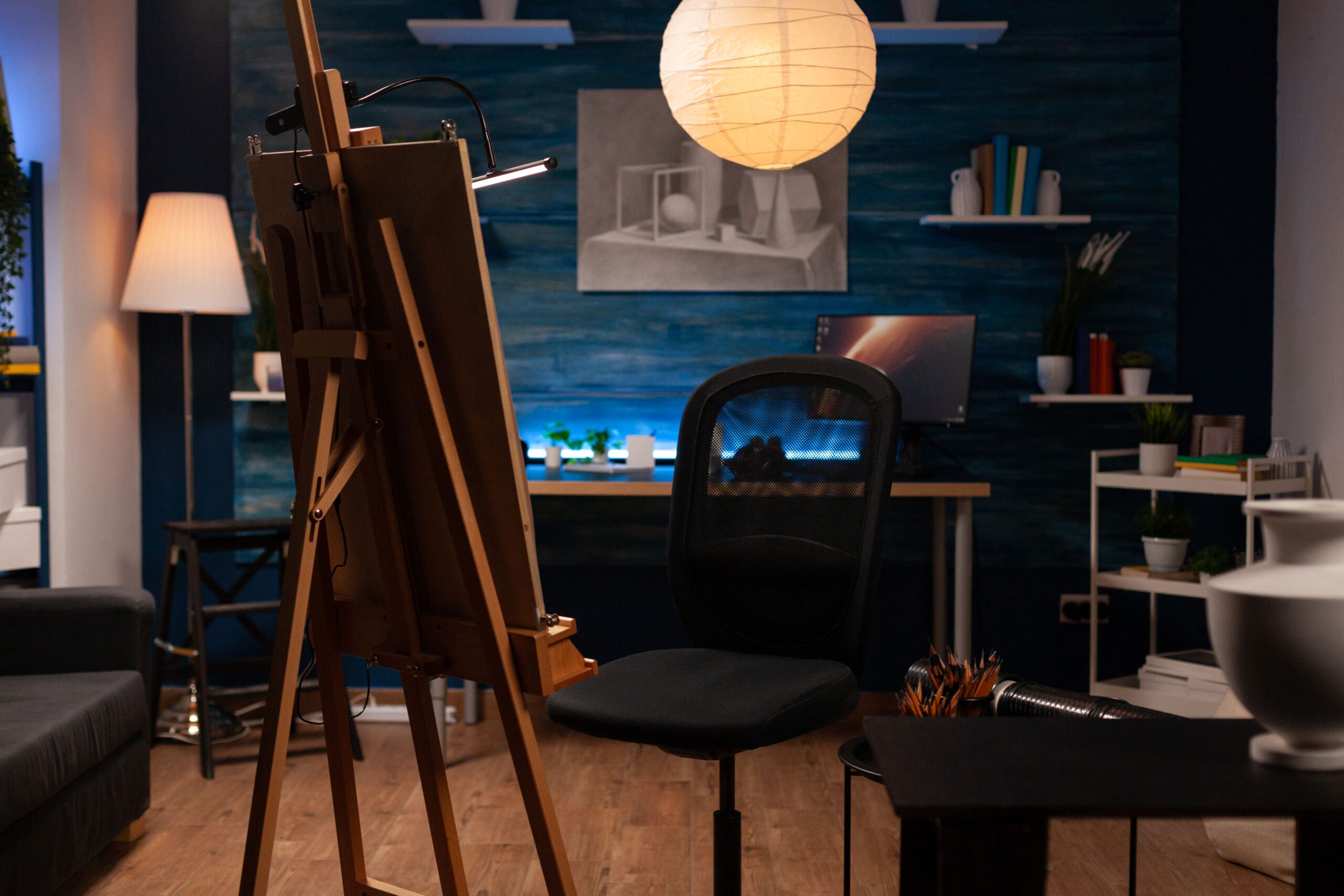
Dimmed, yellow light creates a cozy atmosphere, but it's not ideal for working with colors. Image source: DC Studio on Freepik
However, since this is often not feasible in small spaces – especially if you're using a closet or garage as a workspace – it's advisable to invest in a daylight lamp or light bulbs that mimic natural light. Swiveling table lamps or studio lamps with adjustable arms are particularly practical.
When renovating or converting an interior space into a studio, a building contractor like Welsch Bausanierung advise you on the placement of lighting and light sources. The owner can, for example, choose between:
General lighting;
Spotlighting;
Backlight;
or a combination thereof.
Additional considerations
Some art forms require special technical equipment or safety precautions.
Ventilation / Fresh air supply
Air circulation plays a crucial role when working with materials that release significant fumes or dust. If you are an oil painter or woodworker, for example, it is advisable to choose a room that offers sufficient fresh air.
Fresh air is indeed beneficial for any creative mind. So, if you have the opportunity to use a well-ventilated workspace (regardless of your preferred medium), you should seize it.
When working with chemicals, glues, or paints, good ventilation is essential. A window that can be opened or an exhaust system helps keep the air in the room fresh and minimize health risks.
Access to a sink or running water
For many creative professionals, access to running water or a dedicated sink is crucial. Even if your kitchen or bathroom sink can be used in an emergency, having a separate sink is advantageous.
This means you don't have to worry about project remnants contaminating the sink or blocking the drain.
Security
Think about your safety, especially when working with sharp tools or hazardous chemicals. A smoke detector and a fire extinguisher are mandatory. Make sure first-aid supplies are also readily available.
Technical equipment
Depending on your needs, it may be beneficial to integrate technical equipment such as a laptop, scanner, or printer into your studio. This will facilitate the digital processing of your work or the creation of high-quality prints.
Practical first-hand tips
Let me share a little anecdote from my own experience: When I set up my first home studio, good ventilation wasn't a priority. However, after working with oil paints and solvents for a few hours, I started to feel uncomfortable. Quickly installing an exhaust fan solved the problem and significantly improved my working conditions.
This experience showed me how important it is to pay attention to such details. I have since replaced the exhaust fan with a modern, smartphone-controlled fresh air system.
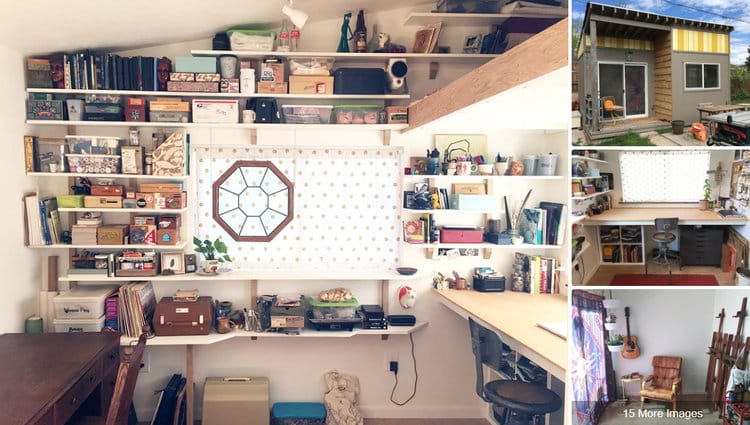
During my research for this article, I also came across a detailed DIY project for building your own artist's studio . Emily Grace from Colorado (USA) shares the construction of her backyard artist's studio in a step-by-step guide: AUTODESK Instructables: Building a Backyard Artist Studio
Building a Backyard Artist Studio (Source: AUTODESK Instructables)
Cost planning and budget
Setting up a home studio can be expensive, but it's often less costly than you might think. Here are some tips to help keep costs down:
Set priorities: Focus first on the basic furnishings and expand gradually.
Used goods: Look for usedfurnitureor furnishings. Flea markets, online marketplaces, or second-hand shops can hold real treasures.
Homemade: You can also make some things yourself, such as an easel from scrap wood or a work surface from old furniture parts.
This cost plan might inspire you to create a budget and keep track of your expenses while you set up your dream studio.
Your studio in the practice
Now that you've set up your studio, you're ready to get started. Here are some additional tips to help you get the most out of your creative space:
Develop a routine: A regular routine makes it easier to be consistently artistically active. Set aside fixed times when you can work undisturbed.
Cleanliness and maintenance: A clean studio promotes productivity. Tidy up after each work session and regularly reorganize your materials.
Build a network: Use your studio to connect with other artists. Invite others to visit your studio or to start joint projects.
Remember that art is a personal journey. Every sketch, every painting, and every sculpture is a part of your expression. Don't let setbacks discourage you, and enjoy the creative process.
The beginning of a new creative era
A home studio is not just a place, but a vibrant space that fosters and supports your creativity. With the right planning, organization, and inspiration, your studio becomes a place where you can realize your artistic dreams.
Remember that the process of creating this space is just as important as the result. Every time you make a brushstroke or sketch, you express a part of yourself. Your home studio is the stage where your artistic visions come to life.
Start designing this special space today and let your creativity flow. You have what it takes to create something truly amazing. Seize this opportunity and transform your home studio into a place of inspiration and personal growth.
May your studio always be a place of joy, innovation, and discovery!
Owner and Managing Director of Kunstplaza . Publicist, editor, and passionate blogger in the fields of art, design, and creativity since 2011. Graduated with a degree in web design from university (2008). Further developed creative techniques through courses in freehand drawing, expressive painting, and theatre/acting. Profound knowledge of the art market gained through years of journalistic research and numerous collaborations with key players and institutions in the arts and culture sector.
Category for interior design,residential design, object furnishings, product and material innovation.
Here you will find everything that makes an interior designer's heart race. We present to you the latesttrendsand developments in the world of home design, as well as innovative products and materials for unique space design.
Our goal is to provide our readers with inspiration and help them creatively redesign or completely transform their living spaces.
We place great importance on ensuring that our articles are not only esthetically pleasing but also include practical tips.
We also introduce you to successful interior designers – from newcomers to the most well-known names in the industry – so you can be inspired by their projects and get to know their working methods.
Whether it's about making the most of a small space or furnishing your home with new furniture in the trendy industrial style: With us, you will find all the information you need on the topic of interior design!
We use technologies such as cookies to store and/or access device information. We do this to improve your browsing experience and to display (non-)personalized advertising. If you consent to these technologies, we can process data such as browsing behavior or unique IDs on this website. Refusal or withdrawal of consent may adversely affect certain features and functions.
Functional
Always Active
Technical storage or access is strictly necessary for the legitimate purpose of enabling the use of a specific service expressly requested by the subscriber or user, or for the sole purpose of carrying out the transmission of a message over an electronic communications network.
Preferences
The technical storage or access is necessary for the legitimate purpose of storing preferences that were not requested by the subscriber or user.
statistics
Technical storage or access that is solely for statistical purposes.Technical storage or access that is used solely for anonymous statistical purposes. Without a subpoena, the voluntary consent of your internet service provider, or additional recording by third parties, the information stored or retrieved for this purpose cannot generally be used to identify you.
marketing
Technical storage or access is required to create user profiles, to send advertising, or to track the user on one or more websites for similar marketing purposes.








 Mystical gemstone necklace "Spring Leaf" with Peridot
29,90 €
Mystical gemstone necklace "Spring Leaf" with Peridot
29,90 €