
Trust, doubt, and the digital image: How security becomes part of creative culture
In a Berlin studio, a digital artist zooms in on an image—not to refine it, but to question it. The texture seems harmonious. The lighting appears correct. And yet, there's something that doesn't quite fit.
The doubt is subtle. But it is new.
In contemporary art and design, the act of creation is no longer separable from the act of verification. Artists, designers, and visual creators not only produce content—they increasingly move in a space where authenticity itself has become uncertain.
A recent analysis, the Digital Security Index 2026 Adobe Acrobat, shows that this insecurity is not abstract, but measurable. Based on real search queries in Germany, the study reveals how frequently people search for information about digital security – when passwords no longer work, fraud is suspected, or content no longer seems clearly trustworthy.

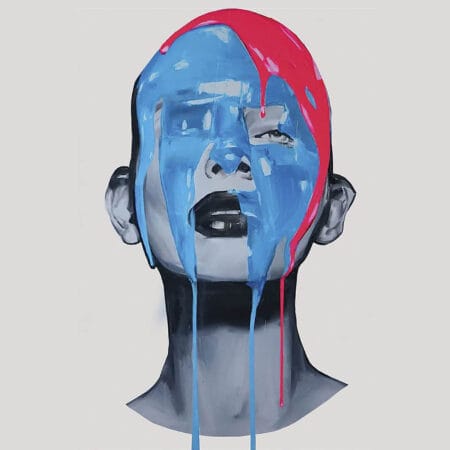
Image source: rawpixel.com, via Magnific
table of contents
Show
A Geography of Uncertainty
The data reveals a clear truth: Digital insecurity is unequally distributed.
Berlin leads the rankings with the highest index score, demonstrating a strong engagement with all relevant topics – from password issues and fraud concerns to document security and initial concerns surrounding AI-manipulated content. Hamburg and Munich follow as the second group, while cities like Leipzig, Düsseldorf, and Stuttgart show significantly lower search activity.
In some cities, digital insecurity is part of everyday awareness. In others, it remains invisible – until a concrete problem arises.
When safety becomes part of the creative process
This development is particularly relevant for art and design. Creative work increasingly takes place in digital environments – on platforms, in tools, in networks and archives. The image, the text, the document are no longer isolated objects. They are part of a system.
In this context, the topic of digital trust gaining greater focus, especially when observing developments such as those in the Digital Trust Barometer Germany, which show how the perception of and handling of digital content is changing. It is no longer a purely technical issue. It influences how creative works are perceived, shared, and interpreted.
When an image can be seamlessly altered, documents can be manipulated without leaving a trace, the question is no longer just "What is this?", but "Can I trust it?"
From reaction to consciousness
A key finding of the study shows how search behavior is changing.
Password-related search queries remain the most frequent topic in Germany. However, their nature is changing. Classic search queries like "reset password" are decreasing, while preventative questions like "create a secure password" are increasing.
It is becoming clear that digital security is increasingly being considered with a proactive approach.
In cities like Munich, this trend is particularly noticeable, with a growing interest in prevention and document protection. Hamburg, on the other hand, shows a stronger focus on fraud and financial issues, such as fake invoices or manipulated payment data.
Berlin is characterized by its thematic breadth – uncertainties surrounding AI-generated or manipulated content also become apparent here at an early stage.
The invisible layer of digital culture
The Digital Security Index ultimately reveals more than just risks. It makes visible an invisible layer of digital culture – characterized by doubt, scrutiny, and uncertainty.
In cities like Frankfurt and Cologne, search behavior focuses on everyday problems such as lost logins or password issues. In Stuttgart, Düsseldorf, and especially Leipzig, digital security usually only becomes relevant when there is an immediate need for action. An example of such pressure is when an account suddenly becomes inaccessible or a suspicious email is received. An unexpected transaction that needs to be investigated can also increase the pressure to act.
These differences reflect not only technical knowledge but also how deeply digital systems are embedded in everyday life. According to the German Federal Office for Information Security (BSI), trust in digital systems plays an increasingly central role in how we handle information and content, especially in areas where authenticity and reliability are crucial.
Creativity in the Age of Review
This raises new questions for art and design.
When digital tools allow for endless variations, they simultaneously create new uncertainties. When images can be generated, altered, or reproduced at will, authenticity becomes more difficult to define.
The role of creative professionals is changing. They no longer just produce content, but increasingly move within processes of selection, classification, and contextualization – in an environment where originality is no longer self-evident.
The moment of doubt
Back in her Berlin studio, the artist looks at the image again. It hasn't changed. But her perception of it has. Here, digital security becomes a cultural issue.
The Digital Security Index 2026 doesn't measure cyberattacks or technical failures. It measures something else: the moment when people begin to question what they see, what they use, and what they trust.
In a world where creativity increasingly takes place digitally, these moments are no longer incidental. They become part of the creative process itself.

Owner and Managing Director of Kunstplaza . Publicist, editor, and passionate blogger in the fields of art, design, and creativity since 2011. Graduated with a degree in web design from university (2008). Further developed creative techniques through courses in freehand drawing, expressive painting, and theatre/acting. Profound knowledge of the art market gained through years of journalistic research and numerous collaborations with key players and institutions in the arts and culture sector.
You might also be interested in:
 Setting up a secure, ergonomic & stylish home office
 Secure proxy services for modern online activities
 Artificial intelligence and digital security: New challenges for cybersecurity for creatives
 Secure browsing for remote employees: Basic rules for protected access
 Securely archiving digital art – How to protect your works in the cloud
Featured Art




Design and Decor Highlights
-
 Elegant wooden sculpture “Grey Heron #1” made of mango wood
79,00 €
Elegant wooden sculpture “Grey Heron #1” made of mango wood
79,00 €
VAT included.
Delivery time: 2-4 working days
-
Delicate swallow flight gold bangle - Globetrotter jewelry with a gold-plated swallow pendant
20,90 €
VAT included.
Delivery time: 1-3 working days
-
J-Line Santa Claus Decorative Figurine in Beige & Gold
149,00 €
VAT included.
Delivery time: 2-4 working days
-
Luxurious 3D wall art "World" made of MDF + resin behind glass, handcrafted
395,00 €
VAT included.
Delivery time: 4-8 working days
-
Love sculpture "Heartbeat" made of polyresin and metal
99,00 €
VAT included.
Delivery time: 3-5 working days
-
J-Line Comfortable Recliner Chair including Cushion, Color: Rust Brown
725,00 €
VAT included.
Delivery time: 2-4 working days
-
J-Line "Square Lines" cushion made of cotton, with sequins (cream/gold)
45,95 €
VAT included.
Delivery time: 1-2 working days


