AI art and the copyright debate – US courts make landmark decisions
With the increasing use of advanced AI systems to create images and other works of art, the question of who can claim copyright for these creations has been a topic of discussion for months. The debates surrounding this issue are characterized by the existential fears of creative professionals and calls for greater freedom of access to copyrighted works in the interest of progress.
Court decisions in the United States are now gradually bringing more clarity to this matter.
Show
table of contents
AI art and copyright
As already discussed in our article "AI Art and Claims for Damages Against AI-Generated Images ," the right to one's own image applies, which in Germany is regulated by the Copyright Act AI models and their "creative" capabilities raise AI-generated art is: Is it the software, its programmers, or the developers who provided it with data and a commission?
And what about the creators of the musical pieces, drawings, or novels that were used as data material?
Landmark ruling from the USA
A ruling by a US judge has brought relief to Hollywood studios: AI-generated artworks are not protected by copyright. The federal judge upheld the US Copyright Office's decision on Friday, confirming that artworks created by AI are not eligible for protection – as reported by The Hollywood Reporter last week.
More than 100 days after the start of the writers' strike, fears are growing that studios might generative artificial intelligence to write entire screenplays. However, intellectual property law has long stated that copyright is only granted for works created by humans, and it doesn't look like that will change anytime soon.
The ruling upheld the lower court's decision to dismiss the claim. The case concerned the obligation of the relevant authorities to register a work as legally protected. The court thus confirmed the dismissal of the claim.
Stephen Thaler , the head of AI developer Imagination Engines, filed a lawsuit because his AI system had created “A Recent Entrance to Paradise”
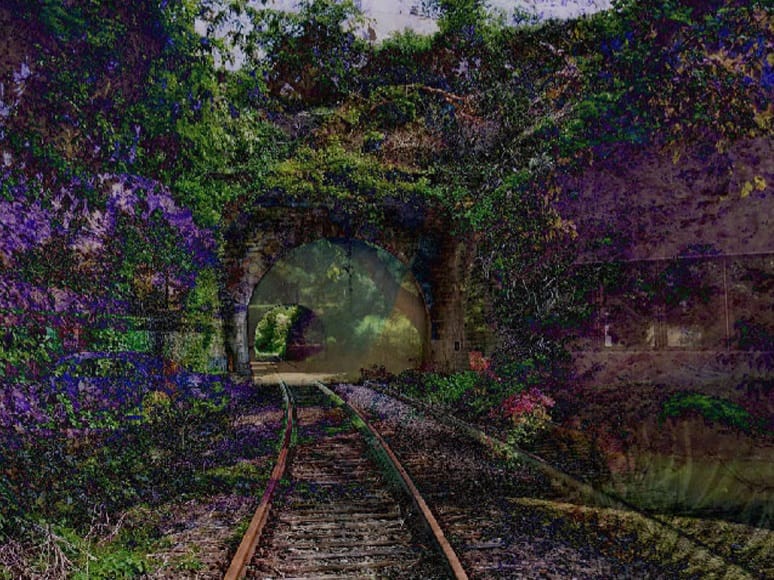
However, his application for registration was rejected by the US Copyright Office. They justified this by stating that the protection of creative expression is closely linked to the connection between the human mind and art.
Thaler countered that the process under discussion is a regular occurrence in the media world. In the US, intellectual property rights are registered for individuals who have created commissioned work. From Thaler's perspective, it makes no difference whether the work is done by a ghost painter or an AI.
Human creativity remains an indispensable prerequisite
The presiding judges referred to the exact wording of US copyright law . While it is flexible enough to adapt to new advancements, the core of its protection remains human creativity . Even when modern technologies are used, a human act must give rise to the work.
This is not the case if a self-learning algorithm generates an image or other work without human intervention.
Further court rulings support the decision
Other court rulings of this kind have already shown a similar legal interpretation.
In one of the leading cases on the subject of copyright authorship, Burrow-Giles Lithographic Company v. Sarony, a large number of courts come to the same conclusion.
The Supreme Court rules that protection can be extended to photographs as long as they represent the author's original intellectual ideas.
The judges emphasize that such authors are exclusively human beings and should be considered a class of persons. Copyright is described as the right of an individual to express their own genius or personal intellect.
Another federal appeals court ruled in a different case that a photograph taken by a monkey cannot be copyrighted. The reason given was that animals do not enjoy legal protection. Nevertheless, the case was decided on other grounds.
Howell cited the aforementioned ruling in her decision. The ruling, which issued a summary judgment in favor of the copyright office, found that the plaintiff only held copyright to a work created by a human being.
The presiding judge emphasized that copyright and patents are considered a form of property that should be protected by the government. Recognizing exclusive rights to this property is intended to encourage individuals to participate in creation and thus promote the common good.
Promoting human creation and how to most effectively inspire people to participate in it, in order to advance science and the arts, has always been of central importance to American copyright law.
The judge emphasized that copyright law is not intended to reach non-human actors.
Owner and Managing Director of Kunstplaza . Publicist, editor, and passionate blogger in the fields of art, design, and creativity since 2011. Graduated with a degree in web design from university (2008). Further developed creative techniques through courses in freehand drawing, expressive painting, and theatre/acting. Profound knowledge of the art market gained through years of journalistic research and numerous collaborations with key players and institutions in the arts and culture sector.
Featured Art
Design and Decor Highlights
-
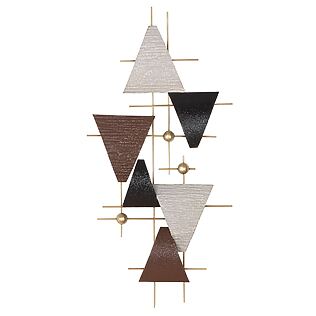
 Geometric wall relief "Bandiera", metal ornaments
57,95 €
Geometric wall relief "Bandiera", metal ornaments
57,95 €
VAT included.
Delivery time: 3-4 working days
-
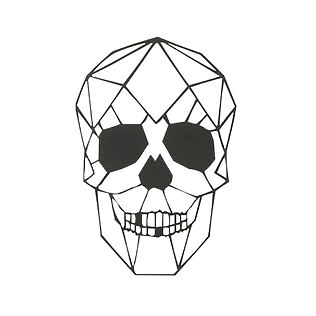
J-Line wall decoration "GeoSkull" - Geometric metal art, black
59,90 €
VAT included.
Delivery time: 2-4 working days
-
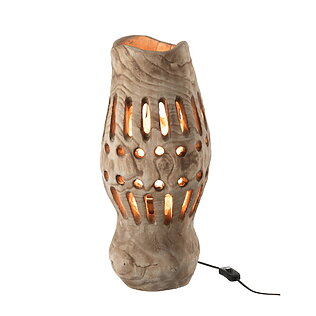
J-Line table lamp “Valerie” – Natural light sculpture made of real wood
119,00 €
VAT included.
Delivery time: 2-4 working days
-
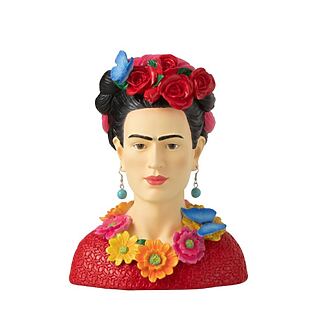
J-Line Small Frida Kahlo Bust in Polyresin
79,00 €
VAT included.
Delivery time: 2-4 working days
-
Love sculpture "Swing" made of polyresin, couple on a swing
99,00 €
VAT included.
Delivery time: 3-5 working days
-
J-Line nutcracker in a playful candy lollipop design (pink/white)
119,00 €
VAT included.
Delivery time: 2-3 working days
-
Floral metal wall relief "Aruba" with a glossy leaf motif
Original price was: €98.0078,00 €The current price is €78.00.
VAT included.
Delivery time: 3-5 working days