In recent years, the popularity of houseplants skyrocketed, leading to the transformation of interiors and entire homes into blooming, green havens. This resurgence in indoor plant cultivation (think " indoor jungle ") can be traced back to a deep-seated desire to reconnect with nature and enhance the quality of living spaces.
Furthermore, many people want to take advantage of the countless psychological and physiological benefits that plants offer. In this article, we will explore the joys of indoor gardening . We will show you that cultivating houseplants in your home is not just a fleeting trend. Rather, it is a lifestyle change that improves both your well-being and the aesthetics of your interior space.
Keeping plants indoors serves a purpose that goes beyond mere decoration. Air purifiers, mental health boosters, and productivity enhancers are all things that nature has provided us with in abundance. Numerous studies repeatedly demonstrate that the presence of houseplants can significantly improve air quality.
A study conducted by NASA found that houseplants are capable of removing up to 87 percent of air pollutants in just one day. They effectively absorb pollutants such as benzene, formaldehyde, and trichloroethylene, resulting in cleaner air in your home and promoting healthy breathing.
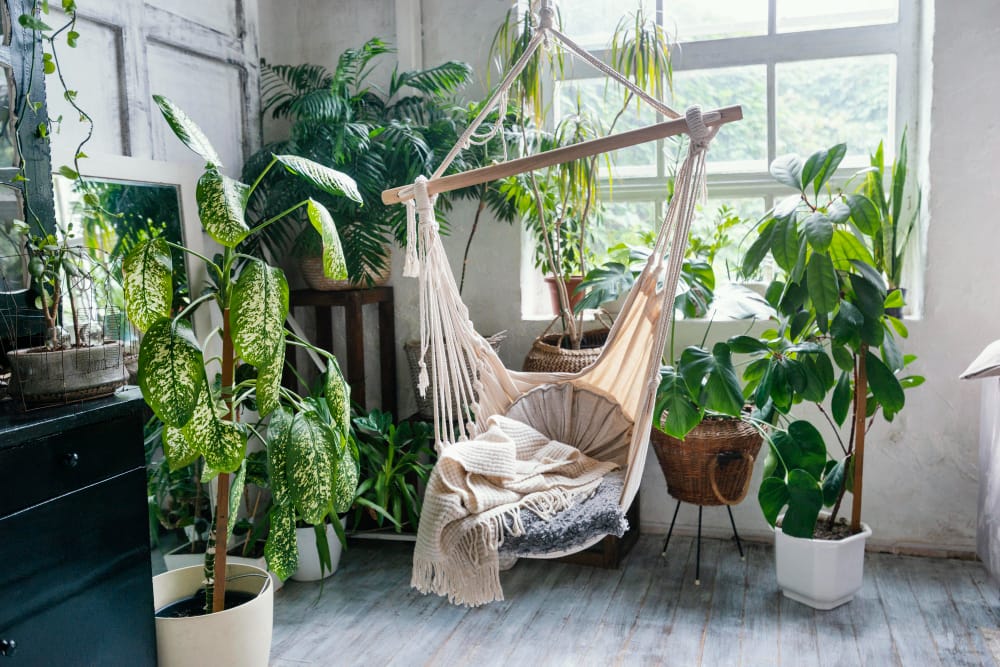
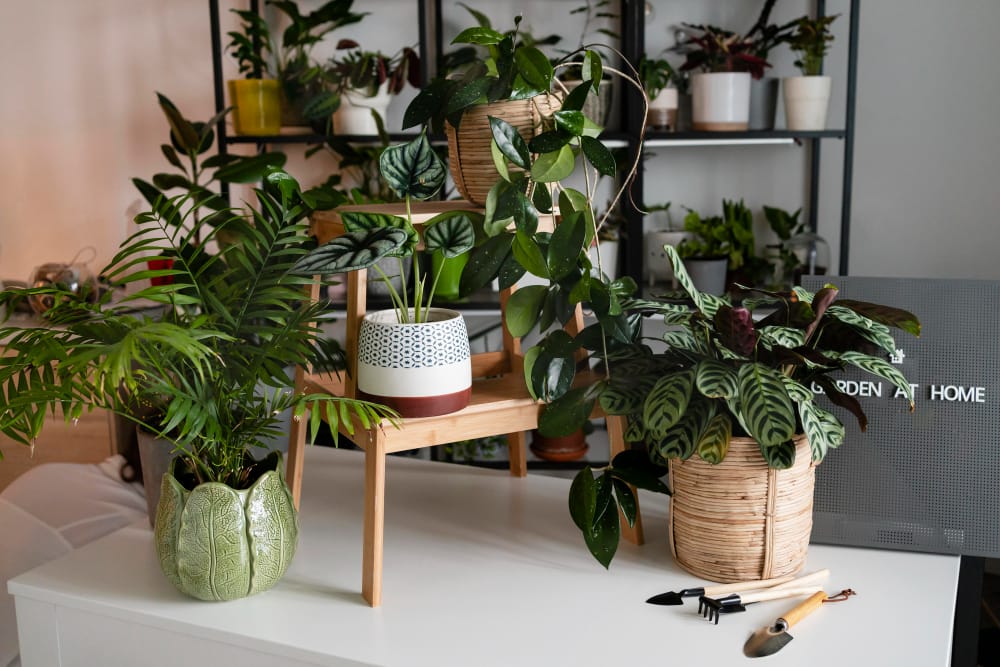
Indoor Jungle Project: Keeping plants indoors serves a purpose that goes beyond mere decoration. Image source: Freepik
Anyone, regardless of their gardening experience, can participate in the exciting adventure of indoor gardening. Numerous options and resources are available to cater to gardeners of all experience levels, from beginners just discovering their green thumb to experienced gardeners looking to expand their indoor jungle.
The purpose of this short guide is to demystify the process. We provide some helpful tips, suggestions, and ideas for selecting, caring for, and styling houseplants to create your very own indoor jungle.
Selection of plants
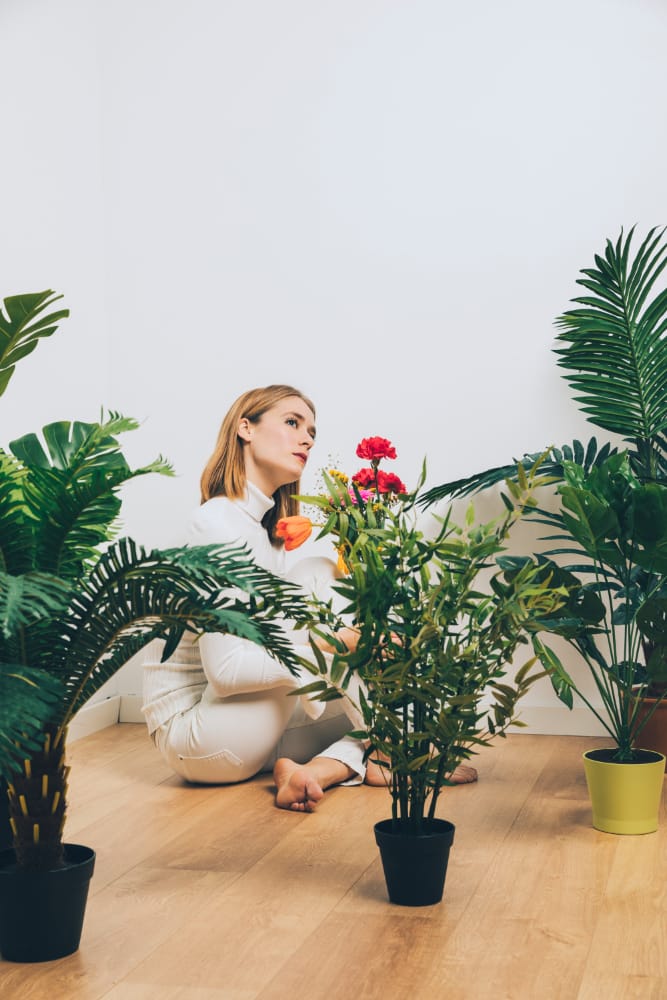
Indoor gardening: A few tips for choosing plants. Image source: Freepik
It's important to choose plants that suit both your living space and your lifestyle. Consider aspects such as the time you can dedicate to plant care, the amount of available light, and the humidity. Plants that require little care and attention, such as snake plants, ZZ plants (ZZ plants), and pothos, are great options for people who are just starting out or have a busy schedule.
In this video, Vani from feey how to properly care for your ZZ plant (or for experts: Zamioculcas zamiifolia). The plant expert explains how to water your ZZ plant it needs, and what to do if it's affected by diseases or pests.
Plants like fiddle-leaf figs , Monstera deliciosa , and various types of indoor palms can dramatically improve your indoor climate. These plants are an excellent choice for people willing to invest more in their care.
Creating a personal indoor jungle is a very satisfying endeavor that not only improves well-being but also brings us closer to nature. At the same time, it makes our interiors more aesthetically pleasing.
It's important for both you and your plants to realize that indoor gardening is a journey of discovery, patience, and progress. Your indoor garden will thrive if you're willing to embrace this process.
Here's how to determine which houseplants are best suited for your rooms.
This selection is important for creating a thriving indoor jungle that suits your lifestyle and chosen decor. Understanding the care requirements and visual appeal of popular houseplants will help you make the best choice, whether you're drawn to the lush, tropical feel of a Monstera deliciosa or the low-maintenance charm of a snake plant.
Which houseplants are best suited for beginners who value low maintenance?
Both snake plants (Sansevieria) and devil's ivy (Golden Pothos) are wonderful options for those relatively new to indoor gardening or looking for low-maintenance solutions. While snake plants are known for their remarkable resilience, they will thrive even when neglected and in low-light conditions. On the other hand, Golden Pothos is known for its rapid growth and air-filtering ability, while requiring very little maintenance.
Both plants are not only easy to care for, but also adapt well to a wide variety of indoor conditions and are therefore perfect for beginners.
Suggestions for plants that will bring a touch of the exotic into your home
The Monstera deliciosa and the Areca palm are two of the most remarkable examples of unique and exotic houseplants currently available. The Monstera, distinguished by its huge, unique leaves with holes, can bring a tropical flair to any room.
With its fluffy fronds, the areca palm lends a soft and lush atmosphere reminiscent of a tropical holiday resort. Although they require a bit more care than the simplest houseplants, both plants reward their caretakers with breathtaking beauty.
I own a pet. Are there any houseplants that I can safely grow?
It's true that people who own pets have special safety requirements. The Boston fern and the parlor palm are two plants that are safe for your pets and bring a lovely touch of greenery to your home.
Boston ferns thrive in high humidity and indirect light, making them ideal for bathrooms . Parlour palms, which also adapt to low light conditions, are fantastic for adding elegance to any room without compromising your dogs' health. Boston ferns are perfect for bathrooms because they flourish under these conditions.
Which types of houseplants purify the air most effectively?
The snake plant and the areca palm are two of the most popular options. The snake plant is a fantastic addition to your bedroom, as it is particularly effective at converting carbon dioxide into oxygen at night. It thrives in bright, indirect light and contributes to both the beauty and clean air in your living space. The areca palm is known for its ability to remove toxins from the air in buildings.
Plants for small indoor spaces
The String of Pearls plant is a beautiful and space-saving solution and an excellent choice for people with limited space. Hanging baskets are the ideal container for this succulent plant, as they allow it to thrive beautifully and thus save valuable space on store shelves or on the floor.
Furthermore, the distinctive leaves, reminiscent of pearls, provide a striking visual element for relatively small areas.
How can I ensure that I choose the right plant for my lighting conditions?
To choose the right plants for your home, it's important to know the exact light conditions. Snake plants and devil's ivy are two robust plants that can thrive in low-light situations. Both the Monstera deliciosa and the areca palm, on the other hand, need bright, indirect light to flourish.
If you want your plant to be happy and healthy, always ensure that the location where you plant it receives sufficient light. When choosing suitable houseplants, it's important to consider your lifestyle, the type of care the plant requires, and your desired aesthetic.
There are a wide variety of houseplants to suit different preferences and requirements for an indoor jungle.
Plant care: How to ensure your indoor jungle thrives
With proper plant care, you can ensure your indoor jungle thrives. Image source: Freepik
To ensure your indoor jungle thrives, you need to care for your plants. Properly caring for a Monstera deliciosa or a snake plant requires not only general care tips but also a thorough understanding of each species' specific needs. In this section, we'll discuss how to maintain the health of your chosen plants, as well as general care strategies applicable to all houseplants.
General care instructions for all houseplants
Here are 13 simple tips for houseplant care for beginners, straight from the home and garden expert:
Light exposure
Most houseplants thrive in bright, indirect light. Be careful not to expose them to direct sunlight, as this can cause leaf burn. You should research the individual light requirements of each plant to find the ideal location for it in your home.
Pour
One of the most common mistakes when watering plants is overwatering . Before watering, check the soil moisture level and make sure the containers have drainage holes. For most plants, it's best to let the soil dry out slightly between waterings.
Houseplants are usually native to humid environments and thrive under conditions similar to their natural habitat. Increasing humidity can be achieved by using pebbles, regular misting, or a humidifier.
temperature
Regarding temperature, it is important to keep houseplants away from drafts, abrupt temperature changes, and direct heat sources. Most prefer a consistent temperature range similar to their natural habitat.
Nutrients and fertilization
Nutrients can be supplied through fertilization with drip fertilizer and compost. During the growing season, which is often in the spring and summer months, it is important to select the appropriate type of fertilizer for each plant and to adhere to the prescribed fertilization schedule. Repot your plants every one to two years, or whenever their roots become too cramped.
This not only promotes growth but also increases the availability of nutrients. When repotting, make sure you use high-quality compost specifically formulated for houseplants.
Luke Jaque-Rodney has even more plant tips :
Special instructions for the care of common houseplants
Monstera Deliciosa
Monstera deliciosa thrives in humid, bright environments and prefers a high level of indirect light. In most cases, water the plant once a week or whenever the top centimeter of soil is dry. For more consistent moisture, especially during the warmer months, consider using a drip irrigation system.
Boston fern
This plant thrives in a cool environment with high humidity and indirect light. Ensure consistent soil moisture and mist the leaves regularly. Throughout the growing season, ferns can benefit from regular fertilization with a balanced liquid fertilizer.
String of Pearls
String of Pearls needs well-draining soil and bright, indirect light to thrive. To prevent root rot, watering should be limited, and the soil should be allowed to dry out between waterings. For maximum growth, consider using a compost specifically formulated for succulents.
Parlor palm
The parlor palm thrives in low light conditions and lower temperatures. The soil should be kept consistently moist, but not waterlogged. Applying a slow-release fertilizer in spring and summer promotes its growth.
Golden Pothos
Golden Pothos , also known as Devil's Ivy , is a plant that can thrive in a variety of light conditions, but does best in indirect light. Allow the soil to dry out completely between waterings. Apply liquid fertilizer monthly during the growing season.
Areca palms
Areca palms thrive best in a humid, bright environment with indirect light. Water the soil frequently enough in summer to maintain a slightly moist level, and less frequently in winter. During the growing season, it is beneficial to use a chemically balanced fertilizer.
Snake plants
Indirect sunlight is ideal for the growth of snake plants, which tolerate low light levels. It is important to water sparingly and allow the soil to dry out completely between waterings. During the growing season, use a slow-release, all-purpose fertilizer.
Care products for houseplants
Consider using plant care products to support the health of your houseplants. High-quality compost not only improves soil structure but also provides essential nutrients, which in turn promotes the growth of healthy plants.
For people with busy lifestyles or those prone to overwatering their plants, drip fertilizers ideal. They offer a simple way to ensure your plants receive consistent moisture. Explore our selection of products specifically designed for houseplants, including various types of compost and slow-release drip fertilizers. These products simplify plant care and promote the growth of lush, vibrant plants.
Monitoring plant health – What can we learn from technological advances in agriculture?
Monitoring plant health plays a vital role in agriculture. It helps farmers identify problems such as diseases, pests, nutrient deficiencies, or water stress in a timely manner. Early detection allows for the optimization of resource use, reduction of crop losses, and improvement of harvest quality.
FieldBee PowerSteer VisionPro: Vegetation index analysis
The FieldBee PowerSteer VisionPro system uses sensors to monitor plant health, collecting and analyzing data on this aspect based on various vegetation indices. These indices allow farmers to more accurately assess plant health, optimize field management, and prevent crop losses.
Let's take a look at how Fieldbee CEO Michael Utkin and CTO Oleksii Bohatyrov present their innovation for agriculture:
The most important vegetation indices that you can use to assess plant health are:
NDVI (Normalized Difference Vegetation Index) . It assesses the density and activity of the plant canopy and allows farmers to identify stress zones due to water or nutrient deficiencies or disease. This index is particularly useful for monitoring plant growth dynamics and the early detection of problem areas.
NDRE (normalized difference red border index) . It reacts to the chlorophyll content in the leaves, allowing for a more accurate diagnosis of hidden nutrient deficiencies. This index is particularly important in the later stages of plant growth when traditional indices such as the NDVI lose their effectiveness.
GNDVI (Green Normalized Difference Vegetation Index) . It helps assess chlorophyll content and detect water stress in plants. Because it is highly sensitive to moisture availability, it is used for precise irrigation system control to prevent both drought and waterlogging.
SAVI (soil-adjusted vegetation index) . The SAVI (soil-adjusted vegetation index) takes into account the influence of the soil on vegetation measurements, which is particularly useful in dry regions or on fields with bare soil. This index helps farmers obtain accurate data on plant health even under difficult conditions by minimizing errors related to soil light reflectance.
LAI (Leaf Area Index) . Determines the density of the plant canopy and helps predict crop yields based on photosynthetically active biomass. This index allows you to adjust planting patterns and apply precision farming methods to optimize plant growth.
Thermal analysis identifies abnormal temperature zones in the field, enabling the diagnosis of problems with drought, disease, or uneven moisture distribution. This method is particularly useful for the early detection of infections that can spread across the entire site and reduce yields.
Farmers useFieldbee products in the field because they provide accurate, real-time information about plant health , allowing them to quickly identify problems and adjust their agronomic practices. This monitoring helps optimize fertilizer and water use, reduce costs, and minimize crop losses. As a result, agricultural production becomes more efficient, and yields become more stable and predictable.
How does vegetation index analysis affect crop yields?
Analyzing the vegetation index allows farmers to detect plant stress, such as moisture or nutrient deficiencies or the spread of diseases, at an early stage, leading to a rapid adjustment of agronomic measures. Based on accurate index data, it is possible to optimize fertilization, irrigation, and pest control, reduce resource overuse, and increase the efficiency of resource utilization.
This promotes uniform plant growth, minimizes crop losses and ultimately increases the quality and volume of the harvest, leading to more stable results in agricultural production.
Smart monitoring of houseplants with a plant monitor
What do technological advances in agriculture show us? What possibilities do innovations now offer for monitoring plant health?.
Fieldbee doesn't offer a smart product here, but there are alternatives for the indoor jungle.
What are my plants lacking?
A plant's viability depends on numerous variables, including water. Light intensity, temperature, and soil fertility also play a role. A plant monitor should keep track of everything related to your indoor plants and alert you when you need to take action.
This is demonstrated, for example, by the plant monitor from VegTrug . A hand-sized device with four sensors, which is inserted into the soil, measures sunshine, temperature, soil moisture and soil nutrients.
How a plant monitor works
To power the plant monitor in your indoor jungle, insert a button cell battery and connect it to the VegTrug Grow Care app . App registration and setup are quick and easy. You can choose from over 6,000 plants to monitor. The database stores essential plant care information for each plant. The sensor can inform you about water, sunlight, temperature, and nutrient requirements for each plant.
The devices recognize and store all this information. When within Bluetooth range, the app synchronizes the data and provides you with a complete plant report. The software allows you to monitor your plant's health and check if all parameters are within the optimal range. Past data, as well as daily, weekly, and monthly analyses, are also available.
The sensor thus provides a complete plant health report. Unfortunately, it doesn't notify you when a measurement reaches a critical level and action is required. Check the app regularly to see how your beloved houseplants are doing. It's not too complicated; a weekly check to see if the plants need water or fertilizer is perfectly sufficient.
If you frequently forget to water a plant, the IKEA moisture sensor might be a better option.
Advanced tips for true indoor gardening experts
It is possible to take your indoor gardening to the next level by learning some advanced techniques that can significantly improve the overall health of your plant collection as well as its aesthetic appeal.
Repotting correctly
When repotting houseplants, ensure there is room for growth. Repotting is essential for maintaining healthy houseplants, as it provides them with fresh soil and the necessary space for root expansion. To ensure your plants are repotted correctly, follow these steps:
During the plant's growing season, which is often in spring or early summer, it is best to repot the plant to reduce the stress it is subjected to.
Choosing a new container: If you want to replace your existing pot, choose one with a diameter that is three to five centimeters larger. Make sure that there are enough drainage holes to prevent water from pooling.
Preparation: Before removing your plant from its current container, water it gently to alleviate any root stress. To prepare your new container, fill it with a layer of fresh potting soil and then set it aside.
When repotting, carefully remove the plant from its current container, shake off any loose soil, and inspect the roots for signs of disease or rot. Be sure to trim any damaged roots.
Now the plant is placed in the new container and then the space around it is filled with potting soil, while at the same time pressing down gently to remove any air pockets.
You should water the plant well and deeply so that the soil can settle better.
Cuttings – the propagation process
Propagation allows you to grow new plants from those already in your collection. Take a look at stem cutting, a common technique that can be used with a wide variety of houseplants:
When cutting, look for a healthy stem with at least two nodes, which are the points where the leaves join the stem. Make a cut directly below a node with a clean, sharp knife or scissors.
As part of the preparation, the lowest leaves should be removed to expose the nodes, which will later be dipped in either water or soil.
To propagate the cutting, place it in a container of water. Ensure the nodes are submerged, but the leaves remain above the water. This will allow the cutting to develop roots.
To propagate the plant through the soil, dip the cut end in rooting hormone powder and then plant it in a container filled with moist potting soil.
Place the cutting in a warm, well-lit room without direct sunlight.
Change the water weekly or ensure the soil remains moist. Once roots have developed, the cutting should be transplanted into a container with fresh potting soil.
Microclimate: Simulation of natural environments
Small spaces in your home whose conditions differ from those of the surrounding area and which are tailored to the specific requirements of certain plants are called microclimates .
You can increase the humidity of tropical plants by placing them close together, using a humidifier, or placing bowls of water filled with stones under the containers they are in. Plants should be misted regularly to simulate the humid environment they live in.
If you want to provide plants with indirect light , you can diffuse direct sunlight by using sheer curtains. Plant lights can be used to supplement the light that plants requiring more light receive by placing them near south-facing windows.
Maintaining the correcttemperature rangecan be achieved by placing plants that thrive at higher temperatures in warmer areas and plants that thrive at cooler temperatures away from heat sources.To ensure ideal conditions, monitor them with a thermometer.
It is possible to significantly influence the health and vitality of your houseplants. You can achieve this by mastering these advanced indoor gardening techniques, which include repotting, propagation, and creating a microclimate.
Your experience with gardening in your indoor jungle will be enriched by every additional method that allows you to create a diverse and healthy indoor garden, even if it requires patience and practice.
Owner and Managing Director of Kunstplaza . Publicist, editor, and passionate blogger in the fields of art, design, and creativity since 2011. Graduated with a degree in web design from university (2008). Further developed creative techniques through courses in freehand drawing, expressive painting, and theatre/acting. Profound knowledge of the art market gained through years of journalistic research and numerous collaborations with key players and institutions in the arts and culture sector.
Category for interior design,residential design, object furnishings, product and material innovation.
Here you will find everything that makes an interior designer's heart race. We present to you the latesttrendsand developments in the world of home design, as well as innovative products and materials for unique space design.
Our goal is to provide our readers with inspiration and help them creatively redesign or completely transform their living spaces.
We place great importance on ensuring that our articles are not only esthetically pleasing but also include practical tips.
We also introduce you to successful interior designers – from newcomers to the most well-known names in the industry – so you can be inspired by their projects and get to know their working methods.
Whether it's about making the most of a small space or furnishing your home with new furniture in the trendy industrial style: With us, you will find all the information you need on the topic of interior design!
We use technologies such as cookies to store and/or access device information. We do this to improve your browsing experience and to display (non-)personalized advertising. If you consent to these technologies, we can process data such as browsing behavior or unique IDs on this website. Refusal or withdrawal of consent may adversely affect certain features and functions.
Functional
Always Active
Technical storage or access is strictly necessary for the legitimate purpose of enabling the use of a specific service expressly requested by the subscriber or user, or for the sole purpose of carrying out the transmission of a message over an electronic communications network.
Preferences
The technical storage or access is necessary for the legitimate purpose of storing preferences that were not requested by the subscriber or user.
statistics
Technical storage or access that is solely for statistical purposes.Technical storage or access that is used solely for anonymous statistical purposes. Without a subpoena, the voluntary consent of your internet service provider, or additional recording by third parties, the information stored or retrieved for this purpose cannot generally be used to identify you.
marketing
Technical storage or access is required to create user profiles, to send advertising, or to track the user on one or more websites for similar marketing purposes.











 Timeless wall mirror "Madrid", rectangular shape with brass-colored aluminum frame (50 x 70 cm)
79,00 €
Timeless wall mirror "Madrid", rectangular shape with brass-colored aluminum frame (50 x 70 cm)
79,00 €