About the positive effects of dance on psyche, creativity and well -being
Art is a constantly changing mixture of the intellectual and the emotional, the physical and the spiritual . It makes subjectivity a virtue.
Art as an individual form of expression offers a unique means by which we can explore ourselves and our position in the wider world, and is an unparalleled opportunity to share with other people what we see and feel, think and perceive.
Art is a way dialogue within and between individuals and communities.
Dance is a fully-fledged art form
Dance is a fully-fledged art form to the "performing arts" , an end in itself and a means to enable people to express their inner feelings, thoughts and experiences.
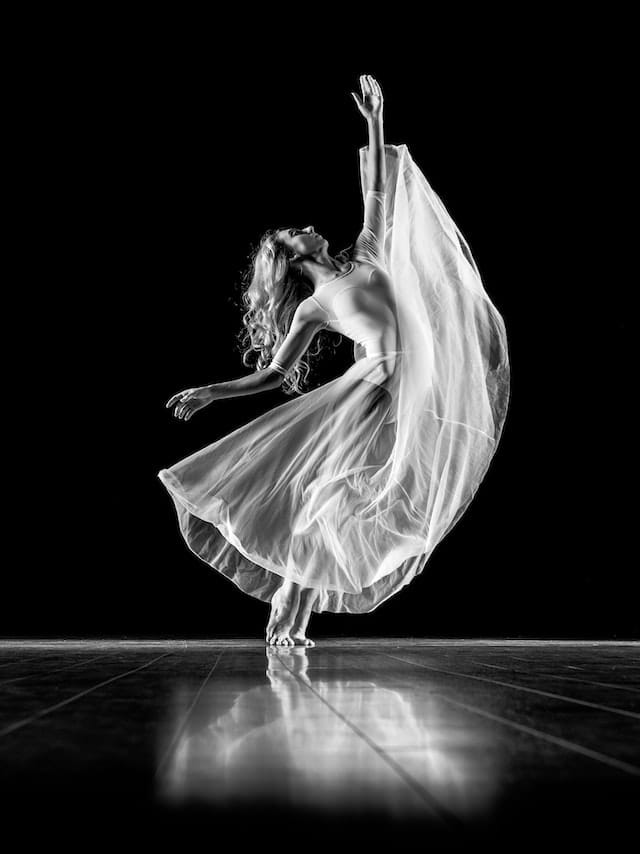
Dance is a natural form of self-expression : the body expresses itself naturally, and with it, the mind. We are all beings with free will, regardless of our personal circumstances. Through dance, our body expresses how free we truly are, while simultaneously highlighting the limitations imposed upon it by our mind.
Dance is the art form in which human movement becomes the medium for perceiving, understanding, and communicating ideas, feelings, and experiences. Dance has its own content, vocabulary, skills, and techniques that must be understood and applied in order to master the art.
The elements of dance are the fundamental concepts and vocabulary for developing movement skills and understanding dance as an art form. All these elements are present simultaneously in a dance or even in a short movement phrase.
But is this the only "use" of art forms? Their "higher expression" on stage? Or is it time to reconnect with our bodies and return to dance as an integral part of our lives?
A brief historical overview of the origins of dance
Performing arts, including dance, have been part of human civilization since its beginning. We are born with an instinct for movement.
Those who could not hear the music thought the dancers were crazy
Friedrich Nietzsche
Dancing in prehistory
In ancient times, people danced constantly, as dance has always been one of humanity's intrinsic forms of expression. Natural phenomena, community gatherings, family moments, war and peace, the seasons… – all these were moments and events that were meant to be expressed through collective, familial, and individual dances.
Dance is a universal form of expression, deeply rooted in every culture and community. Its origins reach back to prehistory, as evidenced by impressive wall paintings in European, African, and Asian caves. The "Dancing Shaman" from the Three Brothers Cave in southern France is particularly noteworthy. Archaeological finds, such as depictions of dance in Egyptian tombs and Stone Age rock paintings on the Bhimbetka rocks in India, demonstrate that dance is one of humanity's oldest art forms. Since dance has no tangible form, art historians rely on such depictions for dating purposes.

Image source: Raveesh Vyas, CC BY-SA 2.0, via Wikimedia Commons
In a time before sophisticated language, the body served as a means of communication among tribes, allowing them to exchange identity and messages. As early as 4000 BC, the first dance techniques emerged, and religious dances were refined with new forms of movement such as the splits and partner dancing. These advancements led to more harmonious and complex choreography. Dance should by no means be underestimated; it was essential for our ancestors' communication.
Dancing in Antiquity
In antiquity, dance played a central role in cultures, particularly in ancient Egypt and Greece . Egyptian dancers were distinguished by their high leg movements and excellent balance, highlighting the high status of dance in their society. In Greece, dance was even more significant and encompassed various types, including religious, dramatic, and lyrical dances.
Those who have spoken truthfully of the origins of dance explain that it was born at the time when all things were created, and thus it (dance) is as old as love, the oldest of the gods.”
Lucian of Samosata describes the essential role of dance: in his work De Saltatione .
Homer's works, the "Iliad" and the "Odyssey," demonstrate the importance of dance in wedding rituals, where men and women danced together. The Dionysian dance , as it was considered a connection between mortals and gods and was performed in religious ceremonies honoring Dionysus. Dance was thus not only an expression of cultural identity but also an important element in spiritual rituals.
Dance played a multifaceted role in antiquity: it served for communication and the establishment of friendships, the worship of gods in ceremonies and rituals, and healing through macabre dances. It was also used to express feelings towards family and potential partners.
Each dance conveyed a specific message or emotion, such as the lyrical dances in honor of Apollo. In Greece, men and women generally danced separately, with joint dances being the exception. Through dance, social rank, gender, age, and origin were made visible.
Dancing in the Middle Ages
The Middle Ages presented a challenge for the history of dance, characterized by a lack of written records. Only the nobility and clergy had access to educational resources, which is why dances were primarily passed down orally. Furthermore, the Catholic Church questioned numerous dance forms and prohibited dancing at night, further hindering their development. Nevertheless, dance forms such as circle dances and couple line dances been preserved through iconographic sources.
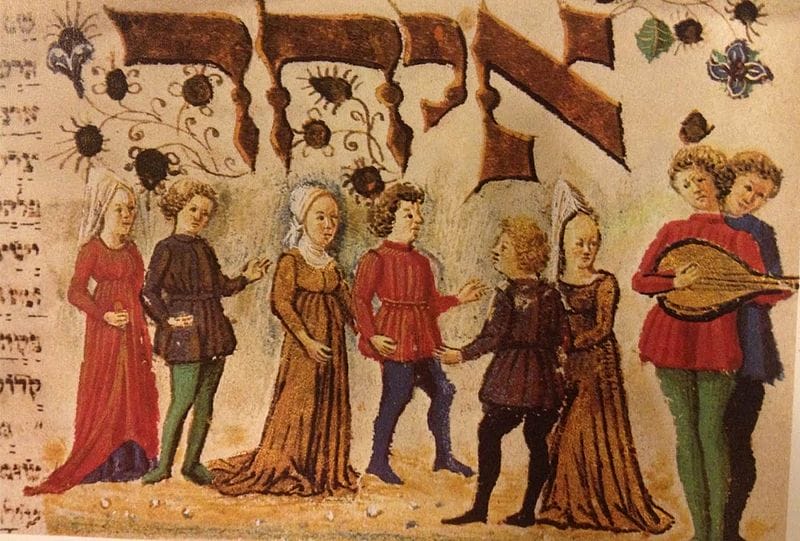
In the late Middle Ages, dance masters began to record these dances in notations, thus documenting the upper classes. Today, it is possible to learn medieval dances – either in dance schools or with private teachers – and even without prior professional experience, anyone can find a way into the fascinating world of medieval dance.
The positive effects of dance…
In the transition from childhood to adulthood, we begin to suppress our natural urge to move. Our movements become increasingly restricted and task-oriented due to societal norms and cultural conditioning. Dance is a culturally valid medium that can revive this natural urge to move in our adult lives and authentically satisfy it.
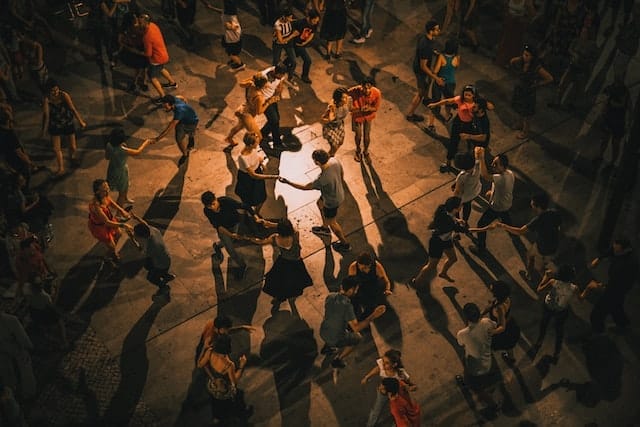
Photo by Ardian Lumi @ardianlumi, via Unsplash
Kashyap (2005) defined dance as a unique physical discipline in which emotional, psychological, spiritual, intellectual and creative energies are united and harmonized.
Dancing has an invigorating effect on mind and body , allowing people to move within external patterns and break free from the constraints of everyday life. Dance influences our personality, our behavior, and our relationships with the environment, ultimately strengthening self-image and independence .
The important aspects of our psyche and personality that dancing has a demonstrably positive effect on are self-confidence , self-esteem , creativity , and constructive communication and coping patterns .
… on creativity
Creativity involves each of our senses – sight, smell, hearing, touch, taste, and perhaps even the extrasensory. The term "creative thinking skills" can be
defined as the constellation of generalized mental abilities such as divergent thinking, productive thinking, inventive thinking, or imagination.
The phenomenon of creativity remains of considerable interest to researchers due to the increasing demand for new solutions to old or persistent problems.
A study by Banes (1998) found that dancers may be better able to oscillate between the fantasy world of dance and reality, with a clearly positive correlation to their creativity. A better repertoire of cognitive processes such as attention, concentration, and concept formation in dancers allows them to engage with and become immersed in the process of dancing.
Creative movement and dance share a ubiquitous connection and lead to self-discovery . Badrinath (2002) argues that the expressive aspect of dance is what truly ignites the creative potential of dancers.
We dance to laugh, we dance to cry, we dance to madness, we dance to hope, we dance to scream, we are the dancers, we create the dreams
Albert Einstein
Are you interested in bringing more creativity into your life? Then dance classes might be just what you're looking for. Dancing creates unique connections in your brain, allowing you to see situations from a different perspective and find creative solutions.
Dance is a way to express yourself through various movements. It allows space for new emotions through artistic exploration. Through dance, you express your inner emotions without limitations, enabling a creative perspective.
Physical activity in general is not only good for your body, but also good for your mind. Being active releases endorphins, which make you feel more confident, creative, and healthier.
… on self-confidence
Self -concept is the cognitive aspect of the self, relating to one's self-image. Self-esteem is the affective or emotional aspect of the self and generally refers to how we feel or how we value ourselves (Brown and Marshall, 2006).
Components of self-esteem that are specific to certain areas of life experience include competence, likability, sympathy, self-control, personal power, moral self-recognition, physical appearance, and body function.
Researchers have pointed to a potential for growth or self-transcendence that dancing allows. Belly dancers experience a number of benefits, including a positive body image and less self-objectification, than non-dancing college students (Tiggemann, Coutts, & Clark, 2014).
It has also been found that dancing confidence in our posture . Dancing makes us beautiful and acts as a remedy for a shattered self-image, boosting self-confidence. Badrinath also claimed that the basic posture of dance fosters self-confidence. Creative activities generally have a positive effect on our self-esteem .
Attend a dance class or dance school
Would you like to immerse yourself in the creative forms of dance and send your body, mind, and soul on an exciting and incredibly enriching journey? Then it's a good idea to look for dance classes or a dance school
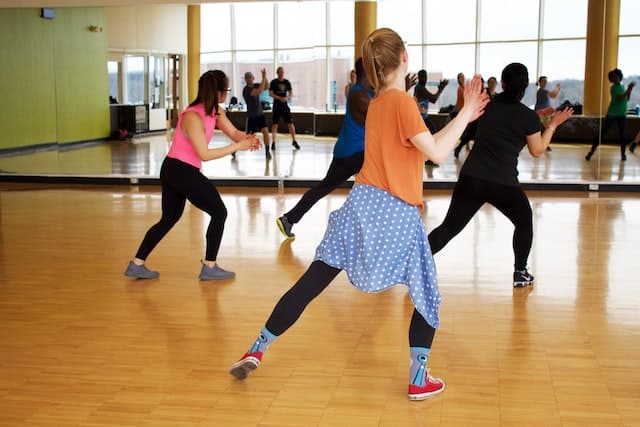
Photo by Danielle Cerullo @dncerullo, via Unsplash
While attending a dance class, you not only receive instruction from a dance teacher but also have the opportunity to observe others around you and follow their movements. As you process the movements of the other participants, you develop your own creative style, making your performances unique.
This will also increase your motivation and competitive spirit. You'll want to develop yourself, perhaps even be better than the person next to you. At the same time, you can independently develop new ideas and inspire others with them.
A now-adult, passionate dancer once recounted how, as a child, she went to her first dance class and was completely overwhelmed. While the teacher was choreographing, she met another girl her age who was also in her very first dance class. Both young girls were nervous about what lay ahead. However, it gave them a sense of comfort to know they weren't alone in this situation. The girls subsequently developed a lifelong friendship and an immense love for dance.
They realized that no one judged their appearance, but instead embraced their differences. Through this experience, they learned to connect with others while simultaneously developing creative and physical skills that stayed with them throughout their lives.
This testimonial is representative of the many people who have found their passion through a dance course or at a dance school.
Dancing can fluid , but it also has structure . Dancing isn't about where you live or what you look like, but about who you are and how you define yourself. If you're interested in developing a more creative outlook on life, dance can be an extremely useful tool. It can help you develop new connections in the brain.
Furthermore, it's a great way to express yourself and allows you to interact during a competition, thus boosting your self-confidence. All of this can lead to a more creative outlook on life. Many areas of life can benefit from it in the long term.
Those lucky enough to live Berlin the extensive course program offered by the dance school of perhaps Germany's most popular dance instructor . Together with over 30 dance teachers, TV personality Detlef D! Soost, a diverse mix of current courses in Afro Dance, Contemporary Dance, Jazz Dance, Modern Dance, House Dance, Latin Dance, Dance Fitness, Pole Dance, High Heels Dance , and, of course, Hip Hop .
All courses at D's Dance School are designed on a drop-in basis, meaning that entry is possible at any time.
The great creativity and passion of the talented coaches is particularly evident in the numerous fusion courses. Here, hip hop approaches are creatively combined with influences from other dances and fused into a new style.

The dance school also caters to individual requests. Private lessons in your chosen style are available upon request, as is a custom-designed dance for a wedding . They also show acts for private, school, club, or corporate events with passion and skill.
Dance as an educational tool
We have explored dance as an artistic form of expression and a lived passion. Now we are examining dance from another perspective: to what extent is dance present in formal and non-formal education systems?
To what extent is dance a tool in the hands of practitioners? Is it legitimate to "use" dance not merely as an art form or as a means of expression, but also as a pedagogical instrument?
Dance does indeed offer a learning method that, in addition to kinesthetic skills, develops communication skills, problem-solving techniques, and creative and critical thinking. At its core, the goal of dance education is to involve students in artistic experiences through the processes of creation, performance, and response.
Dance as a rich learning method can be used not as an end in itself, but as a means and/or tool in formal and non-formal education to develop individual and collective problem-solving skills, learning concepts and understanding of topics, linking movement activities with academic subjects and enabling practitioners to draw on the deeply rooted bodily-kinesthetic intelligence of young people.
Dance activities allow participants to address a wide variety of thematic topics (possibly all of them) and are effective in dealing with all kinds of human behaviors. Guided explorations can be translated into concrete forms. Dance pedagogy provides a vehicle for holistic education that cultivates the human qualities needed in society. Dance integrates mental, physical, emotional, and spiritual aspects of education.
Dancing has an impact on life.
Dance pedagogy in youth services
Dance can be extracted from the performing arts and used as a tool in youth work.
The Community Outreach Project in Sweden, for example, used hip hop to establish the foundation and methodology for creating local meeting places that stimulate creativity. This process encouraged young people and gave them opportunities to make positive changes in their lives.
The aim was to prevent discrimination and alienation, while simultaneously promoting learning, diversity, participation and civic engagement.
Through the use of informal, participatory education, young people were given a space to develop themselves and their interests. Hip hop offered them the opportunity to channel their energy and creativity and thus positively influence their own situation. Hip hop culture was used to encourage young people to make changes in their own lives and in society.
Dance in therapy
Finally, for the sake of completeness, we would like to discuss the possibilities of dance as a form of therapy.
Dance/movement therapy is defined as the psychotherapeutic application of movement to promote the emotional, social, cognitive and physical integration of the individual for the purpose of improving health and well-being.
It originated in the 1940s when early innovators, many of whom were accomplished dancers, began to recognize the benefits of using dance and movement as a form of psychotherapy. It is a holistic healing approach based on the empirically supported assertion that mind, body, and spirit are inseparable and interconnected; changes in the body reflect changes in the mind and vice versa.
Dance and movement therapy, as an embodied, movement-based approach, is often difficult to describe, as it is necessary to actively participate in the process to get a true sense of what it is.
Dance/movement therapy is based on the following premises:
- Movement is a language, our mother tongue. Nonverbal and movement communication begins in the womb and continues throughout life. Dance/movement therapists believe that nonverbal language is just as important as verbal language and use both forms of communication in the therapeutic process.
- Body, mind and soul are interconnected.
- Movement can be functional, communicative, developmental, and expressive. Dance/movement therapists observe, assess, and intervene by viewing movement through these lenses as it emerges within the therapeutic relationship during the session.
- Movement is both an assessment tool and a primary mode of intervention.
Dance/movement therapists use these premises to guide their work and employ body movement , the core component of dance, as the primary access point to their psychotherapeutic work.
Dance/movement therapists approach individual, couple, family, and group sessions by observing and evaluating both their clients and their own movements, using verbal and nonverbal communication to develop and implement interventions that address the emotional, social, physical, and cognitive integration of an individual.
Further information about where dance/movement therapy is practiced and with whom dance/movement therapists work can be found in the following video (in English):

Bibliography and references:
- Kashyap, T. (2005). My Body My Wisdom: A Handbook of Creative Dance Therapy
- Kashyap, T. (2002). Sharing dance. Narthaki: A Directory of Indian Classical
Dances - Badrinath, V. (2002). Dancing for the Body and the Brain. In Narthaki: A Directory of
Classical Indian Dances - Brown, J.D., & Marshall, M.A. (2006). The Three Faces of Self-Esteem. In M. Kernis, SelfEsteem Issues and Answers: A Sourcebook of Current Perspectives
- Tiggemann, M., Coutts, E., & Clark, L. (2014). Belly Dance as an Embodying
Activity?: A Test of the Embodiment Model of Positive Body Image. Sex Roles - Fit to dance? – The report of the national inquiry into dancers' health and injuries, by Dr. Peter Brinson and Fiona Dick, Calouste Gulbenkian Foundation (London, 1996)
- Making Kinesthetic Sense: Creative Dance as a Tool for Learning, by Mary Ann Brehm and Lynne McNett, International Association for Creative Dance
- National Dance Education Organization standards for learning and teaching in dance: Ages 5-18. Reston, VA: National Dance Education Organization (2005)
- Regular Marvels – A handbook for animateurs, practitioners and development workers in dance, mime, music and literature, by François Matarasso,The Community Dance & Mime Foundation (United Kingdom, 1994)

Owner and Managing Director of Kunstplaza. Publicist, editor, and passionate blogger in the field of art, design, and creativity since 2011. Successful completion of a degree in web design as part of a university program (2008). Further development of creativity techniques through courses in free drawing, expressive painting, and theater/acting. Profound knowledge of the art market through many years of journalistic research and numerous collaborations with actors/institutions from art and culture.
You might also be interested in:


Highlighted artwork
Design and Decor Highlights
-
 J-Line maritime table lamp "Sea Urchin", beige
129,00 €
J-Line maritime table lamp "Sea Urchin", beige
129,00 €
inkl. MwSt.
Lieferzeit: 3-5 Werktage
-
Fine Wine - wall decoration made of wine bottles and wine glasses
Original price was: 99.95 €99,95 €Current price is: 99.95 €.79,96 €inkl. MwSt.
Lieferzeit: 3-5 Werktage
-
Adana plaid with a neutral taupe-beige pattern, recycled cotton blend (130x180 cm)
19,50 €
inkl. MwSt.
Lieferzeit: 3-5 Werktage
-
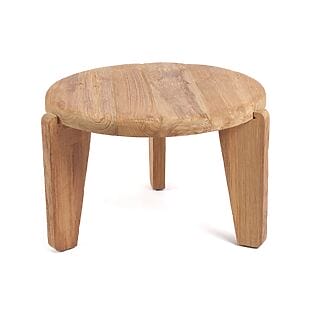
Three-legged Wabi-Sabi coffee table "Seseh" made of recycled teak (size: m)
435,00 €
inkl. MwSt.
Lieferzeit: 1-3 Werktage
-
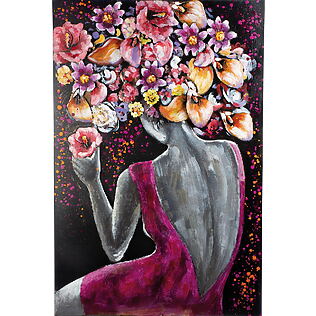
Hand-painted acrylic painting "Florence" on metal plate
385,00 €
inkl. MwSt.
Delivery time: 5-7 working days
-
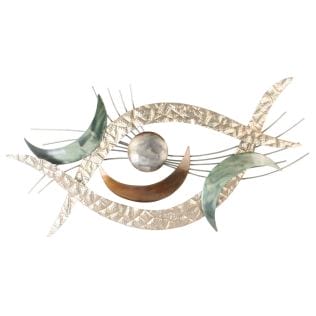
Eye of The Galaxy - Abstract wall decoration made of metal
Original price was: 90.95 €90,95 €Current price is: 90.95 €.72,76 €inkl. MwSt.
Lieferzeit: 3-5 Werktage
-
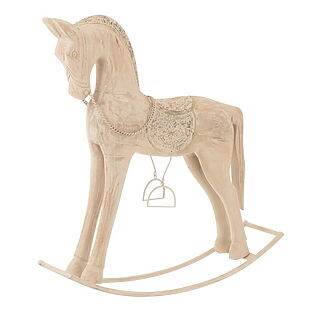
J-Line decorative rocking horse made of hand-carved mango wood (natural)
259,00 €
inkl. MwSt.
Lieferzeit: 2-4 Werktage