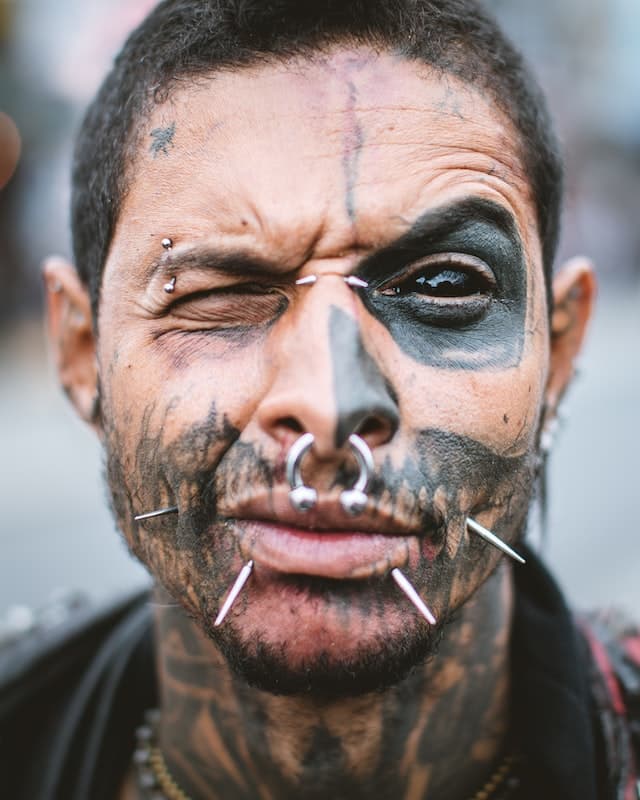
In times of Instagram and the like, of body cult and self-presentation , individualization and the urge for recognition , the popularity as well as the diversity and artistic depth of tattoo art, body art and body modification entirely new heights.
Tattoo art, body art, and body modification have been experiencing an artistic boom for many years. Photo by Tom Morbey @tommorbey, via Unsplash
I would like to take this opportunity to thoroughly investigate the phenomenon of skin enhancement with an ink needle. To develop a fundamental understanding, it helps to begin where it all began – many years back in the past.
have actually existed for thousands of years . They can be considered one of the earliest and most widespread art forms in human history. In regions like Irezumi in Japan, Ta Moko in New Zealand, and the Pe'a and Malu in Samoa, there is a millennia-old culture and tradition surrounding these decorative images and patterns on the skin.
Of course, countless other forms of traditional tattoos existed and still exist all over the world. In almost every culture on every inhabited continent, colors have been applied to the skin permanently for more than 5,000 years. They served as mystical symbols of protection, status symbols, accompanying elements in rituals of all kinds, or simply for personal decoration.
Tattoos in the form we know them today in most Western-influenced civil societies originated in the early seventies of the 19th century.
This Western art of tattooing originates from traditional tribal tattooing , that is, from the tattoos of indigenous peoples such as the Maori . What was added – due to the industrial progress of this time – was the use of electrically powered devices for tattooing the skin designs.
The tattoo machine was born.
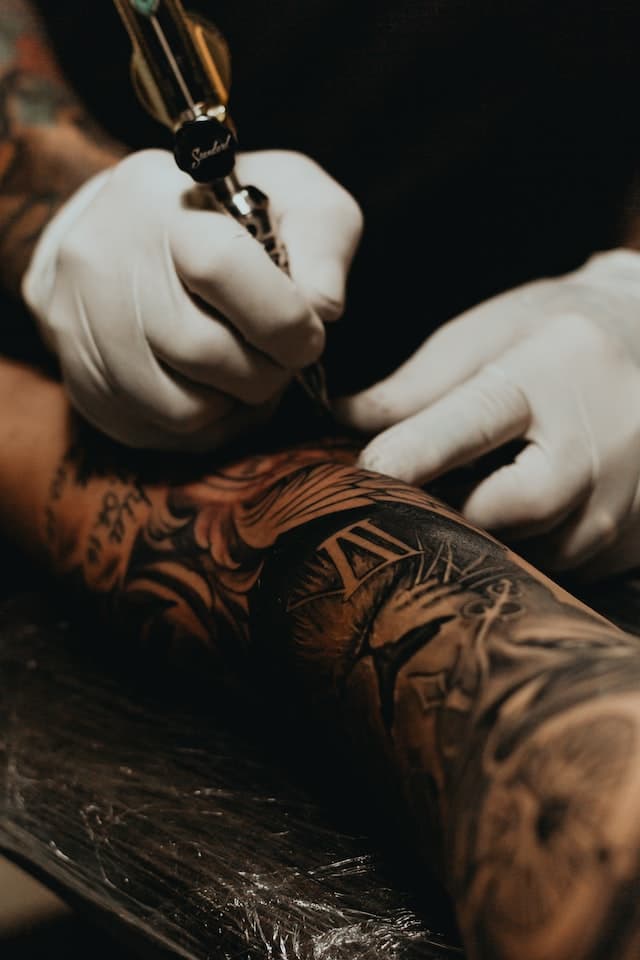
Tattoo machines revolutionized tattoo art. Photo by Allef Vinicius @seteph, via Unsplash
One of the first documented tattoos done with such a tattoo machine dates back to around 1891.
It is somewhat surprising that Western tattooing has not fundamentally changed since then. Of course, the equipment used, the inks, the designs, and the skills of the tattoo artists have evolved and constantly improved. However, over a period of more than 145 years, it can be observed that tattoos have remained largely true to their roots from that 19th-century era.
Over the last two decades, this art form – apparently fueled by mutual inspiration and direct competition via the internet and social media – seems to have made a real leap forward in development , pushing the boundaries of what is artistically imaginable far outwards.
How long have tattoos existed? A historical excursion
the history of tattoos is long and fascinating. How were the first tattoos created, and why? Who invented the tattoo machine? Let's explore these questions.
Tattoos are an art form in which pigments are injected under the skin, permanently altering their color to create specific designs. This practice is very old and can arguably be considered the first visible manifestation of self-expression.
According to historical evidence from archaeological sources, it can be assumed that tattoos were already being applied in Europe 12,000 years ago. This is suggested, at least, by archaeological finds of tools that were most likely made specifically for this purpose. Such tools have been found during excavations in France, Portugal, and Scandinavia.
Tattooing has been practiced all over the world since at least the Neolithic period, as evidenced by mummified, preserved skin, ancient art and archaeological records.
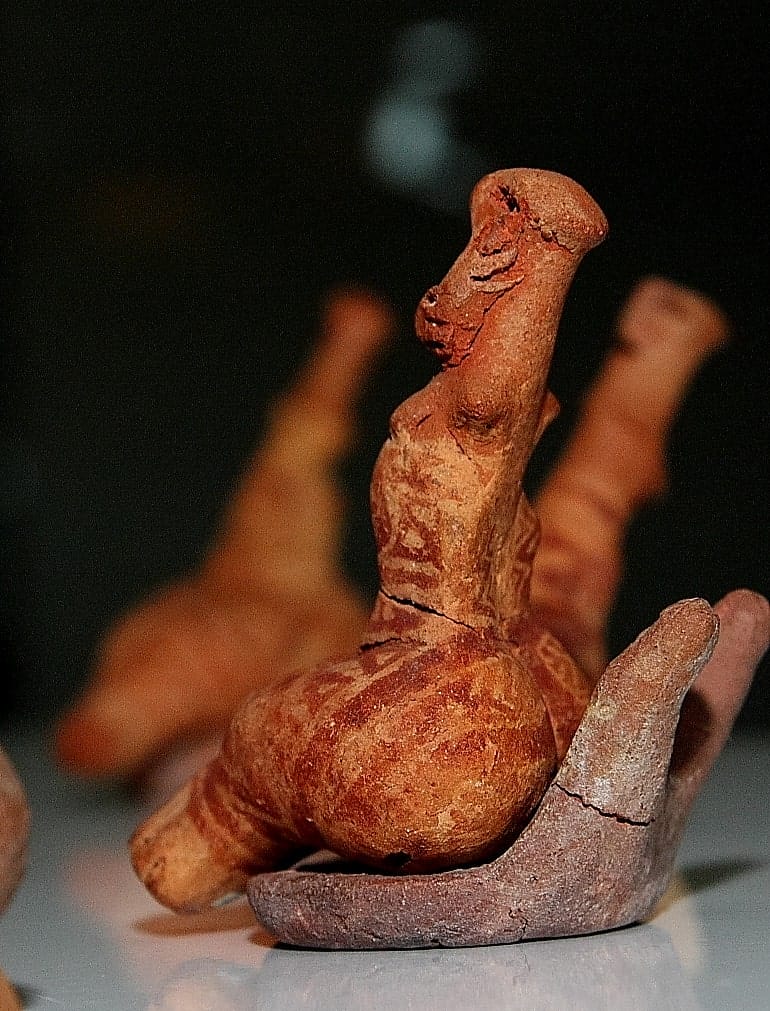
Possible Neolithic tattoo traces on a clay figurine from the Pre-Cucuteni culture of Romania, c. 4900–4750 BC. Photo by CristianChirita, CC BY-SA 3.0, via Wikimedia Commons
Both ancient art and archaeological finds of possible tattooing tools suggest that tattooing was practiced in Europe during the Upper Paleolithic period. However, direct evidence of tattooing on mummified human skin only dates back to the 4th millennium BC.
The oldest evidence of a tattoo on human skin comes from the discovery of an astonishingly well-preserved Alpine mummy from the Stone Age . This Ötzi was tattooed and likely roamed the Central European high mountains around the 5th or 4th century BC.
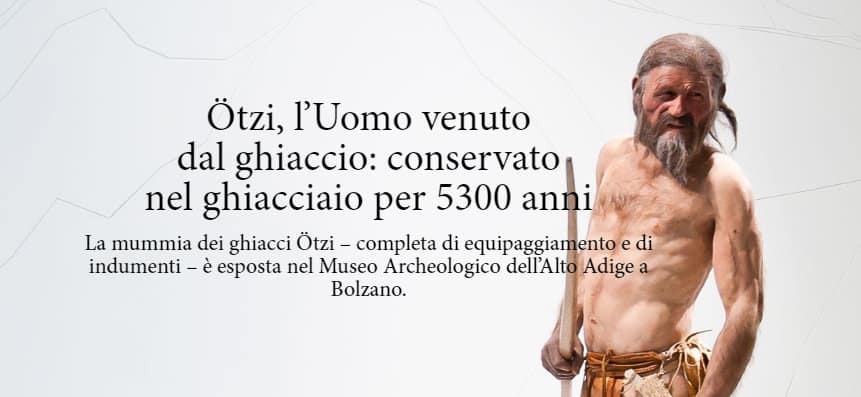
Ötzi, the Iceman: Preserved in ice for 5300 years. The glacier mummy Ötzi – complete with clothing, equipment and all his tattoos – is on display in the South Tyrol Museum of Archaeology in Bolzano (Italy).
A total of 57 carbon-based tattoos adorned his body (see iceman.it ). Most of these were likely protective or healing symbols, and were applied in a similar way to the needles used in acupuncture (see “Why do people go back for more and more tattoos?” by BBC News).
The placement of Ötzi's tattoos is particularly interesting: the decorations can be found, for example, on his wrists, Achilles tendon, knees, and ribcage. This leads scientists like Albert Zink from the EURAC Institute for Mummies in Bolzano to consider a medical explanation plausible – essentially, tattoos as a form of pain management. Ötzi may have treated his back and joint problems in this way. It could even have been a kind of early form of acupuncture .
, researcher Joann Fletcher of the Archaeology Department at the University of York in Great Britain explained to Smithsonian Magazine :
"Based on conversations with my colleague Professor Don Brothwell of the University of New York, one of the specialists who examined him extensively at the time, the distribution of the tattooed dots and small crosses on his lower spine, right knee, and ankles corresponds to regions of the human body affected by degenerative wear and tear. This suggests that the decorations were intended to alleviate discomfort and thus followed a therapeutic application.".
This assumption is further supported by the fact that the markings were located in places that were not easily visible to other people. Therefore, they could not have served any representative purpose – such as a status symbol
Tattoo art in various ancient cultures
The Mocha in South America (around 500 BC)
Body decoration was an important part of some pre-Columbian cultures in present-day Peru and Chile . The enigmatic Mocha culture , which ruled large areas of the Andes around 500 BC and built the famous and probably largest mud-brick Pyramid of the Sun on the American continent, used tattoos to demonstrate its leadership.
For a long time, archaeologists assumed that the Mocha people lived in a strictly patriarchal society. This assumption was refuted by the discovery of an exceptionally well-preserved female mummy who was heavily tattooed. It is now believed that their society was more gender-neutral.
The well-preserved mummy of a young Mocha woman bore numerous religious and magical protective symbols, such as spiders and snakes, on her arms, legs, and feet. This discovery, dating back to 2006, represented the first known female leader of this ancient culture.
The fact that she had been unearthed with ceremonial weapons of war such as clubs, spears, and the body of a teenager most likely sacrificed during the burial ceremony, supported the theory that she held one of the highest ranks in Mocha society.
Ancient Egypt of the pharaohs and kings (approx. 3000 BC)
Numerous mummies with permanent skin decorations have been found in ancient Egypt. According to the prevailing opinion among historians, tattoos were used in ancient cultures, such as those of the Egyptians or ancient India , in a religious, spiritual, and healing context .
At the same time, there is speculation as to whether the permanent marking on the skin was also intended to outwardly display social status
For the first time, scientists have discovered tattooed images on the body of a woman from ancient Egypt. Her skin was covered with more than 30 symbols in the form of eyes and animals. It is already known that the ancient Egyptians used tattoos for specific magical or medicinal purposes, and some mummies have been found with patterns of dots or lines on their skin.
Bioarchaeologist Anne Austin of Stanford University has now provided the first evidence that the Egyptians also inscribed pictorial representations onto the skin. While examining a mummy from Deir el-Medina on behalf of the Institut français d'archéologie orientale, she discovered magical symbols (SPIEGEL Wissenschaft reported: “Tattoos from ancient Egypt: Cows on the arm” ).
At first, the scientist thought the symbols were merely superficial paintings, but upon closer inspection, she discovered they were permanently engraved in the skin. Austin knew that tattoos had previously been revealed in other mummies using infrared technology. Therefore, she began her investigations.
Using infrared imaging, the researcher was able to discover further images of the skin, eventually counting over 30 tattoos. Some of these were not visible to the naked eye because the skin was heavily discolored by the embalming fluids.
Besides baboons, cows also appeared on the arms and lotus blossoms on the hips – accompanied by numerous Horus eyes covering the entire body. It is possible that a new tattoo was added with each ascent in the Hathor cult, but the symbols were not merely decorative – the tattooing, especially in certain areas of the body, was extremely painful.
A fresh look at the ancient mummies from Deir el-Medina could prove worthwhile. Following the discovery of the Hathor servant, Austin has found three more tattooed mummies. However, the Egyptians cannot be considered the originators of tattooing . Similar dot and line tattoos, as are common on Egyptian mummies, were already present on Ötzi the Iceman, who died more than 5,000 years ago at the Tisenjoch pass in the Ötztal Alps.
Although Ötzi's tattoos mainly feature geometric patterns, these Egyptian masterpieces represent the first known examples of pictorial tattoos. The latest results of the analysis have been published in the prestigious "Journal of Archaeological Science" .
The earliest methods for applying color to the skin involved rather crude forms of scratching or pricking the skin, followed by rubbing ash into the wounds to bring the color particles under the epidermis.
A typical tool for this early form of tattooing was basically just a long stick or handle with a sharp end on one side.
This method of working has been used since at least 3000 BC, as discovered by archaeologist WMF Petrie in Abydos, Egypt. The tool he found consisted of a series of flat needles connected at the end of a stick, leaving a kind of dotted pattern on the skin.
Indeed, tattoos were very common among women at the court of a pharaoh, as Fletcher confirmed to Smithsonian Magazine. This is particularly evident from paintings of women with body decorations dating from around 4000-1200 BC, archaeological finds of tools, and mummified women with tattoos, which were excavated, among other places, at Akhmim in Upper Egypt.
Among the best-preserved mummies with clearly visible tattoos on their bodies is Amunet , priestess of Hathor, from Thebes during the 10th Dynasty (2160–1994 BC). She had parallel lines on her forearms and thighs, as well as elliptical patterns below her navel in the pelvic region. Many other female mummies from this period had similar decorations or ornamental scarification, practices still common in some parts of Africa today.
The Egyptian technique, with its runic designs, changed remarkably little over more than 4,000 years. As late as the 19th century, the traveler and author William Lande observed the art of tattooing being performed with several (usually seven) needles connected to each other at the end of a handle. After the tattooing, black ash (made from wood or oil), mixed with breast milk, was rubbed into the wounds. These tattooing sessions were generally conducted when the child was between five and six years old.
Germanic, Pictish and Celtic tribes (c. 300–0 BC)
It is also well documented that tattoos were part of the widespread culture of many Germanic and Celtic tribes.
Among the Germanic and Celtic peoples of the pre-Christian centuries, such as the Picts who first inhabited the British Isles, body decorations were very common for both sexes.
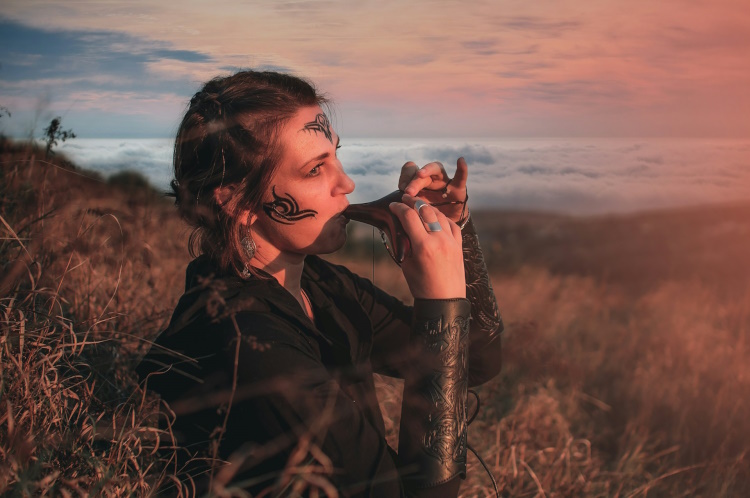
Tattoos were part of the culture of many Germanic and Celtic tribes. Photo by Ruslan Sikunov @sicunov, via Unsplash
An interesting side note: The word "Britain" comes from "Britons ," the name given to the indigenous people of Britain, which meant something like "people of drawings ." This is how the Picts were described by Julius Caesar in the fifth book of his series "De Bello Gallico .
Whether the body paintings were motivated by religious, decorative, mystical, or a mixture of these, remains a matter of speculation to this day.
Scythians and Bible-believing Christians
Even in the commandments that God dictated to Moses, it was stated: “You shall not have any marks carved into your bodies!” (Leviticus 19:28). Nevertheless, not even Bible-believing clergymen adhered to this. In the 14th century, for example, the mystic Henry Suso ignored this commandment by having IHS—for Jesus—tattooed on his chest.
The Scythians, who lived in the Eurasian steppes between the 8th and 3rd centuries BC, are considered masters of figurative tattooing. Large-scale mythical creatures are often visible on the skin of their bodies, which are remarkably well preserved by the permafrost.
Tattooed mummies dating back to around 500 BC were discovered in the 1990s from burial mounds on the Ukok Plateau. Their tattoos included animal designs executed in a curvilinear style. The Pazyryk Man , a Scythian chieftain, is tattooed with an extensive and detailed array of fish, monsters, and a series of dots arranged along his spine (lumbar region) and around his right ankle.
Native Americans and Indian tribes of North America
Tattoos were equally common among many Native Americans , often as religious symbols or as signs of victory in battle. Just as later, pilots engraved the number of their aerial victories on their aircraft fuselages, young warriors of these indigenous cultures used their own bodies as slates to record their triumphs in combat.
Using charcoal or okra, they marked on their scratched skin the number of scalps they had captured during their skirmishes and raids.
Inuit
However, not all tribes used tattoos for such macabre purposes. The Inuit, for example, decorated their bodies in the name of beauty and for a peaceful afterlife, at least since the 13th century.
Cardinal Guzman , author of "The History of Tattoo," described it as follows:
Inuit women wore tattoos, along with other decorative facial adornments, as an expression and to emphasize their feminine beauty. Such tattoos also indicated the wearer's social status, for example, that she was ready for marriage and children.
The tattoos were often very extensive, including vertical lines on the chin with more intricate designs extending down the back of the cheek in front of the ears. The markings were made with a needle and thread covered in soot and then drawn under the skin according to a specific pattern.
Piercings were also jewelry made of bone, shells, metal and pearls was incorporated into the lower lip.
The tattoo artist was usually an older woman, typically a relative, and according to belief, only the souls of brave warriors and women with large, beautiful tattoos were granted access to the afterlife. Men often tattooed short lines on their faces, and in the western Arctic, whalers used these lines to visually record their hunting success.
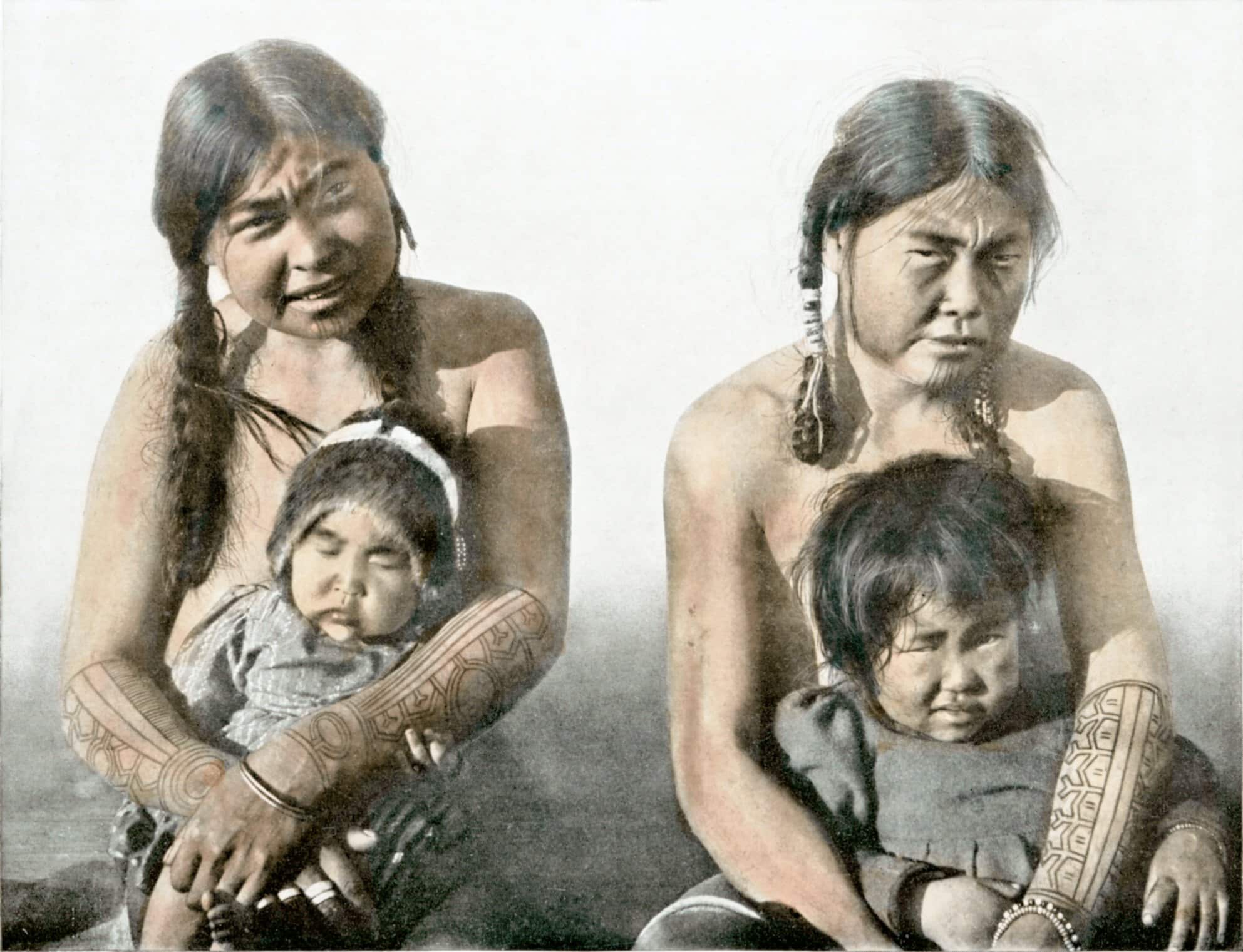
Inuit women with their youngest children from King's Island, Alaska. Their arms display beautiful tattoos.
Similarly, men from the Cree often tattooed their entire bodies, while women wore elaborate designs that extended from the middle of the torso to the pelvis – as a protective shield for a safe pregnancy.
Along the Pacific coast
And along the Pacific coast, the Maidu tribe tattoos for purely fashionable reasons. As Alfred L. Kroeber in the Handbook of the Indians of California (1919):
“The Maidu are on the fringes of the tattooing tribes. In the northern valleys, the women wore three to seven vertical lines on their chins, plus a diagonal line from each corner of their mouth to the outer corner of the other eye. The process involved fine, close cuts with an obsidian shard, similar to the Shasta, rubbed with nutmeg charcoal.”.
For men, there was no universal fashion: the most common mark was a narrow stripe running upwards from the bridge of the nose. As elsewhere in California, lines and dots were not uncommon on the chests, arms, and hands of both men and women; however, unlike among their female counterparts, no standardized pattern seems to have developed
Asia
Tattooing was widespread throughout Asia.
China
However, the Chinese largely regarded tattooing as a barbaric practice, and convicts and slaves were sometimes marked with symbols indicating their status as criminals or property.
Japan
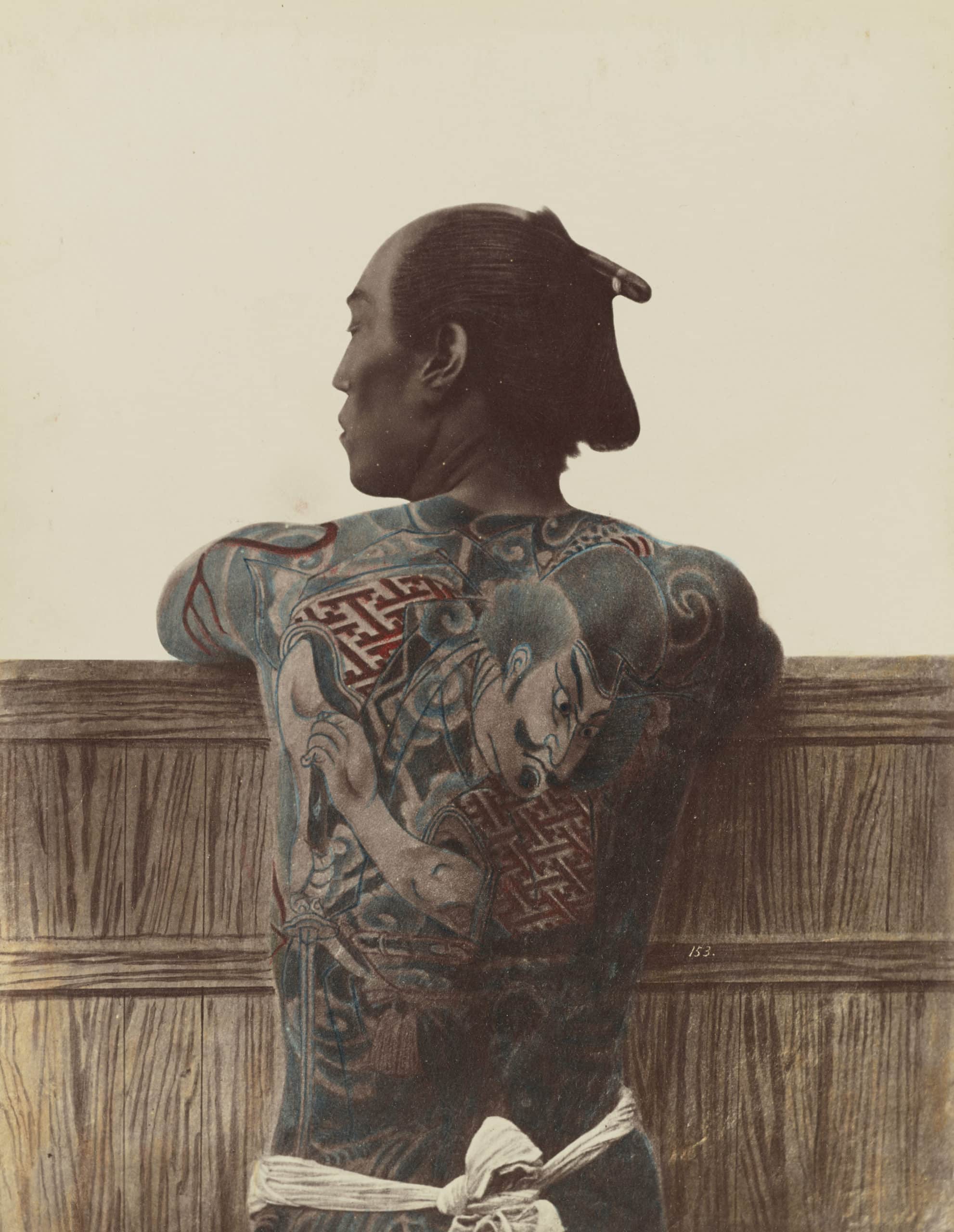
, was popular among the indigenous AinuJapan , whose women tattooed their mouths and forearms with birch bark soot from a young age. Ainu mouth designs often resemble mustaches. This aligns with another Ainu tradition in which all men, after a certain age, stop shaving and grow long, full beards.
The tattooing tradition in Japan was also cultivated by members of the Yakuza , Japan's organized crime syndicate, often with elaborate full-body artworks.
The back of a tattooed Japanese man, circa 1875. Photograph by Kusakabe Kimbei.
The Meiji government of Japan banned tattoos in the 19th century. This ban remained in effect for 70 years before being lifted in 1948. Since June 6, 2012, all new tattoos are prohibited for employees of the city of Osaka. Existing tattoos must be covered with appropriate clothing.
The regulations were added to Osaka's codes of ethics, and employees with tattoos were encouraged to have them removed. This came about because of the strong association of tattoos with the Yakuza, or organized crime, in Japan, after an Osaka official intimidated a schoolchild in February 2012 by displaying his tattoo.
Indonesia
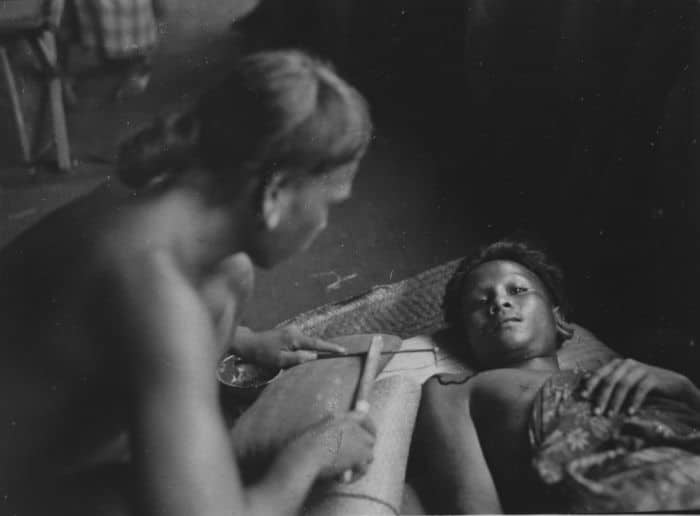
Furthermore, many indigenous tribes throughout Indonesia – such as the Dayak of Kalimantan on Borneo – practiced tattooing. Known as Kalingai or Pantang , these designs were used to protect the wearers from danger.
Dayak tattooed with hammer and needles, Tropenmuseum, part of the National Museum of World Cultures, CC BY-SA 3.0, via Wikimedia Commons
Polynesia / Austronesia
Taiwan
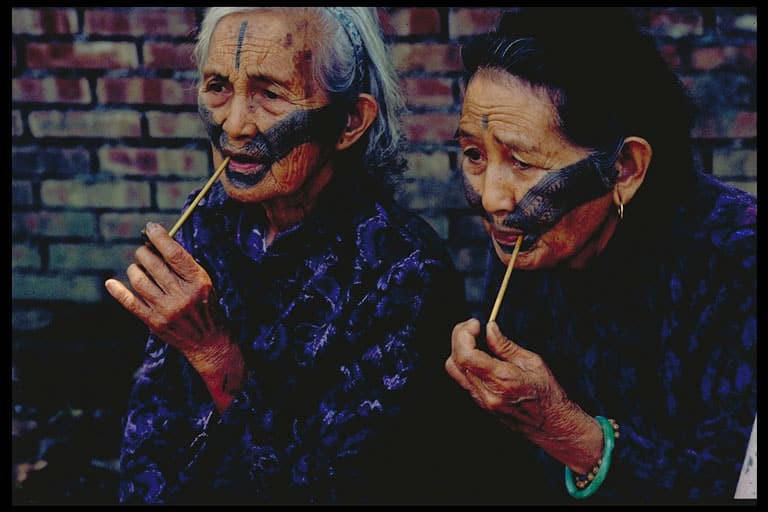
Tattooing customs of Taiwan's indigenous people were banned during Japanese rule. In Taiwan, facial tattoos of the Atayal Ptasan are mentioned as the earliest tattooing practices. They were used to demonstrate that an adult man could protect his homeland and that an adult woman was qualified to weave fabrics and manage the household.
Two elderly Atayal women with facial tattoos as a symbol of maturity, a tradition for both men and women. Tattooing customs of Taiwan's indigenous people were forbidden during Japanese rule. Photo by Hayun Liu, CC BY 2.0, via Wikimedia Commons
Taiwan is believed to be the ancestral home of all Austronesian peoples, including Filipinos, Indonesians, Polynesians, and Malagasy peoples, all with strong tattooing traditions. This, along with the remarkable correlation between Austronesian languages and the use of the so-called hand-tapping method , suggests that Austronesian peoples inherited their tattooing traditions from their ancestors who resided in Taiwan or along the southern coast of mainland China.
Philippines
Tattooing ( batok ) of both sexes was practiced by almost all ethnic groups in the Philippines during pre-colonial times. Ancient clay human figurines found at archaeological sites on the Batanes Islands, dating back approximately 2,500 to 3,000 years, have simplified stamped circular patterns believed to represent tattooing and possibly branding (also commonly practiced).
When Antonio Pigafetta of Magellan's expedition (c. 1521) first encountered the Visayans of the islands, he repeatedly described them as "painted all over ." This was a clear reference to their tattoos.
Tattoos were symbols of tribal identity and kinship, as well as of bravery, beauty, and social or wealthy status. They were also believed to possess magical or apotropaic powers and to document personal or communal history. Their design and placement varied according to ethnic group, affiliation, status, and gender.
They ranged from almost complete body covering to facial tattoos designed to resemble frightening masks on the elite Visayan warriors; or were limited to specific areas of the body, such as Manobo tattoos , which were only applied to the forearms, lower abdomen, back, breasts, and ankles.
They typically repeated geometric patterns (lines, zigzags, repeating shapes); stylized depictions of animals (such as snakes, lizards, dogs, frogs or centipedes), plants (such as grasses, ferns or flowers) or humans; or star-like and sun-like patterns.
Each design had a name and usually a story or meaning behind it, although most of these have been lost over time. They were the same patterns and motifs used in other art forms and decorations of the respective ethnic groups to which they belonged. Tattoos were actually considered a kind of clothing in themselves, and men typically wore only a loincloth (bahag) to display them.
New Zealand / The Maori
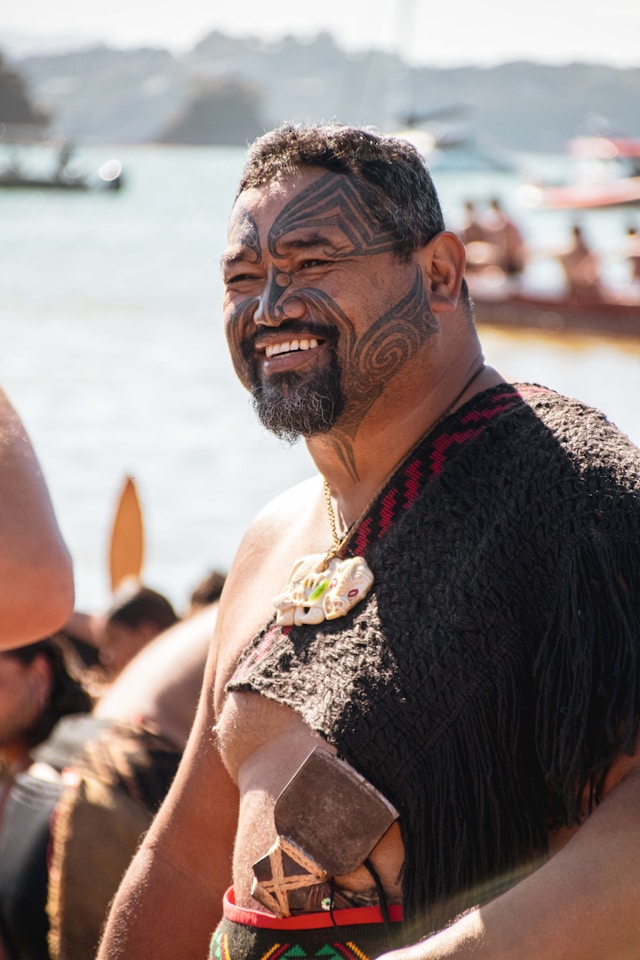
The Maori of New Zealand and other Polynesian cultures are perhaps the best-known examples of early tribal tattooing practices. They have been an integral part of their respective cultures for more than 2000 years.
In New Zealand's Maori culture, the head was considered the most important part of the body, with the face adorned with incredibly elaborate tattoos, or "moko," which were seen as a sign of high status. Each tattoo design was unique to that individual, and because it conveyed specific information about their status, rank, lineage, and abilities, it was described as a kind of identity card or passport, a sort of aesthetic barcode for the face.
After sharp bone chisels were used to cut the designs into the skin, a soot-based pigment was tapped into the open wounds, which then healed to seal the design. Since the tattoos were applied to warriors at different stages of their lives as a kind of rite of passage, the decorations were considered to enhance their facial features and make them more attractive to the opposite sex.
Among the Maori, tattoos are still used for decoration, enhancing their facial features and making them more attractive to the opposite sex. Photo by Wallace Fonseca @waally, via Unsplash
Although Māori women also had facial tattoos, the markings were more concentrated around the nose and lips. Despite Christian missionaries trying to stop the practice, the women claimed that tattoos around the mouth and chin prevented the skin from wrinkling and kept them young; the practice apparently did not resume until the 1970s.
As with other cross-generational cultural tattooing practices, the Polynesian tradition of body painting has changed little over the last two millennia. The traditional tool , known as an /au/ , is made from sharpened boar tusks, which are joined to a piece of tortoise shell and attached to a piece of wood.
After dipping the tusks in ink, the tattooist hammered the tortoise shell to drive the tusks into the human skin. Given that men, especially high-ranking members of society, are tattooed from the torso to the knee in a single session, these sessions often last from sunrise to sunset.
In some cases, it took up to a year for complete healing. During this healing period, the tattooed skin was repeatedly washed in salt water to remove impurities. This process was very painful and carried a high risk of fatal infection.
Samoa
The traditional male tattoo in Samoa is called Pe'a . The traditional female tattoo is Malu . It is believed that the word tattoo comes from the Samoan word tatau , referring to a fruit bat wing bone used as an instrument in the tattooing process.
When the Samoan islands were first sighted by Europeans in 1722, three Dutch ships under the command of Jacob Roggeveen visited the eastern island known as Manua. A crew member of one of the ships described the natives with these words:
"They are friendly in their language and polite in their behavior, without any discernible trace of savagery or savageness. They do not paint themselves, as the natives of other islands do, but on their lower bodies they wear intricately woven silk stockings or breeches and are, all in all, the most charming and polite natives we have seen in the entire South Pacific..."
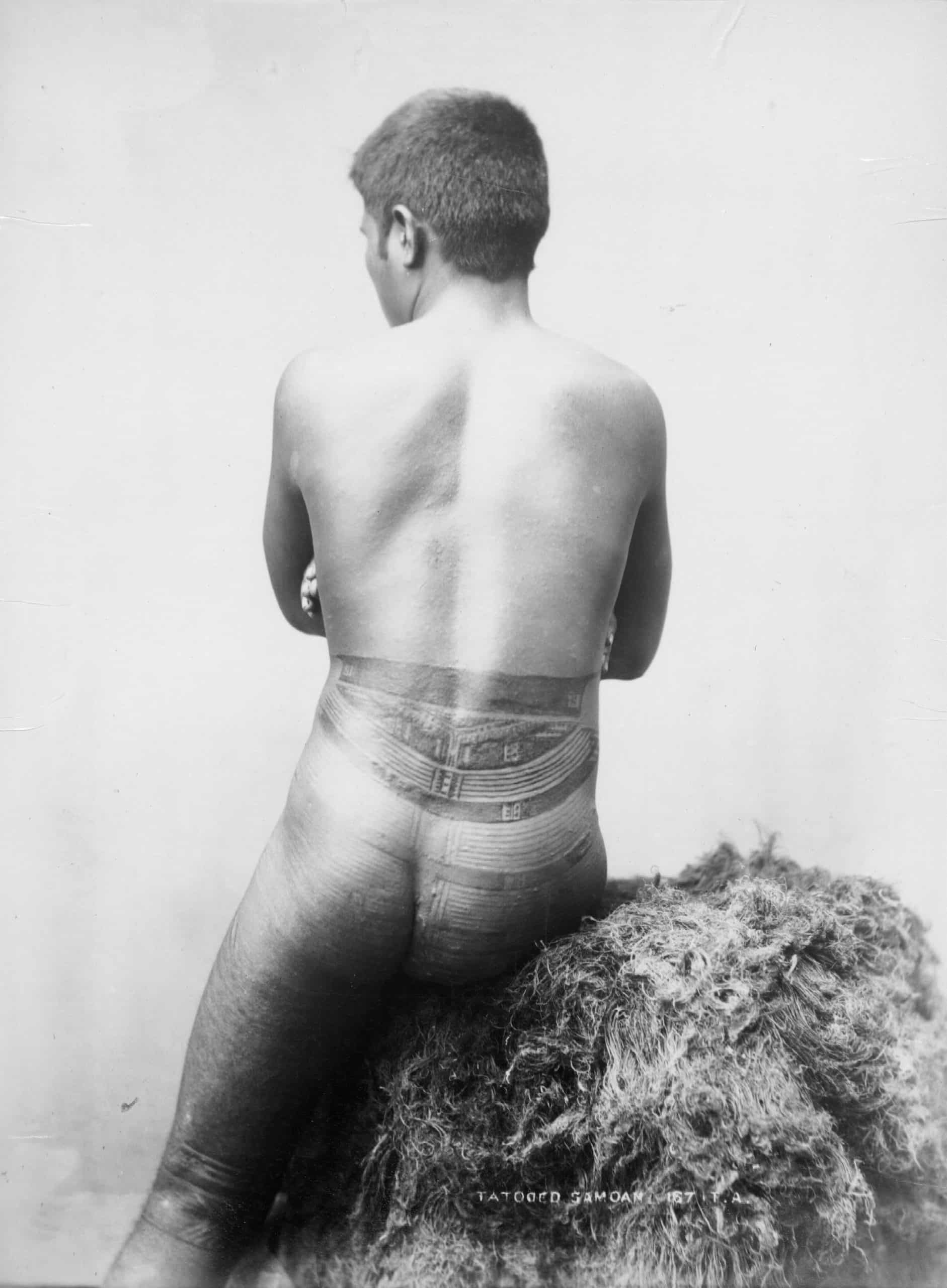
In Samoa, the tradition of applying hand-to-hand tattoos , or tatau, remained unbroken for over two thousand years. Tools and techniques have changed little. The skill is often passed down from father to son. Every tattoo artist, or tufuga, learns the craft over many years as an apprentice to his father.
A young artist in training would often spend hours, and sometimes days, tapping a special tattooing comb or designs in sand or tree bark. Following their tradition, Samoan tattoo artists crafted this tool from sharpened boar tusks attached to a wooden handle with a piece of tortoise shell.
Rear view of a Samoan man with tattoos (circa 1890)
The traditional Samoan tattooing of the “Pe'a” body tattoo is an ordeal not to be taken lightly. It takes many weeks to complete. The process is very painful and was formerly a necessary requirement to obtain a Matai title; however, this is no longer the case. The tattooing was also a very expensive procedure.
Prevalence of tattoos in the Western world
The word tattoo is derived from the Tahitian "tatau" and was translated into English by Captain James Cook after returning from his voyages in the South Pacific in the mid-18th century. In his logbook, Cook explains:
Both sexes decorate their bodies with tattoos , as they call them in their language. This is done by injecting black ink under the skin, making the marks indelible…
Not only did Cook's expedition witness these procedures, but many of his men – including his aristocratic science officer and expedition botanist, Sir Joseph Banks – even returned to England with the distinctive skin markings.
Thus began the popular association of sailors and tattoo artists (think Popeye). This helped spread this body art practice throughout the world. In fact, many European aristocrats sported tattoos well into the 19th century, including English kings Edward VII and George V , King Frederick IX of Denmark , Kaiser Wilhelm II, and even Tsar Nicholas II of Russia.
The practice of tattooing became popular in America toward the end of the 18th century, when American sailors were routinely commissioned aboard British ships. Catherine McNeur of Common Place once explained:
In the late eighteenth and early nineteenth centuries, tattoos served roughly equal parts as a form of self-expression and as a unique method for identifying the body of a British naval sailor. The best source for early American tattoos is the Protective Passports issued under a 1796 Act of Congress to protect American sailors from confiscation. These proto-passports cataloged tattoos alongside birthmarks, scars, race, and height.
Using simple techniques and tools, tattoo artists in the early years typically worked aboard ships, using whatever was available: pigments, even gunpowder and urine. Men marked their arms and hands with initials of themselves and loved ones, important dates, symbols of seafaring life, symbols of liberty, crucifixes, and other symbols
In the 19th century, tattooing was equally popular among commoners and crowned heads. Although it became associated with the lower classes in the 20th century, it returned to the mainstream in the Western world in the 1970s and is now extremely popular among both genders, all economic classes, and people of all ages.
There are tattoo studios that tattoo people professionally and with great skill, and people today wear tattoos that often say a lot about them or serve as a reminder of things they would like to preserve visually.
The rise of tattoo machines / tattoo machines
While people can still get tattooed using the traditional Polynesian needle-pricking method – and still do – a modern method emerged in the 19th century: the needle gun. The tattoo machine was born.
invention
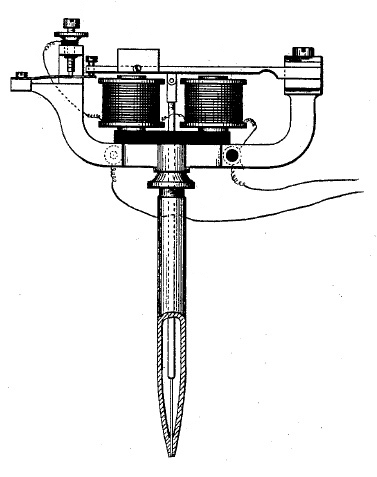
The tattoo machine has a long and complicated history dating back to the 19th century. It all began with Thomas Edison , an American inventor, and his rotary device. He invented it in 1876, and its primary purpose was to create stencils for flyers.
Tattoo artist Samuel O'Reilly modified Edison's design over fifteen years to create an electric tattoo machine, which he patented in 1891. His machine is still one of the most popular designs in use today.
US Patent 196,747, Stencil Pens by T. Edison
Consisting of a sterilized needle driven by an electric motor, the gun's motor injects ink about one millimeter under the skin at a rate of 50 to 3,000 strokes per minute. This early tattoo machine was controlled similarly to a sewing machine, using a machine-style foot pedal.
The Evolution of the Tattoo Machine
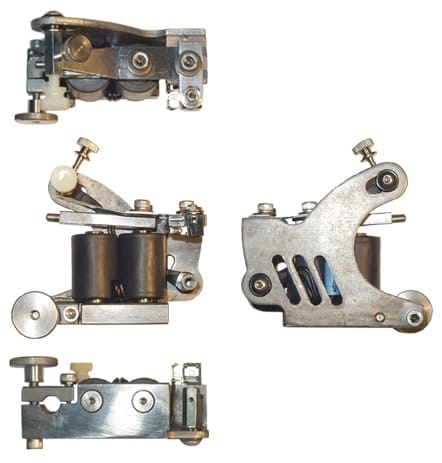
Most tattoo machines in use today have deviated significantly from the original designs. The very first machine was adapted from Edison's rotating stencil pen, which, while revolutionary, was heavy and cumbersome to use. What began as an electric motor with a steel needle attached to a tube transformed into a more efficient model after the addition of two electromagnetic coils, springs, and contact rods.
Tattoo machine with 2 electromagnetic coils. Photographed by William Rafti, William Rafti Institute.
Five years later, this design was improved by Charles Wagner , who created a model with double coils arranged side by side.
The first modern tattoo machine was created in the 1920s when Percy Waters designed and manufactured fourteen frame styles that are still in use today.
A major leap forward came in 1979 when Carol Nightingale introduced an adjustable tattoo machine. Although this machine was never a commercial success, it set standards and demonstrated the possibilities of product design.
Nowadays, most modern tattoo machines (the Dragonfly and Stingray are prime examples) are adjustable in terms of speed, depth, and application force. The Bishop Rotary tattoo machine was developed in 2009, and tattoo artists worldwide appreciated its lightweight design, which allowed them to use it for longer periods without wrist pain.
Tattoo machines then and now
The very first tattoo machines were made of iron, steel, and brass, while later models are often made of aluminum, which is popular for its lightness and durability. The original machines were rotary systems, while the latest designs use electromagnets to operate.
Nowadays, tattoo machines boast innovative and original features, such as the Cheyenne Hawk , which uses a revolutionary cartridge needle system that allows you to change the needle in an instant. Then there's the LACEnano , now the world's lightest tattoo machine, weighing only 45g. This new-age tattoo machine is fully autoclavable (including the motor) and has an ergonomic grip. The machine features fully adjustable percussion and compliance and is suitable for all tattooing styles.
Tattoo art in the 20th century: modern classification, interpretations and associations
Tattoos are still strongly associated with deviation from social norms, personality disorders, and criminality. Although the general acceptance of tattoos is increasing in Western society, they still carry a heavy stigma .
Tattoos are generally considered an important part of Russian mafia culture.
The current cultural understanding of tattoos in Europe and North America has been heavily influenced by long-standing stereotypes based on deviant social groups in the 19th and 20th centuries. Particularly in North America, tattoos are associated stereotypes, folklore , and racism
It was only in the 1960s and 1970s that people began to associate tattoos with social outcasts such as motorcyclists and prisoners .
Today in the United States, many prisoners and criminal gangs use distinctive tattoos to indicate facts about their criminal behavior, their sentences, and their affiliation with an organization. A teardrop tattoo, for example, can symbolize murder, or each teardrop might represent the death of a friend.
members of the US military have an equally well-established and long history of tattooing to signify military units, battles, killings, etc., an association that remains widespread among older Americans.
In Japan, associated with criminal Yakuza groupsFukushi Masaichi , which tries to preserve the skin of dead Japanese people with extensive tattoos.
Tattooing is also common in the British Armed Forces. Depending on the profession, tattoos are accepted in a number of jobs in America. Companies in many sectors are increasingly embracing diversity and inclusion .
Mainstream art galleries host exhibitions of both conventional and custom tattoo designs Museum of CroydonBeyond Skin .
In Britain, there are references throughout the 20th century to women with tattoos covered by their clothing, and records of female tattoo artists such as Jessie Knight from the 1920s.
A study of “at-risk” (defined by school absenteeism and truancy) adolescent girls showed a positive correlation between body modification and negative feelings towards the body and low self-esteem; however, the study also showed that a strong motive for body modification is the search for “self and the attempt to gain mastery and control over the body in an age of increasing alienation” .
The increasing presence of women in the tattoo industry in the 21st century, along with a greater number of women wearing tattoos, seems to be changing the negative perception.
In " Covered in Ink,"Beverly Yuen Thompson interviewed heavily tattooed women in Washington, Miami, Orlando, Houston, Long Beach, and Seattle between 2007 and 2010. Younger generations generally don't mind heavily tattooed women, while older generations, including the participants' parents, tend to look down on them. Some even go so far as to disown their children because they got tattoos.
Typically, the family's reaction is an indicator of their relationship in general. It has been reported that family members who did not accept tattoos wanted to scrub them off, sprinkle them with holy water, or have them surgically removed. Families who emotionally accepted their family members were able to maintain close bonds after the tattooing.
The modern tattoo renaissance
These days, it's not just sailors and brawlers who get inked. Everyone from soccer moms to CEOs, grandfathers to Miss America contestants, athletes of every stripe have tattoos. In fact, tattooing has experienced a worldwide renaissance since the 1950s, particularly in Western cultures.
Led by pioneering tattoo artists such as Lyle Tuttle (who created the famous heart tattoo on Janis Joplin's left breast), Cliff Raven , Don Nolan , Zeke Owens , Spider Webb and Don Ed Hardy .
The revival of tattooing was driven in part by continuous refinements in machine technology, rapidly changing social customs, and the desire of a new generation of people to reconnect with their cultural heritage through the practice.
The hype surrounding tattoo culture reached its peak in the early morning hours when TV shows like Inked , Miami Ink and LA Ink brought tattoo art into the realm of pop culture.
Today, tattoos are considered high art, with numerous contemporary art exhibitions and fine art institutions showcasing tattoos as gallery art. And all sorts of technological advancements are just around the corner.
TV documentary: 7 days among tattoo artists
Sailors, convicts, gang members: they're considered the stereotypical tattooed people. "That's ancient history!" says Richi , owner of the Bloody Ink in Hamburg, himself tattooed from head to toe. "But prejudices against tattooed people still exist. These days, you're actually more special if you don't have a tattoo."
Because one in five people under 35 is now tattooed. Johanna Leuschen (not tattooed) and Martin Rieck (tattooed) spend seven days at the Bloody Ink studio and want to find out: What is it that fascinates so many people about tattoos? Why do they voluntarily subject themselves to hours of pain, usually multiple times?
And what stories lie behind their tattoos? Dennis, for example, is having the motif "fire and flame" tattooed on his calves. He almost died in a fire when he was eleven: "With the tattoo, I want to remind myself how quickly everything can be over." On the lounger next to him, Janina is having her boyfriend's kiss mark tattooed on her bottom; it doesn't have any deep meaning: "I just think it's funny."
The film presents a chamber drama between profound and banal stories, between faces contorted in pain and beaming with joy, and allows the viewer to empathize with the life motto of chief tattoo artist Richi:
Owner and Managing Director of Kunstplaza . Publicist, editor, and passionate blogger in the fields of art, design, and creativity since 2011. Graduated with a degree in web design from university (2008). Further developed creative techniques through courses in freehand drawing, expressive painting, and theatre/acting. Profound knowledge of the art market gained through years of journalistic research and numerous collaborations with key players and institutions in the arts and culture sector.
We use technologies such as cookies to store and/or access device information. We do this to improve your browsing experience and to display (non-)personalized advertising. If you consent to these technologies, we can process data such as browsing behavior or unique IDs on this website. Refusal or withdrawal of consent may adversely affect certain features and functions.
Functional
Always Active
Technical storage or access is strictly necessary for the legitimate purpose of enabling the use of a specific service expressly requested by the subscriber or user, or for the sole purpose of carrying out the transmission of a message over an electronic communications network.
Preferences
The technical storage or access is necessary for the legitimate purpose of storing preferences that were not requested by the subscriber or user.
statistics
Technical storage or access that is solely for statistical purposes.Technical storage or access that is used solely for anonymous statistical purposes. Without a subpoena, the voluntary consent of your internet service provider, or additional recording by third parties, the information stored or retrieved for this purpose cannot generally be used to identify you.
marketing
Technical storage or access is required to create user profiles, to send advertising, or to track the user on one or more websites for similar marketing purposes.









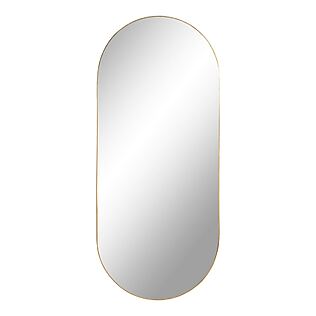
 Slim oval mirror "Jersey", brass look, steel (35 x 80 cm)
59,00 €
Slim oval mirror "Jersey", brass look, steel (35 x 80 cm)
59,00 €