The Covid crisis, the after-effects of which are still being felt, has made it clear how important strong and sustainable federal funding for culture is.
The "Neustart Kultur" (Restart Culture) offered an opportunity to rethink existing funding programs and adapt them to the needs of artists, arts centers, and socio-cultural projects. It is crucial that the federal government continues to take the right measures and provide sufficient financial support in this context.
Impact of the Corona crisis on the arts, culture and media sector
The COVID-19 pandemic, which lasted from 2020 to 2023, had a devastating impact on the arts, culture, and media sectors. Measures to contain the virus led to the widespread closure of public and private cultural institutions and event venues.
This severely restricted normal cultural life with its thousands of daily offerings across the country. These closures had far-reaching consequences for artists, but also for the affected cultural venues, institutions, and associations.
Many of them found themselves in dire straits and faced the worry that they would not survive this difficult time economically. For many people, this represented a profound disruption to their professional lives and an enormous psychological burden.
Not only was their livelihood at stake, but their passion and commitment to art and culture were also severely impacted. The loss of performance or exhibition opportunities meant not only a financial setback, but often also a profound personal loss.
Furthermore, the restrictions in the cultural sector also had a major impact on the public. People could no longer attend live concerts, theatre performances were cancelled, and museum visits were made impossible.
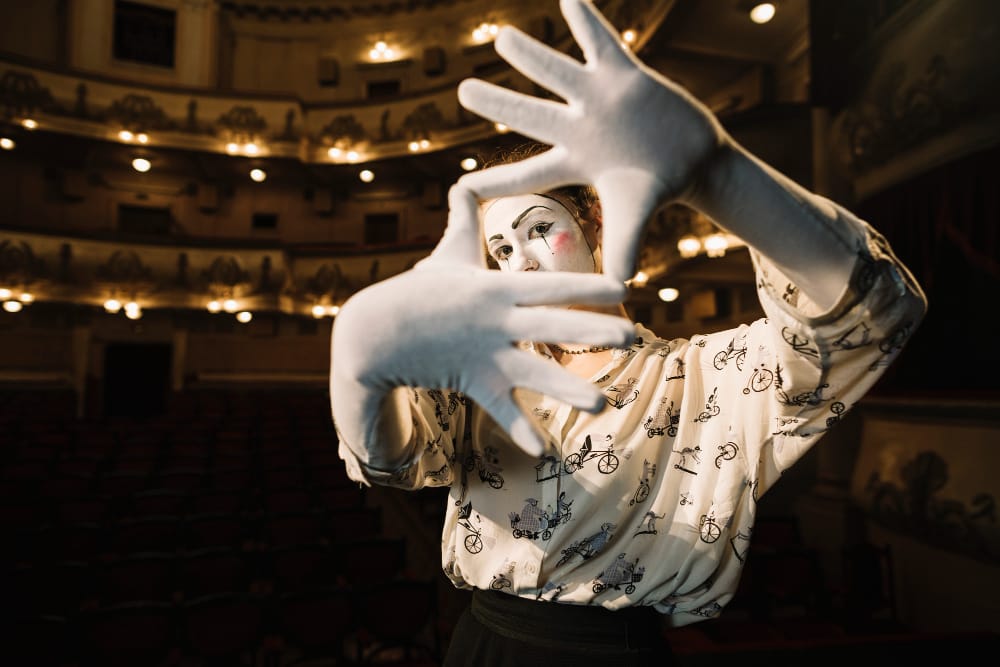
The coronavirus pandemic had a severe impact on the cultural sector. CULTURE RESTART: What lessons can we draw from the crisis for federal cultural funding? Image source: Freepik
The need for cultural participation could therefore not be met in many places.
Long road back to "normality"
The consequences of this crisis will be felt for a long time to come. Many artists have had to find alternative ways to continue presenting their art. Virtual exhibitions, online concerts, and streaming services have been increasingly used to reach audiences despite the closures.
Nevertheless, concerns remain that the arts, culture, and media sector will be weakened in the long term. Confidence in the stability of this sector has been shaken, and considerable effort will be needed to return to normality.
The importance and significance of the cultural sector for our society
It is important to recognize the enormous contribution that the arts, culture, and media sector makes to our society. It enriches our lives in countless ways and plays a crucial role in cultural exchange and identity formation. Therefore, we should be aware of how essential these sectors are and support them – both financially and through our participation in cultural events.
The coronavirus pandemic has shown how vulnerable the arts, culture, and media sector is. It is now up to all of us to work together to ensure that it emerges stronger from this crisis – so that normal cultural life, in all its facets, can soon resume.
Aid and support programs during the crisis
The usual economic development programs be used in the cultural sector, but they often proved unsuitable.
Public cultural institutions and companies in the cultural sector also had the option of applying for short-time work compensation. Access to basic income support was also made easier.
However, special support programs from the federal government, the states, and in some cases, municipalities were crucial for the survival and progress of the cultural sector. In addition to financial assistance, these programs also sent an important signal:
Art and culture are indispensable for our society
This had both economic significance for the sector and broader recognition of its role. The NEUSTART KULTUR, initiated by the Federal Government Commissioner for Culture and the Media, played a particularly important role in this.
With a volume of 2 billion euros over three years and decentralized allocation, this program was intended to help cushion the impact of the pandemic on non-profit organizations and private companies in the arts and culture sector and to strengthen their future.
NEUSTART KULTUR focused on three main areas:
Financing measures related to the pandemic
Strengthening and expanding the cultural infrastructure
Development of alternative cultural offerings, including digital formats.
Furthermore, financial losses and additional financial needs on the part of state-funded institutions and projects as a result of the pandemic were partially offset.
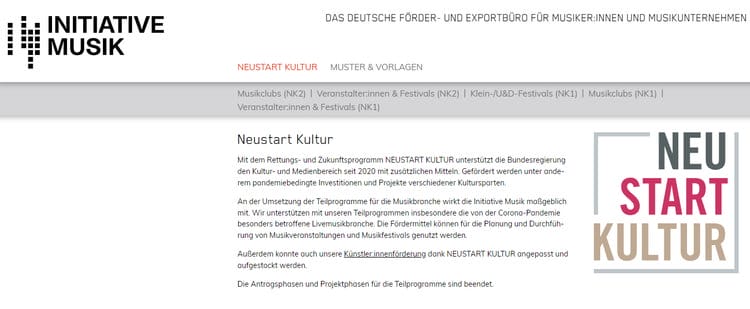
The Initiative Musik played a crucial role in implementing sub-programs for the music industry. These sub-programs focused primarily on the live music sector, which was particularly hard hit by the Corona pandemic.
Initiative Musik: A platform and funding organization for music. Nationwide
The funding could be used for the organization and execution of music events and festivals.
As part of the Neustart Kultur program, the German Federal Government has provided a total of 7 million euros for the pop scholarship to offset the negative effects of the Corona pandemic.
Between 2022 and 2023, the BV Pop awarded a total of 1124 scholarships to artists in the field of pop music. Particular emphasis was placed on young musicians and supporting them in developing their professional skills through advice and coaching.
The role of federal cultural funding in times of restart
In times of restart, the role of federal cultural funding is of crucial importance for the revival of the cultural scene.
The "Restart Culture" initiative offers an opportunity to learn lessons from the crisis and to facilitate improved funding from the federal government. It is essential to provide support to artists and cultural institutions so they can implement their projects and programs.
Federal cultural funding plays a crucial role here, providing financial resources and thus enabling the realization of arts and cultural projects. This is particularly important for smaller projects or those in their development phase.
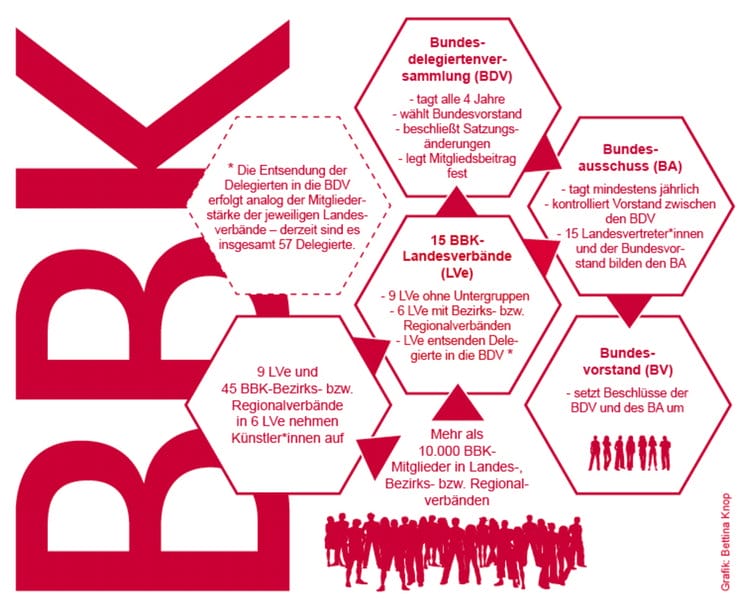
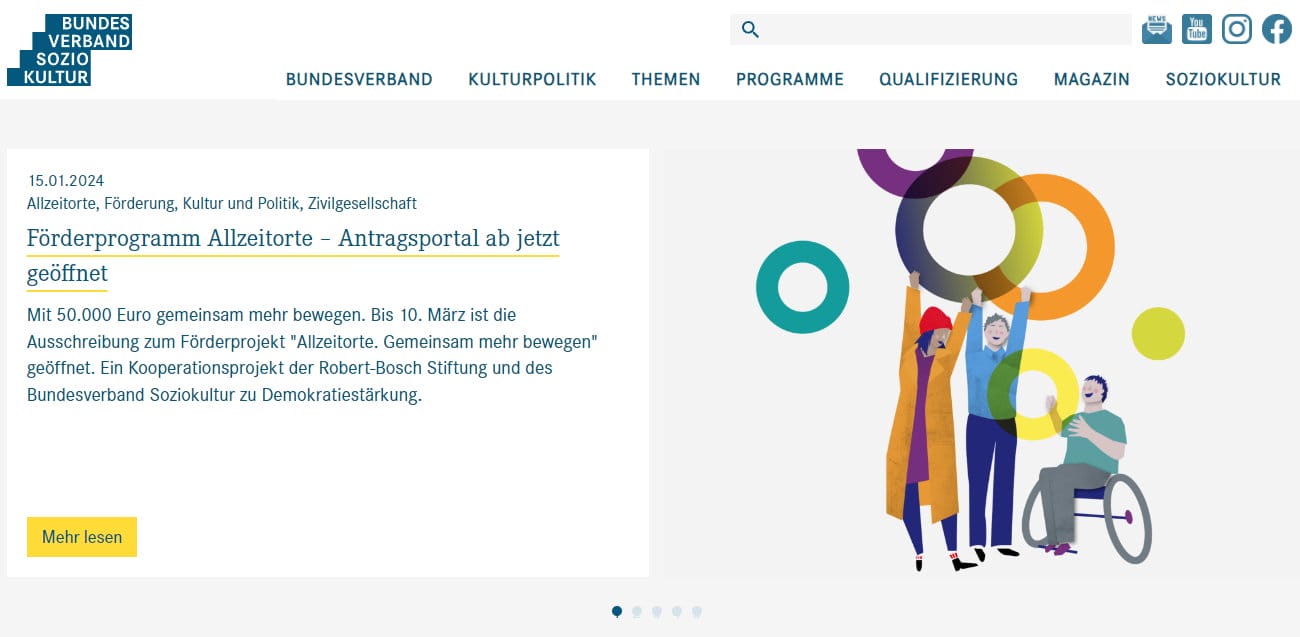
The Federal Association for Socioculture (Bundesverband Soziokultur eV) is the umbrella and professional association of sociocultural actors in Germany.
His work provides information about current funding programs and establishes contacts between artists and potential funders.
Another aspect is the digital transformation in the arts and culture sector. The use of digital media can facilitate access to artworks and thus reach new target groups. Social media channels such as Facebook, Instagram, TikTok , and others offer opportunities for networking and for disseminating information about cultural events.
To ensure the best possible restart of the cultural sector, it is crucial to consider the needs and perspectives of artists. Close collaboration between federal cultural funding bodies and artists is therefore essential. Only through open dialogue and continuous evaluation can optimal funding structures be established.
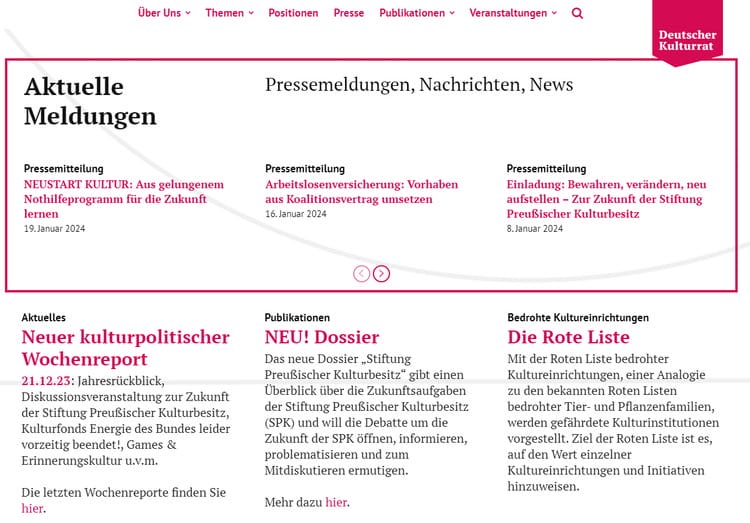
Has the NEUSTART KULTUR funding program been effective? A statement from the German Cultural Council
Under the leadership of the German Cultural Council, regular meetings have been held since 2020, bringing together federal cultural associations, funds, foundations, and other institutions. These organizations have allocated funds from the federal program NEUSTART KULTUR (2020 to 2023).
The German Cultural Council (Deutscher Kulturrat e.V.) is the umbrella organization of federal cultural associations. It is the point of contact for federal, state, and European Union policymakers and administrators on all cultural policy matters that affect the individual sections of the German Cultural Council.
The aim of the meetings was to exchange experiences and discuss ways to improve the implementation of the programs. They also aimed to create synergies in the allocation of funding. However, the German Cultural Council itself did not distribute any funding.
After the funding period ended in summer 2023, it became clear: The NEUSTART KULTUR program had positive effects and went beyond simply stabilizing the existing situation.
It has helped to further develop the cultural sector in light of social and economic changes in our lives in recent years and to highlight additional needs.
The success factors of NEUSTART KULTUR
According to the Cultural Council, the following specific success factors identified:
Close integration in the cultural sector
The 78 individual programs, which were carried out over a period of three years, were developed in close collaboration with the cultural sector.
The wide range of federal cultural associations, the federal cultural funds, the Federal Cultural Foundation and the Cultural Foundation of the Länder, as well as other cultural funding organizations and collecting societies were involved in the financing and are engaged in the decision-making processes together with the cultural actors.
Opening up spaces of possibility
Due to the pandemic, events could not take place, so the individual programs were developed to create opportunities.
These opportunities are intended in particular to stabilize, realign and expand artistic and entrepreneurial activities, as well as to realign non-publicly funded cultural institutions.
Rapid organizational development
Institutions with sufficient resources have further developed their organization within a very short time, optimized processes, driven digitalization forward and increased their staff.
This development was a significant challenge, which was mastered under high pressure from the cultural scene, politics, administration, the public and the media.
Challenges in implementing improved cultural funding
Improved cultural funding still presents numerous challenges in the context of restarting culture after the crisis.
Federal cultural funding plays a crucial role in supporting developments in the cultural scene and revitalizing cultural life.
Therefore, the German Cultural Council sees a need for further action regarding federal cultural funding and demands that the following aspects be taken into account in future funding approaches:
Continue to rely on the independent allocation of funding
Eliminating the investment backlog
Driving digitalization forward
Balanced ratio of project and structural funding
Maintain administrative simplifications
Continue the exchange of funds among institutions under the umbrella of the German Cultural Council
Just days before issuing its statement on NEUSTART KULTUR (Restart Culture), the German Cultural Council also calledfor improvements and future development of unemployment insurance for the self-employed. Self-employment is typical in many areas of the cultural and media sectors. However, these self-employed individuals are excluded from the outset due to the eligibility requirements, as they were neither previously employed nor unemployed.
Owner and Managing Director of Kunstplaza . Publicist, editor, and passionate blogger in the fields of art, design, and creativity since 2011. Graduated with a degree in web design from university (2008). Further developed creative techniques through courses in freehand drawing, expressive painting, and theatre/acting. Profound knowledge of the art market gained through years of journalistic research and numerous collaborations with key players and institutions in the arts and culture sector.
We use technologies such as cookies to store and/or access device information. We do this to improve your browsing experience and to display (non-)personalized advertising. If you consent to these technologies, we can process data such as browsing behavior or unique IDs on this website. Refusal or withdrawal of consent may adversely affect certain features and functions.
Functional
Always Active
Technical storage or access is strictly necessary for the legitimate purpose of enabling the use of a specific service expressly requested by the subscriber or user, or for the sole purpose of carrying out the transmission of a message over an electronic communications network.
Preferences
The technical storage or access is necessary for the legitimate purpose of storing preferences that were not requested by the subscriber or user.
statistics
Technical storage or access that is solely for statistical purposes.Technical storage or access that is used solely for anonymous statistical purposes. Without a subpoena, the voluntary consent of your internet service provider, or additional recording by third parties, the information stored or retrieved for this purpose cannot generally be used to identify you.
marketing
Technical storage or access is required to create user profiles, to send advertising, or to track the user on one or more websites for similar marketing purposes.


 "Flower of Life" stud earrings, 925 sterling silver
32,90 €
"Flower of Life" stud earrings, 925 sterling silver
32,90 €