Getting started with digital art
Digital art , also digital art , has become an increasingly popular medium for artists and art lovers in recent years. Unlike traditional art, creating digital artworks requires nothing more than a computer, a graphics tablet , and suitable software.
This allows many art enthusiasts to unleash their creativity and create their own artwork without having to purchase expensive equipment and materials. But what exactly is digital art, and what types are there?
Digital art refers to artworks created using digital technologies and tools. This can include, for example, a digital drawing, a painting, a 3D model, or a photograph.
Compared to traditional art, digital art offers greater flexibility and freedom, as digital technology makes it possible to realize artistic visions in ways that are not possible with other means.
Show
table of contents
What is digital art?
Digital art is an art form that has gained importance in recent years. Unlike traditional art, which uses physical media such as canvas, paints, and brushes, digital art is created on electronic devices such as tablets or computers.
This art form allows artists to present their work in a variety of media such as websites, social networks, or digital exhibitions.
Digital art can be divided into many different categories, including 2D and 3D graphic design , photo manipulation , digital painting , animation , and more. Each has its own specifications and requirements. Digital art allows artists to create and experiment in innovative ways.
This video is embedded using YouTube's enhanced Privacy mode, which blocks YouTube cookies until you actively click to play the video. By clicking the play button, you consent to YouTube placing cookies on your device, which may also be used to analyze user behavior for market research and marketing purposes. For more information about YouTube's use of cookies, please see Google's Cookie Policy at https://policies.google.com/technologies/types?hl=de.
You can work with various tools and techniques to realize your artistic vision. Furthermore, digital art offers greater flexibility in editing and modifying artwork, as it can often be created in layers.
The popularity of digital art has also enabled artists to tap into new markets and expand their audiences. In today's digital world, where social media plays a major role, artists have the opportunity to present their art to a global audience.
Tools and technologies
To create digital art, a wide variety of tools and technologies are available to the artist. Generally, a computer, a graphics tablet , and specialized software are needed to create digital art.
There are many different programs to choose from, including Photoshop , Illustrator, Procreate , and CorelDRAW . Each of these programs has its own strengths and weaknesses, depending on the type of digital art you want to create.
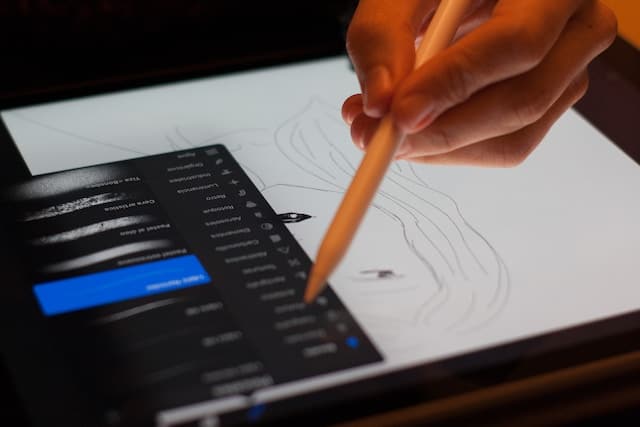
Photo by Rober González @robergd, via Unsplash
Choosing the right tools can be quite a challenge for beginners . However, there are many resources and recommendations online that can help you select the optimal program for your needs.
Another important tool is a good PDF editor. Adobe has the best PDF editor for beginners , distinguished by its ease of use and intuitive user interface.
Another essential aspect of creating digital art is understanding technologies such as color theory , composition , and perspective . This knowledge can help you better understand how to make your art effective and appealing.
Creation of digital art
Creating digital art can be a captivating and creative experience, allowing any artist to expand imagination and technique process typically begins with an idea or inspiration, which is then transformed into a digital artwork. There are several steps you need to follow. First, you need to think about the concept, themes, colors , and layout .
You can then proceed with the actual creation process by making a sketch on paper or digitally and then converting it into a digital format. Here, you should make sure to select the right tool to achieve the best results.
Several things need to be considered when creating digital art. To ensure the artwork can be printed or used digitally in the desired quality and size, the correct resolution and dimensions are crucial. Color choice and the execution of details are also important factors for successful digital art.
Another advantage of digital art is the ability to correct mistakes or edit elements without having to start from scratch. A further advantage of digital art is the immense flexibility it offers. Digital artworks can be created in various formats and sizes, depending on their intended use.
Overall, digital art offers artists a unique opportunity to express their creativity and to use and sell their work in a variety of ways. With the right technology and tools, any artist can engage with digital art and take their skills to the next level.
Marketing of digital art
Marketing digital art is a crucial step in making it accessible to a wider audience and potentially monetizing it. There are many ways to market digital art, and different strategies can be effective depending on the purpose and target audience.
One way to sell digital artwork is through online platforms like Etsy or Society6 . Here, artists can sell their work directly to potential buyers. There are also specialized platforms like Sedition or SuperRare that focus on selling digital artwork.
These platforms can be helpful in reaching collectors and art lovers who are looking for something unique. Social media platforms like Instagram and Pinterest are also particularly well-suited for marketing artworks, as they are visually oriented.
However, marketing digital art can also be challenging, given the vast amount of artwork available. Therefore, building a personal brand and developing a unique style can be helpful in differentiating oneself from other artists.
Getting rich with digital art?
Back in 2021, arte TRACKS focused on a phenomenon that was already causing a stir in the digital art market. The hype surrounding NFTs and blockchains was unprecedented and was examined in more detail “Tracks”
The question arose whether this trend represented a long-term opportunity for artists and musicians or was merely a short-lived bubble.
(1) NFTs – Future or hype in the art market?
The hype surrounding crypto art reached new dimensions on online auction platforms. Even renowned auction houses like Christie's auctioned the first purely virtual artwork early on. This form of art has since allowed graphic designers, software artists, and 3D artists to sell their works, previously hosted for free on social networks, directly to collectors.
But the question remains whether this finally represents well-deserved recognition for digital artists or is merely a short-lived trend inflated by Bitcoin billionaires.
(2): Thomas Harrington Rawles short film “Care More”
Multimedia artist and musician Thomas Harrington Rawle creates dystopian worlds. In his first animated short film, “Care More” (2021), viewers are transported to a post-apocalyptic scene, listen to the thoughts and dialogues of the inhabitants, and discover that in this world, the free development of individuals has been suppressed by an unknown machine.
(3): Song rights as a speculative object
Hipgnosis fund has brought the song rights of famous stars to Wall Street. Music manager Merck Mercuriadis and disco legend and hit producer Nile Rogers hope to revolutionize the music publishing industry. Why do companies buy song rights? What are the consequences when music becomes a speculative commodity?
(4): Bedroom Session: Magic Island Live
Musician Emma Czerny , aka “Magic Island,” performed live on “Tracks.” Her “honest pop” sound evokes the feeling of a big stage. Doubt, anger, and pain are conveyed through her anthemic songs and captivating choreography during live performances. She also discusses surviving as a one-woman indie band in the music industry and releasing a new album during the pandemic.
This video is embedded using YouTube's enhanced Privacy mode, which blocks YouTube cookies until you actively click to play the video. By clicking the play button, you consent to YouTube placing cookies on your device, which may also be used to analyze user behavior for market research and marketing purposes. For more information about YouTube's use of cookies, please see Google's Cookie Policy at https://policies.google.com/technologies/types?hl=de.
The future of digital art
Digital art has gained increasing importance in recent years and will continue to play a significant role in the future. With the advent of NFTs (non-fungible tokens), digital art is also becoming increasingly popular as an investment opportunity. NFTs allow artists to uniquely identify and sell their digital works, just like physical artworks.
The future of digital art therefore lies not only in the creation of new artworks, but also in the creation of a marketplace for artists where they can make a living from their work. New technologies and platforms will enable artists and art lovers to better enjoy and experience the world of digital art.
We are only at the beginning of this development and yet we are excited to see what events and innovations await us in the future.
Owner and Managing Director of Kunstplaza . Publicist, editor, and passionate blogger in the fields of art, design, and creativity since 2011. Graduated with a degree in web design from university (2008). Further developed creative techniques through courses in freehand drawing, expressive painting, and theatre/acting. Profound knowledge of the art market gained through years of journalistic research and numerous collaborations with key players and institutions in the arts and culture sector.
You might also be interested in:
 Graphics Tablets 2026: The 8 Best Models for Digital Artwork (Tested by Professionals)
 Digital Art Trends: A Focus on an Emerging Discipline
 Compelling Advantages of a Drawing Tablet with Pen for Digital Artists & Illustrators
 Making Money with DeviantArt: Tips for Successfully Selling Your Art Image
 Editing Basics: Techniques for Graphic Designers
Featured Art
Design and Decor Highlights
-
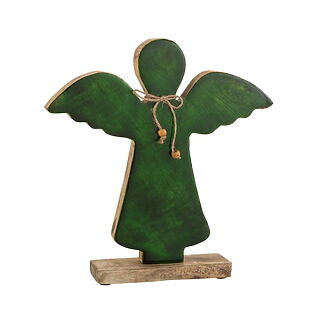
 J-Line abstract decorative angel on wooden base, painted green (H.28 cm)
24,95 €
J-Line abstract decorative angel on wooden base, painted green (H.28 cm)
24,95 €
VAT included.
Delivery time: 1-3 working days
-
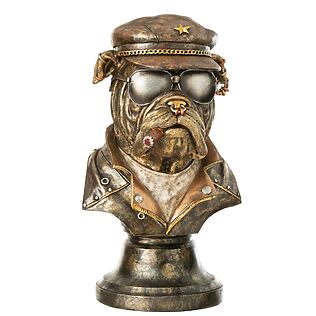
J-Line Bulldog with cigar, animal bust in antique bronze look
77,90 €
VAT included.
Delivery time: 2-4 working days
-
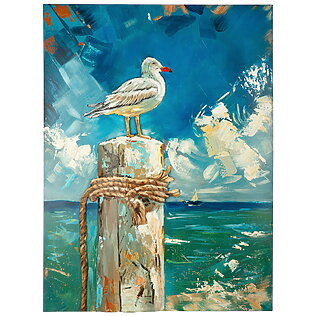
Maritime canvas painting "Coast Bird", hand-painted on metal
245,00 €
VAT included.
Delivery time: 3-6 working days
-
J-Line Large Cushion with Knitted Surface, Cotton (White-Pink)
42,90 €
VAT included.
Delivery time: 2-4 working days
-
Maritime metal wall relief mirror "Boat Tour", gold-colored accents
89,00 €
VAT included.
Delivery time: 3-5 working days
-
Sculptural ceramic flower pot "Groove", gray (ø 14.5 cm)
25,00 €
VAT included.
Delivery time: 4-8 working days
-
J-Line “Fauve” - Copper-colored ceramic flower pot with speckled design (Ø 12 cm)
15,00 €
VAT included.
Delivery time: 4-8 working days