How does one become a literary translator (through studies) and what are the career prospects?
Show table of contents
Literary translator: job description, studies and career prospects
The majority of books newly published in this country are translations from a foreign language. Literary translators are responsible for reworking these works. The following article explains what literary translation is, how to become a literary translator, and what the career prospects are
No life in the limelight
Unlike the authors of famous printed works, people who translate literary works remain in the background. Furthermore, even the Association of German-Language Translators of Literary and Scientific Works in Berlin emphasizes that no wealth is amassed in this profession.
Anyone aspiring to become a literary translator should therefore possess a great deal of idealism. Specialized translators, who focus on specific fields, earn significantly more.
Writers mostly work freelance
Literary translation is usually a freelance profession. If you pursue this career , it means that you:
- have no predictable income
- have no legal entitlement to paid leave
- Do not receive continued salary payment or sick pay in case of illness
- have to take care of their own training and further education
Furthermore, it should be noted that the term "literary translator" is not a protected term. In principle, anyone can call themselves one.
The main task of literary scholars is to translate texts from the source language into a new language. In doing so, they deal with the entire spectrum of writing systems. This includes the following areas:
- Non-fiction books
- Poetry
- Fiction
- Movies and comics
- Scientific texts
- specialist texts

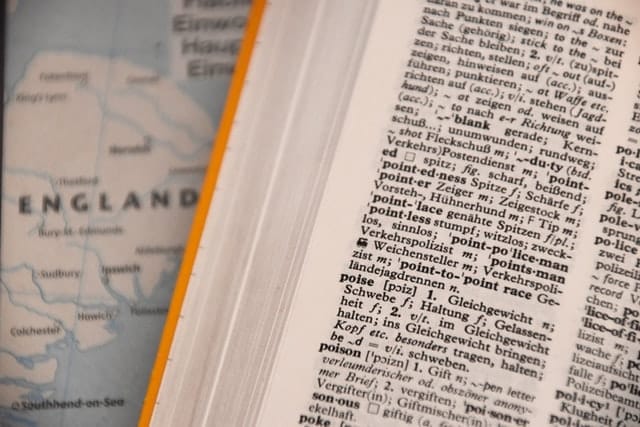
Photo by Annie Spratt @anniespratt, via Unsplash
Literary translation, however, is much more than simply rewriting texts into the target language. Those who pursue this profession are sometimes involved in the creation and marketing of books. Furthermore, they are sometimes responsible for organizing readings and writing marketing materials.
This makes it clear that you should possess certain character traits and preferences to be successful as a translator of literary texts. These include, in particular:
- Creativity
- A love of languages
- Self-employment
- patience
A portrait of translator Eveline Passet
In 2014, translator Eveline Passet received the €10,000 Translator's Prize of the Cultural Circle of German Business. Born in 1958, Eveline Passet studied Slavic and Romance languages in Paris and now works as a literary translator and radio writer in Berlin. She translates from French and Russian and has translated works by Benjamin Constant, Alfred de Musset, Vasily Rozanov, Alexander Kuprin, Daniel Pennac, and Vasily Golovanov into German, among others.
Eveline Passet consistently combines her work as a translator with projects aimed at raising public awareness of translation and linguistic phenomena in general. She is one of the co-authors of "Spurwechsel. Ein Film vom Übersetzen" (2003) and, together with Gabriele Leupold, editor of "Im Bergwerk der Sprache. Eine Geschichte des Deutschen in Episoden" (Wallstein Verlag, Göttingen, 2012). Eveline Passet has also led workshops and training courses for translators for many years.
How to become a literary translator
There are many ways to become a literary professional. One reason for this is the lack of legally mandated training for translators. It is an unregulated profession, which is why many people work in this field from other backgrounds.
Some universities degree programs in literary translation . For example, the universities in Düsseldorf, Munich, and Bochum do. Another way to pursue this career is through training at an institute for interpreting and translation. This usually lasts three years and concludes with an examination. A degree in a foreign language or postgraduate studies in literary translation are also helpful. If you wish to translate literary texts for the business sector, you can also take an examination administered by the Chamber of Industry and Commerce.
Since the vast majority of recent graduates self-employed , you must actively seek employment. Permanent positions in companies or government institutions are extremely rare.
With increasing professional experience, it makes sense to specialize. The technical, scientific, and medical fields, in particular, are lucrative. The more complex the subject matter of the text to be translated, the higher the remuneration. When translating a medical report into German, for example, you need to know and accurately reproduce the precise German terminology of the technical terms.
English is especially important
A comprehensive knowledge of the English language is absolutely essential for success in literary translation. As early as 2010, Norbert Zänker , Vice President of the German Federal Association of Interpreters and Translators, stated the following:
"Specialist translators of so-called orchid languages have a hard time because the order situation fluctuates or is consistently low."
This stems from the fact that most texts are published in English. Those who don't speak the language receive few commissions. Furthermore, it's common practice in the industry to work in a relay system. The source texts are usually first processed by an English translation agency and only then translated into the target language.
What is the salary?
This question cannot be answered in general terms. Rather, it depends on the scope and quality of the work. However, it is certain that literary figures do not become excessively wealthy. High-quality translations of literary texts require a significant investment of time and are usually only inadequately compensated.
An overview of earning potential as a translator can be found at Studycheck – Become a translator.
What are the career prospects?
Due to the lack of permanent positions, entering the profession is challenging. Freelance work is the norm. Accordingly, you must actively seek out commissions and clients. However, successful literary translators never run out of work.
Despite advancing digitalization, new texts are constantly being published. This will not change in the future. Even intelligent algorithms will not be able to compete with human cognitive abilities in the foreseeable future.
The German Federal Association of Interpreters and Translators (BDÜ) provides extensive further information on this profession , possible fields of activity and typical working methods
Owner and Managing Director of Kunstplaza . Publicist, editor, and passionate blogger in the fields of art, design, and creativity since 2011. Graduated with a degree in web design from university (2008). Further developed creative techniques through courses in freehand drawing, expressive painting, and theatre/acting. Profound knowledge of the art market gained through years of journalistic research and numerous collaborations with key players and institutions in the arts and culture sector.
Design and Decor Highlights
-
 "Bergen" dining chair with PU leather seat, molded plastic, rubberwood (white) – set of 2
160,00 €
"Bergen" dining chair with PU leather seat, molded plastic, rubberwood (white) – set of 2
160,00 €
VAT included.
Delivery time: 4-8 working days
-
Timeless wall mirror "Madrid", oval shape with brass-colored aluminum frame (50 x 80 cm)
89,00 €
VAT included.
Delivery time: 3-4 working days
-
Side plaid in classic black and beige pattern, recycled cotton blend fabric (130x180 cm)
19,50 €
VAT included.
Delivery time: 3-5 working days
-
"Hyacinth Pouffe" seat cushion made from environmentally friendly water hyacinth (natural)
259,00 €
VAT included.
Delivery time: 2-4 working days
-
Natural wall decoration "Dada" made of woven seagrass (black)
245,00 €
VAT included.
Delivery time: 2-4 working days
-
J-Line Luxury Champagne Coupé in Brass (Gold Plated)
225,00 €
VAT included.
Delivery time: 1-3 working days
-
J-Line Christmas decoration "Forest", bronze-colored
79,00 €
VAT included.
Delivery time: 3-5 working days