• Art magazine
    • Art Magazine > Homepage
    • Architecture
    • Sculpture
    • Design
    • Digital Art
    • Fashion design
    • Photography
    • Freelancing
    • Garden design
    • Graphic design
    • Handmade
    • Interior Design
    • AI Art
    • Creativity
    • Art marketing
    • Art Periods And Movements
    • Art history
    • Art Trade
    • Artists
    • Knowing the art market
    • Art scene
    • Artworks
    • Painting
    • Music
    • News
    • Product Design
    • Street Art / Urban Art
    • Tips for Artists
    • Trends
    • Living from art
  • Online Gallery
    • Online Gallery > Home
    • Categories
      • Abstract Art Pictures
      • Acrylic painting
      • Oil painting
      • Sculptures & Statues
        • Garden Sculptures
      • Street-Art, Graffiti & Urban Art, Urban Art
      • Nude Art / Erotic Art
    • Post new artwork
    • Browse art
    • Search for artwork
  • Design & Decor Shop
    • Shop> Home
    • Wall Decors
    • Canvas art
    • Metal art
    • Sculptures
    • Furniture
    • Lighting
    • Textile Wall Pictures
    • Mirrors
    • Home textiles
    • Home accessories
    • Watches
    • Jewelry
    • Outlet / Sale
  • My Account
    • Customer area
    • For artists
      • Login
      • Register
Product added to your cart.

3D Visualization & Interior Rendering-Revolution of the interior design through 3D technology

Joachim Rodriguez y Romero
Sun, January 5, 2025, 6:38 p.m. CET

Read new posts immediately? Follow the Kunstplaza Magazine on Google News.

The world of interior design has changed drastically in recent years. Driven by technological advances, particularly in 3D visualization , architects and interior designers now have tools at their disposal that their predecessors could only dream of.

Daniel Schuster , the founder of a leading CGI studio we will examine in detail how 3D technology is revolutionizing the field of interior design , and look at some exciting facts, areas of application and potential uses in this still young discipline.

Show table of contents
1 The transition from 2D to 3D: A paradigm shift
1.1 Interior visualization as an essential tool for efficient project planning
2 Interior rendering, modeling, CGI, VR & AR? WTF?
2.1 Interior Rendering / Modeling – What is it?
2.2 3D technology in interior design
2.3 CGI (Computer-Generated Imagery) as a new piece of the puzzle in visual brand communication
3 Fun Facts: Historical beginnings and modern applications
3.1 Leonardo da Vinci as a pioneer
3.2 Birth in the film industry
4 The use of 3D visualization in customer acquisition
4.1 3D visualizations as a key tool for customer acquisition
4.2 Historical References and Perspectives
4.3 Motivation for further discussion
5 What new services are available to customers through 3D visualization?
5.1 Interior Rendering Services
5.2 Photorealistic 3D visualizations in product development
5.3 3D visualization for product marketing
6 8 questions for Daniel Schuster from Danthree Studio
6.1 Why 3D visualization?
6.2 How did you personally come to found a CGI studio?
6.3 What are some possible applications of this technology? Which customer groups will benefit most from its advantages?
6.4 What costs can customers expect for 3D planning and visualization?
6.5 What are the benefits for the customers?
6.6 What role does visual storytelling play in the marketing success of a home and living brand?
6.7 In your opinion, what characterizes a successful product presentation in the Home & Living sector?
6.8 What technological innovations and advancements can be expected in this field in the coming years? Where is interior design and furnishing headed?
6.9 The future of 3D technology in interior design
6.10 You might also be interested in: :

The transition from 2D to 3D: A paradigm shift

Not so long ago, interior designers relied primarily on 2D plans and physical models to communicate their designs. While these methods were functional, they offered limited insight into the final spatial effect. With the introduction and development of 3D visualization, this has changed.

Thanks to 3D technology, interior designers can now create photorealistic and rotatable renderings of their designs. These virtual models allow clients to immersively "enter" and move around spaces even before a single nail has been hammered.

This makes communication between designers and clients more efficient and effective, as misunderstandings can be minimized and expectations can be better managed.

Interior visualization as an essential tool for efficient project planning

Interior visualization has become an essential tool for precise project planning, especially with regard to cost efficiency and time savings. When designing an interior, it is crucial to carefully consider the idea and concept from various perspectives before the actual implementation begins.

Interior visualization with rendering technology
Interior visualization using rendering technology.
Copyright: Danthree Studio

Especially during this phase, saving time and money are valuable advantages for designers and architects. This not only allows for precise planning, but also more efficient use of resources and a minimization of potential sources of error, ultimately leading to a successful and satisfactory result.

Interior rendering, modeling, CGI, VR & AR? WTF?

Terms often used in this context include interior rendering , interior modeling , and CGI visualization . If you're not yet an expert in this field, the sheer number of new terms, Anglicisms, and abbreviations can be overwhelming.

Let's explain things step by step…

Interior Rendering / Modeling – What is it?

This gives interior designers the opportunity to test all their creative ideas using interior design software and present them to their clients.

By using different light sources, pieces of furniture and design elements such as wallpaper, wall colors and fixed furnishings, they create an inviting atmosphere and can present a property more effectively along with their interior design concepts.

Interior rendering services for interior spaces are not only a useful tool for vividly representing real estate, but are also widely used in various professional fields to achieve optimal results.

For interior designers, the use of Photoshop renderings is becoming increasingly important, as it offers the opportunity to visually present various concepts and ideas, thus giving designers room for creative expression. The use of 3D models proves particularly advantageous here, as it allows designers to save time and work more efficiently.

The 3D model eliminates the need to leave the workstation, allowing clients to view current results and proposals in real time. Furthermore, the 3D model a realistic representation of the interior , enabling designers to work precisely and without loss of information.

Rendering can also be extremely useful for designers in marketing and social media, enabling them to use outstanding designs and ideas for advertising purposes or to present them to loyal customers on social networks.

Interior designers use the software to work precisely and create a solid foundation to present to business partners or clients. In some cases, it can be challenging for architects to present their calculations and concepts clearly, even to non-experts. 3D visualization makes a valuable contribution here, while simultaneously reducing the time required.

Real estate agents , property developers and property owners also benefit from this.

3D technology in interior design

  1. Virtual Reality (VR) and Augmented Reality (AR): VR and AR allow customers to experience their future spaces in an immersive environment. Using VR glasses, they can walk through the rooms, adopt different perspectives, and even move furniture. This technology has the potential to significantly influence decision-making, as customers gain a realistic sense of scale and proportion.
  1. Parametric design: Thanks to 3D software, designers can create parametric models that can be adapted based on specific parameters. These models make it possible to quickly generate and test different design variations, which is particularly helpful for large projects or complex structures.
  1. Time savings and cost efficiency: One of the most significant advantages of 3D technology is its ability to save time and money. Precise visualizations allow errors to be identified and corrected early on, before they become costly. Furthermore, customer change requests can be visualized immediately and with minimal effort.

CGI (Computer-Generated Imagery) as a new piece of the puzzle in visual brand communication

CGI stands for "Computer-Generated Imagery" and encompasses all digital, computer-generated image effects. The term originally comes from the film and games industries, where animation plays a major role.

Technological advancements have also revolutionized the art of animation over the past decade. While cel animation required artists to painstakingly draw each individual frame, CGI enables the creation of complex images and scenes through the use of advanced software. 

CGI is used in a wide variety of media, from film and television to video games and virtual reality. Known for its ability to create photorealistic images, CGI has played a crucial role in creating stunning and immersive visual experiences.

CGI has now established itself as a modern solution for the furniture and architecture industries . While local specialist retailers still play a role in the age of online shopping and digital information gathering, digital channels offer 24/7 and immediate access.

Digital rendering using the example of a living space
Digital rendering of a living space as an example.
Copyright: Danthree Studio

Personal interactions with salespeople are being replaced by websites, social media platforms, and voice assistants. Visual brand communication has evolved from product catalogs to virtual interior design worlds on social media, allowing companies to connect directly with their customers.

In this field, Daniel Schuster – a master carpenter from a traditional family carpentry business with over 100 years of history – recognized the signs of the times early on. Consequently, as an early mover, he created Danthree Studio CGI studios for furniture, home & living brands in the German-speaking market.

Fun Facts: Historical beginnings and modern applications

Leonardo da Vinci as a pioneer

While Leonardo da Vinci did not work directly with 3D technology, he was a pioneer in creating detailed sketches and models that can be seen as precursors to modern 3D models.

His meticulous attention to detail shows how important it was even back then to present ideas as realistically as possible.

Birth in the film industry

The film industry adopted many of the technologies used in interior design today at an early stage. Films like “Avatar” used advanced 3D technologies to create immersive worlds.

These techniques were later adopted and adapted by interior designers.

The use of 3D visualization in customer acquisition

The main driver of business growth, and simultaneously one of the most difficult tasks, is acquiring new customers. This is an ongoing process that never ends. For this reason, marketing strategies , as well as cross-platform communication and interaction with customers, are a necessary investment of money, time, and effort.

One of the most effective ways to promote your services in interior design, interior decorating, or home & living is through 3D visualization. This method offers a compelling presentation of your services, which can serve as one of the strongest arguments for acquiring new clients.

3D visualizations as a key tool for customer acquisition

3D renderings are an excellent way to showcase the variety of design proposals you can implement by publishing them on your website, social media, and other platforms. These visualizations allow potential clients to get a clear picture of your skills and design ideas.

Product visualization using the example of a Home & Living rendering
Product visualization using a Home & Living rendering as an example.
Copyright: Danthree Studio

The quality of your visualizations and interior design concepts attracts the attention of potential clients to you as a renowned professional. Through clear presentations and detailed renderings, you can emphasize the uniqueness and innovative power of your designs.

Historical References and Perspectives

The use of 3D visualizations has historical roots and can be traced back to the traditions of perspective representation in architecture. As early as the Renaissance, techniques such as central perspective were used to present architectural designs clearly and convincingly. Today, digitization enables an even more precise and realistic way of representing them.

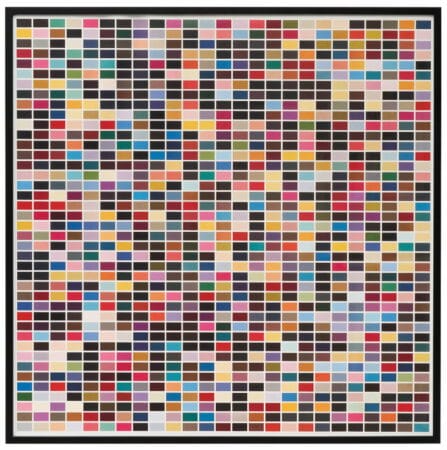
Inspiration from art historical sources such as Pointillism or Pop Art can be incorporated into your design visualizations, resulting in interesting visual concepts. Such references lend your work cultural depth and can be particularly appealing to potential clients.

Motivation for further discussion

It is recommended to regularly update your website and social media with new 3D visualizations. Furthermore, you can build a connection with your potential customers by sharing personal anecdotes and success stories from your professional life. Incorporating such stories makes your information more vivid and relatable.

Motivate your customers to engage further with your portfolio and provide information about current and upcoming exhibitions or projects. Such continuous interactions foster the interest and trust of your target group, which in turn forms the basis for successful business development.

With the right combination of technology and creative inspiration, you can make your 3D visualizations the central instrument of your marketing strategy to attract new customers and expand your business. 

The integration of 3D visualizations will undoubtedly lead to a decisive competitive advantage in the aforementioned industries.”

We stand by this statement.

What new services are available to customers through 3D visualization?

Interior Rendering Services

Interior rendering services , as well as 3D visualizations for interior design , architecture, and brands in furniture, home & living, mostly refer to the creation of detailed and realistic 3D representations of interiors (including furniture).

These services can be used for various purposes, whether it be to present design ideas to clients or to advertise real estate, furniture manufacturing and interior design companies.

In the field of interior modeling, various scenarios are available that are precisely tailored to the needs of the clients. These include, among others:

  • Still images : High-resolution 3D models presented in static image formats. These are often used to visualize specific design elements or spatial concepts.
  • Animations : Moving visuals that guide the viewer through the space are another popular option. They offer a dynamic perspective and allow viewers to gain a more comprehensive understanding of the space.
  • Virtual tours : These visualizations allow viewers to move interactively through the virtual environment, which is particularly useful for real estate presentations.

In many cases, these renderings create a significantly more lifelike and appealing representation of the interiors than photographs of the actual space. They can therefore be particularly attractive to potential buyers, homeowners, and renters.

Interior rendering services are specifically tailored to the needs of designers, real estate agents, furniture brands, or property owners to offer the best possible benefit for their specific requirements. Historical references and contextual information can be added to reinforce the significance of the designed space and thus enable a deeper appreciation.

The 4 phases for creating interior renderings

  1. Creation of the 3D model: First, a 3D model is created based on mathematical calculations to represent the basic structure of an interior space. Sketches or photographs serve as the starting point, which are processed by the software. This data is then converted into geometric shapes to create a precise and true-to-scale model of the space.
  2. Lighting design: In the next step, the lighting is designed. Light sources are implemented to simulate different levels of illumination and achieve optimal lighting conditions for the interior. Both natural and artificial lighting are taken into account to create a realistic lighting situation.
  3. Integration of objects and furniture: After adjusting the lighting conditions, objects, furniture, and design concepts can be integrated into the room. This serves to make the room more inviting and to explore various design possibilities. Different styles and concepts can be implemented to give the room an individual and appealing design.
  4. Fine-tuning of the lighting and rendering: In the final step, the lighting is optimized again and adjusted to the newly added furnishings. The computer then generates an image of the interior that resembles a photograph, but is photorealistic without having been actually photographed. This final rendering gives the viewer a realistic impression of the planned interior design. This structured approach ensures that the final result is not only visually appealing but also presents realistic and well-thought-out design solutions.

Photorealistic 3D visualizations in product development

Photorealistic 3D product visualizations have established themselves as an indispensable tool in modern product development. These digital representations enable companies to visualize and analyze new products in detail even before their physical production. This technique offers a number of advantages that can optimize and accelerate the entire development process.

Photorealistic 3D product visualization using the example of a designer chair
Photorealistic 3D product visualization using a designer chair as an example.
Copyright: Danthree Studio

Precise presentation and better communication

By using photorealistic 3D visualizations, teams can clearly and accurately depict the features and design of a product. These visualizations offer a detailed and highly realistic view, making it easier for everyone involved to get a precise picture of the final product.

This not only promotes understanding, but also facilitates internal communication and coordination within the team.

Early detection of problems

Another significant advantage of this technique is the ability to identify and resolve potential problems early on. The detailed visualization allows developers to identify weaknesses or potential sources of error before actual production begins.

This saves time and money, as changes and improvements can be made digitally instead of having to make costly adjustments after production.

More efficient development processes

The use of photorealistic 3D visualizations also helps to accelerate the development process. Since digital designs can be quickly adapted and updated, this allows for more flexible and efficient project management.

Teams can test and optimize prototypes virtually, reducing the need for physical prototypes and thus significantly simplifying and accelerating the entire process.

A typical process for a 3D visualization for a client

The process for creating a realistic 3D visualization varies depending on the project.

Although the process for creating a realistic 3D visualization varies depending on the project, one can orient oneself towards a typical project workflow
Although the process for creating a realistic 3D visualization varies depending on the project, a typical project workflow can serve as a guide.
Copyright: Danthree Studio

Generally, however, the following phases are used as a guide:

  1. Concept development : Consultation with clients to determine their vision for the presentation and its intended use. Development of a rough draft for the virtual reality visualization.
  2. Modeling : Next, a 3D mesh model is created. This is usually based on a 2D sketch or a CAD file. 3
  3. Texturing : In this step, graphic designers add textures to ensure the model doesn't just look like a simple building block. Tools like shaders are used for this.
  4. Lighting : A product can make a completely different impression depending on whether it is illuminated with warm or cool light. 5
  5. Rendering : In the rendering phase, the 3D scene is rendered. 3D animations are generated from the 3D models.
  6. Post-processing : Finally, the last adjustments are made to make the rendered images or 3D animations even more realistic.

3D visualization for product marketing

3D visualization is not only an essential tool for developing new products, but also invaluable for marketing existing ones. Realistic 3D renderings allow products to be presented in detail, significantly increasing their market appeal.

This visual representation allows potential customers to view the product in a realistic environment and to recognize its features and advantages at first glance.

The experts at Danthree Studio specialize in creating high-quality 3D visualizations, renderings, and CGI projects precisely tailored to your product features. With years of experience and state-of-the-art technology, they transform their clients' visions into stunning visual representations that are not only aesthetically pleasing but also effective in driving sales.

One project that particularly caught our eye as an art platform delivers surreal 3D living environments using CGI technology.

In a fully digitized world where the boundaries between reality and virtuality are increasingly blurred, the creative team at Danthree Studio has managed to create an extraordinary connection between art and commerce.

In an internal 3D project at the CGI studio, the team designed a surreal CGI brand space in which clouds and furniture engage in an unexpected, yet harmonious, interaction.

The implementation wonderfully combines the visual power of 3D computer graphics with the emotionality of spatial design to create a unique brand experience.

Verdict: artistically valuable!

8 questions for Daniel Schuster from Danthree Studio

We spoke with CEO Daniel Schuster to answer the most pressing questions about this exciting new marketing discipline.

Why 3D visualization?

Daniel Schuster: “3D visualization has become a very important tool/marketing tool in the interior and product design industry. 3D images or videos make it possible to present ideas and concepts photorealistically at an early stage, thus providing an accurate idea of ​​what the final product will look like even before production begins.”.

This 3D technology offers the advantage of iteratively revising designs and quickly and cost-effectively testing different variations, which can significantly accelerate and optimize the design process and product marketing if done and used correctly. I always say, anyone can do 3D visualization. But only a few can create high-quality 3D content for brand communication

How did you personally come to found a CGI studio?

DS: “Danthree Studio was born out of a deep passion for craftsmanship and modern technology. As a master carpenter and interior designer, I come from a traditional family carpentry business that has been around for over 100 years. I wanted to combine this vision and deep connection to craftsmanship with Danthree Studio and enhance it with high-quality 3D content. That's how Danthree Studio was founded – a place where traditional craftsmanship meets innovative 3D technology.”.

My goal from the beginning was to combine the art of carpentry and interior design with the possibilities of digital visualization. In our 3D studio, we create photorealistic 3D renderings and animations that are more than just representations. They convey our clients' brand message and speak to the target audience on an emotional level.

Today, our team consists of experienced master carpenters, creative interior designers, creative directors, and 3D/CGI artists. Together, we strive to elevate our clients' visual marketing to a new level by showcasing their products and spaces with impressive detail and aesthetics using 3D.

Danthree Studio is thus the result of a vision that combines traditional craftsmanship with state-of-the-art technology to create exceptional visual experiences that are both aesthetically pleasing and strategically effective for manufacturers in terms of branding.”

What are some possible applications of this technology? Which customer groups will benefit most from its advantages?

DS: “3D visualization is extremely versatile. From interior renderings for furniture manufacturers to product visualizations for the automotive industry, and from consumer goods to architectural visualizations for real estate projects – the applications are virtually limitless. However, we have focused exclusively on premium furniture, home & living brands that offer high-quality and aesthetically sophisticated products.”.

From the outset, it was important for me to focus on a topic we know well in order to achieve the best possible results. For these companies, it is essential to showcase their products in a context that highlights their design quality and functionality.

"With 3D visualizations/animations, we can create spaces that are precisely tailored to the target group and thus positively influence the purchasing decision."

What costs can customers expect for 3D planning and visualization?

DS: “The costs for 3D planning and visualization/animation vary greatly depending on the complexity of the project, the level of detail, and the specific requirements of the client. Generally speaking, 3D visualizations are often more cost-effective compared to traditional product photography, especially when multiple variations or scenarios need to be visualized/depicted.”.

In the long term, they also offer savings, as photorealistic 3D models created once can be reused for various purposes.”

What are the benefits for the customers?

DS: “The advantages for our customers are obvious: They receive a photorealistic and aesthetically pleasing 3D representation of their products, which can be flexibly adapted to various marketing channels. Furthermore, 3D technology enables enormous creative freedom – from the design of individual 3D scenes to the integration of products into virtual environments.”.

The result is visual content that evokes emotions, reinforces the brand message, and positively influences sales figures.”

What role does visual storytelling play in the marketing success of a home and living brand?

DS: “ Visual storytelling is a key to success in the furniture, home & living segment. It's about not just showcasing products, but telling stories for end customers that evoke emotions in the viewer and immerse them in the brand's world. The purchase of a furniture, home, or living product almost always stems from an emotional decision.”

A well-crafted story, supported by high-quality visuals, can strengthen brand loyalty and significantly increase purchase intent. With 3D visualizations, we can create scenarios precisely tailored to the needs and desires of the target audience, thus building a deeper connection to the brand.

This also helps our client to target the target group more effectively and, ideally, to sell more products.”

In your opinion, what characterizes a successful product presentation in the Home & Living sector?

DS: “Successful product presentation in the home and living sector combines aesthetics with functionality. It must highlight the product's uniqueness while simultaneously offering added value to the customer.”.

This is achieved when the 3D visualization not only accurately depicts the product details but also creates the context in which the customer can imagine the product in their own life. Authenticity and a clear brand message are crucial here.”

What technological innovations and advancements can be expected in this field in the coming years? Where is interior design and furnishing headed?

DS: “3D technology is developing rapidly. In the coming years, we will see even more realistic 3D visualizations or 3D moving images, supported by artificial intelligence and augmented reality . These technologies will make it possible to make interactions with virtual products even more intuitive and immersive.”

For product presentation, this means that customers can virtually furnish and experience their spaces before a single piece of furniture is physically present. The boundaries between the digital and real worlds will continue to blur, opening up exciting new possibilities for design and marketing

The future of 3D technology in interior design

DS: Technological advances don't stop. Future developments could include AI-powered design tools that automatically suggest optimal room layouts and furnishings.

Furthermore, the integration of smart home technologies into 3D models could allow designers to plan not only the appearance but also the functionality of a room.”

We sincerely thank you for the detailed answers to our questions and hope that you, as an interested reader, have gained some insights as a result.

Owner and Managing Director of Kunstplaza. Publisher, editor and passionate blogger in the field of art, design and creativity since 2011.
Joachim Rodriguez y Romero

Owner and Managing Director of Kunstplaza. Journalist, editor, and passionate blogger in the field of art, design, and creativity since 2011. Successful completion of a degree in web design as part of a university study (2008). Further development of creativity techniques through courses in free drawing, expressive painting, and theatre/acting. Profound knowledge of the art market through years of journalistic research and numerous collaborations with actors/institutions from art and culture.

www. kunstplaza .de/

You might also be interested in: :

  • Graphic Tablets 2025: The 7 Best Models for Digital Artwork (Tested by Professionals)
    Graphic Tablets 2025: The 7 Best Models for Digital Artwork (Tested by Professionals)
  • Art selection for interior architecture: Instead of a large-format picture, a diptych can also be a great choice above the bed
    Art selection for interior architecture: A guide for interior designers
  • 2025 Black Friday Deals for Creatives and Artists
    2025 Black Friday Deals for Creatives, Artists, Freelancers & Solo Self-Employed Individuals
  • Sideboard made of colorful old wood (Factory Design / Shabby Chic)
    The ultimate interior style guide: Which living concept really suits me?
  • Multifunctional interiors are a big trend in interior design
    The latest trends in the interior design - stylish living rooms 2024/2025

Search

Interior Design

Category for interior design, residential design, object furnishings, product and material innovation.

Here you will find everything that makes an interior designer's heart race. We present to you the latesttrendsand developments in the world of home design, as well as innovative products and materials for unique space design.

Our goal is to provide our readers with inspiration and help them creatively redesign or completely transform their living spaces.

We place great importance on ensuring that our articles are not only esthetically pleasing but also include practical tips.

We also introduce you to successful interior designers – from newcomers to the most well-known names in the industry – so you can be inspired by their projects and get to know their working methods.

Whether it's about making the most of a small space or furnishing your home with new furniture in the trendy industrial style: With us, you will find all the information you need on the topic of interior design!

Similar posts:

  • Graphic Tablets 2025: The 7 Best Models for Digital Artwork (Tested by Professionals)
  • Art selection for interior architecture: A guide for interior designers
  • 2025 Black Friday Deals for Creatives, Artists, Freelancers & Solo Self-Employed Individuals
  • The ultimate interior style guide: Which living concept really suits me?
  • The latest trends in the interior design - stylish living rooms 2024/2025

Popular categories

  • Sculpture
  • Design
  • Digital Art
  • Photography
  • Freelancing
  • Garden design
  • Interior Design
  • Creative gifts
  • Creativity
  • Art Periods And Movements
  • Art history
  • Art Trade
  • Artists
  • Art marketing
  • Knowing the art market
  • Painting
  • Music
  • News
  • Street Art / Urban Art
  • Tips for art dealers
  • Tips for Artists
  • Trends
  • Living from art
All categories

Highlighted artwork

  • "Eternity Crystal" (2022), Acryl and Swarovski® crystals on canvas, by EDYTA Grzyb
    "Eternity Crystal" (2022), Acryl and Swarovski® crystals on canvas, by EDYTA Grzyb
  • Art Nouveau masterpiece "Judith I" (1901) by Gustav Klimt, limited reproduction
    Art Nouveau masterpiece "Judith I" (1901) by Gustav Klimt, limited reproduction
  • Pop Art Bild "Princess Diana" (1982) by Andy Warhol, offset printing on cardboard
    Pop Art Bild "Princess Diana" (1982) by Andy Warhol, offset printing on cardboard
  • Far -intensive oil painting "A Golden Kiss" (2025) by Dini Christoforou
    Far -intensive oil painting "A Golden Kiss" (2025) by Dini Christoforou
  • Acrylic painting "Floating Emotions" (2023) by EDYTA Grzyb, acrylic on canvas, unique
    Acrylic painting "Floating Emotions" (2023) by EDYTA Grzyb, acrylic on canvas, unique

Design and Decor Highlights

  • Terracotta belly vase with rattan details, black (size: M) Terracotta belly vase with rattan details, black (size: M) 54,95 €

    incl. VAT

    Delivery time: 3-5 working days

  • Table lamp "Mara" with a satin black lampshade Table lamp "Mara" with a satin black lampshade 182,00 €

    incl. VAT

    Delivery time: 2-3 working days

  • Red Lips - Mouth with Red Lips as Wall Decor Red Lips - Mouth with Red Lips as Wall Decor 77,95 €

    incl. VAT

    Delivery time: 3-5 working days

  • Angel wing earrings with feathers in a glass sphere - A touch of heaven Angel wing earrings with feathers in a glass sphere - A touch of heaven 9,90 €

    incl. VAT

    Delivery time: 4-8 working days

  • Luxurious table lamp "Flora" with black satin umbrella Luxurious table lamp "Flora" with black satin umbrella 187,00 €

    incl. VAT

    Delivery time: 2-3 working days

  • J-Line Abstract female figure sitting on a square block, matte white J-Line Abstract female figure sitting on a square block, matte white 77,90 €

    incl. VAT

    Delivery time: 3-5 working days

  • J-Line floor lamp "Urban Steel" in industrial chic, metallic grey (matte finish) J-Line floor lamp "Urban Steel" in industrial chic, metallic grey (matte finish) 319,00 € Original price was: €319.00159,00 €The current price is: €159.00.

    incl. VAT

    Delivery time: 4-8 working days

Kunstplaza

  • About us
  • Legal notice
  • Accessibility
  • Press Area / Mediakit
  • Advertising on Kunstplaza
  • FAQ – Frequently Asked Questions
  • Get in touch

Languages

Art Magazine

  • About our magazine
  • Editorial Policy / Editorial Standards
  • Guest contributions / Guest author
  • RSS feeds / Subscribe to news

Online Gallery

  • About our gallery
  • Guidelines & principles
  • Buy Art in 3 Steps

Online Shop

  • About our shop
  • Newsletter & deals
  • Quality Promise
  • Shipping & Payment
  • Return Policy
  • Affiliate Program
Carossastr. 8d, 94036 Passau, Germany
+49(0)851-96684600
info@kunstplaza.de
LinkedIn
X
Instagram
Pinterest
RSS

Proven Expert Label - Joachim Rodriguez

© 2025 Kunstplaza

Imprint Terms & Conditions Privacy

Prices incl. VAT plus shipping costs

Manage Privacy

We use technologies like cookies to store and/or access device information. We do this to improve the browsing experience and to show (non-)personalized ads. If you agree to these technologies, we can process data such as browsing behavior or unique IDs on this website. The refusal or withdrawal of consent may adversely affect certain features and functions.

The technical storage or access is necessary for the legitimate purpose of storing preferences that are not requested by the subscriber or user. Always active
Die technische Speicherung oder der Zugang ist unbedingt erforderlich für den rechtmäßigen Zweck, die Nutzung eines bestimmten Dienstes zu ermöglichen, der vom Teilnehmer oder Nutzer ausdrücklich gewünscht wird, oder für den alleinigen Zweck, die Übertragung einer Nachricht über ein elektronisches Kommunikationsnetz durchzuführen.
Vorlieben
Technical storage or access is required for the lawful purpose of storing preferences that have not been requested by the subscriber or user.
Statistiken
The technical storage or access that is used exclusively for statistical purposes. The technical storage or access that is used exclusively for anonymous statistical purposes. Without a subpoena, voluntary compliance by your internet service provider, or additional records from third parties, information stored or retrieved for this purpose alone cannot usually be used to identify you.
Marketing
Die technische Speicherung oder der Zugriff ist erforderlich, um Nutzerprofile zu erstellen, um Werbung zu versenden oder um den Nutzer auf einer Website oder über mehrere Websites hinweg zu ähnlichen Marketingzwecken zu verfolgen.
  • Optionen verwalten
  • Manage services
  • Deny
  • Read more about these purposes
Manage options
  • {Title}
  • {Title}
  • {Title}