Do you know that feeling? A few weeks ago, I was standing in the lobby of a brand-new, highly praised boutique hotel in Munich. On Instagram, the space looked phenomenal—a dazzling display of neon accents, polished chrome, and asymmetrical furniture that looked like it had been plucked straight from a rendering program. But when I sat down on the cool faux-leather sofa and ran my hand over the pristine, yet sterile, resin table, nothing happened. The room was a visual spectacle, but emotionally, it was a vacuum. It was desperate to impress, but completely forgot to welcome me.
This experience is symptomatic of an era in interior design that is currently undergoing a massive transformation. We have passed the peak of visual overstimulation. Contemporary interior design is turning away from the breathless pursuit of the quick visual "wow" effect for social media. Instead, we yearn for spaces that we can not only look at, but also feel . For environments that breathe, that ground us, and that age with us. The new guiding principle is: back to nature, back to the essence.
In their search for authenticity, architects and interior designers are turning to solutions like those of L'Antic Colonial , where natural materials such as stone, wood or mosaics become part of the architectural language.
This statement is more than just an observation – it is the foundation of a new architectural paradigm. It is no longer about mere decoration. The materials themselves become the architectural alphabet with which spaces are written.
If we browse through industry magazines today or watch TED Talks by leading figures in biophilic design , one term appears again and again: well-being. The concept of luxury has undergone a radical evolution in recent years. While luxury was previously defined by rarity, glamour, and obvious expensiveness (think polished gold leaf or gleaming, poreless marble), the luxury of the 2020s is subtle, tactile, and deeply rooted in our subconscious.
Current design no longer screams at first glance: "Look at me!" Instead, it whispers: "Come to rest."
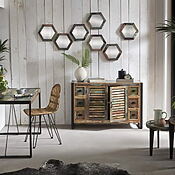
The new sensibility of interior design springs from nature. (c) L'Antic Colonial
The psychological impact of spaces—often referred to as neuroarchitecture —demonstrates that sensory experiences directly influence our stress levels. A study on spatial perception in the context of biophilic design shows that simply touching real, untreated wood can lower heart rate. We humans are evolutionarily programmed to decipher natural textures. When we enter spaces lacking these textures, our nervous system remains in a state of constant, low-level alert. Therefore, the conscious choice of materials is no longer merely a matter of taste, but a decision for the mental and emotional well-being of the occupants.
Identity-forming materials: Nature as co-author
In this new paradigm, materials take center stage. They not only fulfill an aesthetic function as wall coverings or flooring, but also lend spaces their own unique identity. They bring imperfection with them – and therein lies their magic.
Natural stone: The tranquility of eternity
Natural stone instantly grounds a room. Whether porous travertine, rough slate, or a matte-finished limestone – stone tells stories of geological eons. In contrast to the high-gloss polished surfaces of the past, designers today consciously seek out stones with inclusions, tangible fractures, and a natural patina. A solid stone vanity or a rough natural stone wall in the living area acts as a visual and tactile anchor. They remind us that there are things that outlive us.
Wood: vibrant warmth
Wood is perhaps the most emotionally engaging of all building materials. It reacts to the room's climate, it darkens over time, it "lives." Current interior design concepts celebrate the diversity of natural grains. Instead of smothering wood under thick layers of varnish, it is oiled or soaped, allowing the pores to remain open. Cracks and knots are no longer filled, but celebrated as signs of authenticity. A room extensively designed with high-quality, handcrafted oak or walnut wood practically embraces the viewer.
Mosaics and textured surfaces
While large expanses of stone and wood form the base, mosaics and textured surfaces bring rhythm to the room. The interplay of light and shadow on an uneven, natural mosaic wall creates a dynamism that no flat mural could ever achieve. Such surfaces change throughout the day with the shifting sunlight, transforming the room into a living organism.
The balance between craftsmanship, innovation and architecture
One of the most fascinating aspects of this "New Sensibility" is the way in which traditional techniques coexist with modern solutions. We are not witnessing backward-looking nostalgia, but rather a cutting-edge synthesis.
The material is no longer just "wallpaper" that is subsequently glued onto a drywall. It is an integral part of the architectural language. Modern milling techniques now allow natural stone to be processed with such precision that it can be seamlessly integrated into flowing, organic spatial concepts. At the same time, designers are rediscovering ancient craftsmanship – for example, Tadelakt(Moroccan lime plaster) or Japanese woodworking techniques such as Shou Sugi Ban (charred wood), which, thanks to modern sealants, can now also be used in high-traffic commercial spaces or bathrooms.
Today we no longer design sets, we design living spaces. A material doesn't have to be perfect, it has to be authentic. If a customer walks across a wooden floor and can feel the grain through their socks, then we've done our job
– Consensus from current discussions among leading interior architects at Milan Design Week
Case studies: Nature in action
To understand how powerful this approach is, it is worth looking at recent developments in practice, where this trend has long since established itself in the commercial sector, far beyond purely private residences.
Case Study 1: “Slow Hospitality” hotels in the Alps
Three hotel projects completed a few years ago in Italy and Switzerland completely avoided plastics and synthetic carpets during their renovations. Instead, walls made of rammed earth, floors of brushed larch, and massive natural stone blocks as reception desks define the overall look.
The result: The owners noticed that guests spent significantly more time in the public areas, and feedback in online reviews changed drastically from "looks great" to "I've never slept so soundly and felt so safe." The acoustics of the wood and the humidity-regulating effect of stone and clay created an indoor climate that is pure relaxation.
A Munich-based technology start-up faced the problem of high employee turnover and stress levels. When redesigning their 1,500-square-meter office, they radically shifted their focus to nature. Room dividers made of untreated wooden slats, floors with tactile natural stone inlays in the common areas, and organic mosaic elements in the quiet rooms replaced the classic coldness of glass and steel.
The measurable effect: According to internal company surveys, employee satisfaction with the work environment increased by over 40 percent within six months. Natural materials dampened sound, absorbed the hectic atmosphere, and gave the space a human, approachable dimension.
The timelessness of authenticity
The new sensibility in interior design is not a fleeting trend that will be replaced in two years by the next color of the year. Rather, it is a return to reason and to our own human nature.
In a world that is increasingly digital, fast-paced, and flickering, our physical spaces are becoming the ultimate sanctuary. We need walls that ground us, floors that support us, and textures that gently awaken our senses. Natural stone, wood, mosaics, and other fine materials are not simply building materials. They are the tools with which we create spaces with their own identity, soul, and a deep, authentic story.
Anyone who is building or renovating today and wants to create spaces that are truly lived in and felt will find the best inspiration not on the screen – but outdoors in nature.
Owner and Managing Director of Kunstplaza . Publicist, editor, and passionate blogger in the fields of art, design, and creativity since 2011. Graduated with a degree in web design from university (2008). Further developed creative techniques through courses in freehand drawing, expressive painting, and theatre/acting. Profound knowledge of the art market gained through years of journalistic research and numerous collaborations with key players and institutions in the arts and culture sector.
Category for interior architecture, interior design, room design, home design, commercial furnishing, product and material innovation.
Here you'll find everything an interior designer's heart desires. We present the latest trends and developments in the world of home design, as well as innovative products and materials for creating unique spaces.
Our goal is to provide our readers with inspiration and help them creatively redesign or completely transform their living spaces.
We place great importance on ensuring that our articles are not only esthetically pleasing but also include practical tips.
We also introduce you to successful interior designers – from newcomers to the most well-known names in the industry – so you can be inspired by their projects and get to know their working methods.
Whether it's about making the most of a small space or furnishing your home with new furniture in the trendy industrial style: With us, you will find all the information you need on the topic of interior design!





 J-Line 3D wall decoration “Floral Magic” – metal picture in soft pink & white
97,00 €
J-Line 3D wall decoration “Floral Magic” – metal picture in soft pink & white
97,00 €


