• Art magazine
    • Art Magazine > Homepage
    • Architecture
    • Sculpture
    • Design
    • Digital Art
    • Fashion design
    • Photography
    • Freelancing
    • Garden design
    • Graphic design
    • Handmade
    • Interior Design
    • AI Art
    • Creativity
    • Art marketing
    • Art Periods And Movements
    • Art history
    • Art Trade
    • Artists
    • Knowing the art market
    • Art scene
    • Artworks
    • Painting
    • Music
    • News
    • Product Design
    • Street Art / Urban Art
    • Tips for Artists
    • Trends
    • Living from art
  • Online Gallery
    • Online Gallery > Home
    • Categories
      • Abstract Art Pictures
      • Acrylic painting
      • Oil painting
      • Sculptures & Statues
        • Garden Sculptures
      • Street-Art, Graffiti & Urban Art, Urban Art
      • Nude Art / Erotic Art
    • Post new artwork
    • Browse art
    • Search for artwork
  • Design & Decor Shop
    • Shop> Home
    • Wall Decors
    • Canvas art
    • Metal art
    • Sculptures
    • Furniture
    • Lighting
    • Textile Wall Pictures
    • Mirrors
    • Home textiles
    • Home accessories
    • Watches
    • Jewelry
    • Outlet / Sale
  • My Account
    • Customer area
    • For artists
      • Login
      • Register
Product added to your cart.

Roy Lichtenstein – Life with Art

Joachim Rodriguez y Romero
Thu, April 6, 2023, 1:39 p.m. CEST

Read new posts immediately? Follow the Kunstplaza Magazine on Google News.

The article “Roy Lichtenstein’s Road to Fame” described this very path, and also how it all ended, namely in an almost unbelievable increase in the value of his artworks. Lichtenstein had to wait a long time before his artworks even provided him with a living.

Show table of contents
1 Life and art, or life for art? Lichtenstein tried it out
2 Wake up, Lichtenstein! Or: What a new job can do
3 Lichtenstein is “on everyone’s lips” – almost unthinkable without Castelli
4 Energetic production in the Lichtenstein style
5 The time of honors, exhibitions and collections
6 Artwork by Roy Lichtenstein on Pinterest
7 Unpleasant aftertaste
7.1 You might also be interested in: :

Life and art, or life for art? Lichtenstein tried it out

Roy Lichtenstein was almost 40 years old when he experienced his artistic breakthrough, and there were reasons for this: Lichtenstein had never been one of those full-blooded artists whose lives consist of studying art, making art, spending time with artists and the creative industries , and nothing else.

Lichtenstein was an artist and a normal person – he began training for a completely normal (teaching) profession and was drafted into the military; he was unable to use the fact that the military had taken him to Paris as planned for his artistic development (and his acquaintance with Picasso) because he had to return home due to a serious illness of his father.

He completed his teacher training at Ohio State University after the war and, although he had begun a Master of Fine Arts , in 1949 he placed another obstacle in the way of his “free development as an artist” by getting married and having two sons with his wife Isabel Wilson in the following years.

Roy Lichtenstein at the 33rd Venice Biennale (1966); photograph by Erhard Wehrmann
Roy Lichtenstein at the 33rd Venice Biennale (1966); photograph by Erhard Wehrmann.
Source: Kunststiftung Poll [CC BY-SA 3.0 de], via Wikimedia Commons

Lichtenstein was therefore partly responsible for feeding a family, and in the 1950s he worked in all sorts of jobs that served less his artistic development and more to provide a livelihood.

In the first part of his life, he really didn't have endless time to devote to artistic experiments and finding his own style – he participated in real, vibrant life to such an extent that it wasn't easy for even a creative person to develop highly refined artistic ideas on the side.

Wake up, Lichtenstein! Or: What a new job can do

This life in Ohio, with occasional art-related trips to New York, 750 km away, might have continued indefinitely if Lichtenstein hadn't accepted a teaching position at Rutgers University in New Jersey in 1960. For it was there that he found himself in a highly creative environment and met all the artists who are now considered "fathers of Pop Art."

Some of the most important contemporary artists had gathered at the university in Ohio: Jim Dine and Claes Oldenburg, Lucas Samaras and George Segal, George Brecht and Geoffrey Hendricks, Dick Higgins and his wife Allison Knowles, George Maciunas and Robert Whitman, all of them clustered in New Jersey on the campus of Rutgers University around two professors: Allan Kaprow , the “inventor of the Happening” , and Robert Watts , sculptor and expressionist and friend of Fluxus.

Such creativity once again inspired Lichtenstein and encouraged him to pursue even his more outlandish ideas. Up to this point, Lichtenstein's artistic expression had Expressionism , the actual "artistic mainstream" of the time, within which Lichtenstein couldn't quite place himself between the two dominant schools: "Action Painting" or the "introverted Expressionists ," who, with their large-scale applications of paint, "called for meditation."

The works that emerged from these attempts at positioning had certainly not attracted much attention in the New York exhibitions so far, especially as he increasingly doubted his style at the end of the 1950s.

Lichtenstein had already begun experimenting with depictions of various comic strip characters and Disney figures , but he never publicly exhibited these early Disney images. Instead, he painted over them himself, later admitting that he considered them acts of desperation. A pity, really, because these Bugs Bunny, Donald Duck, and Mickey Mouse images would likely have earned him a great deal of money not so many years later.

For when Lichtenstein allowed himself to be inspired by the ideas of the creative people around him, the result of this experimental phase was that he deliberately “forgot” his previously acquired artistic skills completely and created just such a “comic picture” as his first picture without expressionist influence.

Thus, the typical Lichtenstein style was born; “Look Mickey” was followed in the same summer of 1961 by several other pictures in this new style, in which he combined clear images delineated by strong lines with monochrome areas, imitated elements of industrial printing technology (Ben-Day dots) and the speech bubble known from comics.

In the fall of 1961, Professor Kaprow arranged a meeting for him with Ivan Karp, the director of the fashionable Leo Castelli Gallery in New York , to whom Lichtenstein presented some of his paintings in the new style. Karp considered the paintings promising and therefore showed them to his boss, Leo Castelli. Castelli is said to have decided to represent Lichtenstein "Girl with Ball," but Karp did not show him "Look Mickey,"

Lichtenstein is “on everyone’s lips” – almost unthinkable without Castelli

Perhaps it was this omission that enabled Lichtenstein's career in the first place, because Andy Warhol had begun incorporating comic book characters into his art around the same time. He is said to have also shown these comic book images at the Castelli Gallery and been rejected. On the other hand, Castelli's rejection and Lichtenstein's appropriation of comics are said to have led Warhol to turn away from comics and towards consumer goods, and thus he is now number 1 in the "all-time ranking of art," with Roy Lichtenstein only at number 23.

But all that comes much later; in 1961, Lichtenstein first managed to get into one of the most sought-after New York galleries at the time, and from there things went from strength to strength: The first paintings were quickly sold, his first solo exhibition was sold out before it even opened, and Lichtenstein could now live off his paintings.

He subsequently completely reorganized his life: the decades of shared winters in the hinterland, the years of struggle for survival, and his otherwise strained marriage to Isabel Wilson ended in divorce; Lichtenstein moved to the art center of New York, met other leading figures of Pop Art such as Robert Rauschenberg and Jasper Johns , and focused solely on painting. Castelli had good connections in Europe, and through his former wife, Ileana Sonnabend, Lichtenstein also gained recognition there.

Energetic production in the Lichtenstein style

That was it – In the 1960s, Lichtenstein became increasingly famous, and in 1963 he created what is probably his most famous painting, “Whaam!” , which was already hanging in the Tate Modern in London by 1966. In the following years, he created a multitude of artworks, dedicating himself to a wide variety of themes, sculptures, and installations of art objects, and often painted in series.

Perhaps in conscious contrast to Andy Warhol, Lichtenstein never used photographs as templates, but continued to rely on comic strips or commercial printed materials such as the trade directory from which “Girl with Ball” originated, and he always produced visibly in the distinctive Lichtenstein style.

In his early work, he experimented with many themes, sometimes using recognizable models and incorporating very simple objects. Like Warhol, he was influenced at the time by the new wave of commercial advertising for novel consumer goods. This resulted in paintings such as “Sock” , “Roto Broil” , and “Washing Machine” , all from 1961, which were all condemned by art critics but enthusiastically received by Castelli's customers because of their new and subtle portrayal.

Lichtenstein deliberately pursued the connection between art and commerce , a first high point being the 1962 painting “Art,” which depicted nothing more than the word itself on almost two square meters. This was followed by abstractions in a comic-strip style reminiscent of Picasso's paintings, ceramic and metal sculptures, landscape paintings, and series of brushstrokes; the composition of colored areas with bold black outlines and dotted areas remained consistent.

This output marked the beginning of major exhibitions: in 1964, Lichtenstein became the first American to exhibit Tate Gallery Pasadena Art Museum in California hosted the first retrospective of his work and his first solo exhibition in Europe, which toured to Amsterdam, London, Bern, and Hanover. In 1968, Lichtenstein participated in documenta (IV) in Kassel , followed in 1969 by his first retrospective at the Guggenheim Museum in New York.

The time of honors, exhibitions and collections

In 1969, Lichtenstein was also commissioned by Gunter Sachs to paint "Leda and the Swan" for the Pop Art suite of his Palace Hotel in St. Moritz American Academy of Arts and Sciences and bought a carriage house in Southampton on Long Island, where he built a studio and spent a period of relative seclusion.

In the following decade, not much new was added to his style; he discovered optical illusions and produced a wide variety of still lifes, also studied art history again and painted pictures based on the work of famous artists, such as the “Red Horseman” after Carlo Carrà and the “Forest Scene” after Claude Monet.

As early as the 1960s, Lichtenstein had reproduced masterpieces by Cézanne, Picasso and Mondrian; in total, he produced more than 100 interpretations of well-known paintings by famous colleagues. The exhibition “Roy Lichtenstein. Art as Motif.” at the Museum Ludwig in Cologne in 2010 focused on this aspect of the artist.

This journey through Lichtenstein's work touches on Cubism and Expressionism, Futurism and Modernism, from the style of the 1930s to Minimal Art and abstract painting . Lichtenstein doesn't simply copy, but rather finds such interesting personal interpretations for his reinterpretations of the classics that his exclusive reduction to comic-style Pop Art is perhaps regrettable.

During this period, Lichtenstein also began reworking his own pieces, creating "Artist's Studio, Look Mickey" and other reissues in 1973 and 1974 as part of his Artist's Studio series. He also undertook further commissions, including an Art Car for BMW in 1977, a sculptural lamp for St. Mary's Church in Georgia in 1978, and "Mermaid" , a public commission that now stands in front of the Fillmore Miami Beach at Jackie Gleason Theater. Lichtenstein also received his first honorary doctorate in 1977 from the California Institute of the Arts, and in 1980 he was awarded an honorary doctorate from Southampton College.

In the 1980s, Lichtenstein evidently grew tired of comics and returned more to his roots, creating landscapes such as “Sunrise” from 1984 and “Landscape with Red Roof” from 1985, as well as a whole series of “Landscape Sketches .” Further public commissions followed: in 1984, he created the sculpture “Brushstrokes,” which now stands at Port Columbus International Airport; the following year, the “Mural with Blue Brushstrokes” at the Equitable Center in New York; in 1992, for the Olympic Games, the sculpture “El Cap” in Barcelona; and in 1994, the enormous mural in the Times Square subway station in New York.

And further honors: In 1987 he received an honorary doctorate from Ohio State University, in 1993 he received an honorary doctorate from the Royal College of Art, in 1995 he was awarded the Kyoto Prize and the American “National Medal of the Arts”, in 1996 he received an honorary doctorate from George Washington University of Washington DC, and in total he received several more awards.

Ironically, Lichtenstein's last work was a company logo for DreamWorks Records, executed in his signature style, even though he had by then moved so far away from his comic-strip imagery. If a viewer detects a contradiction here, it certainly wouldn't have bothered the artist, who died in 1997. Lichtenstein never took himself too seriously: "I don't think that whatever is meant by it is important to art" is a well-known quote of his (found in the book "Roy Lichtenstein" by John Coplans, published in 1972 by Praeger in New York, p. 54).

The criticism was said to be quite harsh in some cases; for example, “Life Magazine” ran an article asking whether Lichtenstein “the Worst Artist in the US” ; legendary is also the statement by the famous comic book author and Pulitzer Prize winner Art Spiegelman , according to whom “Lichtenstein did no more or less for comics than Andy Warhol did for soup.”

Although Lichtenstein occasionally admitted that criticism sometimes hurt him, he is generally described as a friendly and, with regard to his evaluation, extremely relaxed conversationalist.

Artwork by Roy Lichtenstein on Pinterest

Unpleasant aftertaste

Considering the prices paid for a “Lichtenstein” today, he really had every reason for such composure – the millions paid during his lifetime have since increased approximately tenfold.

It is all the more regrettable, therefore, that even in 2013, more than a decade and a half after the artist's death, alleged "muses" appear who, without any respect for Lichtenstein's almost three-decade-long second marriage, want to capitalize on their acquaintance with the artist on the eve of a major retrospective of his works.

Or when the gallery owner who represented Lichtenstein towards the end of his life and has since marketed his estate makes headlines primarily with legal disputes surrounding Lichtenstein's art…

about this gallery owner overall, but that's another topic that you'll be able to read about soon.

Owner and Managing Director of Kunstplaza. Publisher, editor and passionate blogger in the field of art, design and creativity since 2011.
Joachim Rodriguez y Romero

Owner and Managing Director of Kunstplaza. Journalist, editor, and passionate blogger in the field of art, design, and creativity since 2011. Successful completion of a degree in web design as part of a university study (2008). Further development of creativity techniques through courses in free drawing, expressive painting, and theatre/acting. Profound knowledge of the art market through years of journalistic research and numerous collaborations with actors/institutions from art and culture.

www. kunstplaza .de/

You might also be interested in: :

  • Roy Lichtenstein at the Stedelijk Museum (1967)
    Roy Lichtenstein - Path to fame and records in the art market
  • Roy Lichtenstein in front of one of his paintings at an exhibition in the Stedelijk Museum (1967)
    From soup doses to graffiti: The fascinating evolution of Pop Art of Andy Warhol to Banksy
  • The sculpture "Apollo and Daphne" by Bernini in the Galleria Borghese.
    Art Periods and Movements – Introduction to the Art History of Styles and Their Characteristics
  • Photo portrait of Andy Warhol with Dachshund Archie (1973)
    Andy Warhol - Biography, Life and Work
  • Famous oil painting part 2 - places 26 to 50
    Famous oil painting part 2 - places 26 to 50

Search

Similar posts:

  • Roy Lichtenstein - Path to fame and records in the art market
  • From soup doses to graffiti: The fascinating evolution of Pop Art of Andy Warhol to Banksy
  • Art Periods and Movements – Introduction to the Art History of Styles and Their Characteristics
  • Andy Warhol - Biography, Life and Work
  • Famous oil painting part 2 - places 26 to 50

Popular categories

  • Sculpture
  • Design
  • Digital Art
  • Photography
  • Freelancing
  • Garden design
  • Interior Design
  • Creative gifts
  • Creativity
  • Art Periods And Movements
  • Art history
  • Art Trade
  • Artists
  • Art marketing
  • Knowing the art market
  • Painting
  • Music
  • News
  • Street Art / Urban Art
  • Tips for art dealers
  • Tips for Artists
  • Trends
  • Living from art
All categories

Highlighted artwork

  • Japan Pop Art "Maiden in the Yellow Straw Hat" (2010) by Takashi Murakami
    Japan Pop Art "Maiden in the Yellow Straw Hat" (2010) by Takashi Murakami
  • "One Step Closer" (2023) - Abstract oil painting by Beata Belanszky Demko
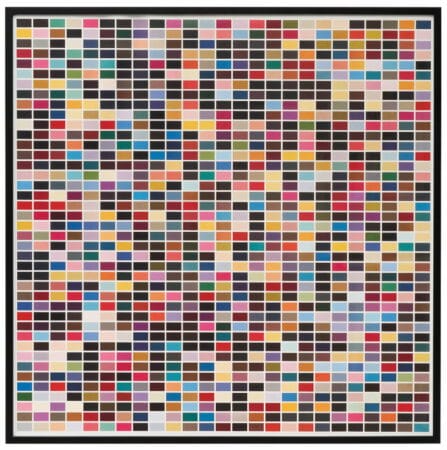
    "One Step Closer" (2023) - Abstract oil painting by Beata Belanszky Demko
  • Folk Art Acrylic painting "Ella/She 3 Sophie" (2015) of the Peruvian painter Gisella Stapleton
    Folk Art Acrylic painting "Ella/She 3 Sophie" (2015) of the Peruvian painter Gisella Stapleton
  • "Art is not crime" (2011) by Mr. Brainwash, limited screen printing on paper
    "Art is not crime" (2011) by Mr. Brainwash, limited screen printing on paper
  • "Sense of Beauty" (2023) - color -intensive portrait paintings by Trayko Popov, acrylic on canvas
    "Sense of Beauty" (2023) - color -intensive portrait paintings by Trayko Popov, acrylic on canvas

Design and Decor Highlights

  • Terracotta belly vase with rattan details, black (size: M) Terracotta belly vase with rattan details, black (size: M) 54,95 €

    incl. VAT

    Delivery time: 3-5 working days

  • Table lamp "Mara" with a satin black lampshade Table lamp "Mara" with a satin black lampshade 182,00 €

    incl. VAT

    Delivery time: 2-3 working days

  • Red Lips - Mouth with Red Lips as Wall Decor Red Lips - Mouth with Red Lips as Wall Decor 77,95 €

    incl. VAT

    Delivery time: 3-5 working days

  • Angel wing earrings with feathers in a glass sphere - A touch of heaven Angel wing earrings with feathers in a glass sphere - A touch of heaven 9,90 €

    incl. VAT

    Delivery time: 4-8 working days

  • Luxurious table lamp "Flora" with black satin umbrella Luxurious table lamp "Flora" with black satin umbrella 187,00 €

    incl. VAT

    Delivery time: 2-3 working days

  • J-Line Abstract female figure sitting on a square block, matte white J-Line Abstract female figure sitting on a square block, matte white 77,90 €

    incl. VAT

    Delivery time: 3-5 working days

  • J-Line floor lamp "Urban Steel" in industrial chic, metallic grey (matte finish) J-Line floor lamp "Urban Steel" in industrial chic, metallic grey (matte finish) 319,00 € Original price was: €319.00159,00 €The current price is: €159.00.

    incl. VAT

    Delivery time: 4-8 working days

Kunstplaza

  • About us
  • Legal notice
  • Accessibility
  • Press Area / Mediakit
  • Advertising on Kunstplaza
  • FAQ – Frequently Asked Questions
  • Get in touch

Languages

Art Magazine

  • About our magazine
  • Editorial Policy / Editorial Standards
  • Guest contributions / Guest author
  • RSS feeds / Subscribe to news

Online Gallery

  • About our gallery
  • Guidelines & principles
  • Buy Art in 3 Steps

Online Shop

  • About our shop
  • Newsletter & deals
  • Quality Promise
  • Shipping & Payment
  • Return Policy
  • Affiliate Program
Carossastr. 8d, 94036 Passau, Germany
+49(0)851-96684600
info@kunstplaza.de
LinkedIn
X
Instagram
Pinterest
RSS

Proven Expert Label - Joachim Rodriguez

© 2025 Kunstplaza

Imprint Terms & Conditions Privacy

Prices incl. VAT plus shipping costs

Manage Privacy

We use technologies like cookies to store and/or access device information. We do this to improve the browsing experience and to show (non-)personalized ads. If you agree to these technologies, we can process data such as browsing behavior or unique IDs on this website. The refusal or withdrawal of consent may adversely affect certain features and functions.

The technical storage or access is necessary for the legitimate purpose of storing preferences that are not requested by the subscriber or user. Always active
Die technische Speicherung oder der Zugang ist unbedingt erforderlich für den rechtmäßigen Zweck, die Nutzung eines bestimmten Dienstes zu ermöglichen, der vom Teilnehmer oder Nutzer ausdrücklich gewünscht wird, oder für den alleinigen Zweck, die Übertragung einer Nachricht über ein elektronisches Kommunikationsnetz durchzuführen.
Vorlieben
Technical storage or access is required for the lawful purpose of storing preferences that have not been requested by the subscriber or user.
Statistiken
The technical storage or access that is used exclusively for statistical purposes. The technical storage or access that is used exclusively for anonymous statistical purposes. Without a subpoena, voluntary compliance by your internet service provider, or additional records from third parties, information stored or retrieved for this purpose alone cannot usually be used to identify you.
Marketing
Die technische Speicherung oder der Zugriff ist erforderlich, um Nutzerprofile zu erstellen, um Werbung zu versenden oder um den Nutzer auf einer Website oder über mehrere Websites hinweg zu ähnlichen Marketingzwecken zu verfolgen.
  • Optionen verwalten
  • Manage services
  • Deny
  • Read more about these purposes
Manage options
  • {Title}
  • {Title}
  • {Title}