When people think of art, most immediately picture framed oil paintings in museums or sculptural works in stone and bronze. But one of the most fascinating forms of creative self-expression takes place entirely without a canvas. It utilizes the most vibrant medium in existence: the human face. Makeup art is far more than simply concealing perceived flaws. It is a conscious staging in which the face becomes a gallery.
In this unique discipline, craftsmanship and vision merge into a work of art characterized by its ephemeral nature. Every brushstroke and every choice of color is a decision made in the moment. Unlike static art in an exhibition, this work is constantly in motion, reacting to light and the expression of its wearer. It is a performance art formthat takes place in everyday life, aesthetically blurring the boundaries between the natural and the created.
Transforming a face requires not only artistic vision but, above all, a profound understanding of proportions. Much like a sculptor studies the structure of a stone, a makeup artist must grasp anatomy, bone structure, and the interplay of light and shadow. Every line can completely alter the perception of an expression—it can broaden the gaze, sharpen contours, or create an entirely different identity. This precision is the foundation upon which the entire composition rests.
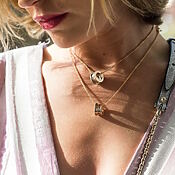
Make-up art: The ephemeral canvas of the face. Photo by MART PRODUCTION, via Pexels
In the world of aesthetics, however, there are differing expectations regarding the permanence of a work of art. While classical makeup celebrates the fleeting nature of the moment, many art lovers seek a lasting effect that permanently enhances the natural symmetry of the face. A skillfully executed and precise permanent makeup application in Wiesbaden exemplifies how modern pigmentation techniques blur the line between decorative cosmetics and fine art. Here, it's not about fleeting trends, but about perfecting the individual's own canvas.
This form of makeup requires the highest level of technical skill. It is the art of omission and subtle accentuation. When pigments are applied so finely that they become one with the skin, a timeless aesthetic is created. It is an attempt to capture the fleeting beauty of perfect makeup in a form that transcends everyday life while still respecting the face's natural vibrancy. In this way, the face becomes a lasting expression of personal harmony.
Materials and techniques: Brushstrokes on flesh and blood
Anyone who takes a look inside a professional makeup artist's kit will quickly recognize the similarities to studio . The tools are strikingly similar: fine sable brushes for precise details meet wide fan brushes for soft blends. The properties of the paints also follow physical laws that the old masters already knew. Where a painter uses oil or acrylic, makeup artists work with different viscosities – from powdery pigments to creamy waxes.
Human skin plays a crucial role as a living substrate. It is not a flat, white canvas, but possesses texture, warmth, and its own inherent tone. An artist must understand how a water-based fluid oxidizes on the skin's surface or how light penetrates different layers. It is a play with transparency and opacity, where often only the layering of the finest nuances creates the depth that makes a face appear vibrant and three-dimensional.
What's particularly fascinating is the use of contrasts. Knowledge of complementary colors is employed here to make eyes sparkle or to position shadows in such a way that they visually emphasize the bone structure. It's a constant balancing act between the material's visibility and its complete fusion with the wearer. When the technique disappears behind the result, the illusion is perfect.
Make-up art in contemporary culture
In today's art world, the made-up face has long since transcended mere beautification. In the photo shoots of major magazines or on the catwalks of major cities, makeup often appears as a radical deconstruction. The face is no longer used as a template for ideals, but as a medium for abstract messages. When colors are applied thickly, as in impasto painting, or when metal elements and textiles are applied directly to the skin, the boundaries between art, sculpture, and object design become blurred.
Leading visionaries in the industry have demonstrated that the face as a canvas offers endless possibilities. They utilize techniques such as airbrushing or the deliberate blurring of contoursto achieve surreal effects that distort the human form almost beyond recognition. Such works are often intended only for the duration of a photoshoot or fashion show—their existence captured for eternity through a camera lens. This art form thus stands in direct tradition with performance art, where the process of creation and the moment of presentation constitute the work itself.
This form of aesthetics is also gaining importance in museum contexts. Exhibitions that explore the history and future of body painting focus on the craftsmanship and cultural symbolism. Makeup art is understood here as a mirror of society, questioning identities, redefining gender roles, or simply celebrating the pure joy of transformation. It is a language that transcends words and yet is understood worldwide.
The face as an eternal work of art
Ultimately, makeup art is an affirmation of the beauty of the moment. It proves that art doesn't need a rigid form to be relevant. Whether as a fleeting painting for a night or as a lasting accentuation of one's features, this form of expression remains profoundly human. It is a dialogue between the self and the world, a play with mask and revelation.
Those who understand the face as a gallery recognize the freedom to reinvent themselves every day and to celebrate their own existence as a continuous work of art.
Owner and Managing Director of Kunstplaza . Publicist, editor, and passionate blogger in the fields of art, design, and creativity since 2011. Graduated with a degree in web design from university (2008). Further developed creative techniques through courses in freehand drawing, expressive painting, and theatre/acting. Profound knowledge of the art market gained through years of journalistic research and numerous collaborations with key players and institutions in the arts and culture sector.
We use technologies such as cookies to store and/or access device information. We do this to improve your browsing experience and to display (non-)personalized advertising. If you consent to these technologies, we can process data such as browsing behavior or unique IDs on this website. Refusal or withdrawal of consent may adversely affect certain features and functions.
Functional
Always Active
Technical storage or access is strictly necessary for the legitimate purpose of enabling the use of a specific service expressly requested by the subscriber or user, or for the sole purpose of carrying out the transmission of a message over an electronic communications network.
Preferences
The technical storage or access is necessary for the legitimate purpose of storing preferences that were not requested by the subscriber or user.
statistics
Technical storage or access that is solely for statistical purposes.Technical storage or access that is used solely for anonymous statistical purposes. Without a subpoena, the voluntary consent of your internet service provider, or additional recording by third parties, the information stored or retrieved for this purpose cannot generally be used to identify you.
marketing
Technical storage or access is required to create user profiles, to send advertising, or to track the user on one or more websites for similar marketing purposes.




 Semi-abstract sculpture "Relaxing" with antique finish, for indoor and outdoor use
145,00 €
Semi-abstract sculpture "Relaxing" with antique finish, for indoor and outdoor use
145,00 €


