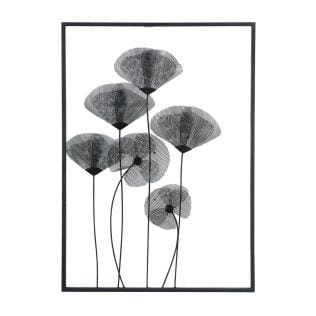
It cannot be denied that numerous video games are developed by creative individuals with an artistic drive and the desire to create aesthetic works that inspire admiration, reflection, and contemplation.
Even in the early stages of their development video games to assimilate inspirations from the film and television industries. This was only logical, since video games combine all audiovisual components, with the player experience and the illusion of player choice being their defining characteristics.
In their pursuit of artistic independence, narrative video games, which sought to create their own stories and portray the hero's journey in their own unique way, faced the challenge of differentiating themselves from the art of filmmaking. As Brett Martin in his contribution to “Videogames and Art” ( see Clarke and Mitchell, 2007 ):
Stylistically, cinema is the medium closest to video games. Both rely heavily on technological developments to attract masses and are firmly rooted in the commercial world
However, he added that
Movies nowadays have more to offer aesthetically than games, and as long as games don't stand out from movies, they won't be recognized as art."
Why Video Games Are Art – On Visual Aesthetics and Narrative Gameplay Photo by Glenn Carstens-Peters @glenncarstenspeters, via Unsplash
These statements led critics to argue that while video games can contain artistic elements, they do not constitute a valid art form in themselves. Nearly two decades have passed since then, and video games have, in some cases, evolved into cinematic worlds of experience that even surpass films in visual aesthetics.
Over the past three decades, video games have begun to fundamentally change their function and use. Until 1994, games were little more than time-consuming, competitive electronic entertainment. While graphics, music, and dialogue certainly existed, the offerings were primarily aimed at affluent teenagers or parents with sufficient financial means to purchase a gaming device.
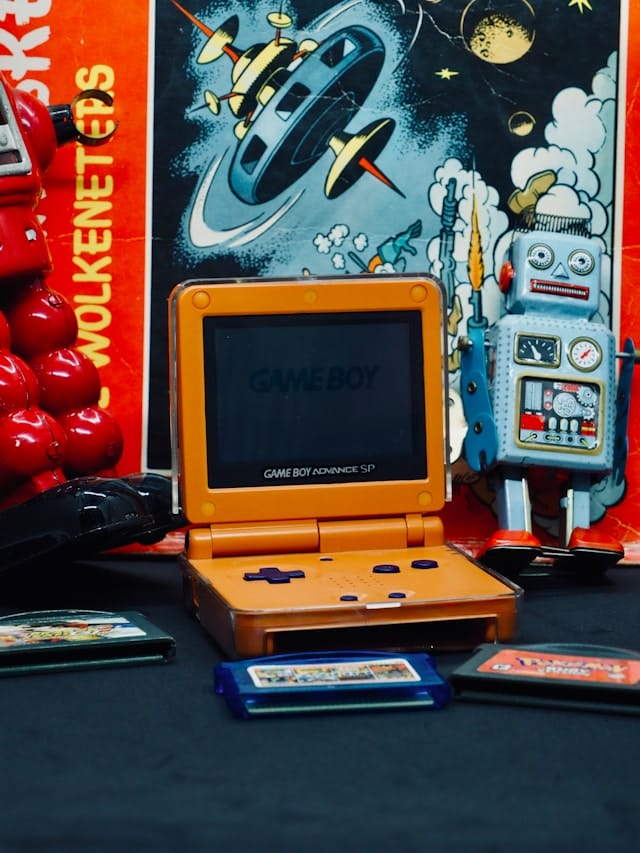
In the 80s and 90s, video games became an integral part of our pop culture. TRIN WA @trin_wa, via Unsplash
For this reason, many viewed the medium as something that didn't extend beyond digitized games—arguing that if we don't recognize chess or basketball as art forms, then we shouldn't classify titles like Pong or Madden Football as art either. The most vocal proponent of this view was the renowned film critic Roger Ebert . From 2006 until his death in 2013, he publicly opposed the notion that video games were art.
In a post on his blog * titled “Video games can never be art”, he explained:
No one, either within or outside this field, has ever been able to name a game that deserves comparison with the great poets, filmmakers, novelists, and lyricists.”
Narrative video games in the nineties
From the 1990s onward, most narrative video games transformed in many ways into films where the player made choices, yet they still remained recognizable as movies. Video games emerged that not only began hiring actors to voice their characters, but also filmed these actors in dramatic cutscenes inserted between gameplay segments.
Examples of this include the Command & Conquer series (1995), Wing Commander IV – The Price of Freedom (1996) , Jedi Knight: Dark Forces 2 (1997), and Star Trek: Klingon Academy (2000), which underscored the influence of cinema. Particularly noteworthy is Metal Gear Solid (1998), which offered a captivating plot with complex characters and a gripping action-adventure narrative structured like a screenplay in three acts, attempting to reflect the artistic rigor of filmmaking.
These approaches aimed not only to introduce the player to an interactive experience interwoven with narrative motifs, but also to transform the storytelling into the actual gameplay. Nevertheless, the cinematic similarities initially failed to resonate with critics. On the contrary, many argued at the time that the art was borrowed from other media and therefore not an integral part of the game.
From today's perspective, however, the principle of storytelling through gameplay fundamentally changed the perception of video games as an art form, by viewing the content of these games as independent works and not merely as ancillary products to film. This was achieved through the integration of narrative elements closely linked to game mechanics and user interactions, instead of limiting storytelling to cinematic or literary aspects.
In the 1990s, many video game narratives tended to adopt cinematic themes, often relegating the player to the role of a mere spectator before returning to the gameplay. In Metal Gear Solid, the player experienced hours of narration as a spectator, a summary that could actually be longer than the entire game's runtime.
The developers have abandoned this limited perspective in favor of a more diverse view of gameplay narrative, where the player rarely loses control of their character. Advances in physics engine technologies that replicate real-world physical interactions, crowd systems that simulate human behavior in public spaces, and artificial intelligence in NPCs that react directly to the player's decisions have opened up countless dynamic storytelling possibilities in recent video games since the turn of the millennium. These unpredictable situations are unique to each player as they interact with the world created by the developers.
In this context, we can observe that the playable element itself has acquired narrative relevance and thus artistic value, similar to the performing arts , where artists interact with their audience. And solely due to the interactive nature of the gameplay , its artistic dimension cannot be attributed to filmmaking or any other art form.
Video Games – Art or Not? Origins of the Debate
From today's perspective, video games represent a potentially postmodern art form and should be viewed with the same critical eye as any other art form. While no game has yet been considered an epic, this medium is evolving faster than any other art form and will continue to do so as technology advances and cultural perceptions change—just consider how much games have transformed since their inception over 60 years ago.
Not all games deserve the title of art, let alone can be considered high art. But in fairness, it must be noted that terrible paintings and inferior books also sell.
But why are video games even part of this discussion?
From the very beginning, video game developers have employed artists for their projects, particularly illustrators as concept artists and musicians. However, a shift occurred in the 1990s when they began to use these arts not merely as secondary components, but to emulate the narrative depth, sophisticated visuals, and emotional musicality of the film industry.
Even if there were exceptions where games attempted to create independent works of art without reference to film, such cases were rather rare. This necessarily led us to the question of whether video games are merely games or whether they can be recognized as an independent art form.
What makes a work or medium art?
Although it is difficult to provide a comprehensive definition of art , a Google search shows that art
"The expression or application of human creative abilities and imagination, typically in visual form such as painting or sculpture, to create future works that are valued primarily for their beauty or emotional impact."
Furthermore, art encompasses fields of study that primarily deal with the processes and products of human creativity and social life, such as languages, literature, and history (as opposed to scientific or technical disciplines).
And although they are not explicitly mentioned, some truisms about art persist. These include Andy Warhol's statement:
"Art is anything you can get by with."
or Edgar Degas ' bon mot:
Art is not what you see, but what you let others see
as well as the general notion that the aim of art is to embody an idea or to evoke an experience and/or reaction.
While the classification of video games according to these general criteria may seem obvious to many people, and they would probably shrug and say, "That makes sense ," it is nevertheless important to recognize that not all games meet these requirements.
For example, there is a clear distinction between designers and artists, essentially differentiating between craft and art. While all games are designed, not every design can be considered art. Design can be both creative and artistic, but it remains a craft at its core. When working in design, the fundamental question clients often ask is: "How can we communicate this core idea to as many people as possible?" or "How can we raise awareness of our brand?"
Game design can definitely be creative and artistic. Photo by Branden Skeli @branden_skeli, via Unsplash
While these aren't bad questions, it's important to note that such questions are directed at designers, not contemporary artists. Artists create with the aim of producing art, while designers design to sell their concepts. Ultimately, it's intention that distinguishes art from design and craft.
Artists strive for expression, designers for functionality.”
2010s: Video games become part of the permanent exhibition at the Museum of Modern Art (MoMA)
In 2012, the Museum of Modern Art (MoMA) in New York to include a selection of video games in its permanent collection. This included works ranging from the classic Pong (1972) to the modern Minecraft (2011). This decision provoked resistance from some cultural figures.
Critics like Jonathan Jones, writing in an article for The Guardiantitled “ Sorry MoMA, video games are not art” , argued that “the worlds created by electronic games are more like playgrounds where experiences are created through the interaction between a player and a program”. He emphasized that the player is unable to impose a personal vision of life on the game, while the game's creator has relinquished this responsibility.
Since no one "owns" , there is no artist and therefore no artwork. This consideration led him to compare the medium to traditional board games, which, while highly regarded, do not enjoy the status of art. Jones emphasizes how crucial the individual contribution of the author is in determining what qualifies as art.
Walk through the Museum of Modern Art, look at the masterpieces by Picasso and Jackson Pollock, and you will see a series of personal visions.”
A work of art represents an individual's response to life. Any definition of art that ignores this inner response of a human creator is worthless. Art can be created with brushstrokes or selected as a finished work, but itmust always be an expression of personal imagination. Another point Allen raises is the limited freedom of choice of the supposed author.
He argues that video games should be viewed as products of an industry rather than as creative works by artists.
Video games are typically developed by corporate committees. Rarely is there a single, unified consciousness behind them. It's not that art can't emerge from groups of people collaborating ("jamming"), but in systems with fixed committees, artistic truth or beauty isn't a priority. They can't do anything meaningful to find a timeless expression of that truth. For them, profit, popularity, and accepted conventions are paramount; they must constantly test their games for popularity, effectiveness, and utility
The debate continues in TED Talks
Video game designer and producer Kellee Santiago attempted to address these questions in a TED Talk that sparked various reactions ( Adrian Gimate-Welsh reported on it in a Game Developerarticle ). Titled "An Argument for Game Artistry," she posited that all art forms emerge from very basic early stages, much like prehistoric cave paintings underlie modern painting.
She argued that video games, having been around since 2009, are still in their infancy, but nothing stands in the way of their progress in the distant future, allowing them to develop into fully-fledged art forms. Martin makes a similar argument by reminding his readers of the arduous path that photography and film had to take before they were recognized as legitimate art forms, as they are today.
In fact, there is nothing that prevents video games from receiving the same appreciation.
Game designer Brenda Romero makes a similar point in a TEDxGalway talk. Games have existed as cultural artifacts since at least 3000 BC, while video games originated in 1958. This talk explores the reasons why games can be considered an art form and perhaps even the most significant art form of all.
Brenda Romero is an accomplished game designer, artist, and Fulbright scholar who entered the world of video games in 1981. As a designer, she has made significant contributions to numerous innovative titles, including the Wizardry and Jagged AllianceGhost Recon and Dungeons & Dragons franchises .
Outside the digital world, her analog game series, The Mechanic is the Message , has garnered both national and international acclaim, particularly through the games Train and Síochán Leat (The Irish Game) , which is currently on display at the National Museum of Play . In 2015, she received the prestigious Ambassador's Award at the Game Developers Choice Awards. In 2014, she was awarded a Fulbright scholarship to research the Irish games industry and its academic and political framework.
In 2013, she was named one of the top ten female game developers by Gamasutra.com, while Develop magazine included her among the 25 people who had a decisive influence on the industry that year. Romero is a co-owner of Romero Games , based in Galway.
The third speaker is Noah Lin , whose TEDxTheMastersSchool talk also aims to broaden our horizons in the interpretation of video games:
In his lecture, Noah Lin challenges us to abandon widespread prejudices about video games. How, he asks, can a medium that cinematography , psychology, creative writing, acting, programming, political and social commentary, groundbreaking technological developments, and captivating interactive experiences not be considered art?
Lin hopes his TEDx talk will broaden our perspective by taking us through some particularly impressive games. Noah Lin is an emerging soundtrack artist and a passionate video game enthusiast. Video games have played a central role in his life since childhood, and in recent years he has enthusiastically explored and analyzed their design, psychology, and aesthetics as works of art.
He has recorded several contributions to Game Jams , has intensively studied game design, and is excited to share his perspective in his TEDx talk.
The status quo of the debate – Where do we stand today?
Video games represent a multifaceted medium. Composers create soundtracks and sound effects, artists design 2D graphics and 3D models, writers develop storylines and dialogues, while programmers assemble all the moving elements into a harmonious world. This form of video game design fulfills all the criteria for a complete work of art.
The players, or rather the audience, experience the games from a personal perspective . They act and react within the game. Many modern games are so richly designed that they can evoke goosebumps, pump adrenaline, and bring tears to the eyes. There is no other medium in which the audience or the person experiencing the game can empathize so deeply that they use personal pronouns to describe their experience.
Players aren't merely passive. No one reads a novel or watches a film and claims to have hunted Moby Dick or defeated Nazism in World War II.However, simply immersing oneself in a pretty digital field full of virtual flowers or being caught in a hectic shootout between online players doesn't automatically make a game art. There are numerous games that will never claim to be art. In fact, most games are developed solely with the goal of generating monetary revenue.
It's not that the pursuit of profit is incompatible with art; however, a creation whose primary goal is financial becomes a product for your bottom line, not a work of art. There are video games that aim to captivate the player, challenge them intellectually, and offer them new experiences. There are also video games that aspire to art and offer their players experiences that are in no way inferior to the works of Monet, van Gogh, or Mozart.
Let us revisit Roger Ebert's criticism, as journalist Nathan Deardorff did in a Forbesarticlein
By arguing that video games can never be considered high art, but only inferior art, he reveals his own inconsistency. High art,after all , is a vague, malleable concept. Impressionism , as an art movement, brought down the French Academy of Fine Arts and shook the foundations of all ideals embodied in art since antiquity. At the time, almost everyone claimed that the Impressionists were not true artists, but naive painters creating unfinished works.
But today, people flock to see works like Van Gogh's "Starry Night" . It is no longer shocking. It has become commonplace. Now it is considered high art. And those who, later in art history, rejected the Impressionists are now also considered high art. Indeed, this trend, which runs counter to the established tide of art movements (which began long before the Impressionists), has reached its zenith in postmodern and contemporary art, where the works are so extreme and seemingly absurd that the average person is once again asking:
How can this be art? A toddler could do that.”
The movement that deconstructed art is still considered high art and is misunderstood by the average citizen. Clearly, high art is not a fixed entity or a measure of the value, quality, or rank of a particular medium or movement.
The philosopher and game expert Daniel Martin Feige has also extensively explored this question. The professor of philosophy and aesthetics at the State Academy of Fine Arts Stuttgart has observed that gaming aesthetics have long since influenced theater and film. He expressed this view in a 2019 interview with Deutschlandfunk Kultur * :
I now see that forms of gaming and game logic are penetrating the field of theatre, and that film logic is being incorporated into literature
According to Feige, computer games represent a significant cultural asset and an independent art form. They received official recognition independent games the "Quartet of Game Culture" launched the Martin-Gropius-Bau"Literary Quartet ," as the series explores the cultural dimensions of outstanding computer games in a journalistic style – as explained by the Digital Games Culture Foundation , which initiated the program.
Prof. Dr. Stephan Schwingeler takes a more nuanced view within the framework of his professorship for media studies at the HAWK University of Applied Sciences and Arts in Hildesheim:
I would never claim that computer games are 'art' across the board.”
Computer games are characterized by opulent audiovisual design that develops its own aesthetic and grace. They present expansive narratives and have the ability to remediate and combine other media and art forms. According to Schwingeler, this evokes parallels to the concept of the romantic Gesamtkunstwerk (total work of art). All these characteristics belong to the repertoire of digital games. Nevertheless, this diversity does not automatically lead to their classification as an art form.
A blanket categorization of computer games as works of art, or the categorical rejection of their artistic status, demonstrates an unconventional understanding of art. Often, a medium, a technique, and a material are included or excluded from artistic status without differentiation. As a rule, necessary and sufficient conditions remain unclear, while relevant contexts are disregarded.
This nuanced perspective sharpens our understanding of the diverse world of computer games and encourages reflection on their cultural significance.
In art history, there are computer games that are recognized as works of art. According to Schwingeler, these include artistic modifications such as JODI's Untitled Game , Feng Mengbo's Long March: Restart , and Bill Viola's The Night Journey . He also believes that interactive media art, such as Jeffrey Shaw's The Legible City, can be considered part of this genre.
Nevertheless, not every computer game automatically becomes a work of art, despite efforts within the industry to propagate this misconception. The aforementioned works interact with the context of the so-called art world , which is shaped by discourses on art. This includes scholarly texts and exhibition catalogs that promote the understanding of computer games as a legitimate form of artistic expression, without, however, categorically classifying all games as works of art.
At the conclusion of his interview with BPJM-Aktuell in 2018, he summarized as follows:
I believe it is wrong to pursue a so-called paragone, a competition between the arts, in which one medium is portrayed as more valuable than another. Furthermore, I consider it absurd not to grant computer games the same freedom as films to depict things or not, simply because they function differently as media
But what concrete arguments, beyond historical parallels and societal recognition, support recognizing video games as an art form? We briefly introduce the core visual disciplines.
Game Design – Art on multiple levels
Concept Art
Concept art for video games is about designing and developing the desired look , style , and visual atmosphere of a game before the full production phase begins. Artists are busy creating sketches, paintings, and references for all the essential elements that will appear in the game.
From characters and their outfits to props and weapons, to environments, architecture and interiors – concept art for video games helps lay the foundations for the captivating, authentic and unforgettable worlds that players explore.
Game concept art represents a crucial step in the pre-production phase of video games. Whether it's Grand Theft Auto , Legend of Zelda,Final Fantasy , or Call of Duty – most games wouldn't exist in the form we know and love them without concept art for video games.
Watch this video to learn more about the role of a concept artist within a game development team. It involves setting limitations, preparing a concept draft, refining an idea, and engaging the team in the process.
In the second video, Stephan from the indie studio Animative spacethrough his 3D environment concept art painting process for the desert island of Tri. In this video, the game developer demonstrates his 3D blockout process using Blender, basic lighting and rendering in Unity, as well as color conception and post-processing in Photoshop.
Level Art / Level Design
However, one aspect that has always been present in the industry has gained artistic relevance in recent years: level design . This design has rapidly evolved into an architectural discipline where the functionality of each level serves both a gameplay and an aesthetic purpose, immersing the player in fictional universes while simultaneously confronting them with the challenges of the level.
It's no longer just about the simple arrangement of obstacles, but about the art of designing level details and challenges in such a way that they blend seamlessly with the context, creating worlds, much like architecture shapes meaningful spaces around us. Outstanding examples of this include "Alien: Isolation" (2014), "God of War" (2018), the Dark Souls series , , " "Dishonored 2 , "Half-Life 1 & 2," and "Titan Fall 2," all of which stood out for their complex and multifaceted level design.
The levels were equipped with objects and landmarks that prevented players from progressing quickly, while simultaneously offering numerous hiding places from deadly threats in the game.
In addition, Alien Isolation, for example, created an eerie atmosphere that gave the game its frightening and exciting appearance and opened up diverse ways to explore the level.
Level design has evolved into such a detailed, thorough, and sophisticated means of conveying atmosphere and emotions to the player that it is now often referred to as level art to acknowledge its artistic value to development teams. It surpasses all other art forms in importance, particularly due to its interactive features.
Visual grandeur
Ultimately, the rise of graphical capabilities and the grace of contemporary visuals have indeed brought us remarkable aesthetic achievements . The ongoing development of hardware capacities, robust hard drives, powerful graphics cards, and fourth-generation RAM, along with groundbreaking innovations in software engines like Unreal 5, enable visual experiences that come astonishingly close to real life or bring to life fantasies that seemed unimaginable just a few years ago.
Much like in film, technological advances have 3D modelers and animators to create depictions of humans, humanoid beings, and animals with such beauty and complexity that it would be almost absurd to dismiss this as unartistic. If the individual touch that each modeler and animator seeks to impart to their characters—much like one would expect from a sculptor—is not recognized as artistic, then what is?
Furthermore, there is the impressive landscape design, as seen in Elder Scrolls: Skyrim, The Witcher III: Wild Hunt , and numerous other video games based on their revolutionary open-world concept. This powerful element of world-building, due to its interactive nature, cannot be reduced to a simple playground, just as one wouldn't doubt the artistry of the architecture simply because it, too, is interactive. For how else could one describe the fact that we enter cathedrals and must decide where to go, whether to sit or stand, which windows or doors to open or close, if not as an interaction with the architect's artwork?
Video games as a significant factor in the creative industries
In the final section of our study, we examine the economic scale and macroeconomic importance of the video game industry in Germany.
In Germany, nearly 240,000 companies and freelancers shape the face of the cultural and creative industries . Whether visual or performing artists, musicians, architects, writers, filmmakers, or video game developers: they all produce, distribute, and/or sell cultural, artistic, or creative products and services.
Figures on the cultural and creative industries (as of 2023) Source: BMWK
The influence of the approximately two million people employed in the cultural and creative industries on overall economic performance is considerable. In 2023, this sector generated revenue of €204.6 billion, 2.2 percent of the total revenue of the German economy . This revenue even exceeded the figures from 2019, the year before the COVID-19 pandemic. (Source: Monitoring Report Cultural and Creative Industries in Germany 2024. Publication Q1/2025 * ).
The sub-markets of the cultural and creative industries Source: BMWK
The software and gaming industry represents roughly one-third of the cultural and creative industries in our country, making it the largest sub-sector. At the same time, the software industry is an essential component of information and communication technology, although ongoing digitalization is blurring the lines between these sectors. Numerous connections exist, for example, with the advertising industry or publishing . E-book publishers, for instance, fall under the umbrella of the software industry.
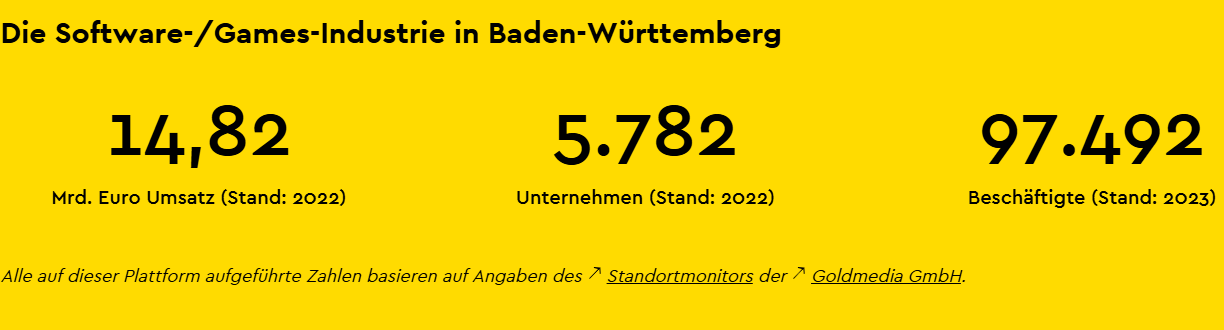
Baden -Württemberg, for example, is home to an above-average number of major software companies: from global market leaders and the German headquarters of international corporations to well-known medium-sized businesses. The digital agency , web portal , and software consulting is predominantly dominated by medium-sized companies. The main players in the games industry are developers and publishers , with many independent small game studios and startups alongside several large players.
These figures illustrate the economic importance of the gaming industry, whose role will continue to grow significantly in the future. This should also contribute to the artistic recognition of video games.
Sources, expert support and further information:
Andy Clarke, Grethe Mitchell:Videogames and Art , ISBN-13: 9781841501420
Roger Ebert : Video games can never be art , https://www.rogerebert.com/roger-ebert/video-games-can-never-be-art
Jonathan Jones / The Guardian : Sorry MoMA, video games are not art , https://www.theguardian.com/artanddesign/jonathanjonesblog/2012/nov/30/moma-video-games-art#:~:text=The%20player%20cannot%20claim%20to,it%20precedes%20the%20digital%20age
Adrian Gimate-Welsh / Game Developer : Why Videogames are Art , https://www.gamedeveloper.com/game-platforms/why-videogames-are-art
Nathan Deardorff / Forbes : An Argument That Video Games Are, Indeed, High Art , https://www.forbes.com/sites/berlinschoolofcreativeleadership/2015/10/13/an-argument-that-video-games-are-indeed-high-art/
Adobe : An Introduction to Video Game Concept Art , https://www.adobe.com/uk/creativecloud/illustration/discover/video-game-concept-art.html
Federal Ministry for Economic Affairs and Climate Action:Cultural and Creative Industries , https://www.bmwk.de/Redaktion/DE/Dossier/kultur-und-kreativwirtschaft.html
Federal Ministry for Economic Affairs and Climate Action:Monitoring reports on the cultural and creative industries , https://www.bmwk.de/SiteGlobals/BMWI/Forms/Listen/Publikationen/Publikationen_Formular.html?&cl2Categories_Typ=monitoring-kuk
Daniel Martin Feige / Deutschlandfunk Kultur : Computer games as valuable as film art , https://www.deutschlandfunkkultur.de/computerspiele-so-wertvoll-wie-filmkunst-100.html#:~:text=Computerspiele%20sind%20Kulturgut%20und%20eine,bekamen%20sie%20den%20offiziellen%20Ritterschlag.
Prof. Dr. Stephan Schwingeler / BPJM-Aktuell 2/2018 : “So what makes a computer game a work of art? In short: It depends ,” https://www.bzkj.de/resource/blob/130172/592471cff70f92ba5cb4c01fe9296fed/201802-interview-dr-schwingeler-data.pdf
MFG Medien- und Filmgesellschaft Baden-Württemberg mbH : Software/Games Industry , https://kreativ.mfg.de/die-kultur-und-kreativwirtschaft/games-software-industrie/
Owner and Managing Director of Kunstplaza . Publicist, editor, and passionate blogger in the fields of art, design, and creativity since 2011. Graduated with a degree in web design from university (2008). Further developed creative techniques through courses in freehand drawing, expressive painting, and theatre/acting. Profound knowledge of the art market gained through years of journalistic research and numerous collaborations with key players and institutions in the arts and culture sector.
We use technologies such as cookies to store and/or access device information. We do this to improve your browsing experience and to display (non-)personalized advertising. If you consent to these technologies, we can process data such as browsing behavior or unique IDs on this website. Refusal or withdrawal of consent may adversely affect certain features and functions.
Functional
Always Active
Technical storage or access is strictly necessary for the legitimate purpose of enabling the use of a specific service expressly requested by the subscriber or user, or for the sole purpose of carrying out the transmission of a message over an electronic communications network.
Preferences
The technical storage or access is necessary for the legitimate purpose of storing preferences that were not requested by the subscriber or user.
statistics
Technical storage or access that is solely for statistical purposes.Technical storage or access that is used solely for anonymous statistical purposes. Without a subpoena, the voluntary consent of your internet service provider, or additional recording by third parties, the information stored or retrieved for this purpose cannot generally be used to identify you.
marketing
Technical storage or access is required to create user profiles, to send advertising, or to track the user on one or more websites for similar marketing purposes.













 Cotton pillowcase "Bonita" with raffia fringe, 60 x 60 cm (grey)
65,95 €
Cotton pillowcase "Bonita" with raffia fringe, 60 x 60 cm (grey)
65,95 €