However, regarding our more well-known critical filmmakers, never mainstream, one wonders why Harun Farocki has climbed over 300 places in the world art rankings since 2005, reaching number 23 in January 2016. There's a reason for this:
Harun Farocki is often described as an essay filmmaker, and his admirers of his documentary treatises on contemporary life, our science and culture, our government and our society are absolutely right to do so.
And yet, that's a bit of an understatement: Farocki's films are certainly witty, but whether they are truly essays (witty treatises in which scientific, cultural and/or social phenomena are addressed and analyzed); or even whether they are merely essays, is debatable.
Farocki's films directly illuminate our lives today; his themes affect us all, and he manages, almost incidentally, to expose, at a seemingly calm pace, much of the madness that characterizes this modern life.
While in 1969 his work began with "The Words of the Chairman" (Mao Tse Tung), by 1970 with "The Division of All Days" he had already arrived at the concept of the externally controlled workhorse, and in 1971 he dedicated himself to the capitalist use-value of commodity and labor power in "A Matter That Understands Itself"
With "Something Becomes Visible" in 1981, the first war theme flashes up; in 1987, in "Training," we are already taught how the senior employee in the seminar is trained in "talking nonsense" ; and in 1990, in "Life: FRG," Farocki shows us in full overview the absurd world of the risk (no-risk) society.
In 1994, Farocki again criticizes the success formulas of a "sales company" in his "retraining" program , with direct references to the training in brain inertia it contains: "When they leave here, their vocabulary will have significantly shrunk."
In 1996, Farocki presents the same dreary game, only in "The Application" about the marginalized, about the application training of the long-term unemployed, whose linguistic absurdities convey the same hopelessness as "The Performance" (1996) of the protagonists from the advertising industry.
In 1998, Farocki's "Words and Games" takes us into the production facilities of the newly launched daily talk and game shows, dumbing-down machines located somewhere on the outskirts of a major city that make their money by having some ordinary person humiliated by a completely unknown celebrity during "his 15 minutes of fame".
In 2012, consumer language becomes even more absurd; in "A New Product," the creator waves oysters and pearls into the linguistic diaspora, more like a student at the blackboard than a shrewd product manager.
The article "Harun Farocki: A Quiet, Triumphant Rise of the Keen Eye" presents many of Farocki's films, including much more serious ones. He has also explored and addressed war and weapons, the state and the military, and thousands of other topics. His later work, which fills museums, art galleries, and other venues, also warrants extensive theoretical discussion; direct access to this material is provided below.
But Harun Farocki's films about everyday life, work, and capitalist conditions are particularly important for all of us. Especially those who are currently watching the changes in the rules of our society with horror should watch a few Harun Farocki films – it's always impressive how Farocki captured "all that crap" on film, while today's managers, considered psychotic and megalomaniacal, were still basking in the unbridled admiration of society, and the average citizen had no clue how the mechanisms worked that would lead our society to destroy and ultimately destroy itself in just about a decade.
Many of us are currently experiencing this, and resistance is growing in all the wrong directions. It is certainly a cause for sorrow that Harun Farocki is no longer here to teach us how to see things clearly.
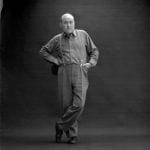
Harun Farocki – German filmmaker profile
Harun Farocki as a public figure: Prizes and awards, teaching activities, lasting impact
Harun Farocki has received the "German Film Critics' Prize" , an award given by the Association of German Film Critics for the best German films, which is awarded by film critics:
1969 for “Inextinguishable Fire”
1989 for “Images of the World and Inscription of War”
1991 for “Life – FRG”
2010 for “For comparison”
In 2003, Farocki's film "Recognize and Track" received an award at the Locarno International Film Festival.
Personal awards:
1995 Adolf Grimme Prize for the retraining
2002 Peter Weiss Prize of the City of Bochum
2006 Herbert Quandt Media Prize for the documentary film "Not Without Risk"
2009 ARTE Documentary Film Prize for his film "For Comparison"
2009 Wilhelm Loth Prize 2009
2012 Special Prize for the Roswitha Haftmann Prize
2015 Special mention at the Biennale di Venice 2015
Teaching activities:
From 1993 to 1999, Farocki was a lecturer at the University of California, Berkeley (California)
From the year 2000 onwards, he worked as a lecturer at the dffb and the University of the Arts Berlin
Since 2004 he has taught at the Academy of Fine Arts Vienna
Farocki's work is immediately present in the filmmaking community. From 2011 until his death in July 2014, he worked with Antje Ehmann on the project "An Attitude Towards Work." From February 26th to April 6th, 2015, the event "An Attitude Towards Work | Instructions for Life: Harun Farocki on Work and Play" took place at the Haus der Kulturen der Welt in Berlin , featuring an exhibition, conference, and workshops.
Contributions about the presentations at the conference on Friday, February 27, 2015:
#1
“Film, Architecture, Movement”, Alexander Alberro, art critic and historian, Columbia University, New York;
“Two or Three Things I know about Harun Farocki,” Nora M. Alter, film and media scholar, Temple University, Philadelphia;
“Pourquoi Harun”, Raymond Bellour, film and literature scholar, Center national de la recherche scientifique, Paris;
“Rhetoric of an Ignorant Teacher”, Christa Blümlinger, film scholar, University of Paris 8 Vincennes-Saint-Denis
#2
“The Trouble with Palms”, Filipa César, artist, filmmaker, Berlin;
"War of the Worlds", Klaus Wyborny, filmmaker, actor, Hamburg;
“Map Matching”, Anselm Franke, Curator, Author, Haus der Kulturen der Welt, Berlin
#3
“A ship with teeth, that’s boring.”, Harun Farocki’s short documentaries for children, Detlef Gericke-Schönhagen, Director of the Goethe Institute, Boston / Vilnius;
“My Individual Workplace”, On Harun Farocki’s Theory of Production, Tom Holert, art historian, publicist, artist, Berlin;
“Explode Explosion Eye”, Hito Steyerl, author, artist, Berlin
#4
“Working on Nature: The Forest as a Darkroom, the Clearing as a Stage”, Christine Lang, filmmaker, cultural studies scholar, Berlin and Constanze Ruhm, filmmaker, curator, Academy of Fine Arts Vienna;
“Embarking on Farocki’s Infinite Flights of Words in Images”, Doreen Mende, curator, theorist, Berlin;
Kodwo Eshun and Anjalika Sagar, The Otolith Group, London
Harun Farocki is categorized as an essay filmmaker and documentary filmmaker who, through his films and his teaching, influenced many subsequent filmmakers. For example, director Christian Petzold, whom Farocki taught and with whom he also collaborated. They co-wrote the screenplays for "The Inner Security," "Ghosts," and "Yella" (Petzold's famous "Ghost Trilogy"), as well as the screenplay for their last collaborative work, "Phoenix," from 2014.
“The Inner Security” received the German Film Critics Award for Best Feature Film in 2001, and “Phoenix” in 2014.
Harun Farocki private
Harun Farocki was born on January 9, 1944 in Neutitschein, then Reichsgau Sudetenland (today Czech: Nový Jicín).
The son of Abdul Qudus Faroqui, an Indian doctor who immigrated to Germany in the 1920s, and his wife Lili, was named Harun El Usman Faroqhi at birth and later pragmatically simplified the name.
The family was not based in Neutitschein; Farocki's mother had just been evacuated from Berlin to escape the Allied bombs. In the post-war period, there were several moves, including to India and Indonesia, until the family finally settled in Hamburg in 1958.
His father opened a surgical practice in Hamburg, which provided the family with a good life, but young Farocki rebelled against his father early on and moved to West Berlin in 1962 (not yet of age at 18). There he eked out a living as a beatnik, completed his high school diploma at night school – and in 1966 filmed his first three-minute short for SFB (Sender Freies Berlin, predecessor of rbb).
From 1966 to 1968, Harun Farocki studied in the first year of the German Film and Television Academy Berlin (dffb).
In 1966 he also married Ursula Lefkes, with whom he had twin girls in 1968.
Ursula Lefkes died in 1996. In 2001, Farocki married his second wife, Antje Ehmann, with whom he collaborated on many projects. Farocki died unexpectedly on July 30, 2014, at the age of 70 near Berlin.
Current access to Harun Farocki
At www.harunfarocki.de you will find much about the work of Harun Farocki, under the menu items “Films”, “Installations”, “Texts”, “Collaboration”, “Exhibitions” and “Biography”.
The following current or upcoming exhibitions feature works by Harun Farocki:
Solo exhibitions:
Until March 18, 2018: “Empathy – Harun Farocki”, Friche la Belle de Mai, Marseille | France
Group exhibitions:
Until August 5, 2018: “Open Codes. Living in Digital Worlds”, ZKM. Center for Media Art, Karlsruhe | Germany
until 17.03. 2018: "Newwar. It's Just a Game?", Bandjoun Station Art Center | Cameroon
Until April 8, 2018: “Brave New Worlds. Virtual Realities in Contemporary Art”, Zeppelin Museum, Friedrichshafen | Germany
until 08.04. 2018: "Please Come Back. The World as a prison?", IVAM. Institut Valencia d'Art Modern, Valencia | Spain
Until May 13, 2018: “Faithless Pictures”, National Gallery Oslo | Norway
March 23 – August 19, 2018: “Hello World. Revision of a Collection”, Hamburger Bahnhof | Berlin | Germany
March 8 – May 5, 2018: “Art of Revolt / Revolt of Art”, Student Union Building Frankfurt | Germany
October 10, 2018 – March 3, 2019: “The Construction of the World (Art and Economics)”, Kunsthalle Mannheim | Germany
March 17th 2018 – January 6th 2019: “Post Institutional Stress Disorder (PISD)”, Kunsthal Aarhus | Denmark
May 16 – July 22, 2018: “A Study in Scarlett”, Frac, Ile-de-France | France
13.04. – 15.07. 2018: “Eastern Sugar”, Kunsthalle Bratislava | Slovakia
April 13 – August 26, 2018: “Faith, Love, Hope”, Kunsthaus Graz | Austria
Harun Farocki is represented worldwide by 5 galleries:
Germany: Barbara Weiss Gallery, Berlin
France: Galerie Thaddaeus Ropac – Paris
Austria: Galerie Thaddaeus Ropac – Salzburg
Spain: Angels Barcelona, Barcelona
USA: Greene Naftali, New York City, NY
Works by Harun Farocki can be viewed in the public collections of several countries:
Germany: Neue Nationalgalerie Berlin; Mathildenhöhe Darmstadt; ZKM Center for Art and Media Karlsruhe
France: Center Pompidou Musée National d'Art Moderne, Paris; LaM LilleMétropole musée d'art moderne, d'art contemporain et d'art brut, Villeneuve d'Ascq
Austria: Museum of Modern Art Salzburg; MUMOK Museum of Modern Art Ludwig Foundation Vienna
Spain: Museu d'Art Contemporani de Barcelona; Museum of Contemporary Art of Castilla and León; Museo Nacional Centro de Arte Reina Sofia Madrid
The more cynical the world, the more in demand a precise perspective becomes
It is (unfortunately) likely that Harun Farocki's recent, meteoric career on the Artfacts.net world rankings
2005 around 330th place
2006, ranked 290th
2007, ranked 210th
2008 around 190th place
2009 around 150th place
2010 around 110th place
2011, ranked 75th
2012, ranked 75th
2013 around 50th place
2014 around 30th place
2015, ranked 24th
2016, ranked 23rd
This is because everything he saw and so vividly addressed so early in his films about the madness of war, the madness of racism, the madness of consumerism, the madness of the economy, the madness of banking and more madness is now coming true.
Watch Farocki's films; unfortunately, he can no longer urge us to look closely. But it was his life's goal to analyze the power of images for us, and many of his films not only sharpen our perception but are also remarkably relevant today.
We use technologies such as cookies to store and/or access device information. We do this to improve your browsing experience and to display (non-)personalized advertising. If you consent to these technologies, we can process data such as browsing behavior or unique IDs on this website. Refusal or withdrawal of consent may adversely affect certain features and functions.
Functional
Always Active
Technical storage or access is strictly necessary for the legitimate purpose of enabling the use of a specific service expressly requested by the subscriber or user, or for the sole purpose of carrying out the transmission of a message over an electronic communications network.
Preferences
The technical storage or access is necessary for the legitimate purpose of storing preferences that were not requested by the subscriber or user.
statistics
Technical storage or access that is solely for statistical purposes.Technical storage or access that is used solely for anonymous statistical purposes. Without a subpoena, the voluntary consent of your internet service provider, or additional recording by third parties, the information stored or retrieved for this purpose cannot generally be used to identify you.
marketing
Technical storage or access is required to create user profiles, to send advertising, or to track the user on one or more websites for similar marketing purposes.




 Sculptural vase "Cubes" - stacked cube silhouette made of recycled smoked glass (dark grey)
61,95 €
Sculptural vase "Cubes" - stacked cube silhouette made of recycled smoked glass (dark grey)
61,95 €


