Jewelry is more than decoration – it isTerms & Conditionsart, a silent expression of personality and style. To ensure these little works of art retain their luster for years to come, careful care and styling are essential. Those who high-quality necklaces for women naturally want to enjoy this investment for the long term – and with the right care routine, this is easily achieved.
The aesthetics of detail: Why proper jewelry care is essential
Those who appreciate originals – whether a painting on the wall or a handcrafted ring on their finger – know that valuable objects deserve attention. In this respect, jewelry is like a work of art from the realm of traditional goldsmithing: it embodies craftsmanship, material knowledge, and design intent. Neglect leaves its mark – dull surfaces, tarnished silver, scratched stones. Regular care, on the other hand, preserves not only the appearance but also the material and emotional value of a piece.
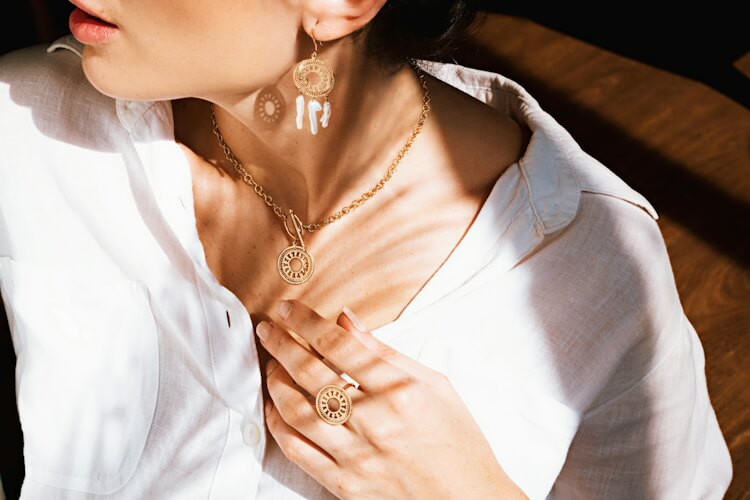
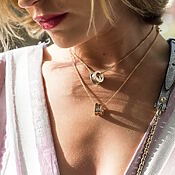
Proper care and styling of jewelry for women. Photo by Saeed Anahid @saeedanahid, via Unsplash
There's also a practical aspect: Well-maintained jewelry fits better, smells neutral, and is gentler on the skin. Dirt, creams, and perspiration can damage metals and settings over time. A short care routine—just a few minutes a week—is enough to counteract this.
Basic rule of jewelry care: Put it on last, take it off first. Perfume, deodorant, body lotion, and sunscreen should be completely absorbed before putting on jewelry.
Maintaining shine: Material-specific care tips for gold, silver and gemstones
Different materials require different treatment. What protects gold can damage silver or pearls.
How to properly clean gold jewelry
Yellow gold, white gold, and rose gold are sensitive to harsh chemicals. For everyday care, lukewarm water with a drop of mild dish soap and a soft toothbrush is sufficient. Rinse thoroughly after cleaning and dry with a lint-free cloth. Professional cleaning by a jeweler is recommended every two to three months – especially for pieces with settings and stones.
Avoid chlorine, bleach, and abrasive polishes. White gold often has a rhodium plating that can wear off quickly if cleaned improperly.
Life hacks and practical instructions for home
Whether an heirloom or an everyday accessory, gold jewelry loses its shine over time due to skin oils, dust, and cosmetics. The following three YouTube videos show how to restore its luster – whether with simple methods at home or through professional cleaning.
1. The intensive DIY method using household items
The video “How to Clean / Polish Gold Jewelry at Home – Shiny Gold” by InnoRative presents a chemical cleaning mixture made from everyday kitchen and household ingredients.
The method: The gold jewelry is soaked in a mixture of vinegar, baking soda, and detergent or dish soap for exactly one hour. Afterwards, the piece is gently brushed with a toothbrush and thoroughly rinsed with clean water.
Specific lesson: Patience protects the material. The one-hour application time of the acidic and alkaline home remedy chemically loosens even deep-seated encrustations. They can then be easily removed with a brush without much mechanical pressure – and therefore without the risk of scratching the relatively soft gold.
2. Gentle and quick care for chain jewelry
The video “How to Clean Gold Chains” from wikiHow focuses specifically on link chains and uses a particularly material-friendly tactic.
The method: A bowl is filled with carbonated mineral water (club soda) and a few drops of dish soap. The necklace is soaked in it for 2 to 15 minutes. Afterwards, it is cleaned with a soft toothbrush using circular motions, rinsed in a fine kitchen sieve under warm water, and dried with a lint-free microfiber polishing cloth.
Specific learning: The clever use of physics and tools. The rising gas bubbles in the mineral water act like a passive mini-scrubber, making its way into the tiny gaps between the chain links. The video also provides two essential practical tips: A fine sieve prevents the jewelry from disappearing down the drain, and a microfiber towel, instead of a regular one, prevents tiny micro-scratches on the polish.
3. Professional deep cleaning by jewelers
video "How Jewelry Is Professionally Cleaned With 'Forbidden Gatorade'" . It demonstrates how experts achieve clinically clean jewelry.
The method: Professionals use a combination of rotary mechanical polishing, an ultrasonic bath with a neon-green special chemical (jokingly called "Forbidden Gatorade"), and a final high-pressure steam cleaning. While robust items like rings and heavy chains are fully polished, delicate pieces like earrings only undergo the ultrasonic and steam baths.
Specific learning: Household brushes reach insurmountable physical limits. The ultrasonic bath works with high-frequency waves that are sent through the liquid. This creates microscopically small bubbles that implode (cavitation). This process blasts away stubborn dirt, old polishing pastes, and dead skin cells, even under delicate gemstone settings, in less than two minutes – completely without risk of scratching and chemically perfectly suited to precious metals and gemstones.
Silver jewelry: How to prevent tarnishing
Silver oxidizes in air – this is a chemical process and not a quality defect. Tarnish protection starts with storage: store silver in airtight bags or boxes, ideally with a chalk or silica gel packet.
For cleaning, a special silver polishing cloth or a paste made from baking soda and water is suitable. For heavily tarnished jewelry, a short bath in warm water with aluminum foil and a teaspoon of baking soda helps – the electrochemical reaction gently dissolves silver sulfide.
Gemstones: sensitive and individual
Diamonds are hard, but not indestructible – grease deposits quickly dull their brilliance. Rubies and sapphires tolerate lukewarm, soapy water well. Pearls, opals, and turquoise, on the other hand, are sensitive to acids and moisture: never soak them, only wipe them gently.
If stainless steel jewelry is waterproof , the situation is different – stainless steel is corrosion-resistant, tolerates water, and is ideal for everyday wear. Nevertheless, it's still important to rinse and dry after contact with salt water or chlorine.
How to stylishly combine jewelry: The interplay of contrasts and symmetry
Combining jewelry is art on a small scale. The basic principles of composition and aesthetics apply here just as they do in everyday aesthetics: rhythm, balance, contrast.
At a glance
Mixing metals is allowed – combining gold and silver looks modern, as long as one piece dominates.
Layering necklaces: different chain lengths (e.g. 40 cm + 50 cm + 60 cm) create depth without overloading.
Earrings and rings can be chosen asymmetrically – a statement earring on one side, a subtle one on the other.
It is best to match gemstone colors to the clothing color: warm tones (amber, garnet) to earth and natural tones, cool tones (blue topes, aquamarine) to grey, blue, white.
Rule of thumb for proportions: Delicate figures benefit from fine jewelry; more robust silhouettes can wear imposing statement pieces .
For everyday wear, less is more. One well-chosen piece – an attractive necklace or a striking ring – has a stronger impact than five equally important items competing with each other. For festive occasions, however, more is perfectly acceptable, provided the pieces speak a common language: the same metal color, a similar design, or a unifying color theme.
The art of storage: How to avoid scratches and oxidation
Even the most valuable piece suffers from improper storage. Jewelry lying haphazardly in a drawer scratches against each other – diamonds scratch soft metals, metal chains become tangled. This damage is often irreparable.
Basic rules for storage
Each piece should be stored separately, either lying or hanging. Jewelry boxes with separate compartments and velvet linings are ideal. Hanging necklaces on small hooks prevents tangling. For travel, jewelry bags with individual compartments made of soft fabric are suitable.
Silver and white gold benefit from low-air storage – small Ziploc bags with an anti-tarnish strip are an inexpensive and effective solution. Pearls should never be stored in airtight containers, as they need a little humidity to prevent them from drying out.
Good jewelry is like a work of art: it deserves a worthy place – even if no one is looking.”
Light and heat accelerate oxidation and can cause gemstones to fade. Never store jewelry on a windowsill or next to a radiator. A cool, dry place – a jewelry box in a closet – is the best choice.
Sustainable elegance: Longevity through conscious use
Proper jewelry care is also a statement for sustainability. Wearing a piece for years reduces the need for new purchases and conserves resources. High-quality materials like 18-karat gold or sterling silver retain their value for decades with proper care – some pieces even become heirlooms.
Conscious jewelry care begins with small habits: remove jewelry before exercising, doing housework, and sleeping. Never wear jewelry in the swimming pool – chlorine permanently damages metal settings and surface coatings. Also avoid showers and saunas unless the piece is explicitly certified as waterproof.
Those who view jewelry for what it truly is – a form of artistic Terms & Conditions with artisanal value – will naturally treat it with the care it deserves. The result: pieces that don't fade over the years, but rather gain patina and history.
Owner and Managing Director of Kunstplaza . Publicist, editor, and passionate blogger in the fields of art, design, and creativity since 2011. Graduated with a degree in web design from university (2008). Further developed creative techniques through courses in freehand drawing, expressive painting, and theatre/acting. Profound knowledge of the art market gained through years of journalistic research and numerous collaborations with key players and institutions in the arts and culture sector.
We use technologies such as cookies to store and/or access device information. We do this to improve your browsing experience and to display (non-)personalized advertising. If you consent to these technologies, we can process data such as browsing behavior or unique IDs on this website. Refusal or withdrawal of consent may adversely affect certain features and functions.
Functional
Always Active
Technical storage or access is strictly necessary for the legitimate purpose of enabling the use of a specific service expressly requested by the subscriber or user, or for the sole purpose of carrying out the transmission of a message over an electronic communications network.
Preferences
The technical storage or access is necessary for the legitimate purpose of storing preferences that were not requested by the subscriber or user.
statistics
Technical storage or access that is solely for statistical purposes.Technical storage or access that is used solely for anonymous statistical purposes. Without a subpoena, the voluntary consent of your internet service provider, or additional recording by third parties, the information stored or retrieved for this purpose cannot generally be used to identify you.
marketing
Technical storage or access is required to create user profiles, to send advertising, or to track the user on one or more websites for similar marketing purposes.







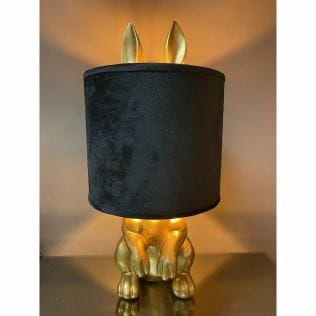
 Luxurious "Lucky Bunny" table lamp with black satin shade
88,00 €
Luxurious "Lucky Bunny" table lamp with black satin shade
88,00 €