On an unremarkable Tuesday morning in late autumn 2024, I stood before a display case in Fribourg, Switzerland, and suddenly realized that I had misinterpreted jewelry and gemstones my entire life. There was no pompous ring, no perfectly cut gem sparkling in competition with the others. Instead, I gazed upon a strange object: a rough, precious gemstone, brutally yet poetically set in a piece of broken ceramic—debris from an old bomb crater.
At that moment, it hit me like a ton of bricks. The flawless, smooth surface of the commercial jewelry market crumbled before my eyes. In the crafts and contemporary art of the years 2022 to 2026, gemstones and so-called healing stones have taken on far more significance than simply being status symbols or esoteric talismans. They have transformed into political statements.
When gazing at a captivating piece of jewelry, have you ever wondered where the line lies between all these sparkling wonders of nature? Precious stones, semi-precious stones, and healing stones – these terms often fly around in our everyday lives, often in a confusing and chaotic way. Join me on a journey of discovery into contemporary studios and let's explore together how artists are breathing new life into raw materials – and why traditional jeweler terminology no longer fits.
Who is who? The end of a historical classification
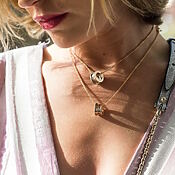
The Soul in Stone: How precious, semi-precious and healing stones shape modern art. Photo by Edz Norton @edznorton, via Unsplash
Before we take a look inside the workshops, we need to clear things up. As a collector of handcrafted items or a jewelry enthusiast, it's crucial to understand the fundamental differences. According to the traditional view, genuine gemstones are minerals that meet three strict main criteria: they must be exceptionally beautiful, rare, and also very hard, possessing a high Mohs hardness, which makes them scratch-resistant. A more in-depth scientific explanation can be found in the Encyclopaedia Britannica'sdefinition of gemstone
In the art of jewelry making, the "Big Four" are traditionally considered particularly valuable for centuries. They are frequently found in exclusive jewelry featuring precious stones :
The diamond: As the hardest known mineral on Earth, it is undoubtedly the symbol of clarity, imperishability and strength.
The ruby : Its deep red color has made it the ultimate symbol of passion and love for centuries .
The sapphire: It usually shines in a deep blue, but is available in many colors (except red) and is traditionally regarded as a symbol of wisdom.
The emerald: As a deep green beryl variant, it is the symbol of hope, renewal and life.
All other minerals, which may have a beautiful shine but lack the extreme hardness or rarity of the big four, have traditionally been classified as "semi-precious stones." But here's the crucial point for you as an art lover:
The classification into "precious" and "semi-precious" arose historically and for commercial reasons, but it has no scientific basis! In today's world of jewelry, the boundaries are becoming increasingly blurred, which is why many professionals prefer the neutral term "gemstone" for all stones used in jewelry
Gemstone vs. Semi-precious stone vs. Healing stone in direct comparison
To give you a quick overview, we have summarized the differences in a clear table:
category
definition
Examples
criterion
gemstone
Historically classified as the "most valuable" type of stone
Diamond, ruby, sapphire, emerald
Rarity, hardness, tradition
semiprecious stone
All other gemstones
Amethyst, rock crystal, rose quartz, aventurine
No scientific difference to the gemstone
Healing stone
Stone with traditionally attributed energetic properties
Amethyst, rose quartz, tourmaline
Attribution, not scientifically proven
The digital pulse: What search engines reveal About us desires
Our search behavior also reflects this confusion surrounding terminology. A look at Google search results from 2025 and 2026 for key terms like "gemstones handicrafts" or "healing stones definition" reveals a significant content gap. While on the one hand, articles with high technical standards about carat weight and hardness can be found, on the other hand, esoteric forums are widespread.
But according to the latest SEO metrics, what we as users really want is meaning. Content design that aims to be successful today must also consider psychology. We are interested in the question of why we feel drawn to a particular stone, regardless of its historical significance or magical superstition.
The new material democracy: A game between art and destruction
In Fribourg, it was precisely this level of meaning that impressed me so much. The exhibition "BS Kosmos – 50 Years of Creation" the works of the Swiss artist Bernhard Schobinger . He practices an extreme form of "material democracy ." Schobinger uses precious gemstones and forces them into a dialogue with industrial waste. A sapphire encounters an old saw blade; a rock crystal meets fragments of a bomb.
The stone no longer serves to display wealth; rather, it becomes a witness to history. Schobinger contrasts the transience of our constructs with the timeless indestructibility of gemstones. He demonstrates that a flawless stone gains narrative value by defying expectations.
Light sculptures: The legacy of the Munsteiners
While Schobinger seeks out social contrasts, other artists simply view the stone as sculpture. The German Munsteiner family from Idar-Oberstein is indispensable when it comes to the modern processing of gemstones.
Bernd Munsteiner, who passed away in 2024, and his son Tom (who died in 2023) redefined the art of gem cutting. Bernd Munsteiner invented the "Fantasy Cut." Instead of forcing quartz into classic, weight-preserving oval shapes, he created veritable architectures within the stone. The negative cuts refract light, much like the light in a Gothic cathedral. Today, Philipp Munsteiner continues this legacy. He demonstrates that the stone itself is the space the artist enters. This is a striking example of the fusion of classical craftsmanship and contemporary sculpture.
"The Gemstone Apothecary": Healing Stones in Psychology
Let's turn to a category that is often misunderstood: the healing stone. A healing stone is not classified according to geological criteria, but solely by its energetic or healing properties traditionally attributed to it. Geologically speaking, it can be either a precious or a semi-precious stone.
This category is heavily dominated by semi-precious stones. The absolute favorites are:
The amethyst: As a beautiful purple variety of quartz, it is often used as a healing stone for calming purposes. It is a member of the quartz family, relatively common, and does not reach the hardness of the four classic gemstones, which has historically given it the status of a semiprecious stone.
Rock crystal: Icy clarity characterizes this clear quartz, and it is regarded as the "master healer" among healing stones.
Rose quartz: This delicate pink variety of quartz is internationally known as the traditional "stone of love" and emotional healing.
Aventurine: A fine, shimmering green quartz, often associated with luck and confidence.
The agate: a banded chalcedony that you can discover in numerous color variations and enchanting patterns.
For a long time, these stones were ridiculed by the elitist art world as "esoteric junk." However, designers like Danni Schwaag transformed the topic through demystification and an intellectual approach. As part of her master's project, The Gemstone Apothecary, at the Idar-Oberstein campus, she analyzes healing stones as "abstracted psychopharmacology."
The basic premise: It's not about scientifically unproven vibrations, but about the powerful placebo effect. In times of crisis, wearing aventurine provides a significant emotional anchor for greater confidence. The art of craftsmanship lies in aesthetically addressing this psychological burden through modern design – such as the contrast between cool 925 sterling silver and warm rose quartz.
Practical excursion: How to recognize real treasures
In today's world, where the value of a work of art often exceeds its material worth, collectors must still consider a significant practical question: How do you actually determine that the materials you are working with are genuine? Due to the many imitations on the market, you should heed these tips to verify the authenticity of various types of gemstones:
Check the weight and hardness: Compared to plastic or glass, real stones are usually heavier and feel cooler. The hardness compared to known imitations can also be a significant indicator.
Note natural inclusions: Flawless stones are extremely rare and therefore command a high price. Small irregularities or inclusions (such as the "jardin" in emeralds) are a strong indication of a natural origin.
Request certificates: When buying expensive stones, it is advisable to always request proof of origin or a corresponding certificate from the specialist dealer.
Consult experts: If you are unsure, you should definitely consider an independent gemological examination.
The old classification – a look back at its dwindling relevance
The strict division into "precious" and "semi-precious" is primarily based on tradition these days. Don't be blinded by old labels. An extremely rare, high-quality semi-precious stone, such as a fine tsavorite or an exceptional tourmaline, can be worth far more today and fetch higher prices than a small, cloudy gemstone.
Whether it's Bernhard Schobinger's avant-garde rubble sculpture, the ingenious light refractions of the Munsteiner family, or the psychologically evocative jewelry creations of young designers – contemporary craftsmanship has become independent. In 2026, beauty, rarity, and your personal, emotional connection to the stone are far more important than the historical label once attached to it.
When an artist today polishes or sets a stone, often in deliberate contrast to everyday trash, they do so to hold a mirror up to us. The stones no longer radiate solely for their own sake – they radiate to remind us who we are.
FAQ
What is the difference between a precious stone and a semi-precious stone?
The difference is not scientific, but historical. Gemstones were traditionally considered harder, rarer, and more valuable, while all other attractive minerals were grouped together as semiprecious stones.
Which four stones are traditionally considered "true" gemstones?
The classic four include diamond, ruby, sapphire and emerald.
Is a semi-precious stone less valuable than a precious stone?
Not necessarily. A high-quality, extremely rare semi-precious stone (such as a fine tsavorite or a rare tourmaline) can be significantly more expensive and valuable than a small, cloudy gemstone.
What distinguishes a healing stone from a gemstone?
A healing stone is defined by its esoteric or energetic properties, not by geological characteristics. Therefore, a gemstone can also be used as a healing stone.
How can I recognize a genuine gemstone?
You can recognize it by its weight (heavier than plastic), its temperature (it cools down more quickly than glass), and its natural inclusions. For valuable pieces, only a gemological certificate offers 100% certainty.
Why is amethyst considered a semi-precious stone and not a precious stone?
Although amethyst is beautiful, it belongs to the quartz family. It occurs relatively frequently in nature and does not reach the hardness of the four classic gemstones, which is why it was historically classified as a semiprecious stone.
Owner and Managing Director of Kunstplaza . Publicist, editor, and passionate blogger in the fields of art, design, and creativity since 2011. Graduated with a degree in web design from university (2008). Further developed creative techniques through courses in freehand drawing, expressive painting, and theatre/acting. Profound knowledge of the art market gained through years of journalistic research and numerous collaborations with key players and institutions in the arts and culture sector.
We use technologies such as cookies to store and/or access device information. We do this to improve your browsing experience and to display (non-)personalized advertising. If you consent to these technologies, we can process data such as browsing behavior or unique IDs on this website. Refusal or withdrawal of consent may adversely affect certain features and functions.
Functional
Always Active
Technical storage or access is strictly necessary for the legitimate purpose of enabling the use of a specific service expressly requested by the subscriber or user, or for the sole purpose of carrying out the transmission of a message over an electronic communications network.
Preferences
The technical storage or access is necessary for the legitimate purpose of storing preferences that were not requested by the subscriber or user.
statistics
Technical storage or access that is solely for statistical purposes.Technical storage or access that is used solely for anonymous statistical purposes. Without a subpoena, the voluntary consent of your internet service provider, or additional recording by third parties, the information stored or retrieved for this purpose cannot generally be used to identify you.
marketing
Technical storage or access is required to create user profiles, to send advertising, or to track the user on one or more websites for similar marketing purposes.




 Modern design table lamp "White Gold Emma"
115,00 €
Modern design table lamp "White Gold Emma"
115,00 €


