Art has a significant influence on the fashion world and on the creativity of fashion designers. Here is our attempt to decipher this intricate network of relationships by examining the most significant collaborations.
Since the emergence of haute couture in the 19th century, art and fashion two realms that attract each other, blending aesthetics with passion. The inseparable connection between these two disciplines is evident in the way fashion designers draw inspiration from the works of artists and vice versa. They recognize a wealth of shared ideas and themes that run through both worlds, creating a creative synergy that enriches both fashion and art.
Indeed, fashion is not merely about wearing clothes ; it is an expression of personality, social identity, and—especially—artistic creation. Fashion designers often draw inspiration from various art movements, be it Impressionism, Surrealism, or even contemporary trends like street art. This interplay creates innovative designs that not only please the eye but also offer deeper cultural commentary.
Artists such as painters, illustrators, and photographers have become key players in the fashion world, their contributions directly enhancing the aesthetic value of a collection. In this process, the designer often sets the direction, while mutual recognition of each other's achievements drives the entire process forward.
A central aspect of this interplay is the enjoyment of representing society . Both spheres respond to and reflect social issues. While fashion tends to be viewed as a fleeting trend, it continues to strive for recognition as an art form. To move beyond preconceived notions and transcend these limitations, numerous designers have directly integrated artists into their creative processes.
The connection between fashion and art resembles a complex love affair. Photo by Charlota Blunarova @charlotabunarova, via Unsplash
This collaboration allows them not only to create unique pieces, but also to explore new perspectives and challenge existing conventions. By combining visual art and fashion, they are shaping existing standards and expanding awareness of the potential of both disciplines.
Can fashion be considered art? This question has been asked repeatedly for centuries and requires closer examination.
The fashion industry has long sought to establish itself as an art form. Outstanding and complex designs exist that could clearly be considered works of art. Numerous haute couture creations find their place in art museums, as they represent the craftsmanship involved in working with fabrics.
Fashion can be just as impressive and expressive as classical art forms like painting and sculpture. But can fashion be universally considered art?
"The expression or application of human creative abilities and imagination, typically in visual form such as painting or sculpture, resulting in works that are valued primarily for their beauty or emotional power.".
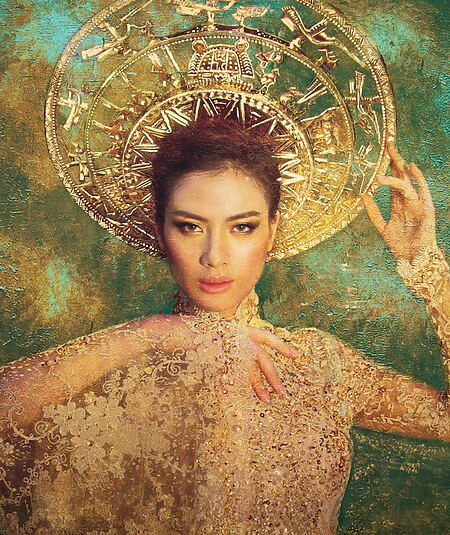
Many garments and accessories created by renowned designers such as Alexander McQueen, Yves Saint Laurent , or Guo Pei could be classified as art. Their designs demand creative skill and imagination. Fashion is also perceived visually and valued for its aesthetics.
Is fashion art? This question is not easy to answer. Photo by naeim jafari @naeimj, via Unsplash
Nevertheless, the debate about whether fashion qualifies as art becomes more complex when considering a simple white T-shirt. These are undoubtedly essential elements of expressive outfits inspired by street fashion. However, on their own, they don't create a compelling aesthetic. Another aspect of the definition of art relates to its emotional impact.
Robert Ryman 's minimalist painting "Bridge" sold at auction for $20.6 million. What makes a white-painted canvas art? Or consider Mark Rothko . To the untrained eye, these resemble a batik technique on canvas.
Robert Ryman's white-on-white paintings, for example, emerged from the Minimalism movement of the late 1950s. It was a reaction against the Abstract Expressionist movement that dominated the 1940s and 50s. The idea of the painting itself is what makes it art. The experience of looking at a white-painted canvas is the art. The painting is a representation of possibility and its reflection.
A white T-shirt is hardly worth $20.6 million. Nevertheless, it offers its wearer opportunities for combination and personalization, and can be identity-defining and a statement. Every stain, every tear, and every hole can contribute to the wearer's overall expressive story and emotional power.
This comparison highlights the complexity of the issue.
The French fashion designer Yves Saint Laurentsums up an interesting perspective with the following quote:
Fashion is not an art, but needs an artist to exist”
Interview series “Is Fashion Art?” from the Metropolitan Museum of Art Bulletin
In November 1967, the Bulletin of the Metropolitan Museum of Art a fascinating series of interviews with the provocative title “Is Fashion Art?” . The French fashion magazine L'Officiel Austria reported on it.
This series of interviews brought the often-perceived contrasting fields of fashion and art into a profound dialogue for the first time. Indeed, fashion and art have consistently influenced and inspired each other throughout the centuries, with both forms of expression pursuing the same overarching goal: the expression of emotions.
The bulletin concludes that these are two different but complementary manifestations of human creativity that are, in a sense, in a constant creative exchange.
There are countless opportunities in everyday life to encounter impressive works of art. It's not uncommon for these works to evoke such intense feelings that one almost feels them physically – as if every line, every gradation of color, and every texture were part of a profound sensory experience. According to one of the interviewees, it is these emotional responses that make both art and fashion unique; they have the power to transform our visual habits and our self-understanding.
It is remarkable to note that fashion often possesses the ability to translate those abstract sensations previously evoked by a work of art into tangible reality. The fusion of artistic expression and fashionable design allows the invisible to become visible. Moreover, many iconic works of art throughout history have found their way into the world of fashion, imbuing garments with a special semiotic meaning that extends far beyond the physical.
This symbiosis between the two disciplines has produced numerous outstanding collaborations in the past.
Legendary collaborations between fashion designers and artists
Numerous designers have drawn inspiration from artistic masterpieces throughout their careers – works that often unexpectedly challenged their own ideas about fashion and encouraged them to push beyond familiar boundaries. By integrating elements of contemporary or classical art into their collections, they created remarkable pieces in which art and fashion merged on fabric.
This interdisciplinary approach continues to prove both fruitful and enriching; it adds new dimensions to the artistic dialogue and invites viewers to consider both the clothing and the artworks with renewed attention. The spirit of creative endeavor lives in this fusion – it demonstrates that the unique union of fashion and art not only creates aesthetics but also generates deeper emotional resonance.
Elsa Schiaparelli & Salvador Dalí
The perception of a garment's uniqueness is significantly enhanced when it incorporates an artistic element—a realization masterfully realized by the renowned Italian fashion designer Elsa Schiaparelli. She maintained close friendships with prominent artists such as Andy Warhol , Pablo Picasso , Man Ray , and the legendary Surrealist Salvador Dalí . Throughout the 20th century, she designed numerous pieces whose exceptional designs illuminated the brilliance and creativity of the fashion world.
In the 1930s, Salvador Dalí and Elsa Schiaparelli formed a fascinating duo at the intersection of fashion and art. Elsa contributed her exceptional talent as a stylist to Dalí's masterpiece "Vêtements de Nuits et de Jour" (Night and Day Wear), while Dalí collaborated on the design of the iconic "Robe Homard" (Lobster Dress) and the distinctive shoe hat. The patterns developed by the artist lent a special value to the creations of the then-designer and allowed her to gradually immerse herself in the captivating world of art.
The organza dinner dress with the artfully painted lobster is considered one of the first masterful results of the collaboration between a fashion designer and an artist.
Wallis Simpson in a sensational Vogue editorial in 1937
“Robe Homard” – The surreal worlds of Elsa Schiaparelli in a sensational exhibition from 2022 to 2023 at the Museum of Decorative Arts, Paris. Image source: Arroser, CC0, via Wikimedia Commons
Surprisingly, the lobster dress initially met with mixed reactions, as some contemporaries perceived the placement of the crustacean on the skirt as erotic and provocative. This fascinating tension between provocative art and innovative fashion invites the viewer to delve deeper into the historical significance of this extraordinary garment.
Exposition Elsa Schiaparelli 2022-2023, Musée des Arts décoratifs, Paris Image source: Arroser, CC0, via Wikimedia Commons
By combining Schiaparelli's avant-garde design with Dalí's surreal vision, the dress gains not only a fashionable but also a cultural relevance that continues to impress today.
In 2022, museums around Paris paid tribute to the legendary fashion designer Yves Saint Laurent , whose work is deeply rooted in the world of art. Even as a child, the passionate art lover developed close relationships with various artists. These encounters shaped his creative work and found expression in his designs.
A prime example is the Autumn/Winter 1965 collection , in which Yves Saint Laurent presented a remarkable selection of dresses that paid tribute to artists such as Piet Mondrian,Henri Matisse, Pablo Picasso , and Andy Warhol . This collection represents not only fashion expertise but also the inspirational power emanating from these great figures.
As part of a comprehensive exhibition entitled "Yves Saint Laurent aux musées," six Parisian museums presented the designer's iconic designs and ensembles alongside important art collections. The exhibition aimed to highlight the fascinating exchange between designers and artists, demonstrating that each fashion piece also reflects the artistic relationship with the respective artists.
Nevertheless, fashion often remains in the shadow of high art and is not always recognized as such. The late Karl Lagerfeld held the view that fashion and art are two separate realms. This assessment is also understandable, since contemporary works of art can endure for generations, while fashion is subject to continuous change to meet ever-evolving commercial demands.
Although it was not a full-fledged collaboration, but rather a source of inspiration, Yves Saint Laurent's collection dedicated to the masterpiece Piet Mondrian undoubtedly represents one of the most remarkable examples of the fusion of fashion and art.
Left: Autumn-Winter 1965, Mondrian dress. Yves Saint Laurent. Wool jersey. Yves Saint Laurent Museum, Paris. Right: Composition in Red, Blue and Black II. Piet Mondrian (1872-1944), 1937. National Museum of Modern Art, Paris. Image source: dalbera, CC BY 2.0, via Wikimedia Commons
In the 1960s , as the sack dress evolved into a modified form of the shift dress, Saint Laurent recognized that the dress's planar nature offered an ideal canvas for incorporating blocks of color. Inspired by the lines and colors of Mondrian's renowned neoplastic era, he designed a collection consisting of just six garments. These pieces, characterized by black lines and vibrant hues, quickly became a symbol of haute couture's plasticity.
Considering the flat canvases created by contemporary artists in the 1960s in the style of Mondrian, Saint Laurent impressively embodies the artistic sensibility of his time. The international press raved about his exceptional artwork. Diana Vreeland praised it in the New York Times as “the best collection ,” while Women's Wear Daily crowned Saint Laurent the “ King of Paris.”
Mondrian fashion from Paris, dresses by Yves Saint Laurent, the models in the City Museum of The Hague. Image source: Eric Koch for Anefo, CC0, via Wikimedia Commons
This combination of fashion and art invites the reader to further explore the complex connections between these two creative disciplines and to engage with Mondrian's timeless influences.
Yves Saint Laurent & Vincent van Gogh
For his Spring/Summer 1988 collection, Yves Saint Laurent presented a masterful homage to the legendary artist Vincent van Gogh , remarkably merging not only the worlds of fashion but also those of art. At a time when the boundaries between different creative disciplines were increasingly blurring, Saint Laurent drew inspiration from van Gogh's iconic paintings "Irises and Sunflowers," transferring their vibrant palette and striking forms onto extravagant jackets. These were intricately embroidered by the renowned Maison Lesage , a workshop known for its exquisite craftsmanship.
The result of this creative process was far more than just fashion; it was a true work of art. Saint Laurent succeeded in capturing countless nuances and the finest details in the floral motifs – an undertaking that required over six hundred hours of intensive handwork for each jacket. This dedication to craftsmanship and attention to detail gave the garments a unique character, making them not only trendsetters but also valuable collector's items.
Evening jacket, “Homage to Vincent van Gogh,” Yves Saint Laurent, Spring-Summer 1988. Sequins, pearls, bugles, and ribbon embroidery by Maison Lesage. Exhibited at the Musée Yves Saint Laurent, Paris. Image source: dalbera, CC BY 2.0, via Wikimedia Commons
Therefore, these jackets became one of the most expensive fashion investments in the world and symbolize the fusion of art and fashion. Through this extraordinary collection, Yves Saint Laurent not only honored Van Gogh but also proved that fashion is far more than just clothing – it can be a voice for artistic expression that deeply touches and inspires even contemporary society.
Yves Saint Laurent & Andy Warhol
In the dazzling 1960s, Andy Warhol emerged as one of the most fascinating figures of the era, embodying a new kind of cultural icon who revolutionized the interplay between art and fashion. His arrival was not only remarkable but also ignited a sparkling interest in the art world within the fashion world, an intensity rarely seen before. With his distinctive aesthetic and avant-garde approach, Warhol captured the hearts of designers, artists, and fashion enthusiasts alike.
The friendship between Warhol and Yves Saint Laurent was particularly formative. These two creative minds found in each other not only a friend, but also a sparring partner who inspired and challenged one another. Warhol created an impressive series of colorful portraits of the designer , which not only captured Saint Laurent's personality but also reflected the vibrant spirit of the 1960s. At the same time, Saint Laurent made a clear statement with his groundbreaking Fall/Winter 1966 collection : He integrated elements of the Pop Art movement into his designs, thus giving fashion a new dimension. His creations were not merely wearable—they became the expression of a cultural revolution.
The impact of Warhol's influence on the fashion world is impressive and far-reaching. Numerous designers have drawn inspiration from his work and incorporated his iconic pieces into their collections. Names likeGianni Versace,Jean-Charles de Castelbajac, andRaf Simonstestify to the enduring fascination with Warhol's unique aesthetic. His art, which often blurred the lines between high and popular culture, cemented his status as a favorite artist in the fashion world and underscored his role as a catalyst for creative synergies between art and fashion.
Louis Vuitton & Jeff Koons
American artist Jeff Koons , considered the legitimate successor of Andy Warhol and a leading icon of contemporary Pop Art, has launched a fascinating collaboration with the renowned French fashion house Louis Vuitton . This partnership has resulted in an exquisite collection of bags and accessories that impressively reflects Koons' critical examination of consumerism.
Vuitton's iconic bags feature masterful reproductions of famous works associated Van Gogh, Titian, Fragonard , Leonardo da Vinci , and RubensSpeedy, Neverfull, and Keepall bags act as exciting canvases, illuminating the timeless compositions of these great masters in a new light.
The selected artworks include "Nymphaeus" by Claude Monet , "Agrippina with the Ashes of Germanicus" by Joseph William Turner , "Reclining Girl" by François Boucher , "Glorious Country" by Paul Gauguin , and "Luncheon on the Grass" by Édouard Manet . Another example of the harmonious fusion of art and everyday life, prompting reflection.
Louis Vuitton / Marc Jacobs & Stephen Sprouse, Takashi Murakami + Richard Prince
, Louis Vuitton has positioned itself as a pioneer in the world of artistic collaborations, as noted VOGUE GermanyMarc Jacobs , who served as creative director, an extraordinary tradition of working with international artists emerged. For example, Jacobs engaged the renowned Stephen Sprouse to reimagine the brand's iconic monogram for the Spring/Summer 2001 collection in a captivating graffiti interpretation. This partnership laid the foundation for a remarkable era.
One of the most significant collaborations was the 13-year partnership with Japanese artist Takashi Murakami , whose creative energy gave rise to the legendary “Multicolore” monogram bag in 2003. This handbag masterpiece quickly became the coveted It bag of the early 2000s and demonstrates a skillful fusion of art and fashion.
In addition, Jacobs collaborated with the provocative artist Richard Prince for the Spring/Summer 2008 show . For this impressive spectacle, models, including international supermodel Naomi Campbell, were sent down the runway in striking nurse costumes, showcasing yet another fascinating variation of the famous monogram.
Such bold and creative approaches have established Louis Vuitton not only as a fashion house, but also as a platform for artistic expression, inviting the public to further engage with this fascinating intersection of art and style.
Dior Men / Kim Jones &KAWS + Hajime Sorayama
Kim Jones , the former head of menswear collections at Louis Vuitton, initiated a remarkable development elsewhere by establishing Dior Menart promoted, thereby not only creating innovative designs but also opening up new perspectives on the relationship between these two disciplines.
For his debut collection at Dior Men, Jones collaborated with New York-based contemporary artist KAWS , whose work has garnered international acclaim and is known for its playful aesthetic. KAWS reinterpreted the house's iconic bee logo, giving it a fresh, modern feel through his distinctive embossing. This collaboration resulted in an exclusive capsule collection that blended the essence of the brand with artistic influences, captivating both fashion enthusiasts and art lovers.
Another captivating element of this collaboration was a gigantic version of Kaws' famous "BFF" character , crafted entirely from vibrant flowers. This impressive sculpture found its place on the runway set of Jones' Spring/Summer 2019 campaign , transforming the fashion show into a visual feast. The combination of floral elements and an iconic character from the art world created a symbiosis of creativity that truly enthralled the audience and heralded the connection between high culture and fashion.
Furthermore, Jones' Pre-Fall 2018 show in Tokyo featured another striking artwork: the imposing twelve-meter-high robot by Japanese artist Hajime Sorayama . This extraordinary sculpture was not only a technical masterpiece but also embodied Jones' futuristic and avant-garde vision.
Sorayama also had the privilege of designing a limited-edition bag for the collection, highlighting the versatility and innovative spirit of this fashion show. This unconventional approach to the fashion creation process underscores Jones's commitment to using fashion as a platform for artistic expression and to fostering dialogue between different creative disciplines.
Such impressive initiatives demonstrate that Kim Jones not only creates trends but also strives for a significant artistic legacy at Dior Men – a vision that could have a lasting impact on the world of fashion.
Miuccia Prada & Christophe Chemin
For her Fall/Winter 2016 collection, PradaChristophe Chemin . While many fashion designers choose established artists to enrich their collections and generate buzz, Miuccia Prada deliberately opted to collaborate with an artist who was largely unknown at the time.
Christophe Chemin, a Berlin-based artist and filmmaker, brought a fresh perspective to the collection. Particularly noteworthy were the shirts printed with his distinctive drawings, which stood out as real eye-catchers in a collection filled with capes and sailor jackets. This demonstrates Prada's courage to innovate and its willingness to explore new creative avenues.
Isabel Marant & I'VR Isabel Vollrath – Art in the DNA
Even though these two fashion designers haven't entered into direct collaborations with artists or used well-known artistic works as references, I wanted to include them in this list. What they both have in common is that an artistic approach is deeply ingrained in their DNA.
Isabel Marant – a name that isn't just whispered about in the fashion world, but leaves a powerful echo, as the lifestyle magazine Ajouré aptly put it. The Frenchwoman is not just a designer; she is a pioneer who masterfully understands how to establish her unmistakable signature in the fashion industry.
Born in Paris , a city often considered the vibrant center of fashion, Isabel was surrounded by creativity from her earliest childhood. The artistic atmosphere of her family decisively shaped her youth and thus laid the foundation for her impressive career. Isabel Marant embodies a style frequently described as "boho-chic ." However, this categorization falls short of adequately capturing the depth and complexity of her designs. Marant herself views fashion as an expression of individuality and freedom—a philosophy far removed from the constraints of fleeting trends.
Her innovative approach and her flair for the extraordinary make Isabel Marant a significant voice in the fashion world.
Isabel Vollrath, of , is not just a designer, but an artist who loves life in all its facets and brings them to life. Her passion for fashion is not merely superficial, but permeates every aspect of her creative work. At Fashion Week 2016, it became strikingly clear how fundamentally and profoundly Isabel's art unfolds, resulting in a collection of extraordinary extravagance.
The show was more than just a celebration of fashion; it was a harmonious fusion of visual spectacle and musical accompaniment. The bass-heavy electronic music that permeated the atmosphere lent the presentation an energetic depth and immersed the audience in a new dimension of experience.
Each outfit told its own story and offered a unique perspective on the different facets of identity and self-confidence. Isabel Vollrath masterfully integrates her personal experiences and influences into her fashion. Her collection not only stands out from the crowd but also challenges the audience to actively engage with the themes of individuality and self-expression.
Fashion Week 2016 was an impressive canvas for Isabel's creative visions. Her ability to interpret fashion as a form of contemporary art has made her a fixture in the fashion world and awakens a desire for more: more inspiration, more creativity, and above all, more of these extraordinary experiences.
Sources, expert support and further information:
VOGUE Germany:Fashion meets art: The most legendary collaborations of all time , https://www.vogue.de/mode/artikel/die-besten-mode-kunst-kooperationen-aller-zeiten
VOGUE Germany : Kim Jones on his Dior show in Tokyo: “I’m quite happy to be commercial. You have to be these days to survive in these big jobs .” https://www.vogue.de/mode/artikel/dior-homme-pre-fall-18
IFA Paris : The Influence of Art on Fashion , https://www.ifaparis.com/the-school/blog/the-influence-of-art-on-fashion
University Fashion Group : Is Fashion Art? , https://universityfashiongroup.org/2021/12/01/is-fashion-art/
L'OFFICIEL Austria : Collaborations between fashion and art that have shaped history, https://www.lofficiel.at/fashion/the-collaborations-between-fashion-and-art-that-have-marked-history
Owner and Managing Director of Kunstplaza . Publicist, editor, and passionate blogger in the fields of art, design, and creativity since 2011. Graduated with a degree in web design from university (2008). Further developed creative techniques through courses in freehand drawing, expressive painting, and theatre/acting. Profound knowledge of the art market gained through years of journalistic research and numerous collaborations with key players and institutions in the arts and culture sector.
We use technologies such as cookies to store and/or access device information. We do this to improve your browsing experience and to display (non-)personalized advertising. If you consent to these technologies, we can process data such as browsing behavior or unique IDs on this website. Refusal or withdrawal of consent may adversely affect certain features and functions.
Functional
Always Active
Technical storage or access is strictly necessary for the legitimate purpose of enabling the use of a specific service expressly requested by the subscriber or user, or for the sole purpose of carrying out the transmission of a message over an electronic communications network.
Preferences
The technical storage or access is necessary for the legitimate purpose of storing preferences that were not requested by the subscriber or user.
statistics
Technical storage or access that is solely for statistical purposes.Technical storage or access that is used solely for anonymous statistical purposes. Without a subpoena, the voluntary consent of your internet service provider, or additional recording by third parties, the information stored or retrieved for this purpose cannot generally be used to identify you.
marketing
Technical storage or access is required to create user profiles, to send advertising, or to track the user on one or more websites for similar marketing purposes.






 Terracotta belly vase "Styly" with raffia details, black (size: L)
Original price was: €65.9532,95 €The current price is €32.95.
Terracotta belly vase "Styly" with raffia details, black (size: L)
Original price was: €65.9532,95 €The current price is €32.95.


