In a world where esthetics, identity, technology, and sustainability are increasingly intertwined, the year 2025 marks a turning point for creative expressions. Art, culture, fashion, and interior design merge into a shared experiential space where boundaries increasingly blur.
We live in the era of openness – whether it be for new materials, fresh perspectives, or previously unknown narratives. Like never before, the creative discourse is shaped by the need for authenticity and sensuality. It's no longer just about pleasing design; one wants to view life itself as a work of art.
This trend can be seen in galleries, on catwalks, in design studios, and even in our living rooms. Creative minds are searching for ways to tell stories that evoke emotions and convey values. An inspiring blog like Curatoro – for art, culture, fashion, and interior design – captures this spirit and creates space for reflection, inspiration, and exchange.
Art in the digital age: From traditional painting to NFT
Art has been undergoing a profound transformation for years. There is far more than just the traditional canvas to showcase creativity. New digital media, virtual galleries, and blockchain technologies are creating innovative spaces for artists to express themselves. Although NFTs (non-fungible tokens) are controversial, they have ushered in a new era in which ownership, value, and creativity take on a different meaning.
Artists have since created hybrid works that oscillate between physical and digital reality – they paint with data, compose with algorithms, and create virtual worlds that constantly change.
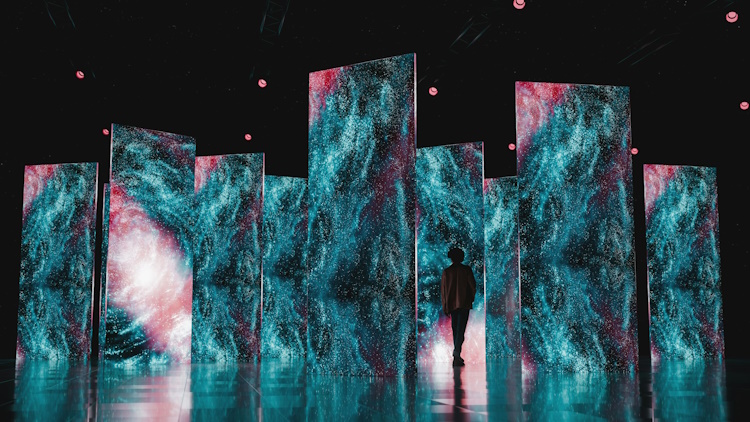
This new art form invites viewers to become active participants. They are no longer merely consumers of a work, but rather become part of the experience. Through augmented and virtual reality, it is possible to immerse oneself in images, experience emotions, and discover places that once existed only in the imagination. It is no longer just about the presentation of the final product; the focus is now on the creative process itself – on the interaction between humans and machines, between reality and vision.
Today, art is far more than an object of contemplation – it is experienced, shared, and everyone can participate in shaping it.”
The art markets and institutions are experiencing a transformation in their functions due to this development. Galleries are evolving into platforms for immersive experiences, while collectors are becoming curators of digital identities. The democratization and access to art, however, also make it more complex.
The boundaries between artist and audience are disappearing, while new questions arise:
Who owns a digital work?
How can creativity be protected if it is reproducible?
The current discourse is shaped by these debates, and they illustrate how closely aesthetics and technology are linked today.
Moreover, the digital transformation brings new opportunities for sustainability. Digital exhibitions reduce transport and storage costs, virtual artworks do not create physical waste yet leave a lasting impression. This can be summarized as follows: Art that wants to look to the future must not only think visually in new ways but also act responsibly – it must think beyond its own horizons and reflect on the role of creativity in a changing world.
Cultural change: The balancing act between tradition and innovation
Cultural transformation struggles to balance tradition and innovation. Photo by Mohamed Nohassi @coopery, via Unsplash
A society is reflected through its culture – and by 2025, this reflection is changing faster than ever before. New digital, inclusive, and participatory forms of expression, while traditional values and craftsmanship are being rediscovered. Theatre productions are hybrid, exhibitions are enhanced with virtual reality experiences, and artists worldwide are connecting in global communities. The result is a complex, dynamic culture that maintains a balance between past and future.
Two years ago, scenographer and musician Franziska Ritter presented various applications for working with immersive technologies at the intersection of theatre, music, and digital technology in the Art & Tech Talk . Her presentation was based on research conducted within the DTHG project "Im/material Theatre Spaces".
At the same time, local culture is experiencing a revival. Awareness of regional identity, sustainable materials, and artisanal aesthetics is growing. In times of global crises, the need for rootedness, authenticity, and cultural belonging is stronger than ever. By reinterpreting local traditions, artists are creating works that connect past and present. Narrative forms are emerging that draw from the deep past while simultaneously looking toward a global future.
A prime example is the revival of traditional crafts. Weaving, ceramics, woodcarving, and textile art are experiencing a resurgence. But they don't feel nostalgic; they are modern. This new culture of making things emphasizes the importance of time, patience, and individuality. In the digital world, traditional crafts become a counterpoint—a symbol of awareness, of the human element in creativity.
The promotional video of the German Stonemasons' Association tells the masterful story of a traditional yet future-oriented industry. It is a tribute to the multifaceted material of natural stone and to all the people who dedicate themselves to it with passion and craftsmanship in their work.
Exemplary developments in cultural transformation:
Revitalization of regional craftsmanship
Digital archives and virtual museums: A path to broader cultural participation
Interactive exhibitions: Visitors become co-creators
Cross-border cooperation and art festivals
In 2025, culture will become a vibrant exchange. It will create connections instead of divisions, bringing together past and future, humanity and technology. New forms of aesthetic storytelling will emerge from this dynamic interplay, expanding the cultural landscape. A generation will rethink cultural responsibility: they will be shaped by a spirit of innovation and mindfulness, not as a preservation of the old, but as a creative evolution.
Fashion as a reflection of values: sustainable, courageous, conscious
In 2025, fashion embodies societal attitudes, reflects values, and serves as a means of communication, demonstrating how people position themselves in an increasingly complex world. The principles of sustainability, transparency, and individuality have established themselves as central guiding principles, influencing both design processes and consumer choices. Instead of following short-term trends, designers focus on timeless pieces, high quality, and authenticity.
Clothing is a storyteller – it speaks of origin, of responsibility and of self-determination.”
The concept of "slow fashion"is central to this movement. It's a conscious response to mass production and fleeting fashion trends. Designers focus on durable materials, fair production conditions, and timeless designs that endure beyond seasons. Consumers are rediscovering fashion as an expression of identity and attitude, rather than as a disposable product. This means that choosing a garment becomes a conscious decision, an act of self-expression.
Designer Kathrin Schiefer provides an impressive example of slow fashion made from sheep's wool between Spessart and Karwendel:
A little bit of spinning – that's a family tradition in Kathrin Schiefer's family. Like her mother Maria, the designer from Rosenheim creates fashion from hand-spun wool and hand-woven fabrics.
The fashion world, too, is being transformed by technological advances. In the metaverse, digital collections and virtual try-ons are already a reality. There are now designers creating digital garments that can be worn on social media platforms, even though they exist only digitally. This development not only offers creative freedom but also reduces the strain on resources. Virtual fashion is becoming a playground for aesthetics, identity, and sustainability. A new era of fashion expression is emerging from the fusion of technology and craftsmanship, where innovation and awareness converge.
trend
Description
Slow Fashion
Focus on quality, durability and conscious consumption
Digital Couture
Virtual fashion and AR designs for social media & metaverse
ReCraft
Upcycling and creative reuse of old fabrics
Biofabrication
Clothing made from biotechnologically produced materials
Transparency
Traceable supply chains and open production processes
At the same time, individuality is becoming the primary motivation. In an era where the desire for authenticity is strong, clothing should be customizable, modular, and adaptable. The days of mass-produced goods are over; consumers want fashion that reflects their lives – flexible, functional, and emotional.
Here, the roles of designer and wearer blur, as they create together. This participatory understanding of fashion proves that the future of fashion should not be exclusive, but inclusive – based on the idea that style is a dialogue.
Recent examples that illustrate this transformation:
Fashion becomes a canvas for attitude and individual expression.
"Statement shirts" and graffiti aesthetics: clothing serves as a direct medium for conveying messages. The graffiti trend brings the raw energy of street art into fashion with vibrant colors and dynamic patterns, representing creative freedom of expression and individuality .
Sensual textures and shapes: The use of bubble and 3D printing gives fashion three-dimensional, voluminous forms. At the same time, a romantic touch returns with soft, fluffy fabrics that emphasize sensuality and well-being
Upcycling and Eco-Fashion: Major fashion houses and niche brands are increasingly focusing on upcycling collections (e.g., from production remnants, old clothes, or even plastic) as an ecological alternative to overconsumption, demonstrating the inseparable link between aesthetics and a culture of responsibility (sustainability).
Digital aesthetics: Patterns and ornaments receive a modern upgrade through floral graphic patterns and digitally inspired designs.
Interior design: Spaces with character and soul
In 2025, interiors will be a refuge, but also a space for self-realization; they will be an expression of feelings and inner states. While design previously focused on beauty and status symbols, today the emotional quality of a space is paramount. Rooms should tell stories, offer security, and simultaneously convey openness. A new zeitgeist in interior design will be characterized by the fusion of naturalness, technology, and atmosphere.
The design of living spaces is changing due to the trend towards "emotional architecture." When selecting furniture and materials, not only style plays a role, but also the feeling it evokes. Materials such as wood, linen, clay, and stone bring grounding and tranquility, while lighting installations and soft colors create a harmonious atmosphere.
In a TEDx Talk nine years ago, architect Adrian Bicathat the world we create is no longer capable of evoking the emotions it once did. Adrian aimed to shed light on this problem so that together we could restore the lost relationship between humanity and architecture.
During his architectural studies, he had noticed that buildings had lost the emotional appeal they once possessed. Rather than becoming mere technological tools in modern society, Adrian championed the idea that our general attitude toward buildings could alter our emotional experience with them. This shift, Adrian said nearly a decade ago, is more obvious than we think. He would be proven right…
Eight building components, 38 cones, 70 percent less energy consumption – querkraft Architekten from Vienna designed a building for Expo 2020 in Dubai that largely dispensed with air conditioning technology and yet stood out as a cool oasis. This was made possible by a ventilation concept based on local building traditions, combined with innovative, sustainable, and above all, deeply emotional architecture.
Sustainability is paramount. Sustainable materials, modular furniture, and energy-efficient lighting systems are not only aesthetically pleasing but also environmentally friendly. The apartment becomes a conscious counterpoint to the noisy, digital outside world.
Another crucial factor in contemporary interior design is the sensory experience. Spaces must touch us, inspire us, and slow down the pace of life. To create an atmosphere, textures, scents, and sounds are consciously used. This involves a new perspective on minimalism – not as deprivation, but as a focus on what truly matters.
The motto is: less, but better. Opulent decoration is passé; now harmony, balance and intention count
Key design principles for 2025:
Use of natural, renewable materials
The combination of usability and emotional impact
An unobtrusive approach to integrating smart technologies
Flexible room design for multifunctional living
Recent examples that illustrate this transformation:
The interior design, with its "grounding maximalism" and "tangible art," shows a clear departure from cold, neutral monochromes and bright white.
A return to warmth and naturalness:Earth tones such as mocha mousse, caramel, deep brown and red tones (burgundy, terracotta) as well as richer blue and green tones dominate , creating a connection to nature and promoting well-being .
"Grounding maximalism": This trend combines the abundance of maximalism with the grounding effect of natural materials and rounded forms. It replaces the overabundance of furniture with bold color combinations and extravagant accents that still create a harmonious, warm atmosphere.
Authenticity through craftsmanship: There is an increased demand for tangible art made of glass and clay , and for unique pieces rather than mass-produced goods. Traditional craftsmanship and vintage revival (e.g., neo-baroque minimalism or the comeback of the 80s/90s in a contemporary style) lend spaces character and tell a story, thus fulfilling the need for authenticity.
Sustainable materials: The use of recycled or rapidly renewable materials (such as hemp fibers, recycled glass, metal, and polyethylene) combined with a calm, deliberate, and authentic aesthetic reflects this. This development proves that successful design doesn't have to be intrusive to be effective; it should simply resonate. Spaces of well-being are created when people live in harmony with their surroundings. Secondhand furniture makes a powerful statement about environmental awareness and durability.
Living spaces thus become a stage for the self, where design and personality unite. The inner attitude—calm, conscious, and authentic—is reflected in the aesthetics. This development proves that successful design doesn't have to be intrusive to be effective; it should simply resonate. Spaces of the soul are created when people live in harmony with their surroundings.
The connection between disciplines: Where everything comes together
The current creative transformation derives its greatest appeal from the dissolution of boundaries. Art influences fashion, fashion inspires design, and design shapes culture – and everything is interconnected. A network of aesthetic impulses emerges, mutually nourishing and supporting each other.
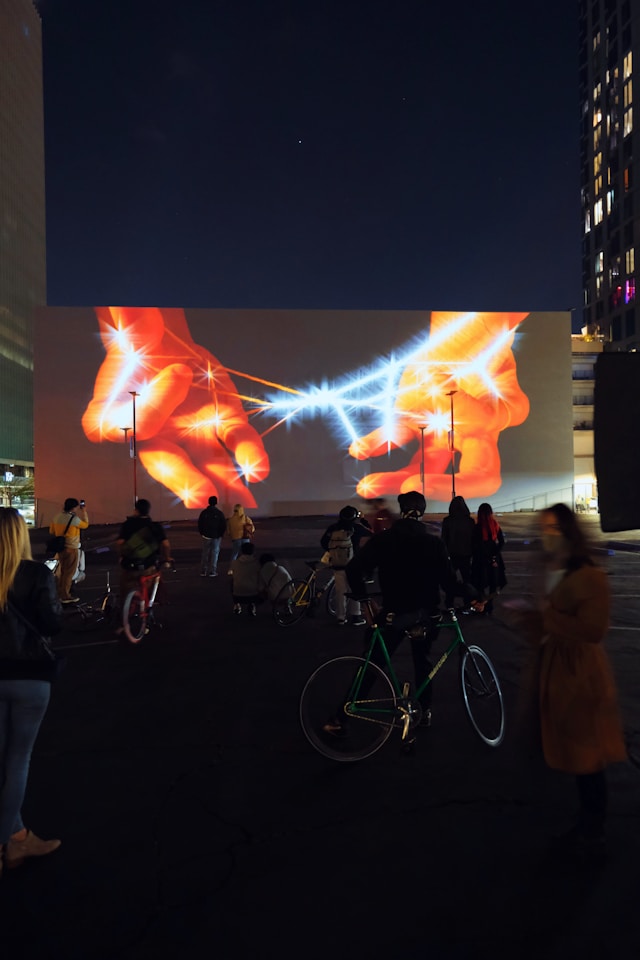
A mural is admired by nighttime passersby – the motif could be symbolic of our theme. Photo by Mike Von @thevoncomplex, via Unsplash
Interdisciplinarity is no longer the exception, but the norm. Creative minds are collaborating across genre boundaries to create holistic experiences. Whether through fashion collections in galleries or installations that transform space into a walk-in sculpture, this interdisciplinarity signals a new way of thinking about creativity.
This approach also reveals a societal need: the pursuit of meaning.”
Today, people aren't just looking for products; they want experiences that move, connect, and inspire them. That's why creative brands, artists, and designers are increasingly adopting a conceptual approach. Their artworks tell stories—about sustainability, community, and change. The boundaries between consumption, culture, and art are no longer clearly defined. A dress can make a political statement, a room can become a stage for everyday life, and a sculpture can invite interaction.
Curatoro, the blog about art, culture, fashion, and interior design, utilizes precisely these fluid transitions. It sees itself as a curated platform for all those who want to explore the creative interplay of modern lifestyles. It observes not only what is happening in these areas, but also how they influence one another.
A glimpse into a creative future
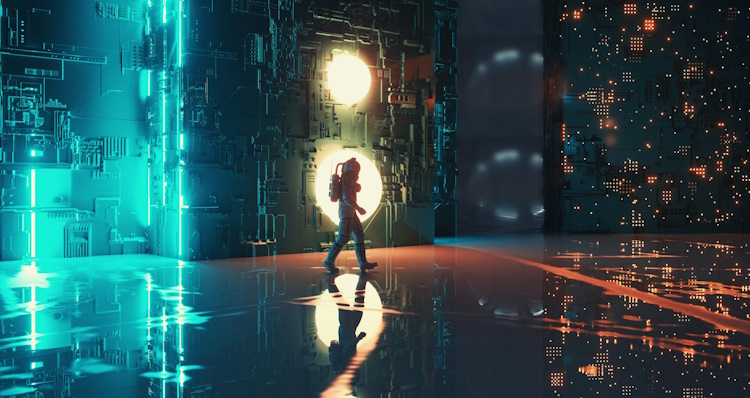
Quo vadis, creative world? Photo by Getty Images @gettyimages, via Unsplash
The future of art, culture, fashion, and interior design will undoubtedly continue to be shaped by the need for depth, responsibility, and innovation. By 2026, the full extent to which creative forms of expression can influence social life will be fully recognized. Creativity will be used as a tool for reflection, as it enables us to understand complexity and to shape emotions that connect us.
A global awareness of sustainability and social responsibility accompanies this development. Aesthetics alone are not enough for them: Young female artists, designers, and architects see themselves as shapers of a more promising future. They are experimenting with biodegradable materials, developing inclusive formats, and using technologies to overcome obstacles.
Young creatives are being asked to embrace nothing less than a new understanding of beauty – one based on ethics, authenticity, and empathy.
In the future, there will be room for imagination. Aesthetics will not be dogmatic, but playful. It will allow for contrasts and rely on diversity, creating new perspectives instead of closing them off.
The creative energy of 2025 is not a passing phenomenon, but a cultural manifesto. In a present full of crises and social hardship, it calls upon us to create a more conscious, beautiful, and humane world.
Owner and Managing Director of Kunstplaza . Publicist, editor, and passionate blogger in the fields of art, design, and creativity since 2011. Graduated with a degree in web design from university (2008). Further developed creative techniques through courses in freehand drawing, expressive painting, and theatre/acting. Profound knowledge of the art market gained through years of journalistic research and numerous collaborations with key players and institutions in the arts and culture sector.
Category for interior architecture, interior design, room design, home design, commercial furnishing, product and material innovation.
Here you'll find everything an interior designer's heart desires. We present the latest trends and developments in the world of home design, as well as innovative products and materials for creating unique spaces.
Our goal is to provide our readers with inspiration and help them creatively redesign or completely transform their living spaces.
We place great importance on ensuring that our articles are not only esthetically pleasing but also include practical tips.
We also introduce you to successful interior designers – from newcomers to the most well-known names in the industry – so you can be inspired by their projects and get to know their working methods.
Whether it's about making the most of a small space or furnishing your home with new furniture in the trendy industrial style: With us, you will find all the information you need on the topic of interior design!
AI Art – Art and Artificial Intelligence
In this magazine section you will find numerous reports and articles about the use of artificial intelligence (AI) in art, design and architecture.
It's not just about the question of how AI can be used in these areas, but also about the impact this has on creative creation.
While some experts believe that the use of AI will lead to a revolution in art and design, there are also voices within the industry itself who are skeptical of AI art and AI-powered image generators .
An early example from 2016 of the use of AI in art is the project "The Next Rembrandt". Here, software was developed that created a new painting in the style of the Dutch painter based on data analysis – without human intervention.
The result was surprisingly realistic and clearly demonstrated the potential of this technology even back then.
What does this development mean for traditional crafts? Will they become obsolete, or can new opportunities be created?
These questions occupy many people both within and outside the industry alike.
In any case, the connection between art and artificial intelligence offers us exciting insights into possible future scenarios.
We warmly invite you to embark on an adventure of discovery with us!
We use technologies such as cookies to store and/or access device information. We do this to improve your browsing experience and to display (non-)personalized advertising. If you consent to these technologies, we can process data such as browsing behavior or unique IDs on this website. Refusal or withdrawal of consent may adversely affect certain features and functions.
Functional
Always Active
Technical storage or access is strictly necessary for the legitimate purpose of enabling the use of a specific service expressly requested by the subscriber or user, or for the sole purpose of carrying out the transmission of a message over an electronic communications network.
Preferences
The technical storage or access is necessary for the legitimate purpose of storing preferences that were not requested by the subscriber or user.
statistics
Technical storage or access that is solely for statistical purposes.Technical storage or access that is used solely for anonymous statistical purposes. Without a subpoena, the voluntary consent of your internet service provider, or additional recording by third parties, the information stored or retrieved for this purpose cannot generally be used to identify you.
marketing
Technical storage or access is required to create user profiles, to send advertising, or to track the user on one or more websites for similar marketing purposes.






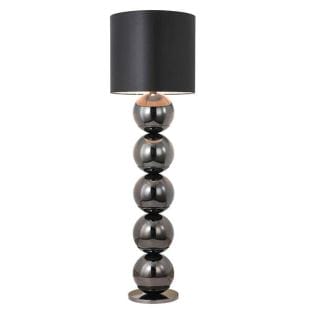
 Floor lamp "Globe XL" made of polished metal spheres with a satin black lampshade, anthracite
345,00 €
Floor lamp "Globe XL" made of polished metal spheres with a satin black lampshade, anthracite
345,00 €