Less is more. This principle has become an almost universal success story in minimalist design . Anyone wondering why the fusion of form, function, and aesthetics has been setting standards in design and lifestyle for years quickly realizes: This isn't about necessity and deprivation, but rather a conscious reduction to the essentials.
This attitude is reflected both in the object itself and in its surroundings. From living spaces and clothing to digital interfaces, minimalism brings clarity, tranquility, and a focus on what matters. The following analysis shows how the three fundamental pillars of form, function, and aesthetics combine to create a holistic approach and which societal developments continue to shape this style today.
Minimalist design principles: form, function, and aesthetics
Minimalist design thrives on the conscious interplay between reduction and expression. At its core are simply designed objects and spaces where every line, surface, and color serves a clear function.
Form strictly follows function: superfluous elements are avoided, and unnecessary decoration disappears completely. In return, what remains is all the more emphasized. This focus not only creates visual calm but also underscores the object's inherent logic
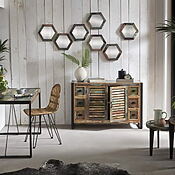
Minimalist design thrives on the conscious interplay between reduction and expression. Image source: Resource Database @resourcedatabase, via Unsplash
This approach is particularly evident in furniture design: A minimalist chair does without decorative moldings or flourishes and impresses with well-thought-out proportions, functionality and harmonious choice of materials.
The same applies to graphic design or architecture, where open spaces and clean lines direct the eye to the essentials. Here, aesthetics arise not from abundance, but from balance. Colors usually remain within the neutral spectrum, such as white, black, and natural tones, so as not to disrupt the design language.
The key advantage: Clarity creates space for individuality and puts the user's needs at the center. Reduction to the essentials becomes a mark of quality and conveys timeless elegance.
Minimalism in art, interior design and fashion
Few other aesthetics influence as many creative fields as minimalism. In art, it often represents monochrome color fields, geometric forms, and meditative emptiness. Works by artists like Agnes Martin or installations by Dan Flavin consciously avoid clutter. They focus attention on the interplay of space, light, and material—on what is truly there, rather than on what has been added.
also interior design with a clear, calm aesthetic. Bright rooms, thoughtful lines, and a limited number of furnishings create structure and serenity. The decor appears uncluttered, spacious, and free from visual distractions. Individual objects thus gain significance and invite conscious consideration of their function and presence.
In fashion , minimalism is reflected in clean lines, high-quality fabrics, and understated color palettes. Here, the focus is not on flashy displays, but on substance. Capsule wardrobes—reduced, combinable clothing collections—exemplify this principle. They allow for stylistic diversity in a small space and emphasize timeless, durable pieces.
This emphasis on clarity and functionality is particularly evident in accessories like belts without holes. These models forgo traditional rows of holes and instead rely on stepless closure systems that adjust flexibly. The result is not only visually appealing but also technically sophisticated: no stretched-out holes, no visible breaks in the design, but rather a consistently minimalist look that combines functionality and aesthetics.
It is precisely these small details that demonstrate how profoundly minimalism transforms even everyday objects. The belt is no longer seen merely as a practical accessory, but as a defining element of a conscious wardrobe. Less becomes more: not only in the closet, but in one's overall attitude towards consumption.
Historical development and cultural influences in Minimalism
Its roots reach much further back than is often assumed. The first design movements seeking reduction and clarity emerged as early as the beginning of the 20th century. Styles such as Bauhaus, De Stijl, or Japanese Zen philosophy consciously relied on minimalist principles.
The Bauhaus movement, for example, coined the principle "form follows function" and prioritized practical use over ornamental decoration. Artists and architects like Mies van der Rohe set standards with their reduction to elementary forms. At the same time, the Wabi-Sabi approach in Japan emphasized the beauty of simplicity and imperfection. This concept later served as a source of inspiration for many Western designers.
Minimalism developed into an independent art movement in the 1960s. Artists like Donald Judd and Frank Stella were among its pioneers. Over the decades, Western and Eastern influences merged, resulting in a globally influenced design style that continues to shape architecture, product design, and fashion today. A cultural openness to simplicity, functionality, and mindfulness characterizes minimalism in all areas of life.
Sustainability and material selection in minimalist design
Sustainability forms the backbone of many decisions in minimalist design today. Durable materials and resource-efficient manufacturing processes are not a trend, but an essential part of the philosophy. Natural resources such as wood, stone, linen, or recycled metal are given preference. Avoiding short-lived, disposable products and plastics is not only aesthetically pleasing, but also beneficial to the environment.
Especially in the previous example: Belts without holes serve as a practical example of durable, sustainable and minimalist design: Here, simple appearance and maximum functionality meet clever material selection and a particularly reduced design concept.
The clear design language and the reduction to the essentials allow products to be used for decades instead of being quickly replaced. This results in less waste and a noticeably smaller ecological footprint. Sustainable minimalists also pay attention to production conditions and transport routes to further minimize environmental impact. Transparency and the conscious selection of supply chains become central.
Durability and multifunctionality are increasingly combined . A minimalist piece of furniture can serve as seating, a shelf, and storage space. This thoughtful reduction unites ecological responsibility with stylish aesthetics. In a time when conscious consumption is becoming increasingly important, minimalist design is a future-proof approach. It merges form, function, and aesthetics.
Digital trends and future perspectives in minimalist design
In the digital age, minimalist design is experiencing a resurgence. It merges form, function, and aesthetics. Users desire intuitive interfaces that present information clearly and avoid unnecessary distractions. Web and app designs are increasingly based on minimalist principles: ample white space, reduced color schemes, and simple navigation.
Digital products benefit enormously from clear structures. Fast loading times, accessible design, and understandable content make websites and applications more user-friendly. At the same time, new materials and manufacturing processes are emerging in technology, such as sustainable bioplastics or modular electronics, which harmonize with minimalist aesthetics.
A look into the future reveals that minimalism is not limited to form, but is increasingly integrating social and ecological components. Artificial intelligence is specifically supporting the personalization of user-centered designs without sacrificing simplicity. Across all industries, it is clear that minimalist design, as a fusion of form, function, and aesthetics, will continue to define style, attitude, and sustainable innovation.
Owner and Managing Director of Kunstplaza . Publicist, editor, and passionate blogger in the fields of art, design, and creativity since 2011. Graduated with a degree in web design from university (2008). Further developed creative techniques through courses in freehand drawing, expressive painting, and theatre/acting. Profound knowledge of the art market gained through years of journalistic research and numerous collaborations with key players and institutions in the arts and culture sector.
Category for interior architecture, interior design, room design, home design, commercial furnishing, product and material innovation.
Here you'll find everything an interior designer's heart desires. We present the latest trends and developments in the world of home design, as well as innovative products and materials for creating unique spaces.
Our goal is to provide our readers with inspiration and help them creatively redesign or completely transform their living spaces.
We place great importance on ensuring that our articles are not only esthetically pleasing but also include practical tips.
We also introduce you to successful interior designers – from newcomers to the most well-known names in the industry – so you can be inspired by their projects and get to know their working methods.
Whether it's about making the most of a small space or furnishing your home with new furniture in the trendy industrial style: With us, you will find all the information you need on the topic of interior design!
Art styles and movements
The art style or style of artworks refers to the uniform expression of the artworks and cultural products of an era, an artist or group of artists, an art movement or art school.
This is a tool for classifying and systematizing the diversity of art. It denotes similarities that differ from others.
The term is thematically related to the Art Movement, but it should not be viewed solely within a temporal framework and is therefore much broader.
In this section, we would like to help you gain a better understanding of styles and movements in art.
We use technologies such as cookies to store and/or access device information. We do this to improve your browsing experience and to display (non-)personalized advertising. If you consent to these technologies, we can process data such as browsing behavior or unique IDs on this website. Refusal or withdrawal of consent may adversely affect certain features and functions.
Functional
Always Active
Technical storage or access is strictly necessary for the legitimate purpose of enabling the use of a specific service expressly requested by the subscriber or user, or for the sole purpose of carrying out the transmission of a message over an electronic communications network.
Preferences
The technical storage or access is necessary for the legitimate purpose of storing preferences that were not requested by the subscriber or user.
statistics
Technical storage or access that is solely for statistical purposes.Technical storage or access that is used solely for anonymous statistical purposes. Without a subpoena, the voluntary consent of your internet service provider, or additional recording by third parties, the information stored or retrieved for this purpose cannot generally be used to identify you.
marketing
Technical storage or access is required to create user profiles, to send advertising, or to track the user on one or more websites for similar marketing purposes.




 J-Line Abstract Couple Sculpture "Cuddling Couple" made of polyresin (brown/gold)
44,50 €
J-Line Abstract Couple Sculpture "Cuddling Couple" made of polyresin (brown/gold)
44,50 €


