

featuring contemporary art directly from the artist
and limited editions of Old Masters.

begins here at Kunstplaza !
by young and emerging artists
in our online gallery.


Kunstplaza - your touch point for contemporary art and stylish living
Discover an inspiring range that is not only aesthetically pleasing but also reflects the pulse of modern interior design.
With us, you'll find carefully curated artworks that will lend your home a unique character and enrich your living environment. Be inspired by the diverse creative possibilities and transform your home into a place of inspiration and elegance.
Welcome to our platform for contemporary art, tasteful design and stylish home trends!
Kunstplaza sees itself as a modern network platform and online portal for contemporary visual art and modern design.
Are you an artist, art dealer, gallery owner, curator, art or culture journalist, interior designer, or simply someone interested in art who loves beautiful things? Then Kunstplaza certainly has something to offer you!
Kunstplaza magazine offers valuable insights into current cultural events and various art forms, from painting and sculpture to performance art, design, architecture, performing arts, music, and film. You'll also find a wealth of inspiration for interior design, home trends, and living Kunstplaza
As an art dealer and interested buyer of art objects, you can use Kunstplaza Buy art online – often directly from the artist or fresh from the studio.
Acquire unique works by contemporary artists and rising stars in the art world who share their visions of beauty and thus open our minds. You will also find limited editions and high-quality reproductions
You can purchase the art objects directly from the respective artist or vendor.
The Kunstplaza Our online shop for design, decor & living is an invitation to create a stylish home and integrate the beauty of design into every aspect of your life. Be inspired by exquisite design objects and decorative items that combine functionality with aesthetic appeal.




Online gallery. Art marketplace.
Find and buy unique works of art in our online art gallery.
Kunstplaza is not only a virtual place where contemporary artworks are presented, but also a creative home for artists and art lovers alike.
We offer you an inspiring and carefully curated online gallery where unique pieces by contemporary artists from all over the world, limited editions and high-quality art prints as well as unique design objects are waiting to be discovered.
Imagine how your rooms are brought to life by carefully selected works of art – each piece tells its own story and gives your home a distinctive touch.


As an art lover, you will find unique works by international artists, emerging talents of the art scene and established masters at Kunstplaza .
Advantages for art lovers at a glance:
- Curated selection of unique pieces, limited editions and high-quality art prints
- International artists from numerous countries
- Artwork directly from the artist
- Free shipping and free returns for up to one year (for a specific selection, see detailed description of the works)
- Insured shipping with tracking
- Helpful tips & tricks
- Sources of inspiration & recommendations
In addition to established artists from Germany and Europe, Kunstplaza also enables young, up-and-coming artists to present their artworks to an interested audience. About our gallery.
We take a less elitist approach than many traditional galleries and want to offer talented artists without long exhibition histories the opportunity to share their wonderful work with the world.
Advantages for artists at a glance:
- Presentation of own artwork
- selling artworks
- Increasing brand awareness
- Featured as part of an artist portrait in our magazine
- Support with art marketing
- Distribution on social media (Instagram, Pinterest, …)
- To attract the attention of buyers, collectors, patrons, agents or sponsors
- Promoting your own website, Instagram channel, etc.
- Helpful tips & tricks
Discover artworks from nationally and internationally recognized artists as well as from young, little-known newcomers.
Using thematic and regional search filters, you can find interesting artists and galleries directly in your immediate vicinity. Making contact is then quick and easy.
Whether abstract paintings, figurative paintings, drawings, or street and urban art, in our online gallery you will find an international selection of styles, techniques, and art movements.
Advantages for gallery owners and art dealers at a glance:
- Find promising works of art & discover up-and-coming newcomers
- Recognizing trends in the art scene early on
- Establish contact with artists, potential buyers, and other gallery owners and dealers
- Presentation of one's own artwork portfolio (in an art magazine)
- Developing new target group(s) for the sale of artworks
- Increasing media reach
- Networking in the art market
- More sales, revenue and profit
- Presentation and promotion of one's own gallery, website, brick-and-mortar store, social media channel, …
Benefits for brands, sponsors and patrons at a glance:
- Recognize trends and developments in the art scene early on
- Find promising works of art and discover talented newcomers
- Find works, achievements, concepts and projects worthy of funding
- Discover suitable artists for advertising and brand collaborations
- Increased media reach, prestige, and reputation (through portraits or feature articles in our art magazine)
- Contact with artists and creative professionals of all kinds
- Networking in the art market and the art scene
- Promoting your own website, projects, events, etc
- and much more.
Kunstplaza is a source of inspiration for interior designers who want to enrich their projects with contemporary art and high-quality art prints.
Here you will find works and inspiration to create spaces that are not only aesthetically pleasing, but also tell stories and evoke emotions.
With Kunstplaza we offer you the artworks and resources to bring your visions to life. Our carefully curated selection of artists and printing techniques guarantees the highest quality and diversity.
Advantages for interior designers at a glance:
- A carefully curated selection of unique pieces, limited editions, and high-quality art prints
- International artists from numerous countries
- A variety of styles, techniques, eras and color palettes for different interior design styles
- Artwork directly from the artist
- Free shipping and free returns for up to one year (for a specific selection, see detailed description of the works)
- Insured shipping with tracking
- Helpful tips & tricks from industry experts (in our magazine)
- Sources of inspiration & recommendations (in our magazine)
We offer access to carefully selected works of art that have the potential to generate above-average returns.
While other asset classes stagnate or fluctuate, the world of art exudes stability and appreciation. With every purchase at Kunstplaza you are not only investing in fascinating works of art and the passion of artists, but also in sustainable wealth accumulation.
Advantages for investors at a glance:
- A carefully curated selection of unique pieces, limited editions, and high-quality art prints
- International artists from numerous countries
- Diversity of styles, techniques, eras and media
- Artwork directly from the artist
- Helpful tips and tricks for investing in art (in our magazine)
- Buying recommendations (in our magazine)
Artworks from our online gallery in
SPOTLIGHT
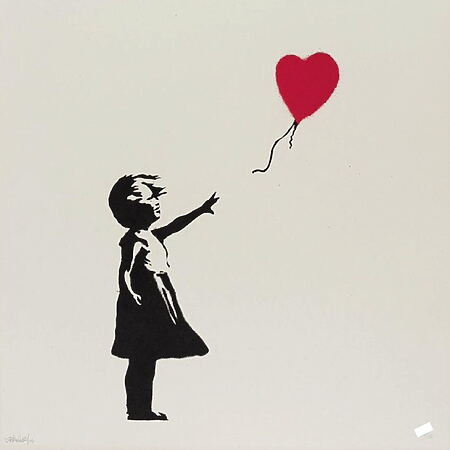
Title: "Girl with Balloon" (2004) Artist: Banksy (Great Britain) Medium: Screen print on paper Edition: Limited edition (edition: 150) Style: ...
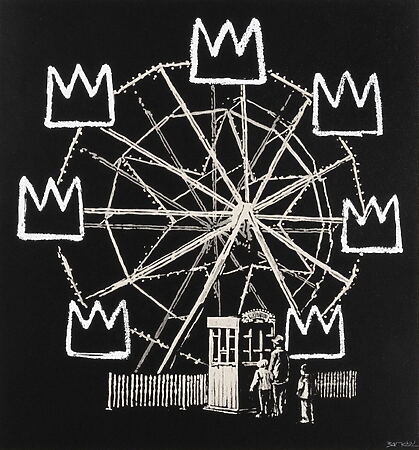
Street Art “Banksquiat (Grey)” (2019), signed by Banksy, limited edition silkscreen print
Title: "Banksquiat (Grey)" (2019) Artist: Banksy (Great Britain) Medium: Screen print on cardboard Edition: Limited edition (edition: 300) Style: Street ...

Abstract oil painting “Lost Time” (2024) by Jonesy
Title: “Down In The Park” (2024) Artist: Jonesy (Great Britain) Medium: Oil and acrylic paints on canvas Edition: Unique piece Style: ...
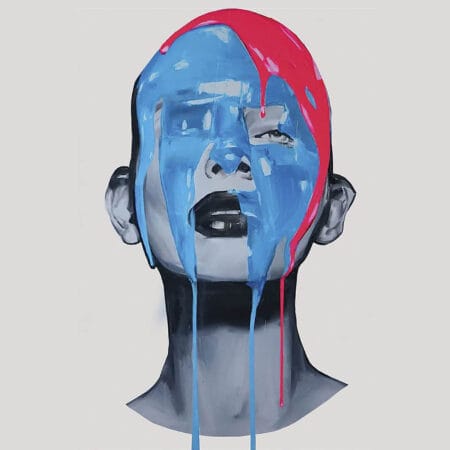
Edyta Grzyb “Insane” (2016) – Limited edition fine art pigment print
Edyta Grzyb: Acrylic painting "Insane" (2016). Fine art pigment print, 2016. Edition: 35 copies on Hahnemühle paper, numbered, dated, and hand-signed. Unframed . Image size / sheet size: ...
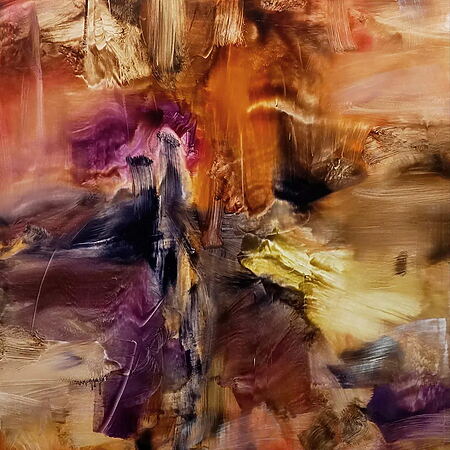
Abstract oil painting “DRMR 21-43” by Marc Podawczyk
Painting "DRMR 21-43" (2022) (Original / Unique piece), framed. Original painting from 2022, hand-signed. Oil on polyester canvas, stretched on a wooden frame. Frame dimensions: 110 x ...
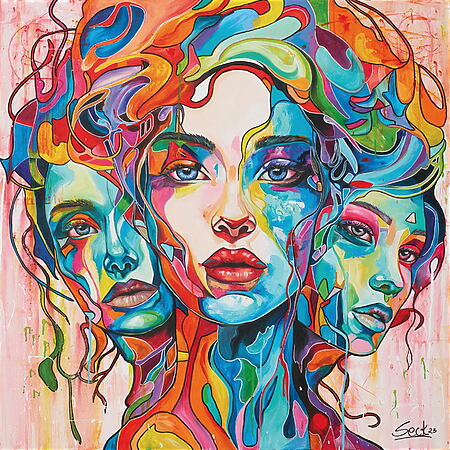
Sabrina Seck: “Hydra” (2023), giclée fine art print on canvas
Painting "Hydra" (2023), framed. Original: 2023, acrylic on canvas, 110 x 110 cm. Edition printed using the fine art giclée process directly onto artist's canvas...
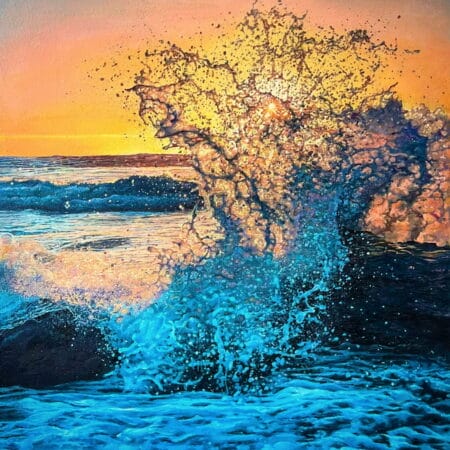
Hyperrealistic oil painting “Light of Hope” by Daria Dudochnykova
Title: "Light of Hope" (2022) Artist: Daria Dudochnykova (Ukraine) Medium: Oil on canvas (100% hand-painted) Edition: Unique piece Style: ...

“See the world in colors” (2024) – Abstract oil painting by Beata Belanszky Demko
Title: "See the world in colors" (2024) Artist: Beata Belanszky Demko (Hungary) Medium: Oil on canvas Edition: Unique piece ...
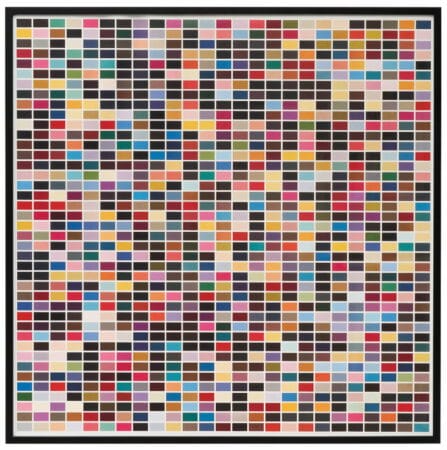
“1025 Colors” (1974) by Gerhard Richter, reproduction on paper
Title: "1025 Colors" (1974) Artist: Gerhard Richter (Germany) Medium: High-quality edition on paper Edition: Reproduction Style: Modern art, ...
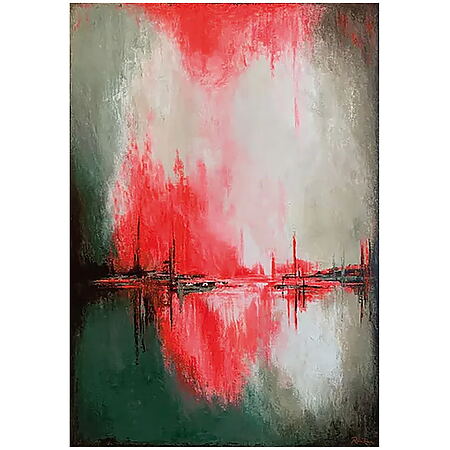
Abstract mural “Keep On Exploring” (2024) by Constance Renken
Painting "Keep On Exploring" (2024) (Original / Unique piece), on stretcher frame. Original painting 2024, hand-signed. Acrylic on canvas, stretched on a wooden frame. Side edges...

Oil and acrylic painting “Straight Out” (2023) by Valentina Andrees
Original painting from 2023, hand-signed. Oil and acrylic on canvas, stretched on a wooden frame. Frame dimensions: 100 x 80 cm (H/W). Framed in silver-colored...
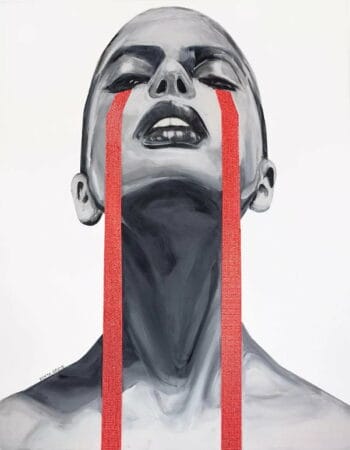
“ETERNITY CRYSTAL” (2022), acrylic and Swarovski® crystals on canvas, by Edyta Grzyb
Painting "ETERNITY CRYSTAL" (2022) (Unique piece) Acrylic on canvas, 2022. The work is adorned with approximately 5,700 Swarovski® crystals. Signed on the reverse...
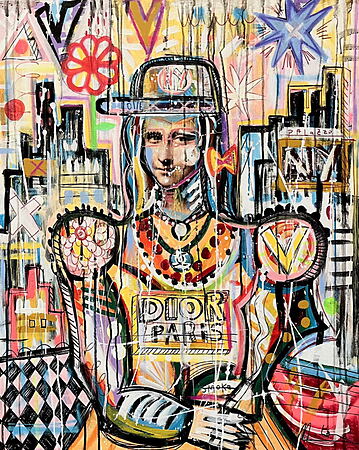
Urban Art acrylic painting “Love Dior” (2025) by Mercedes Lagunas
Title: "Love Dior" (2025) Artist: Mercedes Lagunas (Spain) Medium: Acrylic paint on canvas Edition: Unique piece Style: Pop Art, Urban ...

“Fiery Heart” (2025) – Expressive mixed media painting by Lana Frey (Czech Republic)
Title: "Fiery Heart" (2025) Artist: Lana Frey (Czech Republic) Medium: Acrylic paint on canvas Edition: Unique piece Style: Modern art, Abstract ...

Landscape painting “Bohlenweg” (2018) by Susanne Wind
Painting "Bohlenweg" (2018) (Original / Unique piece), framed. Original painting from 2018, signed. Egg tempera on canvas, stretched on a wooden frame. Frame dimensions 40 x 60 cm...

Oil painting “Series Gift of Hope | Unanimity IV” (2024) by Lezzueck Coosemans
Painting "Series Gift of Hope | Unity IV" (2024-2025) (Unique piece) Oil on linen, 2024-2025. Signed and dated. Framed dimensions 100 x ...
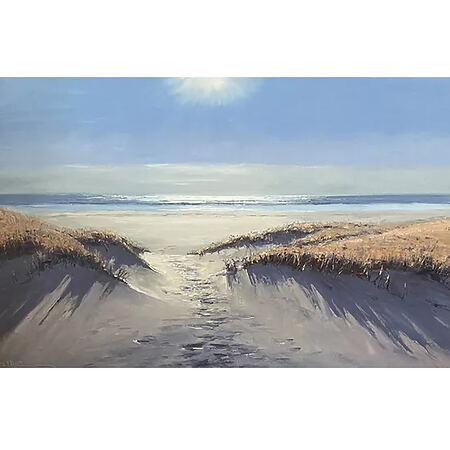
Oil painting “Beach access in backlight” (2024) by Stefan Dobritz
Oil painting "Beach Access in Backlight" (2024) (Unique piece) Oil on canvas, 2024. Signed. Unframed . Size stretched on a wooden frame 60 x 100 cm ...

Pin Up Pop Art “Virnaburger” (1965), limited edition offset lithograph by Mel Ramos
Image "Virnaburger" (1965) Offset lithograph, 1965, edition of 500 on handmade paper, hand-signed. Unframed . Sheet size 54.5 x 43 cm. (Image shown framed...).

Transform your interiors with our
DESIGN- & DEKOR-SHOP


Deal!
Fish Journey – Metal wall decoration
Original price was: €110.9597,00 €The current price is €97.00. 77,60 €


Art Magazine
In our digital art magazine, authors with art expertise publish informative articles and exciting contributions on topics related to art, design, and culture.
This includes, above all, artist portraits; introductions to galleries, art dealers, and museums; introductions to various art fields and styles; excursions into art history; current news from the art trade, art market, art auctions, exhibitions, and art fairs; news from the art scene; sources of inspiration, and much more.
In doing so, the Kunstplaza magazine places particular emphasis on a critical engagement with works and themes. The articles are thoroughly researched and offer the reader an in-depth insight into the background of the artworks and their societal significance.
Our art magazine also inspires you with exciting insights into the world of interior design, home decor, and offers you valuable perspectives on current trends.
The world of art is colorful – true to this credo, we want to highlight the diversity of creative work in our online magazine – even beyond the traditional art world.

Latest posts from our
ART MAGAZINE
OFBA is celebrating its birthday! The presents are for us!
The Buenos Aires Philharmonic Orchestra, also known as OFBA, was founded on May 21, 1946. It was the first official orchestra of the city of Buenos Aires…


Success as an artist in 2026: Trends, proven strategies & tips from the best in their field
The digital revolution has not only massively changed our daily lives, but also offers artists and creatives worldwide unprecedented opportunities. At the same time, the multiple crises…

Africa as a cultural source of inspiration: Where the future takes root
It is that one moment in Accra, just before sunset, when the city's dust mixes with the golden light and the air…

Namji Dolls: African Fertility Figures and Their Place in the World of Decorative Art
The powerful allure of Namji dolls, originating from the Namji tribe in northern Cameroon, has captivated art collectors and interior designers alike. These exquisite…

Beyond decoration: The architectural potential of porcelain stoneware surfaces
Contemporary architecture arises from the interplay of construction and materiality. While volume and proportions determine the spatial structure, surfaces lend a space character, depth…

“HOPE” – String sounds against silence
From the silence of Abbey Road Studios to the ruins in war zones: How Swiss cellist Andreas Graf created twelve “prayers” for London…

Art of the Deal: All the ways to save the maximum when buying at ars mundi
Imagine entering your apartment after a long day. The light of the setting sun falls at a very specific angle through the…


From Banksy to Basquiat: How street art became the most investable category in contemporary art
Street art, once an act of rebellion and a symbol of resistance, has undergone a remarkable transformation. From the rough streets and back alleys of urban landscapes…

Blue-white-red harbingers: When Berlin holds its breath
It's that one moment on a balmy Tuesday evening in Berlin-Mitte. You turn the corner, looking for your usual spot to park your bike…

The importance of art and merchandise in fandom spaces: Why do fans love tangible representations so much?
Fan work and creative diversity: “Fan Labor” (fan work) is the term for all collective activities of fans, especially when they involve visual media or music

From Screen Symbol to Playable Art – Why Chess Is Becoming a Contemporary Aesthetic Language
It's almost impossible to watch a major film or series today without encountering a chessboard somewhere on screen. What was once considered…

Modern learning: Microlearning, Headway and improving the fragmented attention economy
By 2026, the global educational landscape will no longer be dominated by the hallowed halls of traditional academies, but by the digital “fragments of time” that one finds in…

Relaxing in warm pool water after work: Ideas for enjoyable escapes from everyday life
The end of the workday is more than just the end of a workday – it's an invitation to switch gears and consciously return to your own rhythm…



DISCOVER CONTEMPORARY ARTWORKS BY EMERGING ARTISTS
In the contemporary online gallery of Kunstplaza, you will find curated works by established art greats as well as by young and emerging artists from all over the world.