An old apartment in Vienna is being cleared out. Cupboards are opened, attics inspected, cellar compartments emptied. Among ordinary household items stand pieces of furniture that haven't been moved in decades. Old Watches , jewelry, and coins lie in drawers. Pictures hang on the walls, their origins no one can quite recall. Books, porcelain, and personal documents tell the story of a life accumulated over many decades.
What can be thrown away? And what should definitely not be disposed of prematurely?
This question is one of the most crucial tasks in a professional household or apartment clearance. Not everything that looks old is valuable. Conversely, among seemingly ordinary objects, there may be items whose cultural, historical, or material value is hardly apparent at first glance.
Vienna is a particularly special place for this. Many apartments and houses contain furnishings, art, books, and personal collections that have been passed down through generations .
Especially in an art-rich city like Vienna, many homes contain furnishings, art, books, and personal collections that have been passed down through generations. Photo by Joshua Kettle @joshuakettle, via Unsplash
For experienced decluttering professionals, clearing out an estate therefore means far more than simply carrying out furniture and disposing of unwanted items. Before an apartment is cleared, a thorough inspection is worthwhile.
A Viennese apartment can contain decades of family history
A household clearance often begins after a death, a move to a nursing home, or when a property is to be sold or re-let. For relatives, the situation is often difficult. Within a short time, thousands of items have to be assessed: What stays in the family? What can be sold? What can be donated? And what no longer has any economic value?
From the outside, an apartment might seem manageable. But even an averagely furnished apartment can contain a huge number of individual items. Add to that the basement, attic, storage rooms, and sometimes a garage. Those who work under time pressure risk judging things solely by their outward appearance.
This is precisely where experience plays a crucial role. AUSRäumer has been handling household clearances, apartment clearances, estate cleanouts, and decluttering in Vienna. During a professional clearance, attention is paid to whether there are any usable items among the existing inventory. But what exactly should be looked for?
Old does not automatically mean valuable
One of the most common misconceptions regarding estates is that the older an item is, the more valuable it must be. The market doesn't work that simply.
The value of an object is determined by several factors. Age is just one of them. Equally important are the manufacturer or artist, rarity, condition, material, provenance, and above all, current demand. A hundred-year-old cabinet may be virtually unsellable, while a much more recent designer lamp from the 1960s is highly sought after.
This makes assessing the contents of an apartment challenging. Experience doesn't mean assuming there's a treasure everywhere, but rather recognizing conspicuous items and knowing when a professional appraisal is advisable.
1. Paintings, drawings and prints
Pictures are among the most obvious items to examine more closely before decluttering. Paintings, drawings, watercolors, prints, artist's books, or signed works can all be of interest.
The first crucial questions are about the artist and the artwork's provenance. The reverse side can also provide clues. Old gallery labels, exhibition stickers, handwritten notes, or stamps can aid in identification. However, a known signature does not automatically make a painting an original. Therefore, if there is reasonable suspicion, one should not speculate but consult a qualified expert.
2. Furniture: The market has changed
The massive antique wardrobe was once a status symbol. Today, its very size can be a problem. Many classic pieces of furniture from the 19th and early 20th centuries are finding it harder to sell on the market than they did a few decades ago. Modern apartments are smaller, and heavy furniture is difficult to move.
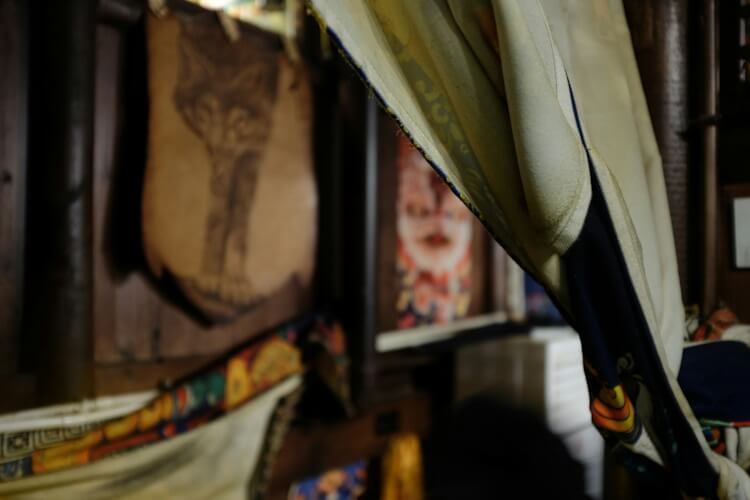
Estate clearances in Vienna can unearth true rarities and valuable works of art. Photo by Tuva Mathilde Løland @tuvaloland, via Unsplash
At the same time, certain designer furniture pieces can be considerably more interesting. Especially with 20th-century furniture and furnishings, it's worth taking a closer look at manufacturers, designers, labels, and markings. Mid-century design clearly demonstrates why younger doesn't automatically mean less valuable.
3. Jewelry, precious metals and old Watches
Small items are particularly easy to overlook during house clearances. Jewelry isn't necessarily kept in a jewelry box. It might be stored in drawers, small boxes, envelopes, or old handbags.
When buying jewelry, pay attention to hallmarks. Gold and silver already possess a certain value due to the material itself. Beyond that, the manufacturer, craftsmanship, age, and design can be crucial. The same applies to Watches: manufacturer, model, movement, originality, and condition can significantly influence their value.
4. Silver cutlery and household items made of precious metal
Silver cutlery is still relatively common in older Viennese households . However, not everything that glitters silver is actually solid silver. Many cutlery and serving pieces are merely silver-plated. Hallmarks can provide initial clues about the material and origin.
Besides cutlery, bowls, boxes, candlesticks, napkin rings, and other everyday objects can also be of interest. Even if an object has no particular art historical significance, its material value can be relevant.
5. Porcelain, ceramics and glass
The famous "good china" sat unused in a display cabinet in many households for decades. When a house is cleared out, the question arises whether there is still a market for it. Manufacturer, series, pattern, age, completeness, and condition all play an important role; marks and base stamps provide initial clues.
Large dinner services can be difficult to sell despite their age, while individual rare pieces or sought-after designs can remain quite interesting.
6. Books are a particularly difficult area
A large bookshelf looks valuable. However, its actual market value can be surprisingly low. Many books were produced in large print runs and are rarely in demand secondhand. Even very old books are not automatically valuable.
More interesting items can include first editions, signed copies, limited editions, special illustrations, historical specialist literature, or rare regional publications. Handwritten dedications can also be relevant if they come from a historically significant person.
7. Historical documents, photographs and personal papers
Some of the most interesting discoveries initially have no obvious market value. Old photographs, letters, certificates, diaries, company records, posters, or documents can establish a historical context that only becomes apparent upon closer examination.
Complete collections are particularly interesting. A single old letter may reveal little; however, many letters from one person over several decades can constitute a historical legacy. This also applies to photographs of old Vienna, historical buildings, shops, workshops, or events.
8. Coins, medals and collections
Coins are also among the classic items found in an estate. A distinction must be made between their precious metal value and their collector's value. A coin can be valuable because of its gold or silver content; for other coins, rarity, condition, year of minting, and variant determine the price.
The same applies to medals, stamps, historical badges, and other collectibles. Larger collections should not be evaluated solely based on individual asking prices found online.
9. Toys and everyday objects are increasingly being collected
What was once a child's toy can become a collector's item decades later. Vintage tin toys, model trains, model cars, dolls, and certain branded products sometimes have an active collector's market. Condition and completeness are crucial; original packaging can further influence the value.
Such items were often not purchased as investments. Their collector's value only developed over time.
The basement is not automatically the most worthless room
When decluttering, the basement is often the first place assigned to the "disposal" category. This can be a mistake. Items that were meant to be removed from the apartment at some point often end up in the basement or attic.
Old pictures, tools, boxes of books, lamps, furniture, records, and collections can remain untouched there for decades. Their condition can be problematic due to moisture. Nevertheless, an inspection should at least be carried out before disposal.
Experience protects against two opposing mistakes
When dealing with inherited items, one encounters two extremes: "It's all just old junk." In this case, there's a risk of disposing of genuinely valuable items. The other extreme is: "This must be worth a fortune." This raises unrealistic expectations.
Professional experience therefore does not mean suspecting treasures everywhere. Rather, it means being able to distinguish striking pieces from ordinary household items and knowing when a closer examination is advisable.
An experienced Vienna-based junk removal company should therefore not only master the logistical aspects of clearing out an apartment. Especially in cases of inherited property, a trained eye for usable furniture, antiques, jewelry, collections, and other items is advantageous.
Credit for value: If usable items reduce the removal costs
For clients, identifying usable items offers a practical advantage. If furniture, antiques, or other objects are indeed usable, their value can be credited towards the cost of the clearance at appropriate clearance companies.
This is what distinguishes mere disposal from a carefully planned household clearance. Of course, not every apartment can be cleared for free. The value of the belongings must be realistically assessed and weighed against the effort involved. That's precisely why an on-site inspection and a transparent assessment are so important.
Why Vienna is particularly exciting for such discoveries
Vienna boasts an exceptionally rich stock of historic housing. Gründerzeit-era buildings, municipal housing complexes, villas, and family apartments inhabited for decades reflect diverse lifestyles. Some apartments have been passed down within a family for generations – and often along with their contents.
Post-war furnishings can stand alongside items from earlier decades. These are complemented by mementos, books, photographs, art, and collections. In this way, an estate can become a small time capsule.
This doesn't mean that a precious work of art awaits behind every cupboard door. But it does mean that a careful inspection is worthwhile before a final decision is made about what should be preserved, reused, passed on, or disposed of.
Two experienced names in the Viennese eviction sector
Even with professional estate clearances in Vienna , experience in handling entire households and estates becomes crucial. Rümpel Max has been active in the field of estate clearances and cleanouts for many years. With large estates, it's not just about transport and disposal, but also about not prematurely discarding usable or reusable items.
For owners and relatives, it is particularly important that the clearing process is structured: first, inspect the contents, secure personal and valuable items, classify usable items, and only then professionally clear the remaining household goods.
The most important rule: look at it first, then dispose of it
Anyone who needs to clear out an apartment or house should therefore follow a simple order: inspect – classify – decide – only then clear out.
Especially valuable items like paintings, jewelry, Watches , precious metals, coins, design objects, high-quality furniture, books, historical documents, and collections should not be disposed of without being examined. For items whose value is unclear, a specialist or auction house can be consulted.
A professional junk removal company doesn't need to be an expert on every painting, clock, or coin. The crucial skill often lies in recognizing when something needs closer examination.
Decluttering can sometimes be a journey of discovery
At the end of a household clearance, empty rooms remain. But before that lies the story of an entire home. Among everyday objects, there may be art, design pieces, jewelry, historical documents, and other items that still possess material or cultural value.
Equally essential is the realization that age alone does not make something a treasure. Markets change. What was expensive in the past may hardly be in demand today. What was considered an ordinary everyday object a few decades ago may now have become a sought-after design classic.
For relatives and owners, one thing is therefore crucial: don't jump to conclusions. A careful inspection can help preserve keepsakes, identify items of value, and avoid unnecessary disposal.
Because sometimes the biggest mistake when decluttering isn't keeping something that's no longer worth anything. Sometimes the biggest mistake is throwing away something whose value you would only have recognized if you had looked more closely.
Editorial note: The assessment of potential valuables does not replace a professional appraisal by specialized experts, dealers or auction houses.
Owner and Managing Director of Kunstplaza . Publicist, editor, and passionate blogger in the fields of art, design, and creativity since 2011. Graduated with a degree in web design from university (2008). Further developed creative techniques through courses in freehand drawing, expressive painting, and theatre/acting. Profound knowledge of the art market gained through years of journalistic research and numerous collaborations with key players and institutions in the arts and culture sector.
We use technologies such as cookies to store and/or access device information. We do this to improve your browsing experience and to display (non-)personalized advertising. If you consent to these technologies, we can process data such as browsing behavior or unique IDs on this website. Refusal or withdrawal of consent may adversely affect certain features and functions.
Functional
Always Active
Technical storage or access is strictly necessary for the legitimate purpose of enabling the use of a specific service expressly requested by the subscriber or user, or for the sole purpose of carrying out the transmission of a message over an electronic communications network.
Preferences
The technical storage or access is necessary for the legitimate purpose of storing preferences that were not requested by the subscriber or user.
statistics
Technical storage or access that is solely for statistical purposes.Technical storage or access that is used solely for anonymous statistical purposes. Without a subpoena, the voluntary consent of your internet service provider, or additional recording by third parties, the information stored or retrieved for this purpose cannot generally be used to identify you.
marketing
Technical storage or access is required to create user profiles, to send advertising, or to track the user on one or more websites for similar marketing purposes.










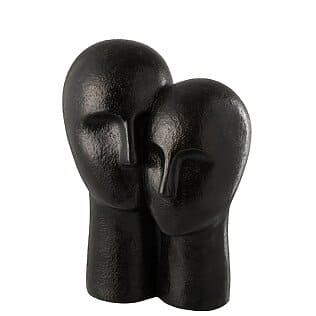
 J-Line Love Sculpture “Abstract Couple Heads” (black)
147,00 €
J-Line Love Sculpture “Abstract Couple Heads” (black)
147,00 €