On October 9, 2024,theGerman Cultural Councilposition paperentitled“Artificial Intelligence: Developing sustainable framework conditions for art and culture”.
Trust in the authenticity of information is increasingly being tested, while at the same time there is widespread concern about the potential replacement of human creativity and labor by AI . With the increasing integration of AI systems into decision-making processes, gaps in accountability are emerging that urgently need to be addressed to ensure broad societal acceptance.
This position paper examines in detail the activities of artists, cultural education institutions, and companies in the cultural and creative industries. It comprehensively addresses both the promising opportunities and the significant risks associated with the use of AI in the arts and culture sector.
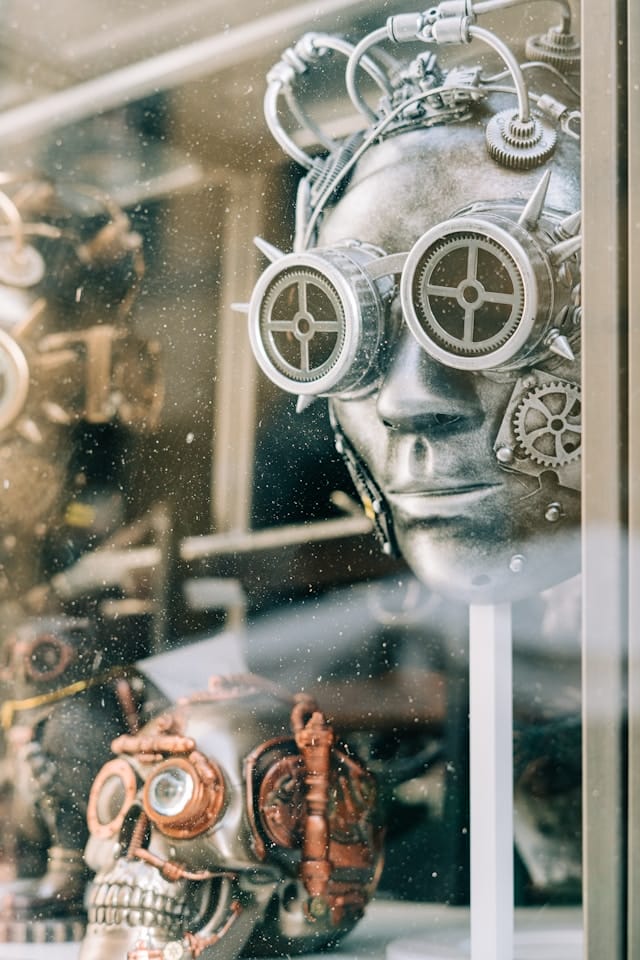
In its position paper, the German Cultural Council addresses both the promising opportunities and the significant risks associated with the use of AI in the arts and culture. Image source: Gabriella Clare Marino @gabiontheroad, via Unsplash
The aim is to create a sound basis for a constructive conversation about the role of AI in the creative landscape and to promote dialogue between stakeholders.
We have read through the position paper of the German Cultural Council for you and present the key points in a summarized form.
Many artists and creative professionals in the cultural and creative industries are open to new tools , especially artificial intelligence (AI), which can revolutionize their creative processes. While AI enables the realization of previously unattainable artistic ideas, the interests and rights of cultural stakeholders must be protected . European standards in Privacy and copyright must be adhered to by both European and non-European providers.
The German Cultural Council highlights the dangers of generative AI and is preparing a statement on copyright issues in the context of new AI regulations. This statement will examine economic, ethical, and cultural consequences in detail. The introduction of AI tools raises questions about human contribution, particularly regarding the transparency between human creativity and AI-generated content.
Currently, there are many inexpensive or free AI offerings that often disregard Privacy and copyright laws. To ensure the legally compliant use of these tools, better education is needed. At the same time, users want access to affordable and privacy compliant applications.
AI in non-artistic work in art, culture and media
In the arts, culture, and media sectors, artificial intelligence (AI) is changing not only artistic but also non-artistic work. This is influencing job profiles and requiring a rethinking of work processes. AI offers opportunities to alleviate the shortage of skilled workers, particularly for repetitive tasks, but also carries the risk of job losses.
The relationship between projected job losses and existing skilled labor needs remains uncertain. Therefore, targeted training and further education of employees is essential. It is important to proactively address current and future changes and not to take the use of AI lightly.
Furthermore, transparency regulations are necessary where results from generative AI are generated or interpreted.
AI in general education
The competent handling of artificial intelligence (AI) represents a significant educational policy challenge that affects all areas of education, from school-based to extracurricular to adult and senior education.
People of all ages are challenged to engage with the potential, functionality, and limitations of generative models in order to use them meaningfully for creative work. A realistic assessment of their possibilities and risks, such as misuse for disinformation or image manipulation (deepfakes) , is essential.
Comprehensive AI expertise needed in the future. Lifelong learning, as well as cultural education and media literacy, play a key role in this; therefore, expanding training and professional development for teaching staff is essential.
AI in higher education and training
AI is increasingly being used as a tool in higher education and by students, particularly in the arts and cultural studies. The challenge lies in the fact that students must produce independent assessments while, at the same time, the scope for the use and evaluation of AI-supported work needs to be examined.
Curricula should firmly integrate the use of AI and promote its creative application and documentation. Continuing education for teachers also plays a crucial role. When hiring new staff, it should be assessed whether knowledge of AI is required.
Furthermore, it is important to intensify research on the impact of AI on art and cultural diversity, and to integrate its development from an artistic perspective into teaching.
In vocational training, it is equally crucial that trainees acquire skills in using AI. In the arts, culture, and media sectors, this is already taken for granted. To ensure the quality of training, prospective professionals should be prepared for the competent and critical use of AI – both in the practical and the theoretical parts of their training.
AI and accessibility
Creating accessibility in the cultural sector is a task for society as a whole and, according to the UN Convention on the Rights of Persons with Disabilities, an obligation of the Federal Republic of Germany. Artificial intelligence (AI) offers the opportunity to make barrier-free access to art, culture, and media more individualized and effective – while respecting copyright.
In its position paper, the German Cultural Council calls on the public sector to promote research and development of high-quality AI solutions and to support institutions and companies in their implementation.
AI and cultural heritage
In its statement on digitization, the German Cultural Council calls for a consistent approach from the federal government. Instead of strengthening existing projects like the German Digital Library , new, temporary initiatives are being launched, fragmenting rather than pooling resources. The digitization of non-commercial memory institutions, such as museums and libraries, remains inadequate – this hinders the use of AI potential for research and access to collections.
Furthermore, AI offers opportunities in audience research and the arts. Promoting such applications is important because cultural institutions, as non-commercial spaces, can test ethical approaches to AI. However, a clear distinction from commercial applications is necessary.
The German Cultural Council also emphasizes the need for appropriate remuneration for authors in the digital context.
Statement by the Managing Director
Olaf ZimmermannManaging Director of the German Cultural Council, offers the following concluding remarks:
“Our current position on the framework for art and culture in the age of artificial intelligence concludes with the statement that it is essential for us that creators are also adequately compensated. This should go without saying, but we are currently far from achieving this goal. Companies that offer AI tools, in particular, are massively disregarding copyright.”
The full position paper “Artificial Intelligence: Developing a sustainable framework for art and culture” can be accessed here
Owner and Managing Director of Kunstplaza . Publicist, editor, and passionate blogger in the fields of art, design, and creativity since 2011. Graduated with a degree in web design from university (2008). Further developed creative techniques through courses in freehand drawing, expressive painting, and theatre/acting. Profound knowledge of the art market gained through years of journalistic research and numerous collaborations with key players and institutions in the arts and culture sector.
In this magazine section, you will find numerous reports and articles about the use of artificial intelligence (AI) in art,design and architecture.
It's not just about the question of how AI can be used in these areas, but also about the impact this has on creative creation.
For while some experts believe that the use of AI will lead to a revolution in art and design, there are also voices from within the industry itself that are skeptical of AI art and AI-powered image generators.
An early example from 2016 of the use of AI in art is the project “The Next Rembrandt” . Here, software was developed that created a new painting in the style of the Dutch painter based on data analysis – without human intervention.
The result was surprisingly realistic and clearly demonstrated the potential of this technology even back then.
What does this development mean for traditional crafts? Will they become obsolete or can new opportunities be created?
These questions occupy many people both within and outside the industry alike.
In any case, the connection between art and artificial intelligence offers us exciting insights into possible future scenarios.
We warmly invite you to embark on an adventure of discovery with us!
We use technologies such as cookies to store and/or access device information. We do this to improve your browsing experience and to display (non-)personalized advertising. If you consent to these technologies, we can process data such as browsing behavior or unique IDs on this website. Refusal or withdrawal of consent may adversely affect certain features and functions.
Functional
Always Active
Technical storage or access is strictly necessary for the legitimate purpose of enabling the use of a specific service expressly requested by the subscriber or user, or for the sole purpose of carrying out the transmission of a message over an electronic communications network.
Preferences
The technical storage or access is necessary for the legitimate purpose of storing preferences that were not requested by the subscriber or user.
statistics
Technical storage or access that is solely for statistical purposes.Technical storage or access that is used solely for anonymous statistical purposes. Without a subpoena, the voluntary consent of your internet service provider, or additional recording by third parties, the information stored or retrieved for this purpose cannot generally be used to identify you.
marketing
Technical storage or access is required to create user profiles, to send advertising, or to track the user on one or more websites for similar marketing purposes.








 Leaf - Metal wall decoration
81,95 €
Leaf - Metal wall decoration
81,95 €