A home is more than just a room with furniture – it's a place that should reflect personality and invite you to feel comfortable. A gallery wall is one of the best ways to express individuality within your own four walls. It can tell stories, keep memories alive, or simply create a stylish atmosphere.
While minimalist walls dominated in recent years, 2025 will see a clear trend towards personalized interior design . Instead of empty spaces, more and more people are opting for creative gallery walls , which create a special ambiance with harmoniously coordinated pictures or photographs. However, to prevent a gallery wall from appearing chaotic or cluttered, it should be carefully planned. The right interplay of motifs, colors, and frames is crucial.
Before you start hanging things up, it's worth developing a concept for the picture wall.
What kind of atmosphere should the room convey?
Which colors already dominate the decor?
Should the wall tell a story or rather present abstract art?
A popular approach is to create a thematic display . Black and white photographs appear elegant and timeless, while colored art prints add vibrant accents. A mix of different styles can be captivating, but should be chosen carefully to avoid making the wall look cluttered.
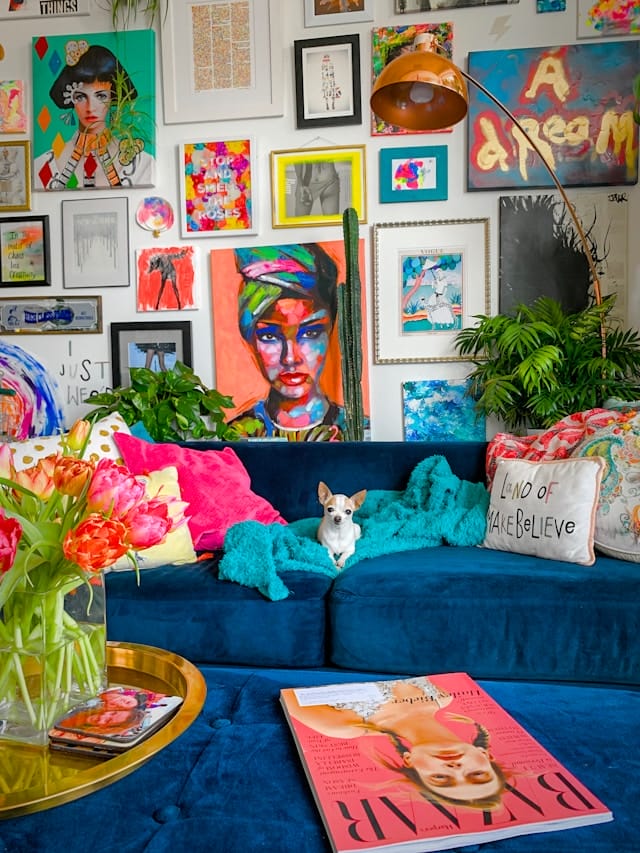
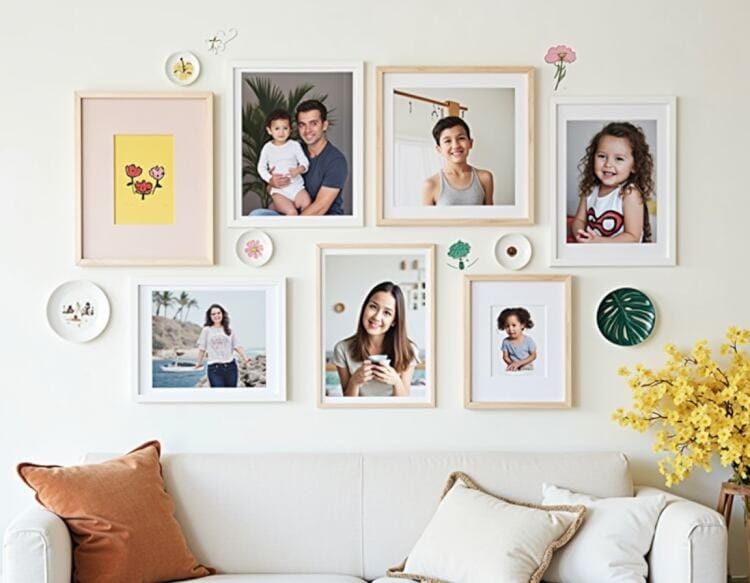
Wall decoration with personality: How to create a unique gallery wall. Photo by Steph Wilson @stephwilll, via Unsplash
The arrangement also plays a significant role. While symmetrical gallery walls convey a clear, orderly aesthetic, asymmetrical arrangements can create a relaxed, creative atmosphere. To find the perfect layout, it's advisable to first arrange the pictures on the floor or experiment with paper templates on the wall. This allows you to test different combinations before using nails or adhesive strips.
A DIY gallery wall is the ideal project for your home. Here's how to create your own personal gallery that will impress both visually and emotionally.
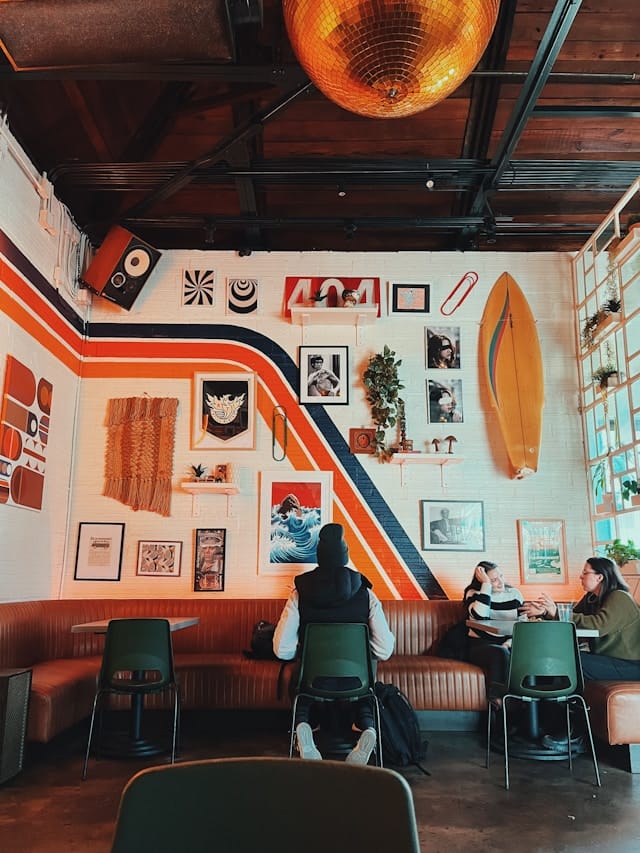
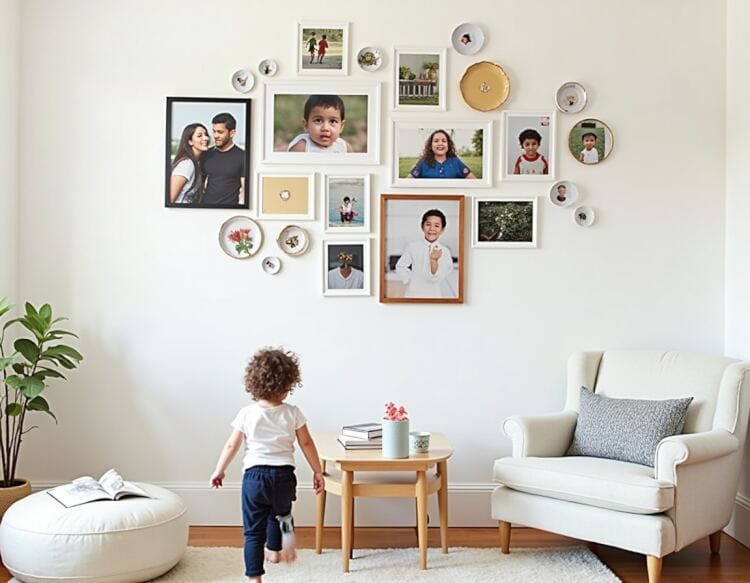
In this interior, the gallery wall was implemented very freely and creatively. Photo by Skyler Smith @skyler_tv, via Unsplash
A few important considerations beforehand
Before we discuss the "what" of a gallery wall, I would first like to explain the "how" – more precisely, how to avoid drilling numerous holes in your wall.
Measure the area that your gallery wall will occupy.
Attach a piece of cardboard of this size to your floor (or, if available, some strips of wide children's art paper glued together, which comes in rolls).
Distribute all your artwork within this framework . You can then experiment with the arrangement of the pictures and change their positions as much as you like without worrying about potentially damaging the wall. This also allows you to ensure that your artwork works harmoniously together.
Interior designer Emily Henderson has a great IGTV video showing you how to implement these preparation steps:
Next, you should think about how you want to attach the pictures to the wall: Do you need to hammer nails into the wall, or would you prefer to use adhesive nails
If you decide to use nails in the wall, it's advisable to check for electrical wires to avoid unpleasant surprises. Especially if you plan to rearrange the gallery wall frequently, adhesive nails are an excellent alternative, as they don't leave numerous unsightly holes that can't be concealed later.
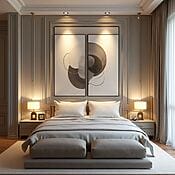
Depending on where you plan to place your gallery wall, it's important to pay attention to proportions . For example, a few large pictures look good above the bed, while above the sofa, you might want to create an extensive gallery wall with a combination of large and small posters. Make sure the proportions are harmonious and that the pictures don't get lost in the overall picture.
Now the creative process begins: Is there a thematic thread? Which images should be selected? How should the images be arranged, and how many posters do you want to hang on the wall?
Pro tip: First, lay out the pattern or arrangement of the pictures on the floor. This allows you to move them around flexibly until you achieve your desired look. This "trial run" will give you a first impression of whether you might need more or fewer pictures.
Pro tip: Start with a test run and first define the pattern or arrangement of the images on the floor. The image is for illustrative purposes and was created with the AI image tool ImageFlash.
Creative idea:If you don't want a traditional gallery wall, you can also place the pictures in different ways on a cabinet, a shelf, or even on the floor. This creates a dynamic, varied, and extremely modern look.
Display shelves add dimension to your walls and are the perfect place to showcase your cherished prints. They're a great option for those not ready to commit to a hammer and nails. Consider creating a gallery wall with shelves of varying sizes. Image is for illustrative purposes only and was created using the AI image tool ImageFlash.
The practice of placing picture frames on the floor has also found its way into countless modern living spaces. The image is for illustrative purposes and was created with the AI image tool ImageFlash.
What all goes on the picture wall?
There are no limits to your creativity when designing your gallery wall. From family and nature photos to city posters, graphic designs, abstract artworks, inspirational quotes, or drawings, you can let your imagination run wild. Furthermore, you can liven up the gallery wall with additional accessories, such as decorative mirrors or writable chalkboards between the pictures.
A fresh look can be achieved by rearranging the pictures. If you have photos on your gallery wall, you can easily replace them with more recent images. Alternatively, you can gradually expand the gallery wall by adding more frames and posters. The choice of pictures will also be somewhat influenced by the room in which your gallery wall is located.
In the video by the interior design enthusiasts at Interliving, you can get an impression of how a gallery wall can be designed and arranged:
Color palette and theme selection
Once you've chosen a theme, consider the color palette as well. A harmonious overall look can be achieved when the colors of the picture frames and artwork are coordinated. A monochromatic scheme presented in various shades, for example, can appear very elegant.
Create a cohesive color palette for a harmonious look
This isn't a strict rule, and if you prefer a personal and fun approach, you don't need to worry about it. However, if you'd like it to look a bit more thoughtful, sticking to a specific color palette . Make sure your elements harmonize with each other in tone and intensity.
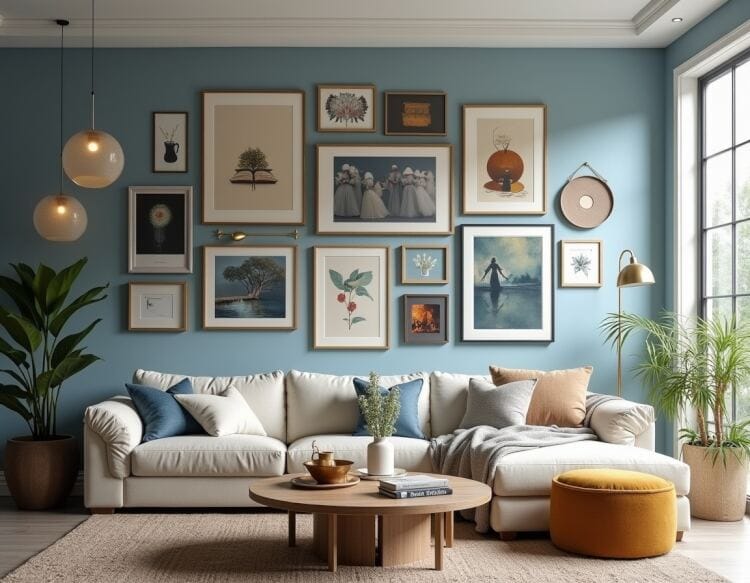
For example, this gallery wall featuring vintage artwork used neutral tones, shades of blue, and gold accents. The image is for illustrative purposes and was created with the AI image tool ImageFlash.
Once you've created your "plan ," take a photo with your smartphone for reference and start transferring the pieces to your wall. You can do this by measuring precisely if you're organized, or simply by being impatient…
Here are some additional creative ideas for gallery wall themes that will give your DIY gallery wall an even more unique and personal touch:
Creative ideas for gallery wall themes
Travel memories
Holiday moments: Hang photos from your holidays on the wall and complement them with small souvenirs such as tickets, shells or city maps.
World map as background: Use a comprehensive world map as a background and pin small photos directly to your travel destinations.
Family history
Family tree: Design your wall as a visual family tree with photos of your family members, both older and younger generations.
Old family photos: Use old, framed black and white photos of grandparents and great-grandparents to create a nostalgic atmosphere.
Artist portraits and selfies
Portrait series: Present self-painted portraits, self-portraits, or professional photographs of yourself and people who are important to you.
Unusual selfies: Use creative selfies in different styles and techniques, e.g. with unusual perspectives or scenarios.
Thematic color schemes
Monochrome wall: Choose one color and use only pictures and artwork in different shades of that color.
Rainbow theme: Arrange your artwork in rainbow colors to create a vibrant and dynamic effect.
Literary inspirations
Book quotes and illustrations: Combine your favorite quotes from books with illustrations or photos that match the respective book.
Cover gallery: Frame the covers of your favorite books and create a literary wall.
Musical tribute
Vinyl covers: Use old vinyl or CD covers of your favorite albums as decorative elements.
Song lyrics: Write or print inspiring song lyrics and mix them with pictures of the artists or bands.
Botanical beauty
Plant illustrations: Place framed botanical illustrations or dried flowers and leaves in stylish frames.
Plant portraits: Photograph your own houseplants and display them on your wall.
Street art and graffiti
Street Art Prints: Buy or print replicas of famous street art and graffiti art and make your wall look like an urban gallery.
Your own graffiti creations: Experiment with graffiti techniques on small canvases and integrate them.
Pop art and comic art
Comic Panels: Use excerpts from your favorite comics or manga and frame them.
Pop Art Posters: Acquire artwork in the pop art style and create a colorful, vibrant wall.
Film and TV moments
Movie posters: Collect posters of your favorite movies and series and create a visual movie diary.
Scene images and quotes: Combine iconic scene images with famous quotes from films and series.
Minimalist elegance
Simplicity in framing: Only black and white images, focusing on clean lines and minimalist designs.
Empty frames: Use empty frames as artistic elements that give the viewer space to find their own interpretation.
Abstract art
Geometric patterns: Use artwork that focuses on geometric shapes and patterns.
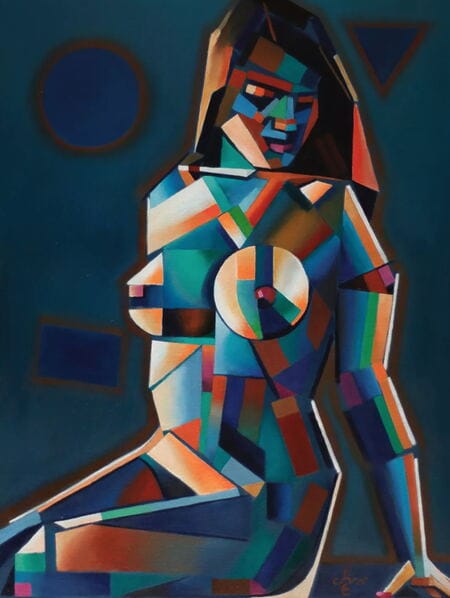
Paint splatters: Incorporate abstract artworks that work with paint splatters and dynamic lines.
Setting up your gallery wall – creative chaos or strict order
Now that you've completed your vision, planning, and preparation, it's time to roll up your sleeves and get started. Here are some key aspects to consider to create DIY gallery wall like a pro
Materials and frames: The right look for your gallery wall
Not only the subject matter, but also the materials of the pictures and frames contribute to the overall effect. Classic wooden frames lend the room warmth and a natural feel, while simple metal frames add a modern, minimalist touch. Those who prefer a more creative approach can also try mixing and matching – combining different frame types to create an unconventional look.
Besides framed artwork , canvas prints or textile pictures an excellent way to personalize a wall. Particularly trendy in 2025 are wooden or metal rails that elegantly showcase pictures while also allowing for flexible replacement.
An interesting dynamic emerges when you experiment with contrasts . Playfully designed frames around clean, simple images, or vice versa. Furthermore, frames in different colors can also contribute to a vibrant poster wall. Using picture frames of varying thicknesses creates a sense of depth, potentially even resulting in a subtle 3D effect. Particularly wide frames also draw attention and should therefore frame your favorite image.
The choice of hanging method – layout, arrangement and composition
The arrangement of the images can make the difference between a chaotic jumble and a perfectly orchestrated exhibition. There are several classic layouts that can serve as a starting point:
A. The classic: The edge hanging
The classic: The edge hanging image serves for illustration purposes and was created with the AI image tool ImageFlash.
Edge hanging is a timeless classic for your gallery wall, giving your room a consistently tidy and stylish look. This technique is suitable for both a harmonious arrangement of pictures of the same size and a creative combination of different formats.
All you need for successful edge hanging is a precise vertical or horizontal line . Place your chosen artwork along this line, aligning the edges of the picture frames. Whether you place your photos on one side or both sides of the line is entirely up to your personal preference.
When hanging your pictures along the edges, it's best to start with your most impressive piece to create an effective foundation for arranging your collection and captivating the viewer's eye. This simple yet effective method opens the door to a unique and inspiring presentation of your favorite images.
Ideal for minimalist designs where uniformity and order are paramount.
B. The geometric hanging: Inside the lines
Picture wall with the Inside-the-Lines hanging technique. Image serves as an illustration and was created with the AI image tool ImageFlash.
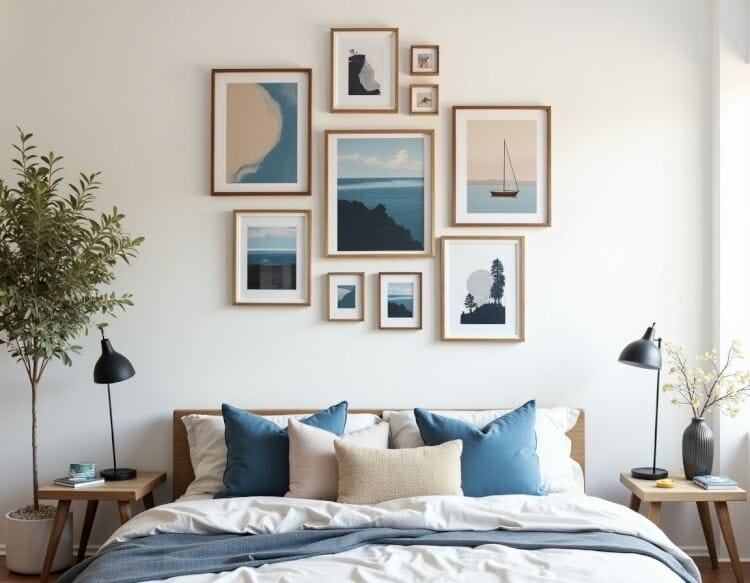
This trendy way of hanging pictures exudes lightness and casualness and is ideal for combining pictures of different sizes.
The key to inside-the-lines hanging : All wall elements are arranged within an imaginary geometric shape. Popular shapes for this include circles, ovals, or rectangles. Mark this imaginary structure on the selected wall surface.
Now place your most important photo in the center of this border. Group smaller pictures and decorative elements around this central point.
C. Opulent and Original: The Salon Hanging
Opulent and original: The salon hanging image serves as an illustration and was created with the AI image tool ImageFlash.
The salon-style hanging style exudes splendor and originality, captivating with its expansive arrangement. For this style, hang pictures of varying sizes as close together as possible. Ideally, very little of your wall remains visible in the end. Furthermore, geometric guidelines or lines are irrelevant when hanging the pictures.
Your intuition is all that matters here. Choose a wall and position a picture precisely in the center. From this point, gradually work your way outwards. To ensure this extensive gallery wall appears harmonious, you should only use perfectly matching frames.
D. The Triptych
The triptych image serves as an illustration and was created with the AI image tool ImageFlash.
This innovative photo wall design is achieved by dividing an image into tiles or separate panels, allowing multiple photos to combine to create a harmonious overall picture. This striking style is particularly well-suited for panoramic shots and conveys the narrative of your image in a unique way.
It may seem complex at first, but in the following video, the Framebridge explained the process of dividing a photo into different frames in detail to make it easier for you to do. The advice and steps you learn for a triptych gallery wall can easily be applied to an image divided into two, four, or more parts once you've grasped the basic principles.
E. The grid layout / grid arrangement
The grid layout/raster arrangement image is for illustrative purposes and was created with the AI image tool ImageFlash.
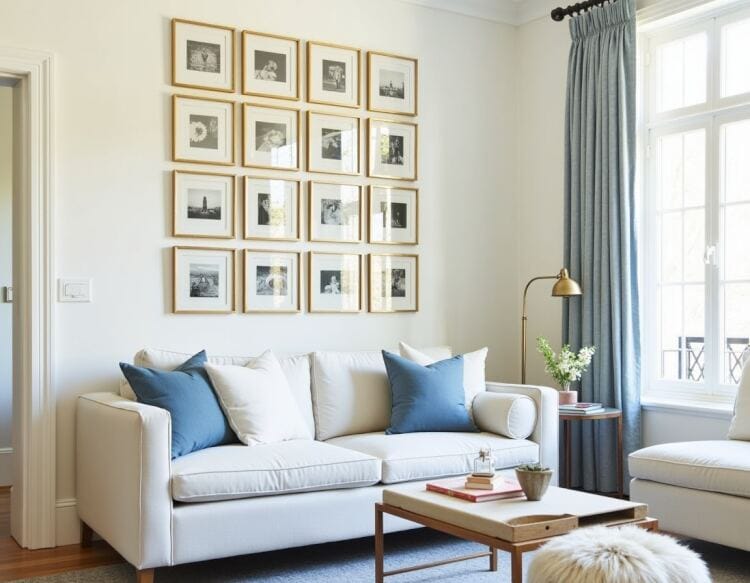
One of our favorite ideas for photo collages on a wall is to create a grid using smaller prints or picture frames. This layout gives what might otherwise appear cluttered a focused look through its clean and clear lines. It's advisable to have a tape measure handy to ensure your grid is precise and consistent.
What's the best part? If you create your grid with modern prints, all you need is washi tape to securely attach the prints to the wall. Keep in mind that all your prints or frames should be the same size to create a true grid.
F. The closed set
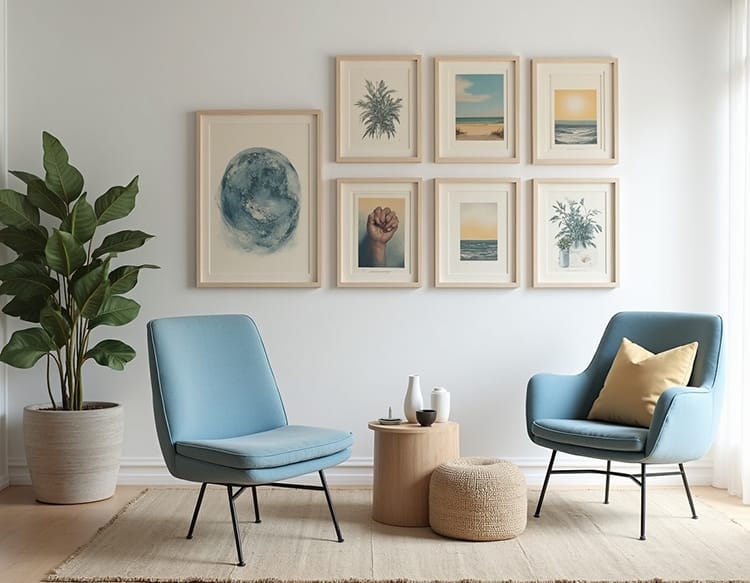
Bring order to your room with this gallery wall idea. Position your picture frames so that they interact with each other in certain areas, creating a unique and harmonious overall look.
By adding frames with ample matting, the white space of the matting becomes the space between your pictures. We particularly appreciate this style for smaller rooms or as a modern accent. Use a mix of large and small frames (we recommend they all share the same design) and experiment with different arrangements on the floor before mounting them on the wall.
G. Shelf gallery wall
of the shelf/gallery wall is for illustrative purposes only and was created using the AI image tool ImageFlash.
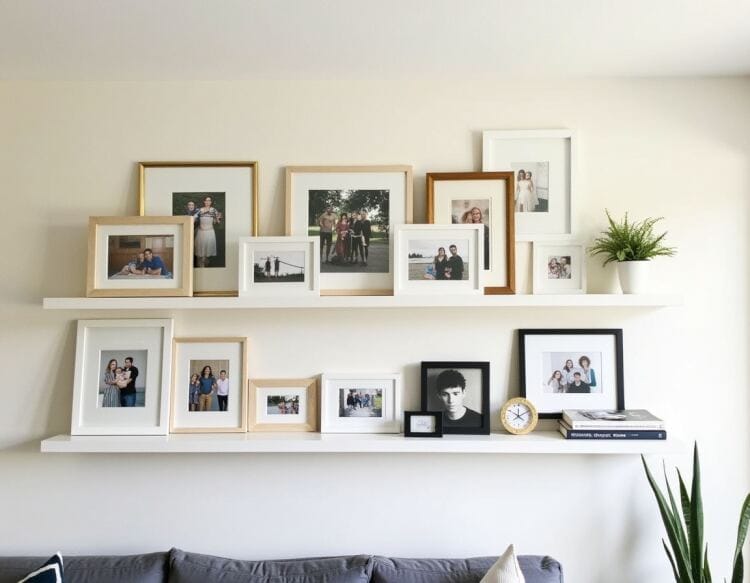
Long shelves add extra dimension to your walls and offer the ideal space for your treasured prints. This solution is particularly suitable for those who don't want to commit to hammering and nailing. Consider creating a gallery wall with different frame sizes, for example, with 18 x 26 cm frames as well as some 13 x 13 cm frames.
Combine different sizes and colors, and display your photos or prints stacked on top of each other on the shelf. Vary the arrangement occasionally so that the photo wall in your living room always looks fresh and appealing. Use the extra space to display everything from your favorite collectibles to a neatly organized stack of books.
H. The floating look
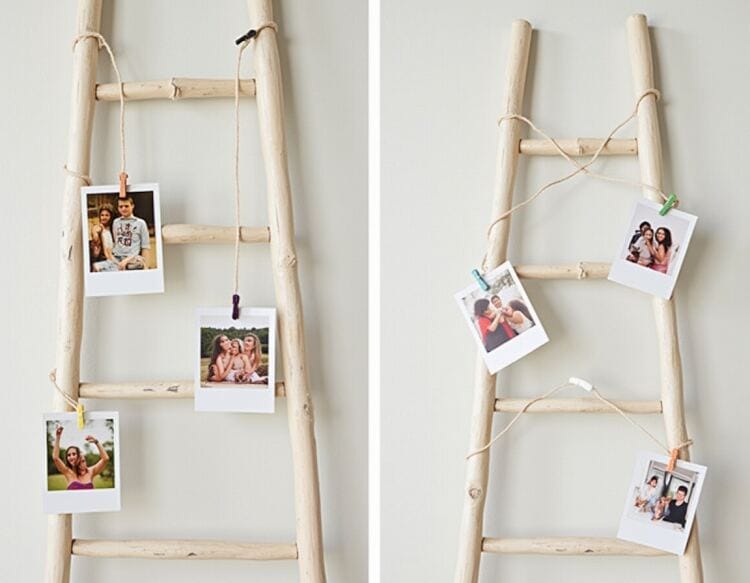
The floating look – style variant 1 image serves as an illustration and was created with the AI image tool ImageFlash.
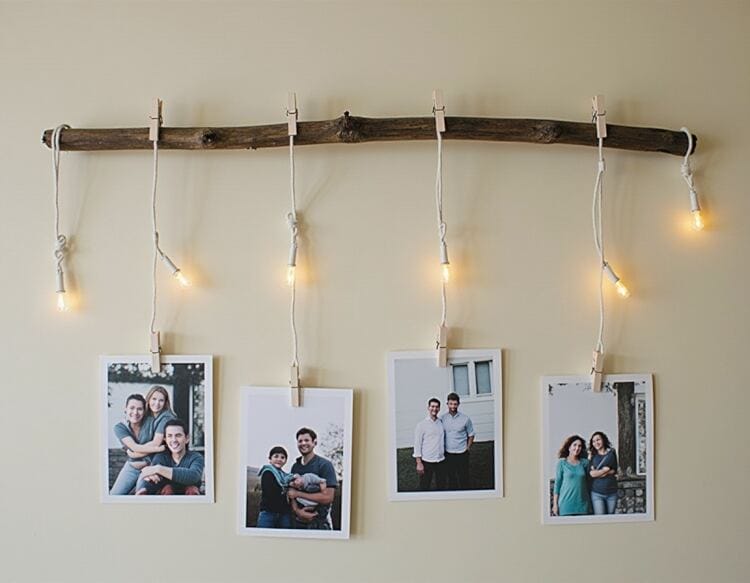
Combine your everyday prints with just a few simple household items (string and clothespins) to create this floating effect in your living space. Thread the string through the rungs of a ladder for a rustic style, or attach it to a branch to bring the outdoors in.
The floating look – style variant 2 image serves as an illustration and was created with the AI image tool ImageFlash.
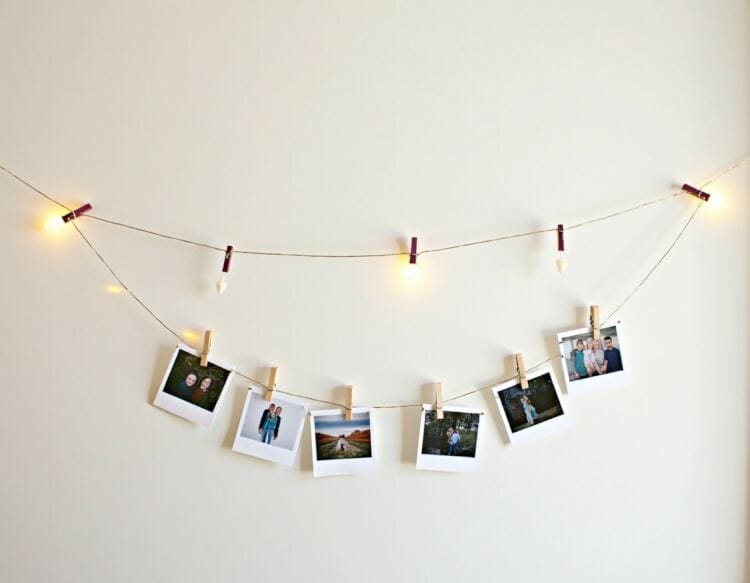
Even better: Make your prints shine by replacing the string with fairy lights. Let your creativity run wild and embrace this frameless photo display method.
The floating look – style variant 3 image serves as an illustration and was created with the AI image tool ImageFlash.
I. Symmetrical grid with square and rectangular images
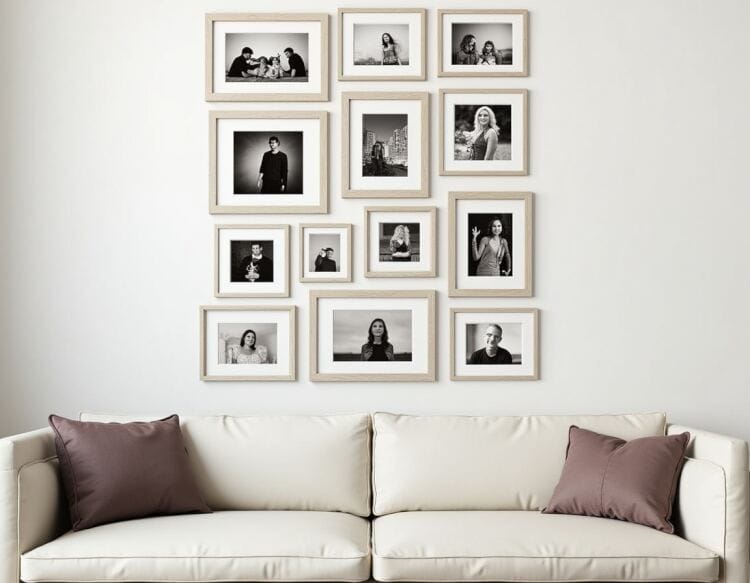
Symmetrical grid with square and rectangular images. Image serves for illustration purposes and was created with the AI image tool ImageFlash.
This symmetrical gallery wall design combines aesthetically pleasing square frames with horizontal prints, resulting in a dynamic and multi-layered presentation. The varying orientations of the images create a visually captivating arrangement that appears both harmonious and vibrant.
The successful combination of square and rectangular frames gives the wall fascinating depth and makes it the ideal choice to create an elegant and impressive focal point in any room.
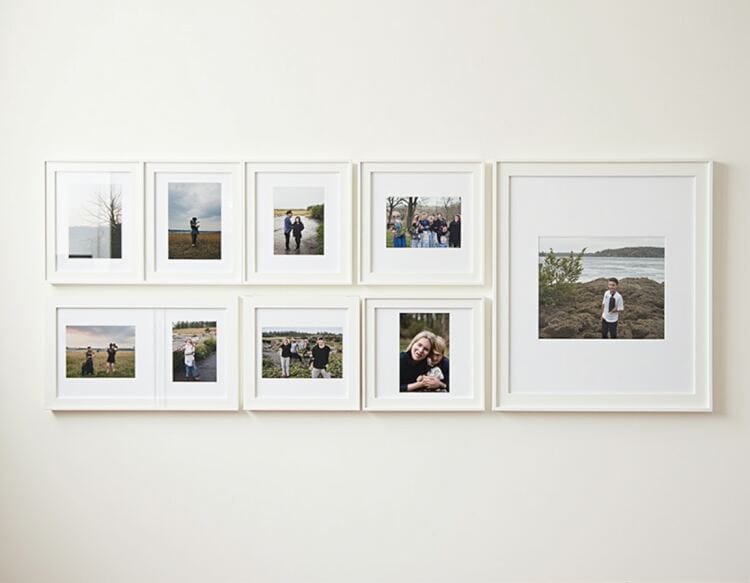
J. The connected rectangle
Symmetrical hanging: The connected rectangle in the image serves for illustration purposes and was created with the AI image tool ImageFlash.
This sophisticated design cleverly combines different sizes of horizontal and vertical prints to create a harmonious rectangular shape. The skillful combination of the various orientations not only creates depth and visual interest, but also lends the arrangement a balanced sense of harmony and structure.
With its medium dimensions, this design is ideal for compact spaces such as apartments or studios. It adds an artistic touch without overwhelming the room and invites you to enjoy art in everyday life.
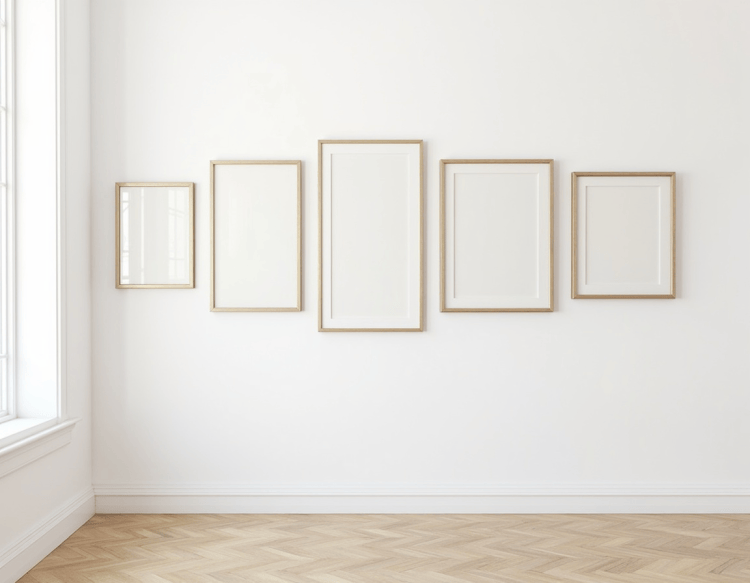
K. Vertically centered arrangement
Vertically centered image for illustrative purposes only and was created with the AI image tool ImageFlash.
This simple yet classic gallery wall layout, featuring five vertical frames in three different sizes, adds timeless visual interest to your wall. The clean and structured arrangement creates a balanced look, while the varying frame dimensions add depth and visual interest.
This layout is ideal for rooms that call for understated elegance and is perfect for living rooms, entryways or bedrooms.
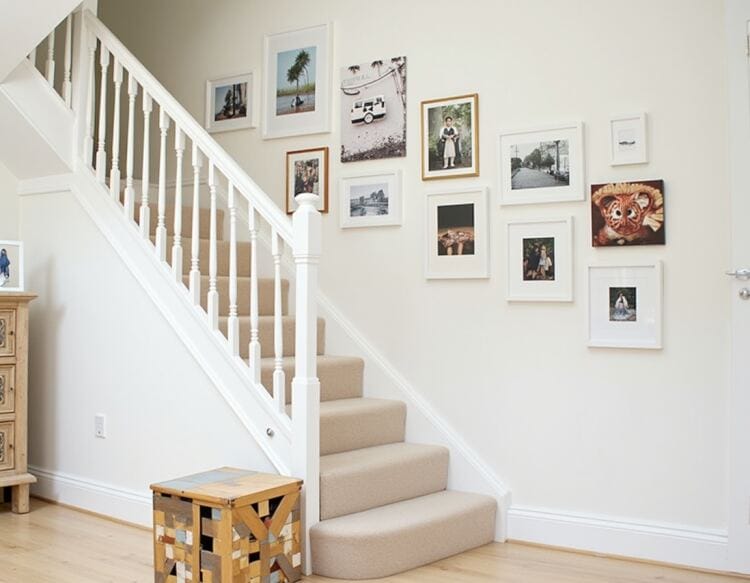
L. Completely slanted: The stair suspension
The image of the staircase is for illustrative purposes and was created with the AI image tool ImageFlash.
A gallery wall in the stairwell? Absolutely! Hanging artwork on the stairs utilizes the rising lines of this space to create a harmonious and inviting atmosphere. Pictures of a uniform size are just as impressive here as combinations of different formats. Imagine a line running parallel to the stairs; you can hang your artwork along this line.
Attach the bottom edges of your artwork along this line for a clean and elegant look. Alternatively, you can position the pictures so that the line runs through the center of the pieces, creating a captivating visual balance. To complete the overall effect, additional elements can be hung above this bottom row.
This creative arrangement not only gives your stairwell character, but also invites visitors to experience the space with a conscious eye.
M. Frei and Creative: Asymmetric Cluster
Free and Creative: Asymmetric Cluster – Example 1. The image is for illustrative purposes and was created with the AI image tool ImageFlash.
Perfect for a bohemian look that exudes freedom and flair.Choose a unique, contemporary take on a gallery wall by combining framed andunframedprints. You could even incorporate different artworks or decorative plates to create additional depth and detail.
This gallery wall idea is easy to implement and can be further developed according to your preferences and favorite pictures. Don't hesitate to try this concept. With a more creative approach, you can incorporate wall backdrops behind your frames.
Create a unique mural yourself or use a stencil to design wall art that will breathe new life into your entire room. We're especially enthusiastic about this style for decorating children's rooms. For slightly older children, this can be a fun craft project to do together.
Free and Creative: Asymmetric Cluster – Example 2. The image is for illustrative purposes and was created with the AI image tool ImageFlash.
The layout options presented offer inspiring ideas, but creating your own gallery wall can be challenging. Selecting the right prints and arranging them harmoniously requires careful consideration. Pre-assembled gallery wall kits offer an excellent alternative, as they are designed with coordinated prints and layouts. These kits are ideal for beginners or those with limited time, allowing you to effortlessly transform any wall into a stylish art display.
Professional tips for successful implementation
Up to this point, you now have the necessary skills to successfully create your own gallery wall. However, we would still like to give you a number of professional tips to help you achieve even more impressive results.
01 Dynamics and Harmony: The Art of the Right Combination
A gallery wall thrives on its dynamism , yet it should still appear harmonious. A tried-and-tested trick is to choose a color palette that runs through all the images. This creates a unified overall look despite the different subject matter.
mix of different sizes and formats also make a gallery wall more interesting. Large prints often serve as visual anchors, while smaller pictures or postcards loosen up the composition. A clever combination of portrait and landscape formats adds variety and movement to the wall design.
02 Art doesn't have to be expensive: The best tips for high-quality posters
Not everyone can or wants to invest in expensive original artwork. But that's not necessary at all, because high-quality art prints and posters offer an affordable alternative for creating an impressive gallery wall. Anyone to buy posters should pay attention to good print quality – because only sharp, color-accurate prints truly stand out.
Paper quality also plays a role: matte, textured paper gives posters an elegant look, while glossy surfaces ensure vibrant colors. When buying, it's also worth looking out for limited editions or works by independent artists to add a special touch to your collection.
A gallery wall with posters looks even more sophisticated when complemented by suitable frames. Whether in classic wooden frames, delicate metal frames, or with modern moldings – the right presentation makes all the difference and ensures that the wall looks not only individual but also stylish.
03 The perfect placement: Which wall is best suited?
Not every wall is suitable for a gallery wall. Gallery walls work particularly well above the sofa , the bed , or along a hallway . In large rooms, a gallery wall can serve as a visual focal point, while in smaller rooms it adds depth and structure.
Another trick is to use wall shelves or floating boards on which pictures can be arranged loosely. This creates a flexible layout that can be expanded or rearranged at any time. This method is particularly practical for those who like to decorate seasonally and change their pictures frequently.
04 Consideration of the line of sight
According to museum standards, the optimal height for the center of a gallery wall is generally between 1.45 and 1.60 meters. Ideally, one-third of the artwork should be positioned above eye level, while two-thirds should be placed below. However, the specific room also plays a crucial role
Living room/kitchen: This room often serves as the central meeting point of the apartment or house. People gather here and spend time together. Therefore, gallery walls should not be hung too high, as most people sit in this area.
Hallway: In this area, visitors and residents primarily view the gallery wall while standing. Therefore, it is advisable to place it at eye level.
05 Use distances to your advantage
The distance between the picture frames plays a crucial role in creating a harmonious gallery wall.
Generally, 5 to 8 centimeters between individual artworks is ideal. However, you can always vary the spacing according to the dimensions of your wall and the frames.Consistent spacing promotes a neat and tidy appearance for yourwall decoration.
06 Hanging and mounting
The way you mount your pictures on the wall is just as important as the choice of artwork itself. Here are some helpful mounting tips:
Tools and aids
Spirit level:Essential to ensure that everything hangs straight.
Drill:Especially useful when hanging heavy wall pictures.
Mounting adhesive:Can be a great alternative to nails, especially if you don't want to damage the wallpaper.
A measuring tape
A hammer
nails or picture hangers
Wall anchors (if required)
Painter's tape
Measuring and marking
Measure the distance between the top edge of each frame and the hanging hardware. Use these measurements to indicate where to place the nails or picture hangers. Ensure each mark is precise and aligns with your layout.
Painter's tape can be useful for visualizing the positioning and making adjustments if necessary.
Attach wall anchors
For heavier frames, it's crucial to use wall anchors to prevent them from falling. Drill holes at the marked locations and insert the wall plugs. This provides extra support and ensures your frames stay securely in place.
Hanging and adjusting
Hang each frame at the pre-determined points, starting with the central piece and working outwards. Use a spirit level to ensure each frame is correctly aligned. Make any necessary adjustments to maintain the overall look and alignment of your gallery wall layout.
Pro tip:Use detachable rail systems that allow for flexible arrangements. This way, you can rearrange your pictures again and again without having to drill new holes each time.
07 The final inspection – fine-tuning and details
Now is the time to take a critical look at your gallery wall. Take a step back and view your artwork from a distance. Have you convincingly depicted the intended theme or story? Are there any gaps, or is the composition too cramped?
Inclusion of decorative accents
Enhance your gallery wall by adding decorative touches such as wall decals , small statues, wall sculptures , or plants. These additions can add depth and intrigue to your presentation, making it truly special.
08 Lighting
The right lighting can transform your gallery wall from a simple arrangement of frames into a brilliant work of art. Use targeted spotlights or even LED strips to highlight each piece.
Proper lighting has the potential to significantly enhance the appearance of your gallery wall. Consider installing picture lights or using adjustable spotlights to showcase the artwork to its best advantage. This will not only increase visual appeal but also foster a warm and inviting atmosphere.
The right lighting is crucial for the presentation of your gallery wall and can transform it into a stunning focal point. Here are some suggestions on how to use lighting effectively:
Special picture lights
Adjustable spotlights
LED strip lights
Track lighting
Ambient lighting
09 When in doubt: Floating assembly
Anything can appear elevated through a floating mount – be it a Polaroid, a painting, or a wall hanging. Implementing this technique is easier than ever: you can either send your object to a framing service like Framebridge or get creative yourself by shadowbox frames and mounting the item with foam adhesive pads and matte cardboard.
A gallery wall as an expression of your personality
Creating a gallery wall is much more than just decoration – it's a creative way to personalize your home and add style. With the right mix of motifs, colors, and formats, you can create a harmonious overall look that enhances the room and creates a special atmosphere.
Whether with photographs or your own creations – there are no limits to your imagination. A well-designed gallery wall can be not only a visual highlight, but also a place of inspiration and emotion. So, for anyone looking to enhance their home with minimal effort, a gallery wall is the perfect solution for combining style and personality.
Owner and Managing Director of Kunstplaza . Publicist, editor, and passionate blogger in the fields of art, design, and creativity since 2011. Graduated with a degree in web design from university (2008). Further developed creative techniques through courses in freehand drawing, expressive painting, and theatre/acting. Profound knowledge of the art market gained through years of journalistic research and numerous collaborations with key players and institutions in the arts and culture sector.
Category for interior design,residential design, object furnishings, product and material innovation.
Here you will find everything that makes an interior designer's heart race. We present to you the latesttrendsand developments in the world of home design, as well as innovative products and materials for unique space design.
Our goal is to provide our readers with inspiration and help them creatively redesign or completely transform their living spaces.
We place great importance on ensuring that our articles are not only esthetically pleasing but also include practical tips.
We also introduce you to successful interior designers – from newcomers to the most well-known names in the industry – so you can be inspired by their projects and get to know their working methods.
Whether it's about making the most of a small space or furnishing your home with new furniture in the trendy industrial style: With us, you will find all the information you need on the topic of interior design!
We use technologies such as cookies to store and/or access device information. We do this to improve your browsing experience and to display (non-)personalized advertising. If you consent to these technologies, we can process data such as browsing behavior or unique IDs on this website. Refusal or withdrawal of consent may adversely affect certain features and functions.
Functional
Always Active
Technical storage or access is strictly necessary for the legitimate purpose of enabling the use of a specific service expressly requested by the subscriber or user, or for the sole purpose of carrying out the transmission of a message over an electronic communications network.
Preferences
The technical storage or access is necessary for the legitimate purpose of storing preferences that were not requested by the subscriber or user.
statistics
Technical storage or access that is solely for statistical purposes.Technical storage or access that is used solely for anonymous statistical purposes. Without a subpoena, the voluntary consent of your internet service provider, or additional recording by third parties, the information stored or retrieved for this purpose cannot generally be used to identify you.
marketing
Technical storage or access is required to create user profiles, to send advertising, or to track the user on one or more websites for similar marketing purposes.









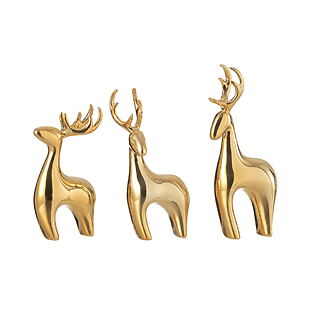
 J-Line Golden Reindeer (Set of 3) made of polyresin, electroplated gold surface
47,50 €
J-Line Golden Reindeer (Set of 3) made of polyresin, electroplated gold surface
47,50 €