Spaces influence creativity and productivity. If you work as an artist in an interior space where you can express and realize your creativity, not only your mental health but also your work will benefit.
The problem: In many cases, artists don't receive funding for their projects. This is because they typically work as freelancers and don't have a regular income. As a result, they are often unable to purchase their own studios and other necessary facilities. This prevents aspiring artists from growing and expanding their businesses.
To strengthen the arts sector (especially the competitiveness of companies) and create more jobs, the German Federal Government established the Cultural and Creative Industries Initiative . It also created the Federal Competence Center for Cultural and Creative Industries .
In this article, we explain how you as an artist can obtain a loan for a house and what you should pay attention to when taking out a loan.
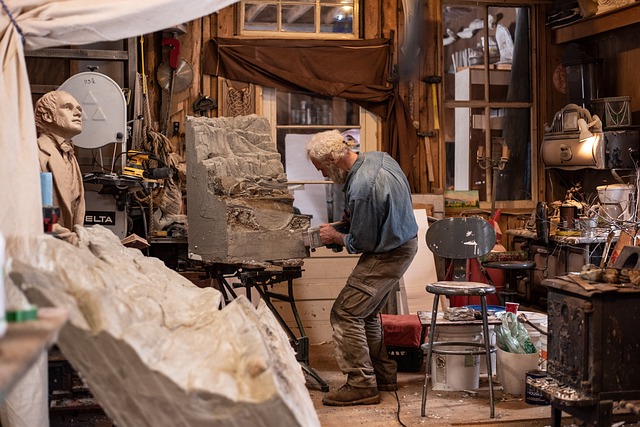
Unleash creativity: Funding spaces for artists. Image by Ana Krach on Pixabay
Creative minds need spaceto let their thoughts flow freely. Painters find it difficult to complete their works in a cramped apartment in the heart of a bustling city center. Sculptors need ample space to create their pieces. And potters need to find premises where they can set up kilns, store materials, and bring their projects to life.
Since you, as a self-employed individual or freelancer, don't have a fixed income, you should choose the loan for your property with a studio carefully. Don't just go for the first offer you receive. Banks and lending institutions already charge higher interest rates because the risk is higher for freelancers than for employees or civil servants.
Before you decide on a loan, first use a mortgage calculator . This will help you determine your available budget and how expensive your new property can be. When calculating, also consider the additional costs. A house incurs ongoing expenses that need to be paid regularly. Costs for the notary and other related fees should also be factored in.
If you belong to the cultural and creative industries , you have access to various funding options. This applies, for example, to artists in the music industry, the art market, the architecture market, the advertising and press market, and the book market. Software and game developers are also included by definition. The exception is anyone who receives public funding.
Buying a house: Do I need a loan?
Most homeowners rely on financing and only a small amount of savings. Germans are generally considered to have a credit . In 2020 alone, €235.20 billion was taken out in the form of consumer loans. A portion of this was for home financing.
Before taking out any loan, it's essential to check whether a loan is the best option. In many cases, home financing can prove helpful. Numerous online providers offer attractive rates. However, beware: the devil is often in the details. Particularly cheap loans usually come with additional costs that aren't immediately apparent.
However, you shouldn't rely solely on your primary bank. A comparison is always worthwhile . It's important to invest sufficient time in research and compare several offers. The more thorough your approach, the higher your chances of finding an affordable loan that can be repaid quickly.
take advantage of offers from the German Development Bank ( KfWspecial loans for freelancers in the arts sector , aiming to facilitate their entry into the profession.
Who can take out a home loan?
To finance a house, you must be of legal age and have full legal capacity. Furthermore, you must be able to prove official residency in Germany and have a checking account with a German bank.
The lender will also require proof of your income and creditworthiness. This is how they assess your eligibility for a loan. Based on your income situation, the bank or lending institution then determines the individual interest rate. The higher the risk for the bank, the more expensive the loan for the house.
Tip: Find out if the bank offers a specific loan for artists such as freelancers .
How do I find the right loan provider?
There is no single answer to the question of how artists can find a loan provider offering the best terms. The foundation is thorough research , comparing various online lenders with offers from your bank and the KfW (German Development Bank). This will give you an overview of potential loans and the expected costs.
The monthly payment should be high enough to allow you to pay off the loan quickly. The shorter the loan term, the sooner you'll be debt-free. At the same time, the payments should be low enough that you don't have to lower your standard of living. You should also plan for a financial buffer. This way, you might have to cover unforeseen expenses – for example, when replacing your kilns.
Always question the trustworthiness of lenders. Unscrupulous operators in the market often lure customers with particularly attractive offers and suspiciously low interest rates. Those who fall for these scams will regret it in the long run due to high payments. Ensure that the terms and conditions are always contractually agreed upon. Also, be sure to carefully review any penalty clauses.
How many artists take out loans?
A 2019 monitoring report on the cultural and creative industries shows that more and more artists are taking the plunge and taking out loans. A total of 1.2 million people employed in the arts sector used financing in 2019, including 258,790 freelancers and entrepreneurs in the field.
The plan of the federal government and the cultural and creative industries it created is therefore bearing fruit, and artists are finding it easier to enter the profession and to obtain financing during their working years.
Infographic: Financing in the cultural and creative industries
The conclusion – freelance artists can also take out loans
Previously, it was virtually impossible for freelance artists to obtain a loan. This is because freelancers like sculptors, who sculptures , have no fixed income, and the lender therefore bears a high risk.
Today, funding from the KfW (German Development Bank) and measures for the cultural and creative industries, established by the federal government, mean that more and more artists can access loans. This allows them to launch their careers, and a loan also opens up new opportunities later in their professional lives.
When taking out a loan as an artist, you should keep a few important points in mind. Always compare several offers and read the fine print. Avoid tempting offers with unrealistically low interest rates. These often conceal unscrupulous lenders, and the loans can become a costly trap.
Owner and Managing Director of Kunstplaza . Publicist, editor, and passionate blogger in the fields of art, design, and creativity since 2011. Graduated with a degree in web design from university (2008). Further developed creative techniques through courses in freehand drawing, expressive painting, and theatre/acting. Profound knowledge of the art market gained through years of journalistic research and numerous collaborations with key players and institutions in the arts and culture sector.
We use technologies such as cookies to store and/or access device information. We do this to improve your browsing experience and to display (non-)personalized advertising. If you consent to these technologies, we can process data such as browsing behavior or unique IDs on this website. Refusal or withdrawal of consent may adversely affect certain features and functions.
Functional
Always Active
Technical storage or access is strictly necessary for the legitimate purpose of enabling the use of a specific service expressly requested by the subscriber or user, or for the sole purpose of carrying out the transmission of a message over an electronic communications network.
Preferences
The technical storage or access is necessary for the legitimate purpose of storing preferences that were not requested by the subscriber or user.
statistics
Technical storage or access that is solely for statistical purposes.Technical storage or access that is used solely for anonymous statistical purposes. Without a subpoena, the voluntary consent of your internet service provider, or additional recording by third parties, the information stored or retrieved for this purpose cannot generally be used to identify you.
marketing
Technical storage or access is required to create user profiles, to send advertising, or to track the user on one or more websites for similar marketing purposes.



 Exotic wall decoration "Lobo" made from banana leaf and coconut
199,95 €
Exotic wall decoration "Lobo" made from banana leaf and coconut
199,95 €