Working as a freelancer has both advantages and disadvantages. A central issue in the life of a freelancer or self-employed person is budgeting .
This magazine article serves as a guide to budgeting and cost savings for freelancers facing challenging times. It provides important tips that freelancers should consider, along with a concluding summary.
The irregular income from freelance work makes budgeting difficult, yet essential. Check out our freelance budgeting guide to create a budget tailored to your needs. Budgeting as a freelancer can be challenging, especially if you're used to receiving a regular monthly payment.
Due to unstable financial situations, smart budgeting is crucial. Are there any best practices you should follow? Absolutely! Our quick guide offers essential budgeting tips for freelancers.
Let's start with some basic information about budget planning and bootstrapping . The term comes from English and is primarily used there for startups and solopreneurs who need to keep costs as low as possible due to a lack of or irregular income. In Germany, in a business context, we would say:
Effective budgeting and bootstrapping for freelancers in difficult phases. Photo by Sincerely Media @sincerelymedia, via Unsplash
Working on freelance projects is often like waiting for the famous London tourist buses: you wait patiently but in vain, and then suddenly several arrive at once. Payment from clients also varies, from immediate payment to payments throughout the year – if you're lucky
Creating a detailed budget is crucial for effective income and financial management. Structured budgeting is essential for ensuring the financial stability of both freelancers and businesses.
It serves as a guideline for planning and executing financial decisions and objectives , and makes it possible to avoid financial bottlenecks. Furthermore, a budget provides clear guidelines for resource allocation and contributes to optimizing financial performance .
Budgeting is therefore a fundamental building block for professional success and long-term financial security for freelancers.
I remember my early years as a small business owner from 2004 to 2008 very well. Without disciplined planning, I would have failed in no time.
Which sub-areas need to be considered:
Variable income
Self-employed individuals do not have a regular income like employees. Therefore, it is crucial to keep a close eye on finances in order to survive difficult times and financial bottlenecks in their business.
Creating a budget specifically for self-employed individuals allows you to manage your fluctuating income through accurate financial planning and thus successfully overcome the challenges.
Expense management
Whether it's business or personal expenses, both play an essential role in the life of a self-employed person. Budgeting is crucial for the self-employed to effectively manage both personal and business expenses.
Therefore, experienced freelancers choose to invest in accounting software that helps them easily record, track, and control personal and business expenses.
Tax planning and management
Effective budget planning helps your company to precisely comply with tax regulations. Photo by Claudio Schwarz @purzlbaum, via Unsplash
A crucial element of budgeting for the self-employed is tax planning and management. Unlike employees, whose employers handle tax planning, the self-employed are solely responsible for their own tax planning and management.
Effective budget planning helps your company to comply precisely with tax regulations.
From my own experience, I can say that it usually starts innocently enough with just a few receipts and a simple income statement. However, the step to becoming a fully VAT-registered business owner was very difficult for me and severely tested my planning. The conversion from sole proprietorship to a GmbH (limited liability company) will likely take place soon, which will make the planning even more complex.
To avoid getting into trouble, proactive planning is essential. Many freelancers and self-employed individuals have already had a nasty surprise when faced with VAT back payments after the first year.
Reserves and provisions
This is also a point that I myself neglected for far too long and put off. In retrospect, this seems like a clear mistake. Until the coronavirus pandemic, I was accustomed to steadily increasing sales and revenues. With the lockdowns and then the war in Ukraine and the inflation shock, I was forced to rely on reserves.
Solid financial planning is essential for self-employed individuals like us to build a safety net or manage emergency reserves to be prepared even during challenging business times. Due to the fluctuating income of the self-employed, setting up an emergency or security fund for unforeseen events is crucial.
Effective financial planning helps self-employed people manage their emergency reserves and thus prepares them in the best possible way for the future.
Retirement planning / Private pension provision
Self-employed individuals do not receive a company pension from their employers. Nor are they required to contribute to the statutory pension insurance scheme. Therefore, they are responsible for securing their own financial future.
Careful budgeting helps you focus on emergency savings and investments, thus ensuring a solid retirement plan. Don't start too late! I know from personal experience how tempting it can be to postpone these expenses to the future in order to attend to supposedly "more urgent matters.".
Now that we know the scope of our planning, we are focusing on concrete budgeting for freelancers and identifying important potential savings in expenses.
How to budget as a freelancer – guide, advice, tips
Budgeting is easier for employees with a fixed monthly salary, as they know their monthly income precisely. For freelancers, however, predicting expenses is more difficult, since their income can vary (sometimes significantly).
However, you should not be discouraged from monitoring your spending habits and keeping your finances under control!
Here are some effective budgeting tips that freelancers can benefit from. Budgeting is an absolute necessity for freelancers. To compete effectively in a highly competitive market, a freelancer needs to implement tailored budget planning and expense control.
Essentially, budgeting for freelancers involves calculating monthly income and deducting expenses, future savings, reserves, retirement provisions, and tax planning. We offer a detailed guide to budgeting for freelancers here.
So let's begin!
01 Calculate average monthly income
How to budget as a freelancer: Step 1 – Calculate your average monthly income. Photo by 2H Media @2hmedia, via Unsplash
Your income as a freelancer depends on your projects and clients, which can lead to monthly fluctuations. Therefore, it's important to calculate your average monthly income to create an accurate budget.
Unlike employees with a fixed salary, budgeting as a freelancer requires a precise analysis of your income.
As I said, it's possible that you might earn 7,000 euros in one month, only to barely reach 1,000 euros gross in the next.
To manage my finances regularly, I calculate an average amount over a period of, for example, 12 months. Adding all the figures together, I arrive at, for instance, €54,000 per year. Dividing this by 12 gives an average monthly income of €4,500.
When budgeting, I prefer to be cautious, as life is often unpredictable. Based on these figures, I would probably plan for an average monthly income of €3,750 for the next year. Of course, we all strive to increase our income, but we should be aware that some things are beyond our control.
Therefore, I feel more comfortable budgeting with a slightly lower amount. However, my paycheck won't be €3,750, since taxes are automatically withheld from employees' wages and half of their social security contributions are paid by their employer, which isn't the case for the self-employed.
As a freelancer, you typically pay taxes later (unless you choose to make high advance payments during the year), but since we want to convert you to an employee, we need to balance things out. The amount to be deducted depends on your income, where you live, and a variety of variables, including your business expenses. There are online calculators that can help you with this.
Since round numbers are easier to work with, we will set aside €1,000 per month for taxes and €500 for health and long-term care insurance, which means that we will have a monthly salary of €2,250 left over for the coming year. Ideally, however, around 20% should also be deducted and invested for retirement savings.
That would leave us with 1,800 euros per month for ongoing expenses and our living costs.
02 Separate accounts and a system for salary payments
There are various methods for paying oneself, especially in connection with freelance income.
One option is separate bank accounts to manage income and expenses. Alternatively, you can keep track of everything in one account. Some people prefer cash to keep an eye on their budget and control their spending.
An effective and stable payment system helps to achieve regular incomes and to financially balance fluctuating months.
It is also recommended to set aside money for taxes. Nevertheless, it may happen that your own salary is insufficient to cover all expenses. We will address possible solutions in the next step.
03 Calculate expenses and monthly costs
Calculating expenses and monthly costs. Photo by charlesdeluvio @charlesdeluvio, via Unsplash
We've already analyzed the income side, and now it's time to get a handle on expenses
It requires listing all your expenses – both regular ( fixed costs ) and one-off ( variable costs ). Due to perceived sloppiness, many people tend to skip this step or not carry it out thoroughly. However, it is crucial to have a precise overview of all your monthly expenses. Even small amounts can add up, so you should consider everything.
Once you have listed your expenses, it's time to determine which ones mandatory . The remaining expenses can, in the worst-case scenario, be avoided, or, if necessary, paid from savings.
Fixed costs are unavoidable expenses such as rent, mortgage payments, insurance premiums, car loans, and loan repayments. Variable costs, on the other hand, can be reduced or avoided through effective budgeting; these include expenses for groceries, utilities, travel, repairs, marketing, and more.
It is advisable to establish an average monthly expenditure to determine the amount that can be used for tax planning, emergency funds, or savings after deducting expenses from income.
To keep your finances under control, it's essential to closely monitor your actual spending. Relying on vague estimates can lead to unpleasant surprises. By accurately tracking your expenses, you maintain control of your budget and avoid potential financial challenges.
Caution: Most people tend to overestimate their expenses. Therefore, remain realistic and always keep track of your financial reality to ensure long-term stability.
Furthermore, it is essential not only to cover current expenses but also, if necessary, to pay off debts, service loan installments, and provide for future needs. This includes strategic preparation for retirement, unforeseen events, and significant occasions such as vacations and the weddings of acquaintances.
4 Bootstrapping Opportunities
Set a monthly spending limit
It sometimes happens that monthly income is significantly higher in certain months than in others. At such times, the temptation is great to immediately squander the extra money or make expensive purchases.
However, it is advisable to set a limit for monthly expenses in order to ensure financial security even during periods of lower income.
Plan your trips carefully
Since you currently have no additional money available for leisure activities, it is crucial to plan your travels according to your income.
Have you just signed a 6-month contract? Then now would be the perfect time to plan a break or a short vacation, as your income is secure.
Are you facing several months without income? Perhaps you should wait to book your next holiday until the situation improves.
Choose your financial priorities
The 50/30/20 budgeting method is an effective tool for self-employed individuals to manage their finances. This strategy suggests allocating 50% of income to regular expenses, 30% to flexible needs such as gym memberships, movie tickets, and clothing, and the remaining 20% to long-term savings goals, retirement planning, or debt repayment.
Use handy online calculators to find out how best to divide your budget.
Rent instead of buy
As a self-employed entrepreneur, you can usually deduct some of the costs incurred for business activities for tax purposes.
Typical expenses for freelancers include broadband and internet access, dedicated landline connections, smartphones, mobile phone rentals and calls, as well as computer hardware such as PCs , monitors, and accessories. The amount of tax deduction depends on how intensively you use these resources for business purposes. These expenses should be carefully documented to maximize tax benefits.
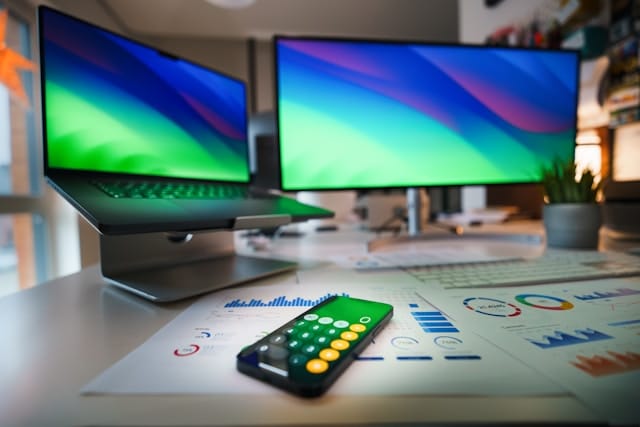
Hardware costs can quickly add up. Photo by Jakub Żerdzicki @jakubzerdzicki, via Unsplash
Depending on your field, you may face costly equipment purchases. This applies particularly to professional photographers and video producers.
But generally speaking, a basic set of equipment such as a PC, laptop, monitor(s), tablet, etc., must first be purchased.
Especially at the beginning, such expenses can quickly rise into the five-figure range. However, with a tight budget, renting equipment is a simple and convenient option. Or, in the case of photographers, using second-hand equipment or older models.
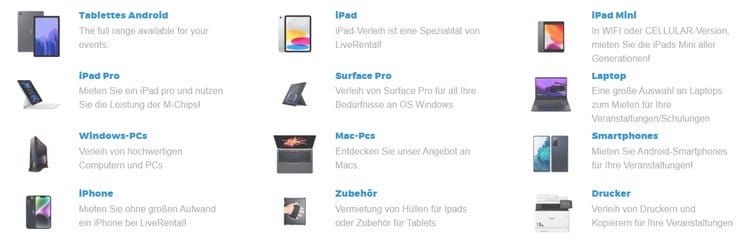
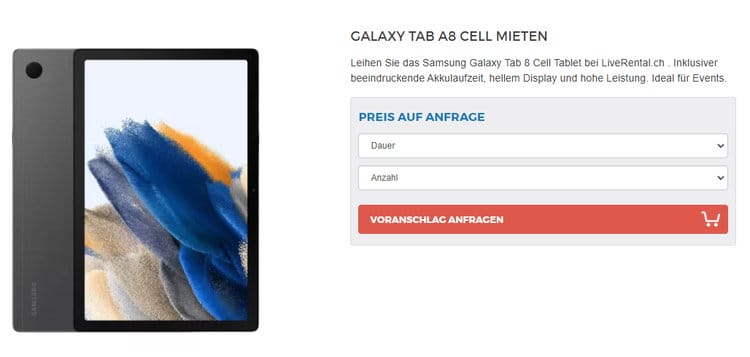
Providers like LiveRental offer IT products such as desktop PCs, iMacs, laptops, iPads, and tablets for rent . Smartphones, printers, and other accessories are also available for freelancers and businesses.
LiveRental's product range includes a variety of rental devices, such as iPads, smartphones, tablets, and (high-end) laptops
With providers like LiveRental, the equipment is state-of-the-art, ensuring you have access to the latest hardware and software. Various flexible rental models adapt well to the needs of freelancers and self-employed individuals – whether for short-term projects or long-term programs.
Furthermore, expert technical support is available to offer technical assistance, setup help, and maintenance services. This is very convenient if you want to focus on your core competencies instead of dealing with the procurement, installation, and maintenance of hardware.
Renting or leasing hardware allows the high purchase costs to be spread over many months, significantly reducing the financial burden.
Start each month with a new budget
Once you have learned how to manage your order pipeline as a freelancer, you will be able to accurately predict your monthly income.
Start the month with a well-thought-out plan and budget to cover all costs, build your savings, and maintain a clear overview of your personal expenses.
Make customer meetings budget-friendly
It is advisable to avoid expensive dinners or cocktails when trying to attract potential new customers and instead suggest coffee meetings or more informal get-togethers.
This allows you to make new contacts more efficiently and cost-effectively.
Negotiate working from home
Some clients may prefer that you are present in their office during the contract period.
Nevertheless, it is advisable to use the option of working from home to minimize expenses for travel and meals.
Find out which expenses are tax-deductible
This is a fundamental rule for self-employed individuals. By knowing which purchases and expenses are tax-deductible, you can better plan your finances and budget accordingly. However, be careful not to make purchases under the guise of "business expenses" when money is tight.
Ultimately, you'll still have to pay out of your own pocket!
Here is a (non-exhaustive) list of the most common business expenses that tax deductible :
Office rental / room rental / home office
Internet/Broadband costs
Mobile phone plan(s)
Website hosting
Technical equipment such as a new laptop, a laptop mouse, stationery, printer cartridges, etc.
Travel expenses, insofar as they are related to business trips
All professional training courses or online courses
Industry-specific equipment, such as a camera for a photographer or a PlayStation for a game developer
Make the most of budgeting apps
Whichever online budgeting tool you choose, your savings goals will certainly get a boost once you automate this financial task. Seeing exactly how much money you spend each month on different activities and keeping track of multiple savings goals can make a big difference!
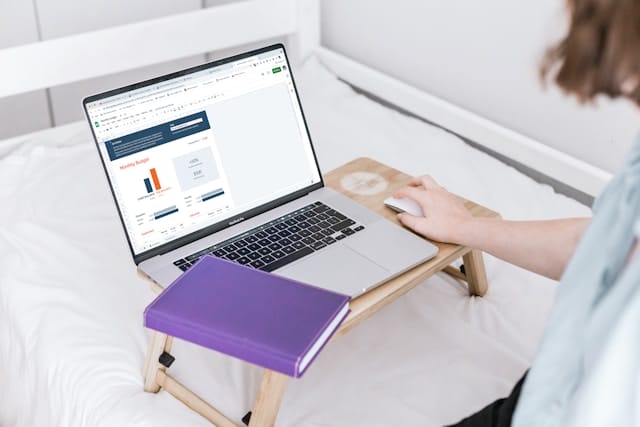
Use financial planning software or an automated budgeting app. Photo by Microsoft 365 @microsoft365, via Unsplash
Using an effective online budgeting tool is crucial for successfully achieving your financial goals. Automating your finances will undoubtedly help strengthen your savings plan. By breaking down your monthly expenses for various activities in detail and monitoring multiple savings goals, you'll certainly notice positive changes in your financial habits.
From clearly monitoring your expenses to strategically planning your savings, using such a tool can have a significant impact on your financial future.
05 Separate short-term and long-term financial reserves
Careful and smart budget planning allows you to build up a financial buffer to be prepared for unforeseen expenses such as heating repairs or dental visits.
At the same time, you can long-term savings goals , whether for your children's education or purchasing a home. For the self-employed in particular, building up a financial cushion is just as important as taking out appropriate insurance.
Life as a freelancer already brings enough stress – additional financial worries shouldn't be a burden.
06 Keep personal and business accounts separate
Imagine it's similar to having two different customer groups – just as you would keep project results for different clients in separate folders, business and personal finances should also be kept separate.
Mixing things up quickly leads to ambiguity and confusion, making it harder to follow your smart budgeting strategies. Many online banking providers for business accounts and personalized bank accounts allow you to manage your money effortlessly.
Separating business and personal finances not only becomes simpler, but also allows you to receive free payments in any currency and withdraw money from ATMs free of charge.
07 How much tax should you budget for?
Careful tax planning as a freelancer requires a certain amount of discipline, because ignoring common advice can quickly lead to high costs – not only in the form of enormous stress, but also in the risk of a fine.
It is advisable to learn from the experiences of others and therefore set aside at least 25 to 30% of your income. This way, you can ensure that you are well prepared for your tax liabilities at the end of the year.
08 Prepare for the worst: Create worst-case scenarios
We've already focused extensively on our past income and expenses. But a budget is much more than just a review of past figures – it's a forward-looking document that helps you plan your financial future.
By creating forecasts and estimates for your income in the coming months and years, you can be better prepared to achieve your financial goals.
In the next step, we will use the data and information we have collected so far to extrapolate into the future. This will allow us to make realistic assumptions about how our financial situation might develop in the coming weeks or months.
There are various apps and software solutions on the market that can help you plan your future finances. Here is just a small selection of possible options (of course, there are many more):
QuickBooks
FreshBooks
Pulse
Xero
Mint
09 Diversification: Don't put all your eggs in one basket
Finally, I would like to address the importance of income diversification for freelancers. In this context, I would like to point out that dependence on a single client poses a significant risk, as freelance projects are volatile and companies often consider freelancers the first to be let go when cost-cutting measures are in place.
Furthermore, you should be aware that you might fall into the category of "bogus self-employment" and the German Federal Pension Insurance (BfA) might subsequently demand social security contributions. This can become very unpleasant.
It is recommended to spread income among several regular clients to ensure financial security. Such diversification can prevent sudden income losses and compensate for canceled contracts.
It's a reality of working as a freelancer that there's no job security. Therefore, it's especially important to be prepared.
Sources:
Paul Mapleston: Your Complete List of Freelance Business Expenses, https://www.paulmaplesden.com/freelance-guides/the-complete-list-of-freelance-business-expenses
N26: Budgeting for freelancers: a how-to guide, https://n26.com/en-eu/blog/budgeting-for-freelancers
mooninvoice: How to Budget as a Freelancer: A Complete Guide, https://www.mooninvoice.com/blog/how-to-budget-as-a-freelancer/
Andrew Blackman on Envato Tuts+ : A Freelancer's Handbook for Effective Budgeting , https://business.tutsplus.com/de/tutorials/ein-freelancer-handbuch-zur-effektiven-budgetierung–cms-23923
Owner and Managing Director of Kunstplaza . Publicist, editor, and passionate blogger in the fields of art, design, and creativity since 2011. Graduated with a degree in web design from university (2008). Further developed creative techniques through courses in freehand drawing, expressive painting, and theatre/acting. Profound knowledge of the art market gained through years of journalistic research and numerous collaborations with key players and institutions in the arts and culture sector.
A fundamental need for every artistically creative person is likely to be the ability to live off their art.
To secure one's own existence, it is essential to earn money with art. In fact, nowadays—contrary to the majority perception—many artists can live well from their creative work. Nevertheless, a significant majority of all freelance artists still rely on additional sources of income (e.g., teaching courses, commissioned work, side jobs, etc.).
Recognition as an artist often does not bring immediate financial security. Therefore, artists are often also life artists.
The opportunities to make a living from one's own art have, however, grown significantly due to the internet and social media. As an artist, however, you must be versatile and flexible to succeed. A certain degree of perseverance is also essential.
Customer relations and self-marketing are also important pillars for success as an artist .
In this section, we compile numerous articles, information, tips, and advice to help you make a living from your art.
Freelancing
Regardless of your field of activity as a web designer, graphic designer, game developer, photographer, programmer, product designer, journalist, content creator or influencer , as a self-employed person you have a wide range of tasks to manage.
From customer acquisition and successful project implementation to time management and financial administration – including the often unpopular tax matters.
Good information and the right online tools are crucial for a successful career as a freelancer or content creator.
In this section you will find helpful articles and valuable advice with tips specifically for freelancers.
We use technologies such as cookies to store and/or access device information. We do this to improve your browsing experience and to display (non-)personalized advertising. If you consent to these technologies, we can process data such as browsing behavior or unique IDs on this website. Refusal or withdrawal of consent may adversely affect certain features and functions.
Functional
Always Active
Technical storage or access is strictly necessary for the legitimate purpose of enabling the use of a specific service expressly requested by the subscriber or user, or for the sole purpose of carrying out the transmission of a message over an electronic communications network.
Preferences
The technical storage or access is necessary for the legitimate purpose of storing preferences that were not requested by the subscriber or user.
statistics
Technical storage or access that is solely for statistical purposes.Technical storage or access that is used solely for anonymous statistical purposes. Without a subpoena, the voluntary consent of your internet service provider, or additional recording by third parties, the information stored or retrieved for this purpose cannot generally be used to identify you.
marketing
Technical storage or access is required to create user profiles, to send advertising, or to track the user on one or more websites for similar marketing purposes.
















 Eye of the Galaxy - Abstract Metal Wall Decor