The cliché of the "struggling artist" is all too often invoked. However, there are more and more artists who have built successful and flourishing careers in the art world – even as self-taught individuals, entirely without an academic background or conventional artistic path.
Today, there are numerous established self-taught artists in the art scene . The fact that they are self-taught no longer poses a problem, as their art, their knowledge, their understanding, and their contribution to art are far more significant than a piece of paper from an art university or the name of an art teacher.
Let's assume that's our goal. But how do we get there? Above all, it requires strong motivation, discipline, perseverance, and dedication. The path may be rocky, but with passion and the relentless pursuit of making a living from your passion, it's possible to become successful as a self-taught artist in the art world.
Don't let doubts hold you back and believe in yourself – with a bit of natural talent, you have the potential to achieve great things. Success in the art world, too, is 1% inspiration and 99% perspiration.
How do I become an artist? Learn with us from established artists and successful self-taught individuals!
This article shows you in a few steps how you improve your chances of success as a self-taught artist . We discuss how you can independently learn the material of an art university and where you should begin. We also discuss how to develop your artistic practice, how to proceed as an autodidact, and how to succeed in the art world. We draw on the experiences, insights, and tips of successful artists.
“elite art world”, there is often a certain stigma attached to being a self-taught artist, which leads to various challenges for those who do not have the opportunity to attend an art school.
Depending on the socioeconomic situation or education system of a country, art education
Today, essential information for self-taught artists is more readily available than ever before—provided you know where to look. Becoming a professional artist, let alone a professional self-taught artist, is no easy feat. Despite all the obstacles and challenges along the way, however, a self-taught artist should not be discouraged from making a name for themselves in the art world.
What are the basic requirements to become an artist?
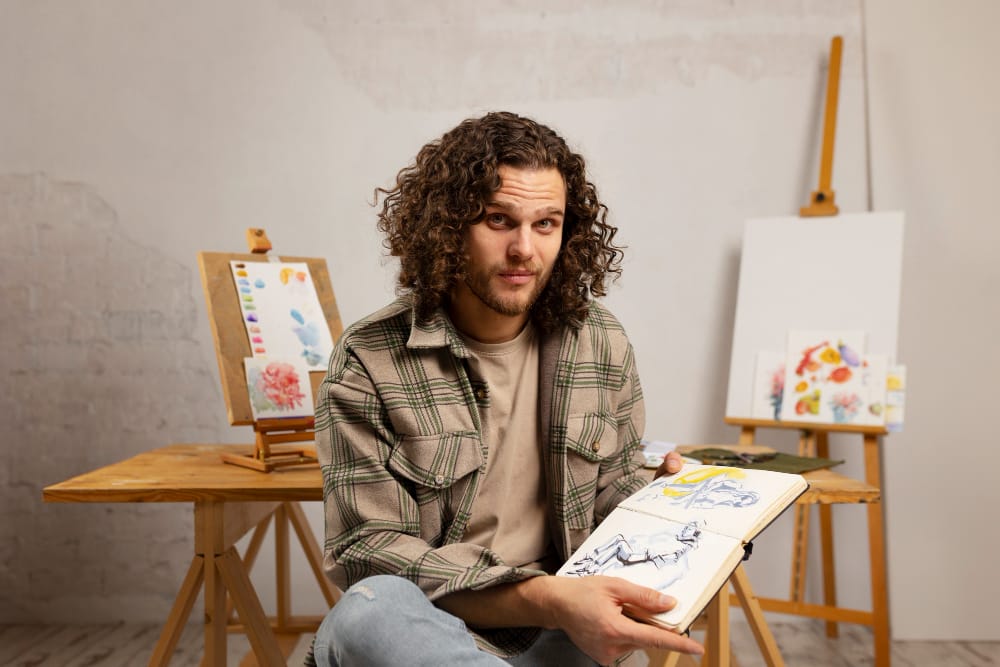
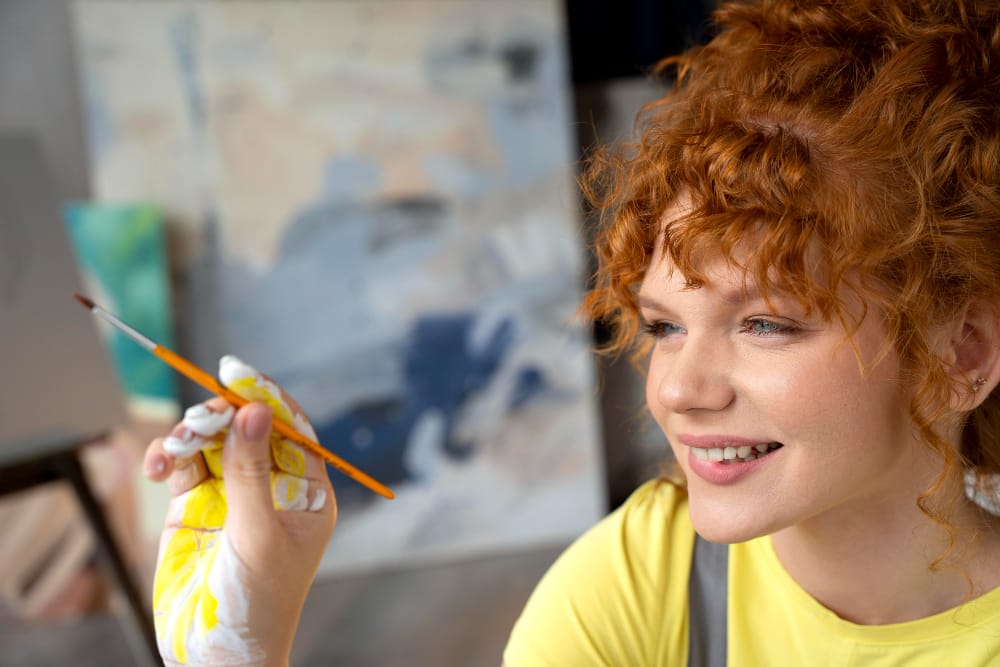
What are the basic requirements to become an artist? Image source: Freepik
Do you possess a natural creativity that gives you new ideas every day? Do you enjoy painting, drawing, and designing, have a feel for colors, shapes, and aesthetics, and a vibrant emotional life? Some say you're a bit unconventional?
If you also have little need for stability and predictability, then the life of an artist might be just right for you. As an artist, you can paint, craft, build, sand, photograph, and film, creating your artwork entirely according to your own vision.
If others like your works because of their expressiveness, emotionality, aesthetics, or sophistication, you can exhibit them in galleries or sell them privately.
Incredible variety of fields of activity
In the artistic field, there is a sheer diversity and abundance of fields of activity and forms, which makes such a career path particularly attractive for creative people.
The first things that probably come to mind are the fine arts, such as painting, sculpture, drawing, and illustration. Or the performing arts, including theater, opera, music, and acting. Beyond these traditional areas, however, an incredible wealth of opportunities has emerged. Whether tattoo artist, street performer, game designer, comedian, circus performer, art therapist, clown, magician, burlesque dancer, martial artist, entertainer, YouTuber, makeup artist, or restorer, the possibilities for creative individuals to earn money are virtually endless.
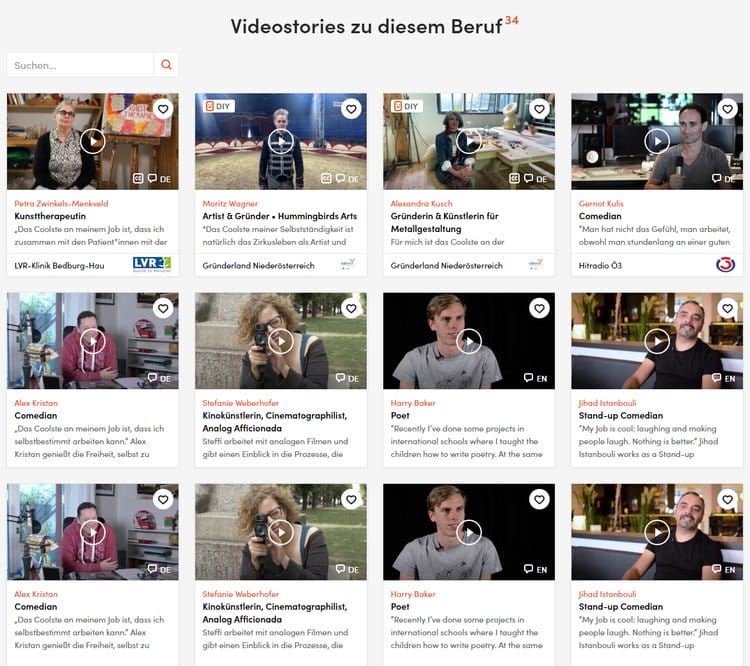
also find great insights into 34 of these artistic activities in the form of video storieson watchado .
Video stories about artistic professions on watchado
Even outside the art world and beyond working as a freelance artist, many companies and institutions offer employment opportunities for creative individuals. The following sectors are in demand and hiring creative professionals:
Educational institutions (schools, universities , further education institutes)
Healthcare (clinics, therapy centers, etc.)
Social institutions (youth/support centers, etc.)
Exhibition stand builders and event companies
architectural firms
Media and advertising companies
Opera houses, theatres, galleries and other cultural institutions
Corporate communications and marketing departments
Game developers
Publishers and editorial offices
Web and graphic design
Artificial Intelligence, Virtual Worlds, Big Data, Digital Art
The activity profile of artists
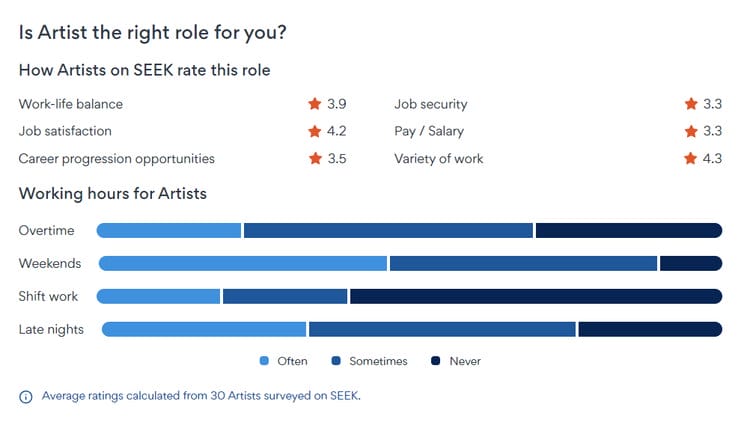
The Australian job portal Seek an interesting infographic on the job profile and role of an artist . It uses 10 metrics to clearly illustrate the requirements and benefits of working as a creative professional. The analysis is based on the average values of 30 artists surveyed.
Is being an artist the right career choice for you? How artists rate this field on SEEK.
Since the scope of work for artists in Germany is unlikely to differ significantly from that in Australia, these results can probably be largely applied to our country. The areas of "job satisfaction" (4.2 stars) and "variety" (4.3 stars) performed particularly well. At the lower end were "job security," "earning potential," and "career opportunities.".
Important skills for an artist:
How do I become an artist? And what skills do I need? Image source: Freepik
As an artist, your most important skill is, of course, creativity . You have to create works that no one has ever thought of or implemented before, and you succeed in inspiring people with your work.
Naturally, you must also understand and flawlessly master your craft – whether it's painting, photography, sculpture, or visual game design. You don't necessarily need to be a natural salesperson, but it's definitely helpful if you market yourself and your work .
A basic understanding of marketing and some knowledge of social media are advantageous these days for bringing your work to the widest possible audience and potential buyers. It will also help if you're not too shy: contacts can take you very far in the art world. Ideally, you shouldn't shy away from building a network .
Foreign language skills are also very useful in your profession, especially English, as they allow you to communicate with the international artistic community and more easily participate in exhibitions and other opportunities abroad.
Finally, as an artist, you need a good dose of courage and a willingness to take risks . The prospects of live off your art are initially slim, and you may search in vain for stability in the first few years (although positive surprises do happen). If you cannot accept this, you should reconsider your career choice.
Art Academy Training vs. Self-Taught Artist
Art studies or self-taught approach – there's more than one way to reach your goal. Photo by Chris Benson @lordmaui, via Unsplash
At art academies, the focus is primarily on your personal artistic development – be it learning a specific skill or cultivating your own style. However, it has been found that most institutions do not adequately prepare their students for a career in the art world.
So before we take the first step, we need to find out what makes a successful artist .
Success as an artist can mean something different to everyone. The ultimate goal is probably to become a recognized artist in the high-end art scene. Some, however, simply want to earn a living as an artist. Experience tells us that artistic success often leads to commercial success as well.
When it comes to artistic recognition , there are no limits. It is possible to be represented by leading galleries, to sell works for high prices, or even to be featured as a renowned artist in museums and publications.
Depending on how much time you invest, how much you benefit from natural talent, and the influence of external factors like luck and chance, it can take varying amounts of time to get started as a self-taught artist. According to a realistic assessment by CAI (Contemporary Art Issue) – a hybrid artist platform and gallery for contemporary art in Belgium – initial success as a self-taught artist can come after just two years .
That's less time than most art school programs require. Don't expect to be established immediately, but it is possible to gain serious recognition as an artist and have a promising future within two years.
With this article, we aim to provide you with a starting point and a basic guide, revealing fundamental things you need to know but aren't explicitly told; and showing you where to find the necessary information to help you achieve artistic success. Ultimately, however, success rests in your own hands.
Give 110%, remain patient and passionate, believe in yourself! Then you have the best prerequisites.
Valuable tips from successful creatives – step by step to success as an artist
Up to this point, you have been able to get a comprehensive picture of what your daily work as an artist could look like and what you should bring with you to be successful in this field.
Let's now turn, step by step, to the path to becoming a successful artist! What does it take to establish oneself in the art world? Where are the pitfalls, and which levers lead to the greatest success? What should you pay attention to? And which tips are the most valuable?
We will now answer these questions together with artists who have made it and are happy to share their formulas for success.
Twist: Three female artists and one male artist tell how they made it
Being an artist seems like a dream job to many. But does it only require talent, or also skill in self-marketing?
In the cultural program “Twist” on arte, we are confronted with various personalities who shed more light on this question. First, we meet the rising star of the art world, Leon Löwentraut . Despite lacking formal art training, he is internationally successful as a painter. Although the arts pages ignore him and some even comment disparagingly, he wins over many fans with spectacular appearances and a strong social media presence. His paintings now fetch high prices.
Is it therefore possible to launch an artist's career anytime, anywhere, thanks to social media? French sculptor Latifa Echakhch , winner of the Marcel Duchamp Prize and designer of the Swiss Pavilion in Venice, shows us a different approach to art as a way of understanding the world.
American painting professor Rajkamal Kahlon addresses serious topics such as colonialism and racism in her works by reinterpreting 19th-century depictions of indigenous peoples, thus restoring their dignity.
Annika Le Large from Leipzig, on the other hand, makes a living from illustrating children's books, proving that one can be successful as an artist even without a degree from an art college.
These different stories clearly show that the path to success as an artist can be very individual and success has many facets.
01 Motivation and Passion: The Beginning as an Artist
Every painting an artist creates carries within it a spark of their own soul. It is a connection between the artist and the canvas, brought to life through earnestness and dedication. Artists like Gerhard Richter and Vincent van Gogh have moved and inspired the world with their works.
The editing of images should never stagnate, but always be new and innovative. Paul Klee and Karl Ernst Osthaus were pioneers in their fields and showed that their passion for art knew no bounds.
The best prerequisite for being an artist is precisely this passion and insatiable curiosity, which acts as a tireless driving force for motivation and inspiration.
02 Discover, experiment and experience
Before we can establish ourselves as artists, we must clearly define what we want, advisesJulien Delagrange – art historian, contemporary artist, and director of the CAI and the CAI Gallery . Previously, Delagrange worked for the Centre for Fine Arts (BOZAR) in Brussels, the Jan Vercruysse Foundation, and the Ghent University Library. His artistic practice and his written art criticism are closely intertwined, examining contemporary art in search of new perspectives within the art world.
So, at the beginning of our career, let's ask ourselves the following questions:
What kind of artist do you want to be?
Which discipline do you enjoy the most?
Which style or technique do you particularly prefer?
Before committing to a particular medium, style, technique, or vision, we need the freedom and opportunity to explore, experiment with, and experience art. It is essential to explore , experiment with, and experience art throughout our lives and artistic careers in order to find inspiration
This can happen most radically and intensely in the early stages of an artist's career. Later in one's professional life, it becomes more difficult to bring about radical changes. Nevertheless, our work must continuously change and evolve to remain interesting and relevant. Because, as in life, the only constant in art is change.
Later we can introduce a new discipline or visually change our style, but in this step we have complete freedom without having to worry about possible consequences. We can try anything we enjoy: experimenting, exploring, and experiencing.
Delagrange particularly emphasizes the third “E”: Experience .
Art must be experienced, both as a viewer and as an artist
These experiences will inspire us, and what inspires us will encourage us to experiment and absorb different influences, ultimately creating a new synthesis of our artistic identity.
These experiments will present self-taught artists with technical challenges. It's time to consider supporting these experiments with online tutorials and possibly some courses (see Skillshare , Udemy, or Domestika). Thanks to the World Wide Web, skills can be conveniently learned online from home. YouTube is probably the best place to find suitable tutorials.
Delagrange therefore recommends that you do thorough research and choose a channel run by an artist you like, and then start watching their videos and learning and experimenting along the way.
Nowadays, there are countless online tutorials for painting and drawing . For less common art forms such as sculpture or installations, it's worth searching for specific courses, for example on platforms like Skillshare .
There are no longer any fixed rules governing the artistic creative process, which allows self-taught artists to develop their own style. It is important to experiment and try out new techniques in order to ultimately realize a personal vision and identity in the artwork.
03 Further your education in art (history)
This step is also of great importance for your development as an artist and your credibility as a self-taught individual . A frequently asked question from self-taught artists is whether they possess sufficient knowledge of art and art history. However, there is no reason why you cannot become an art expert even without a master's degree in art or art history.
It is crucial art history in order to gain a deep understanding of modern art and its significance. It would be naive to believe that one can be successful in the art world without knowledge of art. Your knowledge and intelligence will be put to the test when you try to gain a foothold in the art scene.
Further your education in art (history). Photo by Unseen Studio @uns__nstudio, via Unsplash
So how and where can we deepen our education? Delagrange recommends first familiarizing oneself with art history and reading academic textbooks like those used at universities. This step can be seen as a kind of formal education , and taking notes is advisable.
Not for exams, but to create a personal summary of art history and to make useful notes for one's own artistic practice.
Let's begin with a comprehensive introduction to art history and consider the following books, which might be ideal for your further education:
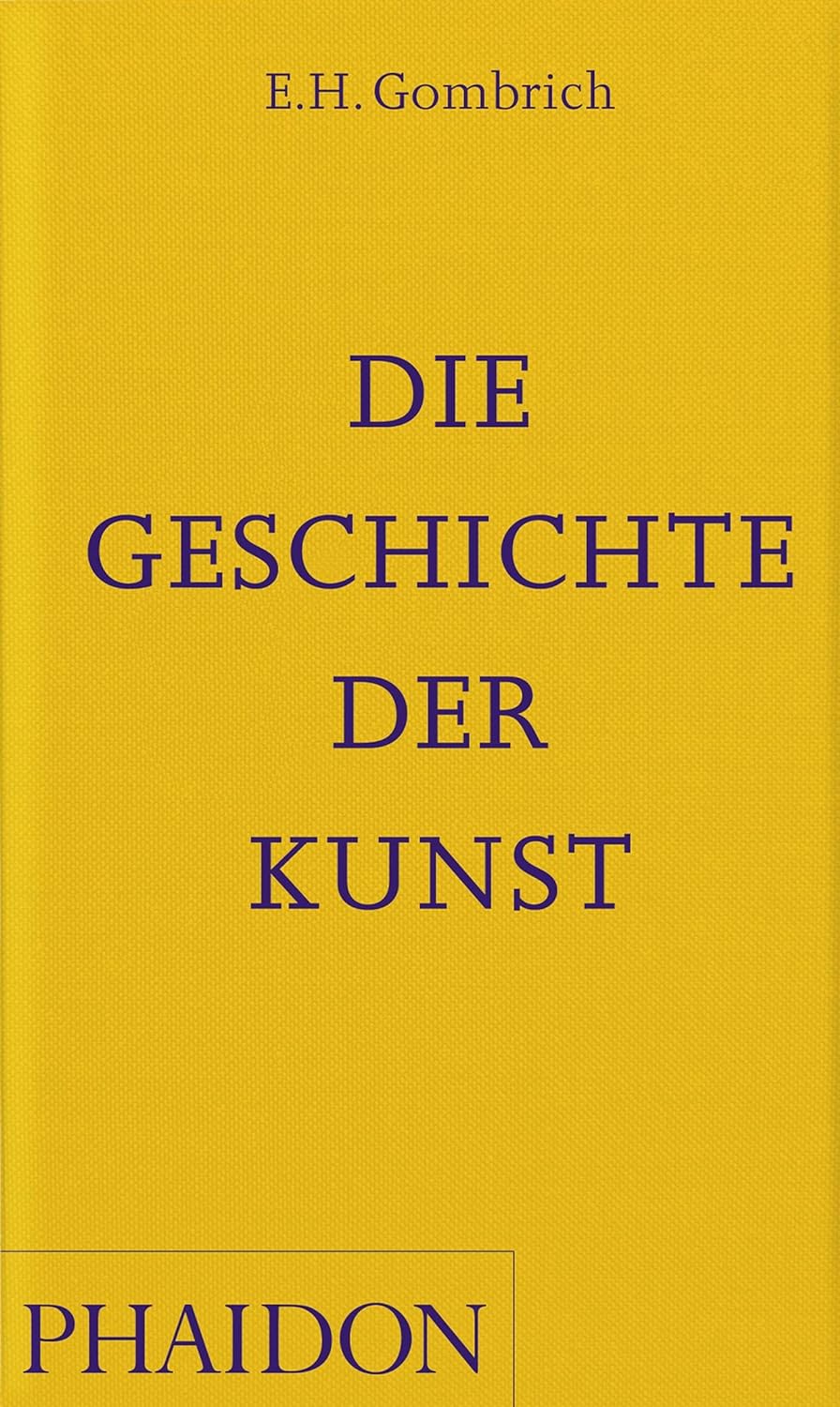
Ernst H. Gombrich's "A History of Art" has been an unsurpassed masterpiece for 50 years and is one of the best-known and most popular books on art. The author impresses with his ability to present cultural-historical contexts and artistic problems clearly and compellingly.
Thanks to his understanding of the psychology of the visual arts, he succeeds in presenting the history of art as a constant evolution of artistic intentions. Every work of art is considered within its historical context, regardless of whether it distinguishes itself from or imitates its predecessor.
Gombrich demonstrates that art remains connected to past eras. In this new form, this masterpiece will continue to introduce younger generations to the world of art and inspire art enthusiasts.
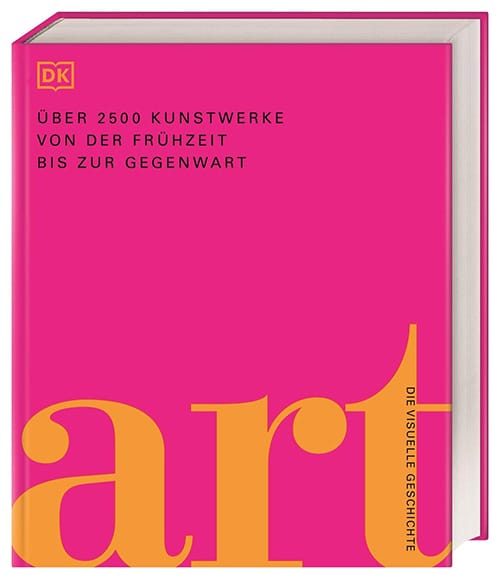
"Art: The Visual History" by Andrew Graham-Dixon
Over 2500 works of art from prehistory to the present day. Presented in 3000 brilliant illustrations and over 700 artist profiles; the book is available here .
This visual reference work presents the 2,500 most important works of art from 30,000 years of art history across all cultures. With over 3,000 brilliant illustrations, 700 artist profiles, and information on periods and movements, it is an impressive resource for evaluating and understanding art.
In addition to a detailed presentation of key works, the book covers themes such as love, landscape, portraiture, and the nude. From cave paintings to modern media art, all eras and cultures are explored. This high-quality illustrated book offers insights into the development of art from prehistory to the present day, as well as an overview of important movements and artists.
It is a highly recommended reference work for all art lovers, convincing and informative.
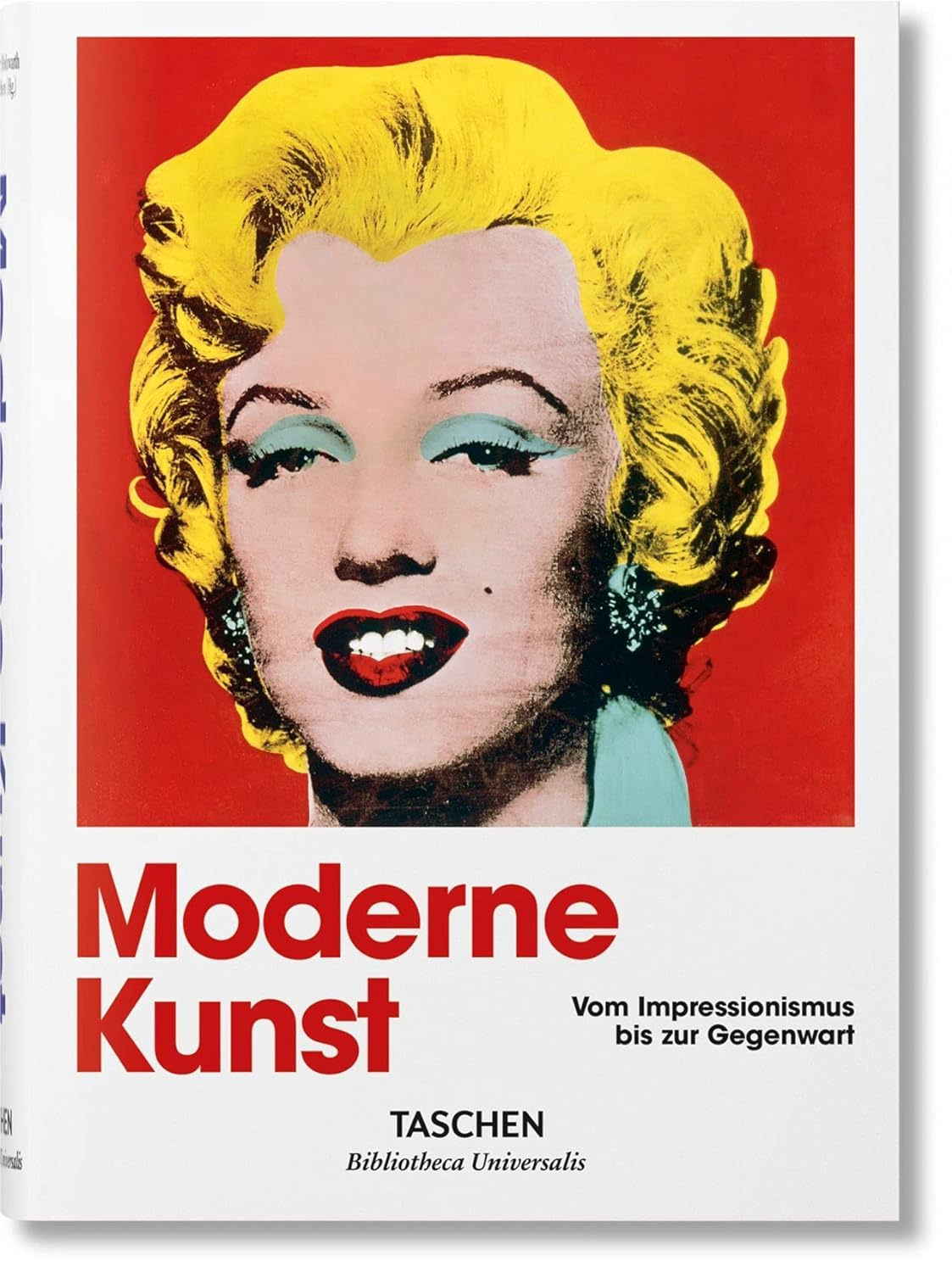
"Modern Art. From Impressionism to the Present" by Hans Werner Holzwarth
An excellent overview of all art movements from 1870-1944 (Volume 1) and 1945-2000 (Volume 2); the book is available here .
Modern art began about 150 years ago in Paris with the Impressionists , who turned away from classical academic art and revolutionized the art world. They chose everyday themes and organized their own exhibitions to challenge the art establishment.
This led to a multitude of modernist styles such as Symbolism, Expressionism, Futurism, Dada, Surrealism, and more. The volume traces the development of modern art through groundbreaking works that broke existing conventions and opened up new paths.
Introductory essays explain the main movements of modernism and highlight important artists and their works.
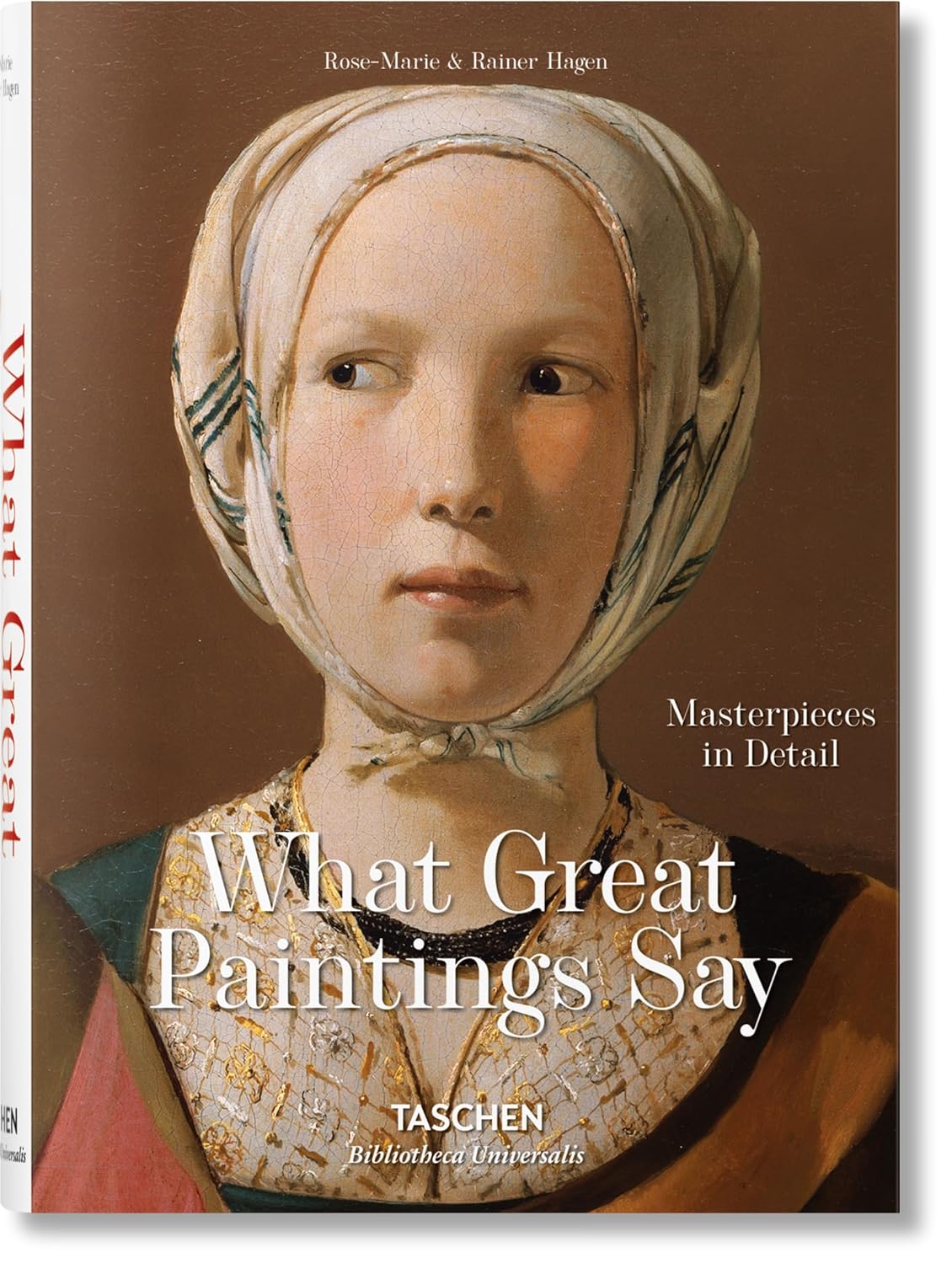
"Image Interviews: 100 Masterpieces in Detail" by Rainer & Rose-Marie Hagen
A book that shines with its informative and elegant style and is full of fascinating details. The authors' dedication to art is palpable in every section; the book is available here .
This book by Rose-Marie and Rainer Hagen also offers us an illuminating glimpse into the world of art history. It reveals the hidden stories behind some of the most famous paintings by focusing on subtle details that reveal much about bygone eras. The authors draw our attention to seemingly insignificant aspects, thereby casting even the most well-known paintings in a new light.
As we read, we immerse ourselves in different eras and cultures, encounter Greek heroes and German poets, explore cathedrals and cabarets, and travel from antiquity to modern Europe. We analyze each image like a puzzle, piece it back together, and in doing so, uncover secrets about the people, politics, fashion, and opinions of bygone times.
The book provides fascinating insights into the world of artworks and helps us to understand them better.
These magnificent survey works present the canon of art history.”
For each art movement or chapter, consult the notes to discover further specialized literature on a particular period or artist. However, the works mentioned are already very comprehensive and provide sufficient information for now.
Following this, we will focus on contemporary art , from modern art to the present day. The recommended reference works are "Art Since 1900" (English edition), the aforementioned "Modern Art – From Impressionism to the Present," and "A History of Modern Art" by H.H. Arnason and Elizabeth C. Mansfield (English edition only).
These three books are undoubtedly the most important reference works on modern art history, and it is even recommended to read all three if possible. While one work might suffice for art history, here the more the better.
Acquire specific art knowledge
Now that we have established a solid framework for the art canon, it is time to delve deeper and focus on specific art movements, artists, and disciplines .
The selection of publications should be based on your interests and practice, but there are some important points I would like to inform you about. Be wary of inaccurate information in self-published books. These days, anyone can write and publish a book. Even small publishing houses often produce questionable art books.
Therefore, I recommend that you books from reputable art book publishers such as Taschen , Phaidon , Thames & Hudson , Skira , Prestel Publishing , Tate Publishing , Lund Humphries , or other respected art institutions that act as publishers – think of museums or universities.
These publishers stand for high-quality art research, reliable information, and renowned authors and editors. Phaidon, for example, offers outstanding publications on virtually every medium, be it contemporary painting or sculpture. Taschen's fundamental art series is another excellent collection of books on specific art movements and artists.
Monographic publications from museums in conjunction with retrospectives are always an excellent source of information. These examples demonstrate thorough research and self-education in the field of established art, but what about less established art?
Several publishers now offer excellent publications on this topic. Consider Phaidon's series on new perspectives in art, such as Vitamin P (painting), Vitamin D (raw art), or Vitamin Photography. Publications from galleries about the artists they represent, with whom you can identify, are also worth mentioning.
This leads us to further sources for delving deeper and staying up-to-date on contemporary art – think reputable art platforms, art magazines, curatorial institutions, and museums of contemporary art. Even more specialized information can be found in academic literature on contemporary art.
Whitechapel 's "Documents on Contemporary Art" series is an excellent example of a publisher that compiles the most critical scholarly writings on a specific topic in contemporary art. It also includes academic works with an indirect connection to art, such as those by Foucault and Lacan.
Don't be intimidated by the abundance of global knowledge and information about art. You don't need to be an expert or scholar to succeed. There are different levels of knowledge, with general and modern art history serving as foundations.
After that, depending on your interests, you can delve into more specific literature. There are many ways to learn about contemporary art, for example, through informative YouTube channels . However, it's important to note that not all information is created equal.
Some channels, such as Art Assignment and Great Art Explained, offer well-researched and factual content, while others are less trustworthy. You can also follow reputable institutions, galleries, and platforms on social media or subscribe to their newsletters to stay up-to-date.
Organizations like Artforum , Cura , the Museum of Modern Art , and art influencers like Mary Lynn Buchanan are good starting points. It's important to remain curious, follow your own interests, and continuously engage with art and art history.
04 Get to know the art world and its unwritten rules firsthand
At first glance, this step may seem less significant than the previous ones. However, this is not the case. The third "E" that we emphasized in the previous chapter – experience – is central here.
Because the best way to get to know the art world is by experiencing it yourself.”
You might think you're already quite familiar with the art world. Perhaps you've visited a few museums and follow some galleries and artists on social media. But that's not comprehensive enough. Art and the art world are full of subtle details that ultimately make all the difference.
Whether it's about creating a work of art, completing it and presenting it in a gallery, or everything related to art exhibitions – such as creating a series of works or how works interact with each other in an exhibition, the exhibition title, the description of the works and their metadata, the way of talking about them, the installation, inspirations for design and presentation, etc. – one has to be on the pulse of the art world.
What's popular in galleries today?
How do the works look and feel?
To appreciate the nuances of art that make all the difference, it's advisable to visit not only museums but also art galleries. While museums primarily showcase established art, galleries display works by emerging artists as well as new pieces by established artists.
Art galleries are also crucial for a career in the art world . It is therefore important to be critical when choosing galleries and to research them beforehand to ensure you end up in a highly reputable gallery.
Quality features of top-class galleries include a carefully curated series of exhibitions, a professional and stylish presentation, a press release for each exhibition, many years of experience in gallery operations, participation in art fairs, and a presence on renowned platforms such as Artsy or a professional gallery website.
Some of the world's most prestigious galleries, those that manage to implement this to perfection, belong to the category of mega-galleries. They offer a unique insight into the unspoken rules and customs of high-end art and art galleries.
Prominent examples of mega-galleries include:
Gagosian
Hauser & Wirth
Pace Gallery
David Zwirner
White Cube
Lisson Gallery
Thaddaeus Ropac
Perrotin
Lehman Maupin
Victoria Miro
Marian Goodman
and many more…
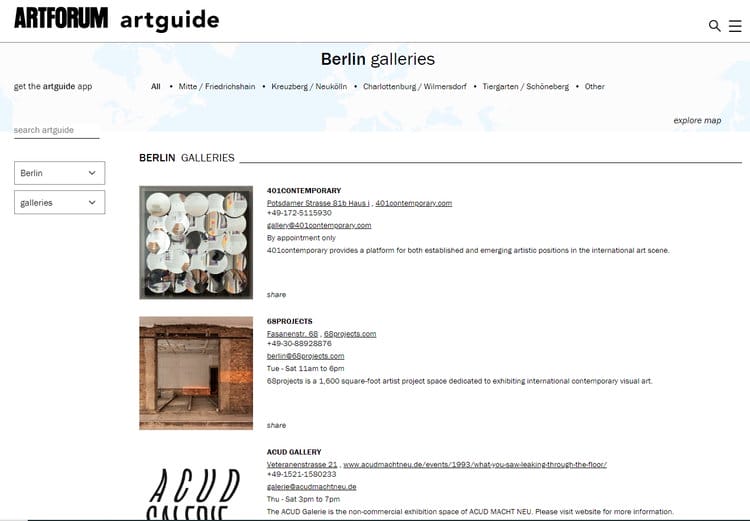
A good strategy is to focus on emerging galleries rather than immediately contacting established ones. The Artforum Art Guide can be a helpful resource in this regard. Choose an art city near you, explore it, and start gallery-hopping.
A filtered list can be quickly generated by searching for galleries in a selected city – here using Berlin as an example
This will inspire you to discover works by emerging artists who are on their way to making a name for themselves. Observe closely how these artists stand out from others and how they present their work within an exhibition or even across multiple exhibitions. This can help you find new inspiration and further develop your own creative work.
While it is possible to contact gallery directors, I advise against it – at least not for the time being – and against revealing that you are an artist. You and your work are probably not yet ready for the critical eye of a gallery director, even if you believe you are – and these opportunities are rare.
It is advisable to first express your interest in the gallery. If the gallery director initiates the conversation, there may then be an opportunity to discuss their artistic activities. Art exhibitions, lectures, art festivals, and events such as the Venice Biennale or Art Basel offer excellent opportunities to gain insights into the art scene and the contemporary art world.
Even if attending such events involves travel and time investment, it can have a significant impact on your personal development, understanding, and future career opportunities, and should therefore not be underestimated.
05 Finding creative inspiration: Tips and tricks for the artistic process
When the creative spark is ignited and the canvas lies before you, the longing for inspiration . How can you bring your ideas to life and make your art shine? Artists like Gerhard Richter or Vincent van Gogh found their unique voices by exploring diverse themes and styles.
Be bold and experiment with new techniques and materials to expand your artistic vision. Embrace the diversity of the art world to draw inspiration from other artists. Whether abstract works or realistic portraits, let different styles stimulate you to find your own unique expression.
By editing images in your own personal way, you can discover new paths and unleash your creativity.
Are you familiar with this situation?
You finally find the time to go to your workspace, and then that terrible feeling washes over you: surrounded by a multitude of materials, you feel unmotivated to create anything. Finding inspiration seems harder than rowing across the Atlantic.
You may feel completely alone, but each of us has already had this experience – once, several times, often.
There is no creative person who can work without inspiration. For some, finding inspiration is easy and natural, while for others it can be a challenge.
No creative person is immune to creative blocks; they occur constantly in every creative practice
It is important to be able to motivate yourself, and sometimes you simply need a few ideas and suggestions to get back on track.
The following short book list provides a helpful approach when inspiration is slow to strike:
Book recommendations for creative flow
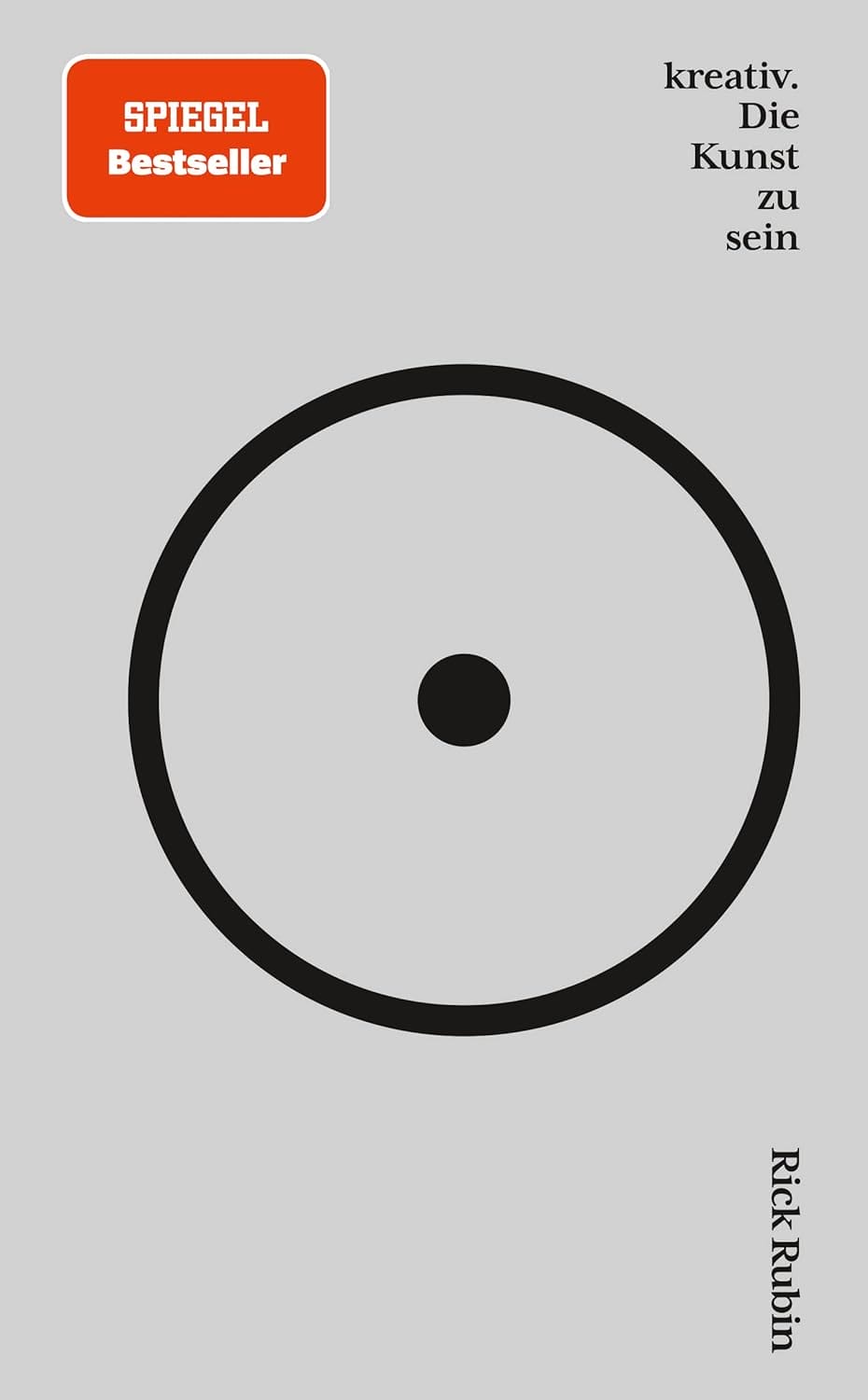
Creative. The Art of Being by NY Times bestselling author Rick Rubin ( available here )
"Creative: The Art of Being" by Rick Rubin
The bestseller "Creative: The Art of Being" reveals the secrets of the successful music producer behind stars like Johnny Cash, Adele, Run-DMC, Jay-Z, and U2. The book illuminates his life's work in a clear and inspiring way, showing the artist's path that we can all follow.
Over the years, Rubin has come to realize that for artists, it's not just about their output, but rather about their relationship to the world. Creativity is essential for everyone and can be cultivated by everyone. Every person possesses innate creative power—it's up to us to unleash it. “Creative. The Art of Being” (2023) is a passionate message celebrating the joy of artistic creation and playful experimentation. It encourages trying things out, making mistakes, and starting anew—simply for the sake of being creative.
This book is aimed at music lovers and musicians seeking inspiration, creative people with writer's block who want to overcome their fears, and those seeking meaning who want to consciously perceive the wonders of the world.
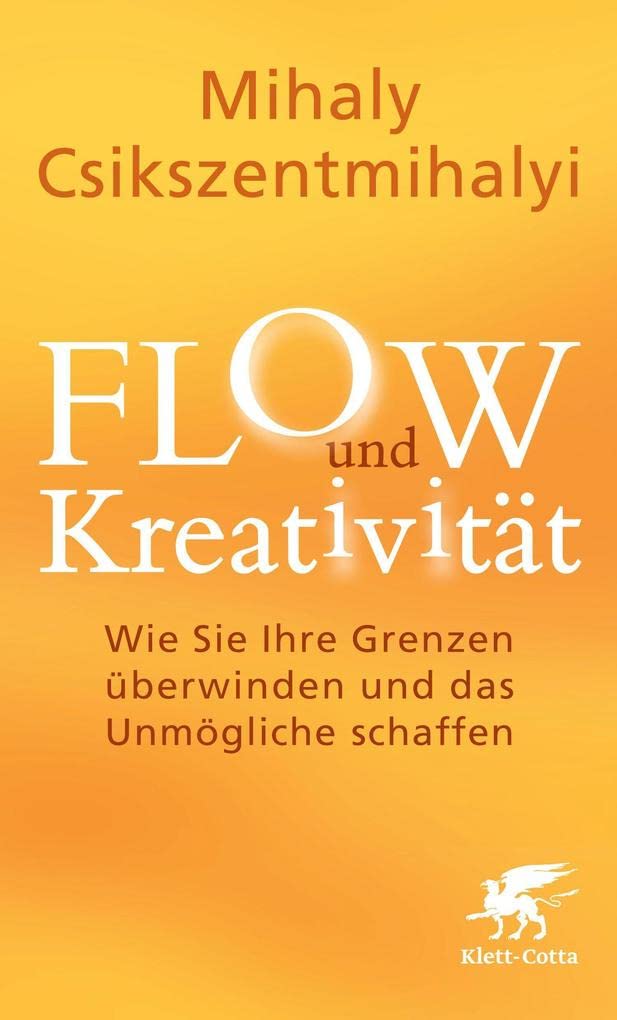
Flow and Creativity: How to overcome your limits and achieve the impossible ( available here )
"FLOW and Creativity" by Mihaly Csikszentmihalyi
In his work “FLOW and Creativity,” Mihaly Csikszentmihalyi explores the process that leads us to new ideas and groundbreaking insights, unleashing our full artistic potential. In this book, Csikszentmihalyi answers the questions of where and how creativity arises and how each individual can discover and cultivate their own personal source of inspiration.
Based on extensive interviews with renowned creative personalities, he shows how we can specifically promote our own creativity in order to not only improve our artistic work, but also enrich our entire lives.
This book is aimed at artists and all creative minds seeking inspiration. With sound insights and practical tips, "Creativity" valuable guidance for anyone wishing to unleash and further develop their creative power.
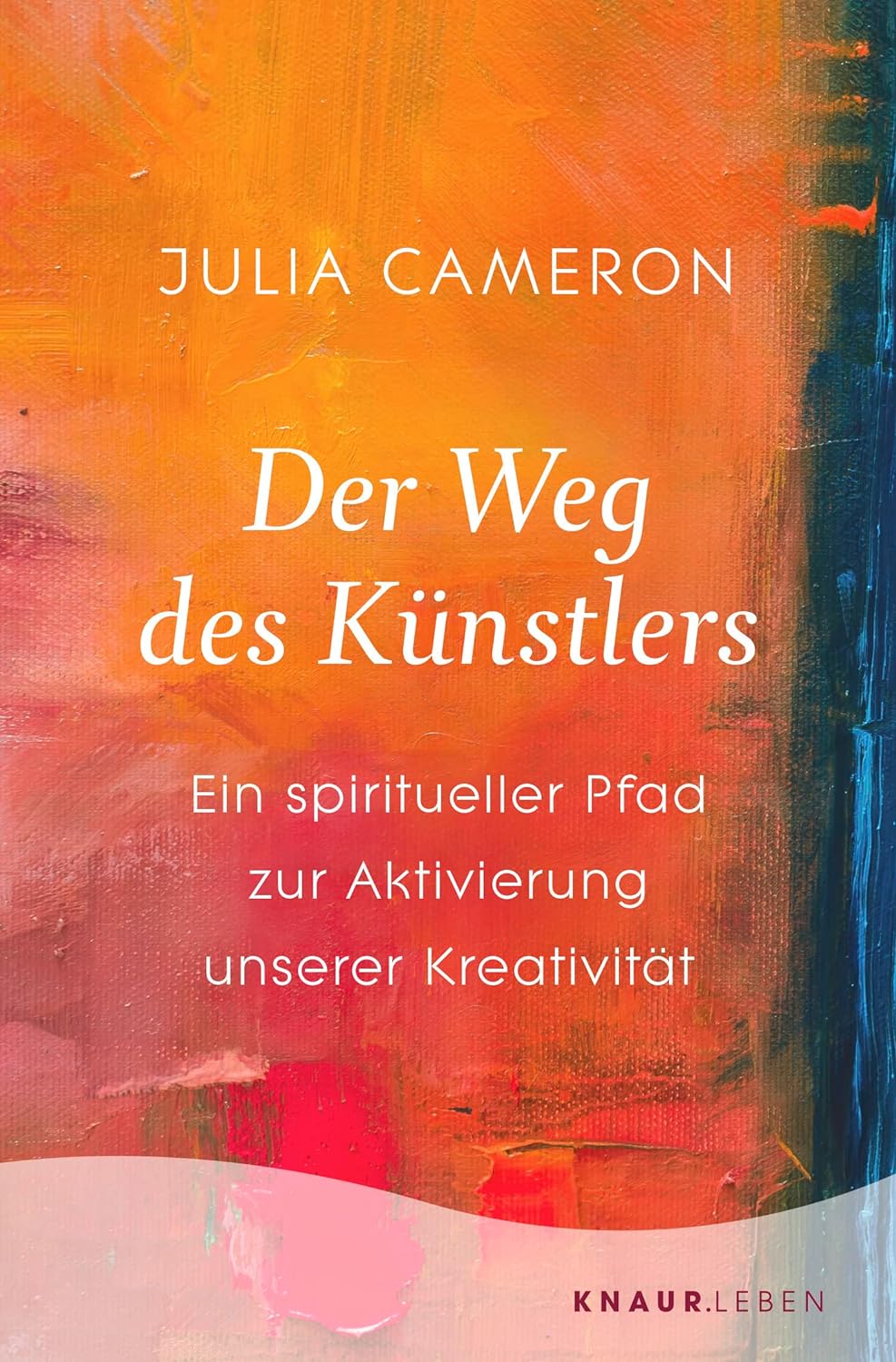
The Artist's Way: A Spiritual Path to Activating Our Creativity ( available here )
"The Artist's Way" by Julia Cameron
This rather spiritual book inspires readers to discover the hidden artistic potential within each of us. It shows how we can awaken our creative side to create something great. Often, doubts, negative experiences, or the opinions of others prevent us from unleashing our creative energy.
This book offers guidance on how to reconnect with our inner artist and awaken our creative abilities. With valuable exercises and tips, we can strengthen our artistic presence and embark on the path to a fulfilling artistic life.
This book is particularly suitable for anyone who doubts their own creative abilities and is looking for inspiration to unlock their full potential.
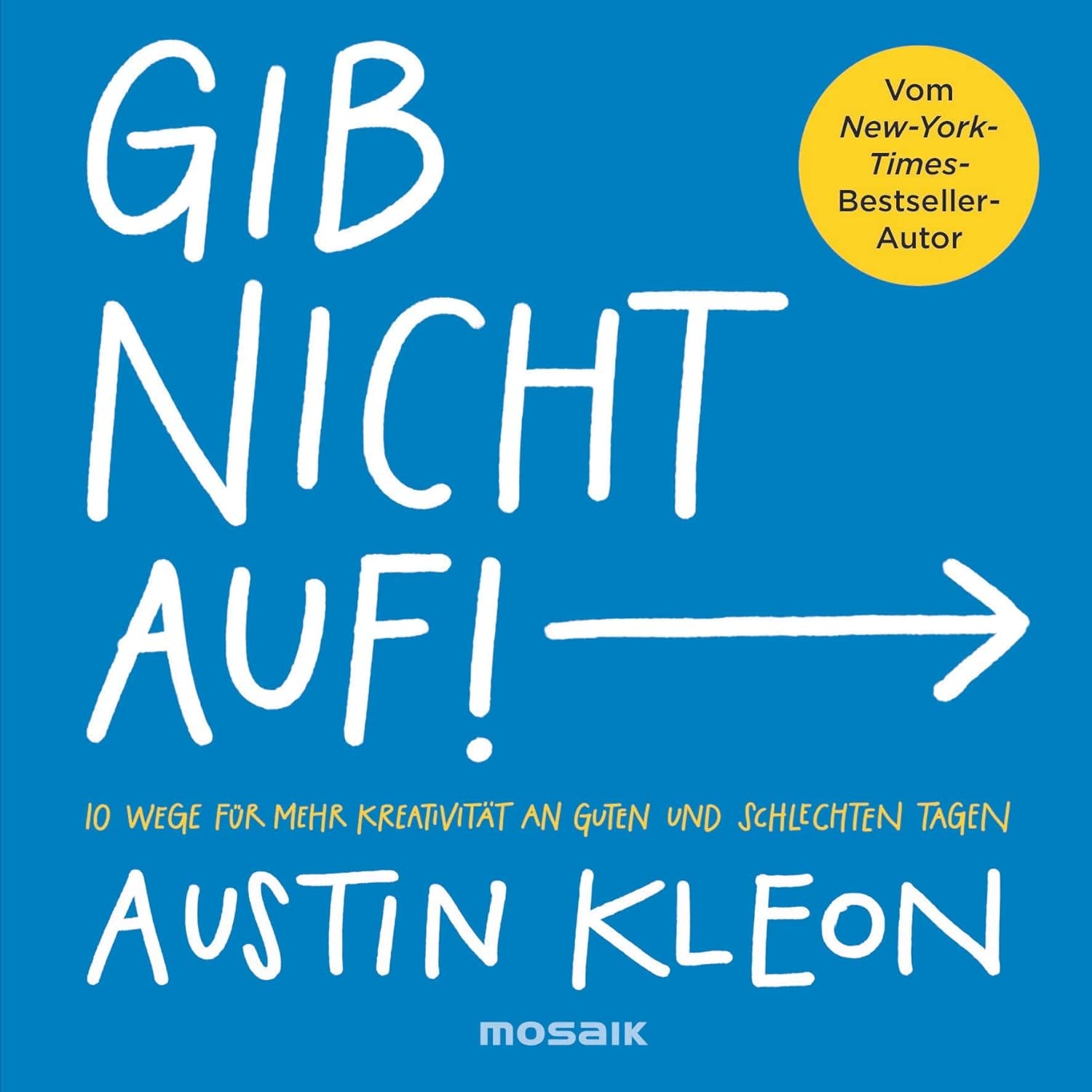
Don't give up!: 10 ways to be more creative on good and bad days ( available here )
Don't Give Up!: 10 Ways to Increase Creativity on Good and Bad Days by Austin Kleon
“Don’t Give Up” is an inspiring book for creative people who regularly pursue their creativity. It offers numerous helpful tips and methods for staying motivated even during periods of lack of inspiration. New York Times bestselling authorAustin Kleon presents ten strategies for staying not only creatively engaged but also true to oneself.
The suggestions are mainly aimed at professional creatives and hobby artists, but can also help anyone who wants to express their creative side from time to time.
06 Develop your complete work – create a coherent oeuvre
Now we reach the sixth step; we stand at a crucial turning point in the artist's career, where the work matures and a total work of art emerges – a unity characterized by a clear vision, visual recognizability and a continuous, fascinating development.
After a phase of experimentation, building a solid framework as a basis for developing one's own artistic vision and identity, and drawing inspiration from contemporary art, we gradually reach the point where everything comes together.
You have found a medium you feel comfortable with, clear goals and a vision you want to realize with your work.
Now is the time to refine and professionalize your artistic production and create works that you will forever consider part of your oeuvre. Consistency is key in art. A crucial exercise in achieving a coherent body of work and steady, meaningful development is to write an artist's statement .
In this section, you will explore your vision, goals, philosophy, methodology, and technique. All the elements from the previous steps combine to create a highly personal synthesis of who you are as an artist, what defines your art, and what it's about. This statement, or artistic vision, will guide your development and ensure continuity as you continue to experiment, evolve, and improve.
The artist statement is not just for exhibiting your work in galleries or publishing it on your website. Rather, it is a personal tool and guide for continuous and coherent self-development . Now that you have clearly defined your artistic characteristics, it's time to take action.
Explore how you can further develop your vision in your artistic practice to stand out and increase your recognition. The life of an artist is undoubtedly one of the most fascinating professions. The art world is oversaturated with thousands of artists—more than galleries, collectors, and curators are looking for.
Therefore, it's crucial to stand out from the crowd, regardless of whether you're self-taught or hold a PhD in the arts. Be consistent, personal, and recognizable. Distinguish yourself and stay true to your vision. The importance of this coherence can sometimes be challenging.
Galleries and collectors don't appreciate radical changes in an artist's creative process, as it might give the impression that the artist is suddenly doing something completely new after they've invested time or money. However, this doesn't mean you have to constantly repeat yourself.
On the contrary, if you don't evolve, your work will stagnate and become boring, and you risk being labeled a limited-edition artist. Here we encounter one of the subtleties of the art world, already discussed in our previous section: the interplay of balance between consistency and change—or rather, development.
The thing is: as long as you remain true to your original vision – or follow constantly changing visions and priorities – variety is always an advantage.
Delagrange illustrates this with the following examples:
Coherence as exemplified by Luc Tuymans
Luc Tuymans is one of the most important and consistent painters of his generation. His work ranges from paintings of Holocaust scenes and a mural of Mickey Mouse to still lifes and representations of numbers. However, his vision remains coherent in all his pieces.
He explores image theory within the context of painting, addressing themes such as simulacra, image overload, history, and moral complexities. What visually connects these diverse themes are his characteristic tremulous brushstrokes and subtle color palette. These elements ensure coherence and recognizability, allowing the Belgian artist to dedicate himself to any given subject or motif.
Tracey Emin – Autobiography and Controversies as a Common Thread
Many artists demonstrate impressive versatility while remaining consistent in their work. A prime example is Tracey Emin , who effortlessly moves between installations, sculptures, and figurative painting. She uses autobiographical elements and controversies as the basis for her artistic vision.
In the following interview, she shares 6 important lessons that must be mastered on the road to success as an artist:
More examples…
Equally impressive are artists who follow certain motifs in their lives and make them their trademark, such as the dots and pumpkins of Yayoi Kusama or the cages, spiders, and spirals of Louise Bourgeois . It is important to note that these motifs are consciously chosen and represent direct results of their individual vision and history.
Some artists dedicate their entire lives to a single thing, perfecting an idea or technique – think of Mark Rothko or Carmen Herrera . Others have a vision that includes radical changes as an integral part – without them, there is no consistency.
Think of the deliberately no-style approach of Maurizio Cattelan and Ryan Gander . Or consider Gerhard Richter, whose painterly work is characterized by an endless search for the possibilities of painting, from photorealism to pure abstraction, minimal conceptual figuration, and hard-edge paintings.
The nuances of these visions and the interplay between continuity and development underscore once again the significance of our previous steps. It is therefore advisable to study the work of other artists to understand how to create one's own art. Good starting points include a clear vision, philosophy, technique, or a selection of motifs.
Therefore, write down your own vision and pursue it consistently in your studio. Begin to professionalize your artistic practice by using high-quality materials and carefully crafting each piece of art. Every work should be of consistent quality, from experiments to finished pieces ready to be presented to the world.
It's time to become part of the art world yourself!
07 Create a professional artist profile
To succeed in the art world, it's crucial to ensure everything is accurate, professional, and meets the standards of a serious artist, especially for self-taught individuals. This step takes into account all relevant details to guarantee your artist profile is compelling and professional.
This will show a potential collector or gallery owner interested in your work that everything is done meticulously. This not only significantly increases your credibility as a serious artist but also improves your chances of success in the art world.
In Delagrange's opinion, many artists – whether self-taught or trained – fail at this point and lose their way, even if they possess great talent and potential.
Let's now give an overview of what you should pay attention to. It's important to strictly adhere to the points mentioned here. The way you present yourself as an artist online and in the real world should be clear, formal, professional, and even a little mysterious.
Anything else you could do that isn't on this list could damage your credibility as an artist. So, how do we prepare our overall profile as an artist?
7.1. Document your art
It is essential that professional photographs of your artwork. Please take high-quality photos of your images and ensure you have high-resolution files of your work. It might also be helpful to create some installation or studio views of your artwork in a suitable space.
Avoid simulating your work with apps in galleries or spaces (so-called mockups). Prepare your living room or studio accordingly, rent a space, or take advantage of an exhibition to take high-quality photos. This will undoubtedly increase your credibility.
Document your artwork thoroughly and make records of all important information – meaning, title, year, medium and dimensions.
Create a comprehensive catalog with all relevant data that you can present to potential clients and galleries.
7.2. Artist CV – The Curriculum Vitae – Artist Resume
The next step is creating an artist CV . This contains all relevant information and serves as a guide for galleries, collectors, and curators to understand where you currently stand in your career.
Your CV should include information about your year and country of birth, your current place of residence, your education and qualifications, your professional experience, your exhibition history, selected publications, press coverage, awards, collections, and residencies. As a self-taught individual, I advise against including self-taught individuals in your CV.
Only list education and training if they are relevant; otherwise, leave this field blank. Use this structure as a guide and analyze the CVs of established artists or gallery websites. Follow the same layout, structure, and professional approach.
Don't worry if your artist CV currently contains little information. Our next step will be to improve and expand it year by year. It's perfectly normal if you've had few or no exhibitions so far; everyone starts small.
In fact, the CAI team has written a detailed article on how to create a CV as an artist with little to no experience. You can find a complete guide here, including examples and a CV template for artists.
7.3. The artist's website / online portfolio
The artist's website serves as a digital business card and portfolio , which should reflect the artist's professionalism.
High-quality, minimalist design is essential for gaining recognition in the art world. Draw inspiration from renowned artist websites and present your own site with a clear and concise homepage , a selection of your best works (portfolio), your CV, and perhaps even a third-person biographical text.
A crucial step on the path to becoming a successful artist is the skillful presentation of your work. A well-thought-out portfolio, whether digital or in print, offers potential clients and galleries a comprehensive insight into your artistic vision and diversity.
A contact page completes the offering. However, elements like a blog, online shop, or merchandise are superfluous for a professional artist. In the art world, it's common practice for potential buyers to inquire about prices and availability directly via email. Therefore, it's unnecessary to publish prices online or set up a webshop.
7.4. Self-marketing as an artist: How do I find my target audience?
Finding your target audience can be an exciting journey that will elevate your artistic career to a new level. It's essential to understand your audience's needs and interests in a serious and focused way. By actively engaging with feedback and strategically presenting your work, you can build an authentic connection with your potential supporters.
Utilize the diversity of digital platforms and social media channels to make your art accessible to a wider audience. Damien Hirst , Takashi Murakami , Wolfgang Tillmans, Nan Goldin, and Cindy Sherman—they have all found their target audiences and successfully engaged them.
Be bold, experiment with different marketing strategies to discover your own path. Your art deserves to be appreciated and supported by the right people. Find your niche and exude confidence – your target audience is already waiting to be discovered by you.
However, finding the right balance is also important in the realm of social media . A general rule of thumb is that we should focus on the currently most powerful social media platform for artists – Instagram . It's impressive how many gallery owners and collectors discover and contact new artists through Instagram.
An online presence allows you to build a fan base and thereby increase your credibility. YouTube"vlogging" as an artist is still frowned upon , even though all the major art organizations are represented on YouTube. Nevertheless, CAI gallery director Julien Delagrange advises you to focus entirely on Instagram for now and to maintain a professional tone in your posts.
08 Develop your career organically and think long-term
Instagram has already been cited as an excellent platform for discovering artists. However, to truly succeed, artists should take a few more steps. Before we look at specific actions you can take, let's talk about things to avoid .
Aggressive self-promotion is not well-received in the art world
Success cannot be forced. Therefore, it is advisable not to over-promote yourself—avoid cold calling galleries, magazines, collectors, and institutions. Don't think of your art as a purely commercial product to be sold through advertising, flyers, or discounts. Remain professional and don't push yourself on anyone.
The goal is rather to pursue an organic career and think long-term by leaving your mark on the art world , which will ultimately lead to galleries, collectors, and magazines contacting you.
Actively immerse yourself in the art scene by visiting exhibitions and galleries, as recommended in the previous step. Build authentic relationships by discussing art out of genuine interest, not self-interest. Network with like-minded individuals and engage in the art world to enhance your success.
Even as an introvert who doesn't consider themselves a networking expert, you can actively improve your chances of a career in the art world by seeking out opportunities in this field. Consider open calls for exhibitions, artist residencies , art competitions , grants , project-based open calls for public art , and similar opportunities.
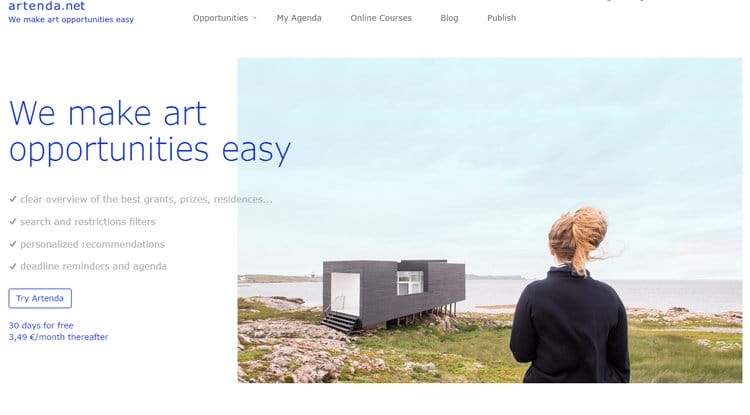
An excellent way to discover these opportunities is through the platform Artenda.net , which keeps you up-to-date on the most exciting art opportunities. It's important to be present and to prepare well as an artist. Trust the process.
Artenda offers a clear overview of high-quality open calls and opportunities for international art. Residencies, grants, competitions, prizes, projects, and much more.
If your art is of high quality and your entire artist profile is professionally designed without being intrusive, but rather blends in naturally and organically, people will notice your work. And if they find your artist profile appealing and professional, they will get in touch with you – regardless of whether you are self-taught or not.
At this point, things start moving. As soon as you participate in an exhibition – whether through an open call, an invitation from a gallery, or by collaborating with other artists – new doors open.
Owner and Managing Director of Kunstplaza. Publicist, editor, and passionate blogger in the field of art, design, and creativity since 2011. Successful completion of a degree in web design as part of a university program (2008). Further development of creativity techniques through courses in free drawing, expressive painting, and theater/acting. Profound knowledge of the art market through many years of journalistic research and numerous collaborations with actors/institutions from art and culture.
A fundamental need for every artistically creative person is likely to be the ability to live off their art.
To secure one's existence, it's essential to earn money with art. In fact, many artists can live well off their creative work today, contrary to the majority's perception. Nevertheless, a vast majority of freelance artists still rely on additional income sources (e.g., giving courses, commissioned work, side jobs, etc.).
Recognition as an artist often does not bring immediate financial security. Therefore, artists are often also life artists.
The opportunities to make a living from one's own art have, however, grown significantly due to the internet and social media. As an artist, however, you must be versatile and flexible to succeed. A certain degree of perseverance is also essential.
Customer care and self-marketing are also important pillars for success as an artist.
In this section, we compile numerous articles, information, tips, and advice to help you make a living from your art.
Freelancing
Regardless of your area of activity as a web designer, graphic designer, game developer, photographer, programmer, product designer, journalist, content creator or influencer , as a self -employed you have to master a variety of tasks.
From customer acquisition to successful project implementation to time management and financial administration - including the often unloved tax matters.
Good information and the right online tools are crucial for a successful career as a freelancer or content creator.
In this section you will find helpful articles and valuable advice with tips especially for freelancers.
We use technologies like cookies to store and/or access device information. We do this to improve the browsing experience and to show (non) personalized ads. If you agree to these technologies, we can process data such as browsing behavior or unique IDs on this website. Not consenting or withdrawing consent may negatively impact certain features and functions.
Funktionale
Immer aktiv
Die technische Speicherung oder der Zugang ist unbedingt erforderlich für den rechtmäßigen Zweck, die Nutzung eines bestimmten Dienstes zu ermöglichen, der vom Teilnehmer oder Nutzer ausdrücklich gewünscht wird, oder für den alleinigen Zweck, die Übertragung einer Nachricht über ein elektronisches Kommunikationsnetz durchzuführen.
Vorlieben
Die technische Speicherung oder der Zugriff ist für den rechtmäßigen Zweck der Speicherung von Präferenzen erforderlich, die nicht vom Abonnenten oder Benutzer angefordert wurden.
Statistiken
The technical storage or access that is used exclusively for statistical purposes. The technical storage or access that is used exclusively for anonymous statistical purposes. Without a subpoena, voluntary compliance by your internet service provider, or additional records from a third party, the information stored or retrieved for this purpose alone cannot usually be used to identify you.
Manage {vendor_count}-suppliers
The technical storage or access is required to create user profiles, to send advertising or to track the user on a website or across several websites for similar marketing purposes.











 J-Line Modern Metal Christmas Tree "8 Levels", Black, 188 cm tall
385,00 €
J-Line Modern Metal Christmas Tree "8 Levels", Black, 188 cm tall
385,00 €