The ultimate checklist for your creative portfolio: How to impress in art and design degree programs
Are you interested in applying for an art or design degree and later working creative profession
Those interested in creative studiessubmit a portfolio with their application . But what does the perfect portfolio for creative degree programs like product design, graphic design, architecture, game design, illustration, cinematography, fashion design , fashion journalism & communication , brand & communication design, art education , and interior design actually look like? And how can one best illustrate their own creative potential?
In this article, you'll learn how to perfect your portfolio with our ultimate checklist .
We've taken a detailed look at professional advice from student advisors , tips and tricks , and success stories from accepted students, and we present our curated and moderated findings here. From application to submitting your artwork. Because only with an impressive portfolio can you secure a place in your dream program!
Next stop: a compelling portfolio for your dream studies. Photo by Peter Fogden @petefogden, via Unsplash
What is a creative portfolio?
A portfolio is a key component of your application for art and design programs and one of the most important parts of the application process for design programs. It serves to showcase your creative skills and individual style. In your portfolio, you can collect and organize various works such as drawings, paintings, photographs, or design projects.
It shows the examiners that you have a wide range of skills and techniques and that you are able to implement your creative ideas in a professional manner.
It is therefore important to ensure that your portfolio is neat and well-structured to make a positive impression. Additionally, you should ensure that the portfolio reflects your own style and sets you apart from other applicants. A good choice of materials and a careful compilation of your work are essential to making your portfolio a compelling tool when applying for a place at university.
Creating a successful portfolio often takes months – so start early to avoid time pressure. Photo by Microsoft 365 @microsoft365, via Unsplash
Many applicants spend several months creating their portfolio . It is therefore advisable to start working on the portfolio very early on in order to develop a suitable concept and create work for it.
Why is a creative portfolio important for art and design degree programs?
A portfolio is an essential part of an application for art and design programs. It serves to give admissions committees a comprehensive insight into our creative abilities and individual style.
The portfolio is, in a sense, our business card, the way we register and showcase our work. It demonstrates our ability to present our ideas and artistic work in an appealing and professional manner. The portfolio should contain a variety of works such as drawings , sketches, illustrations, photographs, and design projects.
If you pay attention to all the aspects we list in our checklist and carefully design your portfolio taking into account the following tips, you have a good chance of convincing the committees of art and design programs of your skills and potential.
Ultimately, a compelling portfolio is a crucial factor for successfully entering art and design studies and realizing the dream of a creative career.
The ultimate checklist for your creative portfolio
You've applied to study art or design and are now putting together your portfolio. But what exactly should such a portfolio include? Don't worry, we've compiled the ultimate checklist to help you impress art and design program applicants with your portfolio.
01 Choice of materials
The choice of materials is a crucial factor when creating your portfolio for art and design studies. When compiling your portfolio, you should ensure that the selected materials reflect your skills and personal style.
It's important to incorporate a variety of materials to showcase your skills in different areas. Besides classic materials like paper, pencils, and paints, you can also use more unconventional materials such as vinyl film, plotter supplies, or even specialized tools like Cricut.
Make sure that the materials are of high quality and give you enough freedom to implement your ideas and concepts in a visually compelling way.
You should also pay attention to the presentation to showcase your work attractively. Remember that your n't compromise on the materials you choose
Pay attention to the interplay of different materials and their harmonious integration into your work. Including your portfolio in your overall application presentation can also be helpful, for example, by using a custom-printed portfolio with a visually distinctive cover. A well-designed and diverse portfolio can make all the difference when applying to art and design programs.
02 Structure and contents of the creative portfolio
Structure and organization
The structure and arrangement of the various works and projects in the portfolio plays an important role, as it gives a first impression and directs the attention of the examiners.
It is important to choose a clear and well-structured outline to make a good overall impression. Begin with an introduction that explains your personal background and your unique motivation for studying art and design.
Next, you should present your highlights —the works that best reflect your strengths and abilities. Make sure you showcase a variety of techniques and media to demonstrate your range and willingness to experiment. Nelly Kolodziejski , student advisor at the Berlin campus of the AMD Academy of Fashion & Design , reveals:
"We want to get to know our applicants better through their portfolios. It's more about gaining an impression of their creative potential than finding technically perfect work. My colleagues and I are happy to offer individual advice on which pieces are suitable for the portfolio. As a general rule, it should definitely include work related to fashion."
Present your work in chronological order or group it thematically. Don't forget to present your work appropriately. Consider using high-quality folders or sleeves to protect and professionally display your pieces.
Contents – What should be included in a creative portfolio?
The contents of your creative portfolio should be individually tailored to the requirements and goals of your chosen degree program. Demonstrate your willingness to learn new techniques and develop your skills.
Present a diverse range of work in terms of motifs, themes, and styles to demonstrate your creative versatility and potential. Show what distinguishes you as an artist or designer and how you stand out from others. This can be done through your choice of motifs, color palettes, or even special techniques.
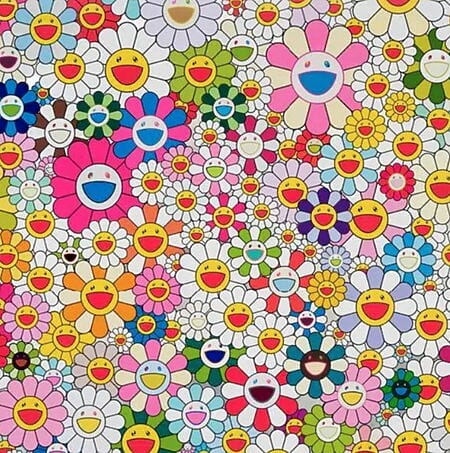
There are countless possibilities for what can be included in a creative portfolio. The great thing about it is that your imagination is the only limit. Whether you want to present drawings, collages, photographs, colorful or black and white illustrations, sculptures, websites, a fashion blog, your Instagram profile, or something completely different – anything goes when it comes to the contents of a creative portfolio.
Some art academies, design schools, and fashion schools even explicitly encourage their applicants to unleash their creativity. And not every piece of work necessarily has to be submitted on a sheet of paper.
"Please note that this portfolio characterizes you; we want to get to know you through the portfolio – so be bold in your approaches and inspirations, search for your own themes and research, reflect, note down, draw, illustrate, photograph, paint, sketch, and collage. There are no limits to your choice and combination of media and themes."
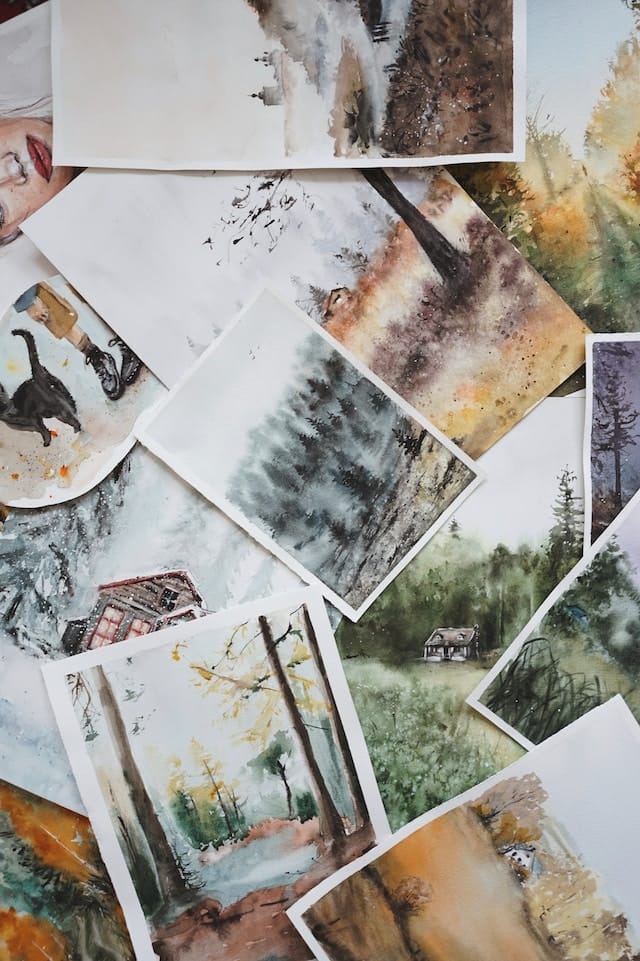
It doesn't always have to be a picture – there are no limits in the selection and combination of means and in the themes. Photo by Vera Gorbunova @veragorbunova, via Unsplash
Possible content overview
Collages: Create something unique by cleverly combining existing materials such as fabrics, cutouts, colors, images, and other resources. For example, look at various images of objects or individual elements and then assemble them into new creations.
Drawings: This includes precise sketches of scenes, body parts, or products, such as a shoe, car, or luxury goods, as well as depictions of a person in action. Perspective and creative drawing are also highly sought after.
Paintings: Unlike drawings, which are often only in black and white, painting offers the opportunity to express yourself creatively with color. Use your ability to analyze color by, for example, translating the most striking colors of a photograph into color squares. This way you can demonstrate your skill in handling color and make your work shine.
Photos: Photographs are a wonderful way to express oneself. Numerous creative blogs offer a wealth of inspiration to their readers through pictures of themselves or other fashion enthusiasts. This is no coincidence, as images possess a unique power that speaks to us in a gentle and calming way.
Digital products: An Instagram profile with a clear concept that doesn't focus on your personal experiences, as well as a personal blog or website about lifestyle, design, fashion or photography are also suitable projects.
Other techniques: An alternative to submitting a drawing or sketch is to submit a linocut print . Potato prints or the combination of natural materials (found objects) can also be considered, provided they are thematically appropriate and meaningful. However, it is essential to avoid copying from photographs. Understandably, such an approach is not viewed favorably and is usually quickly detected.
And finally: Design your portfolio carefully and be sure to check it for completeness before submitting your final application.
Scope and layout
Each university or academy has its own guidelines for portfolio structure. Most offer comprehensive information about the requirements that must be met. It is therefore worthwhile to visit the university's website to ensure no important details are overlooked.
When applying for a creative degree program, it is advisable to strictly adhere specified guidelines regarding the scopeGenerally, 15 to 30 creative projects are expected , but sometimes only 10 may suffice. Whether older work can be submitted depends on the specific university's requirements.
However, too few or too many submissions can negatively impact the evaluation. If the website of the university, academy, or fashion school does not specify the required scope, it is advisable to contact the student advisory service .
format either . Some universities specify exactly what size, material, and structure the individual works should have, while others allow more freedom in this regard.
If the university doesn't specify any requirements, it's advisable to check with the student advisory service to ensure that the portfolio format meets expectations. Admission shouldn't be denied due to choosing the wrong format.
03 Integrating your own style into your creative portfolio
In our portfolio checklist, we've already discussed the choice of materials, the structure, and the content of your portfolio. Another important aspect to consider when creating your portfolio is incorporating your own style. We've touched on this point before, but it's too important not to discuss in detail.
Your portfolio should not only be a collection of your best work, but also reflect your individual artistic expression .
The first step is to select the works that best represent your artistic personality . Don't just base your decision on technical skill or the popularity of the works; also let your personal preferences and interests influence your choice.
Demonstrate to the examiners who you are as an artist or designer and what is personally important to you.
Showcase your artistic personality in your portfolio! Photo by Bruce Mars @brucemars, via Unsplash
Another aspect to consider when incorporating your own style is the presentation of your work. Choose a coherent and aesthetically pleasing presentation that not only showcases your work perfectly but ideally also reflects your personality.
Pay attention to a consistent color scheme, font, and image composition. Also, remember that your portfolio tell a story . The selected works should flow harmoniously together and give the viewer insight into your artistic development and vision.
Don't rule out the possibility of showcasing your own style through innovative techniques or unusual materials. Experiment with different materials or combine them in unexpected ways. Use these tools to differentiate your work from the crowd and give your portfolio a personal touch.
Incorporating your own style into your portfolio is so important to stand out from other applicants and capture the attention of the examiners.
In combination with the other important aspects of the portfolio, this will give you the best chance of being successfully accepted into art and design degree programs.
Helpful tips and tricks for successfully designing your creative portfolio
In the previous section, we already discussed the importance of a portfolio for art and design studies, as well as its structure and design. Now we would like to give you some valuable tips on how to design your portfolio.
To make your creative portfolio even more appealing and skillfully avoid common pitfalls and no-gos, we have compiled a few useful tips, tricks and advice for you:
Creating the portfolio requires not only a lot of time, but also the challenge of producing an exceptional piece of work that meets the requirements.
This can lead to beginners being faced with a blank sheet of paper and having difficulty putting their ideas on paper or discarding drafts.
It is therefore advisable to start working on your portfolio early to reduce pressure and allow enough time to create the required 15 or more pieces. Although some people work better under pressure, it is helpful for beginners to plan sufficient time to avoid creative blocks .
b. Special requirements must be observed
Although not many universities specify a particular topic, there are usually detailed guidelines for creating and submitting the application portfolio on their website.
It is important to read these instructions carefully, as the number of work samples and the specifications regarding materials and execution can vary considerably. To avoid unnecessary effort, it is advisable to gather detailed information in advance.
c. Personal style is more important than catering to examiners' preferences or trends
Many applicants for university studies first think about what the examiner would like to see. But this approach is wrong. Even if you know who the examiner is and what their preferences are, what matters most at university is that you are recognized through your work. The examiners usually have so much experience that they can quickly tell whether you have put your heart and soul into your portfolio.
Having the courage to express your own style is usually rewarded. Photo by Mieke Campbell @miekelauren, via Unsplash
However, you should make sure to showcase your versatility. For example, if you want to study photography, a portfolio of photos will certainly be helpful. But if you want to go into design, you should incorporate different media and styles into your work.
Avoid being overly influenced by current trends and fashions. Instead, showcase your individual style and let your creativity shine through in every piece. This will set you apart from other applicants and highlight your unique personality.
d. The common thread
Another important aspect when creating your portfolio is the common thread that runs through your work. This consistency shows the examiners that you have thought about your presentation beforehand and haven't just thrown together materials haphazardly.
The clear structure of your work allows the examiners to better understand your working methods and approach, enabling a more accurate assessment. Even if you have been given a topic, there is still plenty of room for your individual interpretations and implementations.
Create a common thread in your creative portfolio by telling a story or using a shared style or theme.
e. Also pay attention to the casing
Please also consider the importance of the presentation folder itself. During the application process, numerous folders are reviewed. It's easy to imagine that folders with unsightly coffee stains or other blemishes will be quickly rejected. Nevertheless, the folder should not be considered more important than its contents.
When compiling your portfolio, pay attention to a clear structure. This ensures that your work can be carefully reviewed even during the hectic entrance exam for creative studies. All designs should be glued onto uniformly sized sheets of paper. The paper should be large enough, but not excessively so.
A3 format is perfectly sufficient. Each sheet should be labelled with information about the work and the topic.
A popular option for "packaging" your artwork is to use folders or binders to safely store and ship it. You can also use special storage boxes or sleeves to protect your work from damage.
Another important aspect is labeling your folder. You can, for example, use labels to identify the individual sections of your folder. Furthermore, you can also create digital copies of your work and save them on an external hard drive or in the cloud for an additional security measure.
Remember that a well-organized and protected portfolio helps you make a professional impression when applying to art and design programs. However, be careful not to overload your portfolio; instead, present a balanced selection of your best work to capture the attention of the examiners.
f. Quality over quantity
Quality is more important than quantity. Photo by Kelly Sikkema @kellysikkema, via Unsplash
Less is often more. Collages, mood boards, drawings and sketches – five to a maximum of 15 designs offer an optimal basis for expanding your repertoire.
The key is quality over quantity! It's not necessary for all your work to be thematically related; in fact, it's beneficial to explore a variety of topics. This allows instructors to see that you're already familiar with different forms of creative work.
Remember that the quality of your work is more important than the quantity. Focus on your best work and leave out the less successful pieces.
g. Enjoyment of experimentation
Experiment with different presentation formats, such as collages or sketchbooks.
Expand your artistic horizons by familiarizing yourself with different materials and techniques. Using watercolor, charcoal, ink, and other media, you can express your creativity and experiment with various styles.
By experimenting and gaining experience, you will develop as an artist and find your own unique style. Let yourself be inspired by the possibilities and discover the diversity of art.
h. Let yourself be inspired
Inspiration can be found everywhere and in everything. It's practically in the air, waiting to be discovered. Whether you're at the cinema, the theatre, listening to music, or reading literature, there's always something that can ignite the creative spark.
Inspiration for one's own art can be found everywhere. Photo by Aleks Dorohovich @doctype, via Unsplash
We find inspiration all around us – be it in nature, the urban jungle, or our immediate surroundings. The internet also offers countless opportunities to view successful portfolios of others and learn from them.
But caution is advised: We must not be tempted to copy. Instead, we should be inspired by the ideas of others and implement them in our own way.
By drawing personal inspiration from different cultural backgrounds, one will never be short of ideas.
Everything must be in order
Transform your artwork into a digital format and combine it into a single PDF. As a precaution, you should always back up a digital copy to cloud storage . You have the option of creating a cover page for your collection.
j. individual design of the presentation folder
Let your creativity shine when designing your portfolio itself. Use special materials, such as vinyl film, to make your portfolio unique. Once you've finished your creative portfolio, the question arises of how best to store it. Choose a method that optimally protects your work, such as a portfolio with acid-free sleeves or a special art portfolio.
To create a personalized portfolio, there are several steps to consider. First, it's important to define the theme or purpose of the portfolio. Based on this, you can then plan the design and structure.
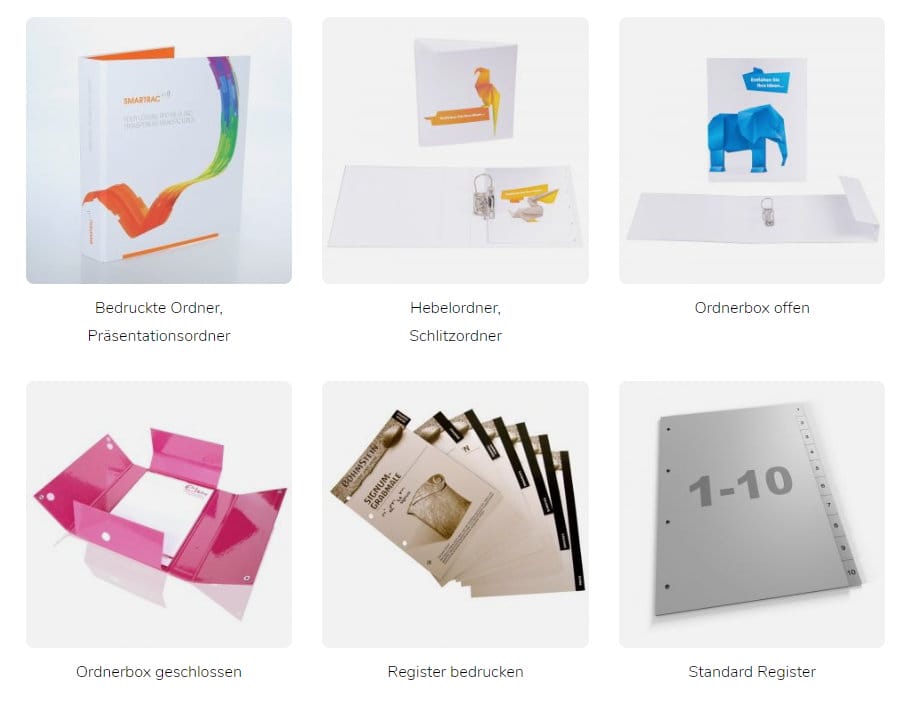
The first step is to choose the folder . There are various types of folders, such as ring binders, clip folders, or file folders. Depending on what the folder will be used for, you can choose the appropriate type.
The next step is to decide on the design of the portfolio. You can either choose a pre-made design or create your own.
Custom printable presentation products such as folders and binders. Source: schlender.de – Manufacturer of printed packaging and custom binders
It's important to ensure the design matches the theme or purpose of the folder. Colors, fonts, and images can also be used to make the folder more appealing. Once the design is finalized, you can begin printing and compiling the contents. Organize the documents neatly to ensure the folder is well-organized.
It can be helpful to use dividers or tabs to create different sections. Finally, the folder should be given a title or logo. This personalizes the folder and makes it easier to identify . You can either use a sticker or have the design printed directly onto the folder.
k. Always up to date
It's not uncommon to apply to several universities, sometimes over an extended period. In this case, you should ensure that your portfolio is always up-to-date.
Regularly review the contents of your portfolio and update them as needed. Stay informed about current developments and trends to give your creative portfolio a contemporary feel.
l. First the idea, then the implementation
The visual challenge requires an original idea. The instructors understand that you may not own a top-of-the-line professional camera or have access to the resources of professional designers.
However, it is crucial that you demonstrate your empathy and aesthetic sense for a creative editorial.
With these tips on designing your creative portfolio, you are now ideally equipped to successfully present your creative skills to the university jury.
m. Don't put too much pressure on yourself
It may seem difficult not to put yourself under pressure. But there is a way to look at the portfolio in a completely relaxed manner, if you can manage it somehow. This can be very helpful in avoiding unnecessary stress.
Don't forget that studying at this university or in this program is your dream. But even if you get rejected, it's not the end of the world. Many applicants are rejected every year, and even successful designers and artists have failed entrance exams or only passed after several attempts.
Remember that there are other universities where you can develop your talent and succeed. If it doesn't work out this year, you can try again next year. Don't give up and stay calm and gentle with yourself.
n. There is no magic formula for the perfect portfolio
The design of your portfolio is undoubtedly of great importance, as it can determine the success or failure of your application. Nevertheless, there is one factor over which you have no control: the reviewer.
It can happen that you have perfected your portfolio down to the smallest detail and still receive a rejection because the examiner does not understand your work or prefers a different style.
Therefore, it's advisable to apply to several universities, as the examiner's personal preferences often play a role in the decision. So don't be discouraged, but rather aim for a wide range of applications.
Don't get discouraged
It can happen that the overall impression of your application isn't quite right. In this case, you need to continue working on your application and try again next year. The positive aspect is that you can make an unlimited number of applications.
However, it can be frustrating to be rejected several times in a row. But this has happened to many applicants. They didn't give up, but kept applying and finally succeeded on their third or fourth attempt.
So don't get discouraged too soon!
Portfolio consultation and portfolio preparation courses
Problems creating your map? Help is available!
A portfolio isn't something you just put together. As mentioned before, some applicants work on their portfolios for months to deliver the best possible result. Seeking advice, creative input, or further practicing techniques is therefore quite normal.
Many educational institutions offer portfolio development consultations. You can schedule an appointment and get valuable tips and tricks for your existing designs. This can be a great help, as the consultants know exactly what's important.
On set days or by appointment, you can present your initial drafts to the student advisory service. You'll receive direct feedback on which drafts have potential and what you need to work on further. These consultations take place individually, and sometimes in a group setting. Some consultations are free, while others charge a fee (approximately €50).
In addition to internal portfolio reviews, there are also external studios and specialized course providers. These offer a range of services, from simple consultations to multi-week courses where you create your portfolio from scratch and receive professional assistance.
In a portfolio preparation course, the consultation is more intensive, and you learn new techniques or can practice painting and drawing techniques under professional guidance. Portfolio preparation courses last from a few days to several months – there's something for every goal. Providers are located throughout Germany.
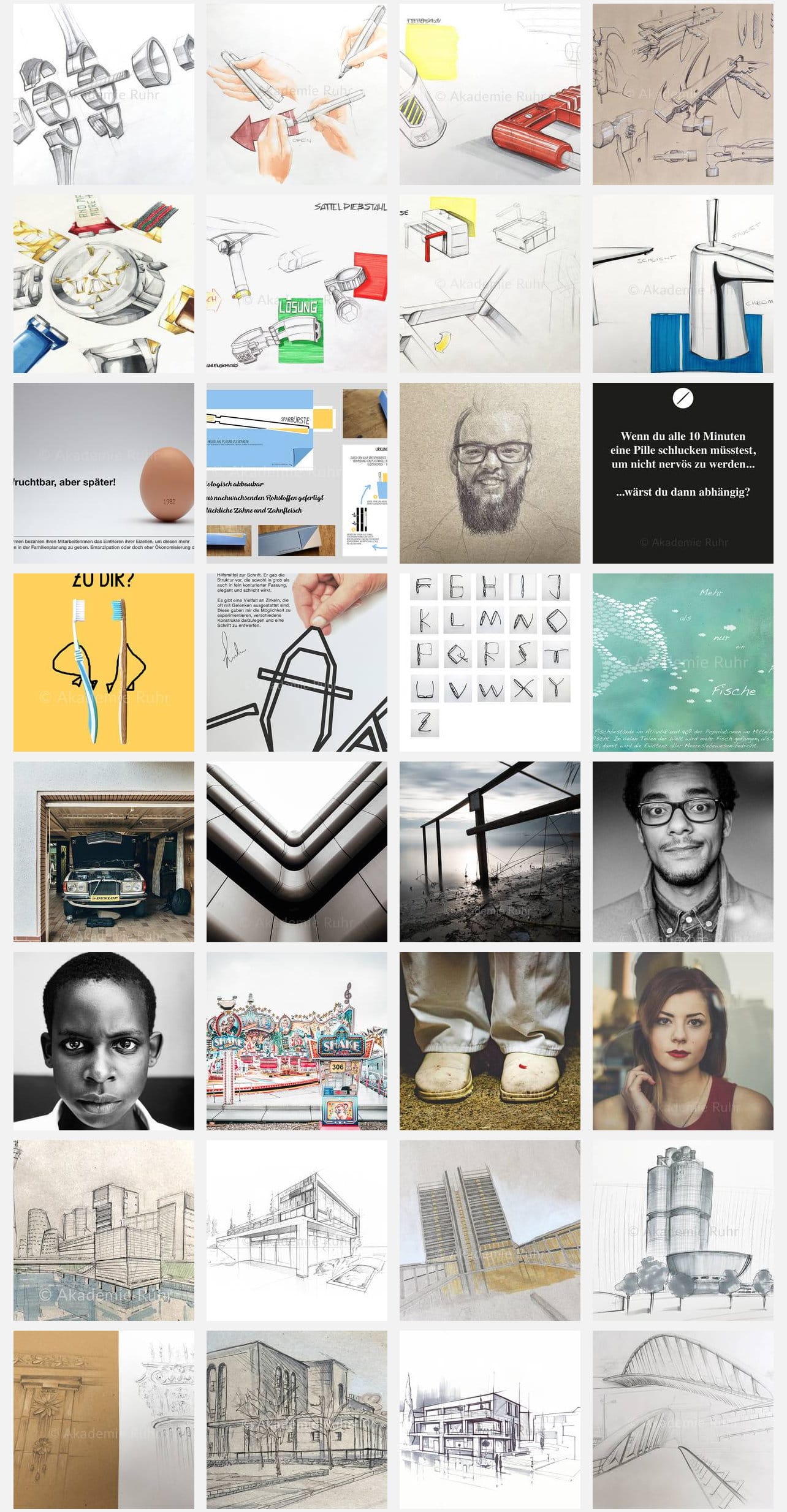
The best of the best – successful portfolio examples for creative degree programs. Examples from the Ruhr Academy
The Ruhr Academy, for example, offers a wide range of courses on design techniques and presentation methods for various fields of application. The drawing courses are designed for beginners and advanced students who want to spend their free time creatively.
From portrait and manga drawing courses to classic drawing courses, the academy offers a wide range of options.
Success stories: Accepted applicants provide insights into their portfolios
This video is integrated in the extended Privacy mode of YouTube, which blocks the setting of YouTube cookies until a active click on playback is made. By clicking on the reproduction button, you grant your consent in the fact that YouTube sets cookies on the end device you use, which can also serve an analysis of usage behavior for market research and marketing purposes. You can find more information about the cookie use by YouTube in the Google cookie policy at https://policies.google.com/technologies/types?hl=de.
This video is integrated in the extended Privacy mode of YouTube, which blocks the setting of YouTube cookies until a active click on playback is made. By clicking on the reproduction button, you grant your consent in the fact that YouTube sets cookies on the end device you use, which can also serve an analysis of usage behavior for market research and marketing purposes. You can find more information about the cookie use by YouTube in the Google cookie policy at https://policies.google.com/technologies/types?hl=de.
This video is integrated in the extended Privacy mode of YouTube, which blocks the setting of YouTube cookies until a active click on playback is made. By clicking on the reproduction button, you grant your consent in the fact that YouTube sets cookies on the end device you use, which can also serve an analysis of usage behavior for market research and marketing purposes. You can find more information about the cookie use by YouTube in the Google cookie policy at https://policies.google.com/technologies/types?hl=de.
The Kunstplaza team wishes you the best of luck with your application process!
In summary, a portfolio is an essential tool for applying to art and design programs. This article has discussed what a portfolio is and why it's important.
We have provided a checklist with important points for setting up and designing a creative portfolio, as well as tips on structuring and safe shipping.
To maximize your success in the application process, it is crucial to weave your personality and your own style into your creative portfolio.
If you follow these tips, you'll undoubtedly attract the attention of art schools and design universities. So, the best thing to do is start creating your portfolio now and let your creativity speak for itself!
Don't miss our future magazine articles, where we'll share more tips and tricks for aspiring artists and designers. Stay tuned and keep getting inspired!
Owner and Managing Director of Kunstplaza. Publicist, editor, and passionate blogger in the field of art, design, and creativity since 2011. Successful completion of a degree in web design as part of a university program (2008). Further development of creativity techniques through courses in free drawing, expressive painting, and theater/acting. Profound knowledge of the art market through many years of journalistic research and numerous collaborations with actors/institutions from art and culture.
A fundamental need for every artistically creative person is likely to be the ability to live off their art.
To secure one's existence, it's essential to earn money with art. In fact, many artists can live well off their creative work today, contrary to the majority's perception. Nevertheless, a vast majority of freelance artists still rely on additional income sources (e.g., giving courses, commissioned work, side jobs, etc.).
Recognition as an artist often does not bring immediate financial security. Therefore, artists are often also life artists.
The opportunities to make a living from one's own art have, however, grown significantly due to the internet and social media. As an artist, however, you must be versatile and flexible to succeed. A certain degree of perseverance is also essential.
Customer care and self-marketing are also important pillars for success as an artist.
In this section, we compile numerous articles, information, tips, and advice to help you make a living from your art.
We use technologies like cookies to store and/or access device information. We do this to improve the browsing experience and to show (non) personalized ads. If you agree to these technologies, we can process data such as browsing behavior or unique IDs on this website. Not consenting or withdrawing consent may negatively impact certain features and functions.
Funktionale
Immer aktiv
Die technische Speicherung oder der Zugang ist unbedingt erforderlich für den rechtmäßigen Zweck, die Nutzung eines bestimmten Dienstes zu ermöglichen, der vom Teilnehmer oder Nutzer ausdrücklich gewünscht wird, oder für den alleinigen Zweck, die Übertragung einer Nachricht über ein elektronisches Kommunikationsnetz durchzuführen.
Vorlieben
Die technische Speicherung oder der Zugriff ist für den rechtmäßigen Zweck der Speicherung von Präferenzen erforderlich, die nicht vom Abonnenten oder Benutzer angefordert wurden.
Statistiken
The technical storage or access that is used exclusively for statistical purposes. The technical storage or access that is used exclusively for anonymous statistical purposes. Without a subpoena, voluntary compliance by your internet service provider, or additional records from a third party, the information stored or retrieved for this purpose alone cannot usually be used to identify you.
Manage {vendor_count}-suppliers
The technical storage or access is required to create user profiles, to send advertising or to track the user on a website or across several websites for similar marketing purposes.