Buying a tiny house is trending, while the average living space per person in Germany has increased from 35 to 46 square meters in the last 30 years * . These small living spaces, ranging from 22 to 65 square meters for stationary models, offer a conscious alternative to conventional living space.
With prices ranging from €25,000 to €115,000 for a turnkey tiny house, more and more people are buying their minimalist dream home. In fact, a fully equipped mini-house can be purchased for less than €15,000 if it offers approximately 8 square meters of living space.
Thanks to more than 60 manufacturers in Germany, there are now numerous options for making a tiny house habitable year-round – whether as a mobile tiny house on wheels or as a stationary structure . The construction costs, averaging €2,700 per square meter *,financing options have support from the prefabricated house experts at
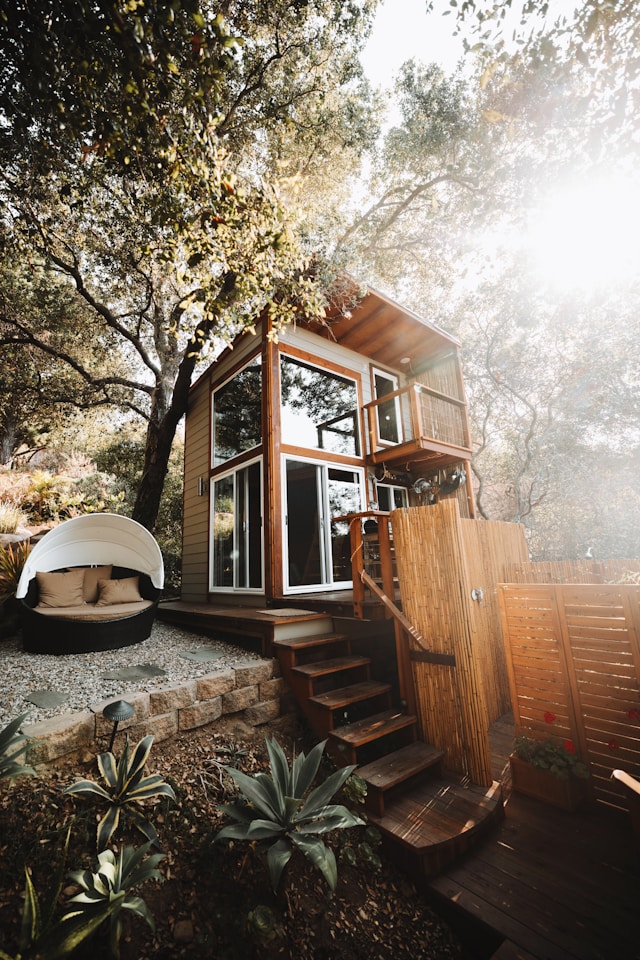
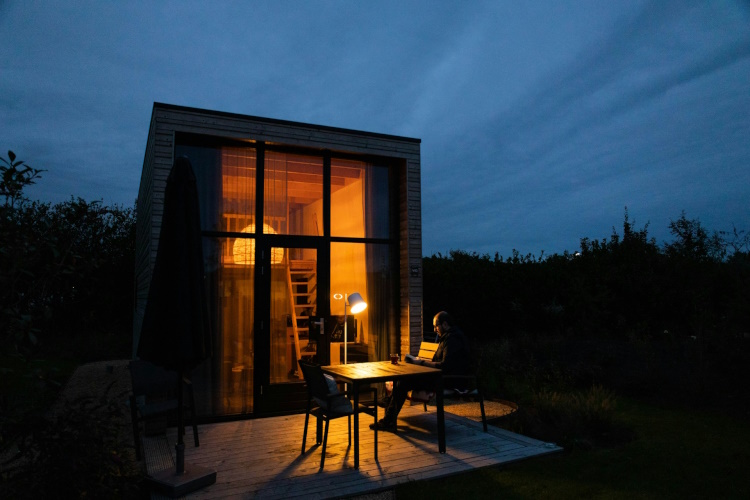
Buying a tiny house – The fusion of prefabricated construction and individual planning leads to an affordable dream home, photographed by Roberto Nickson @rpnickson, via Unsplash
As a result, we can now explain in detail what a tiny house costs, what advantages prefabricated construction offers, and when individual planning is worthwhile.
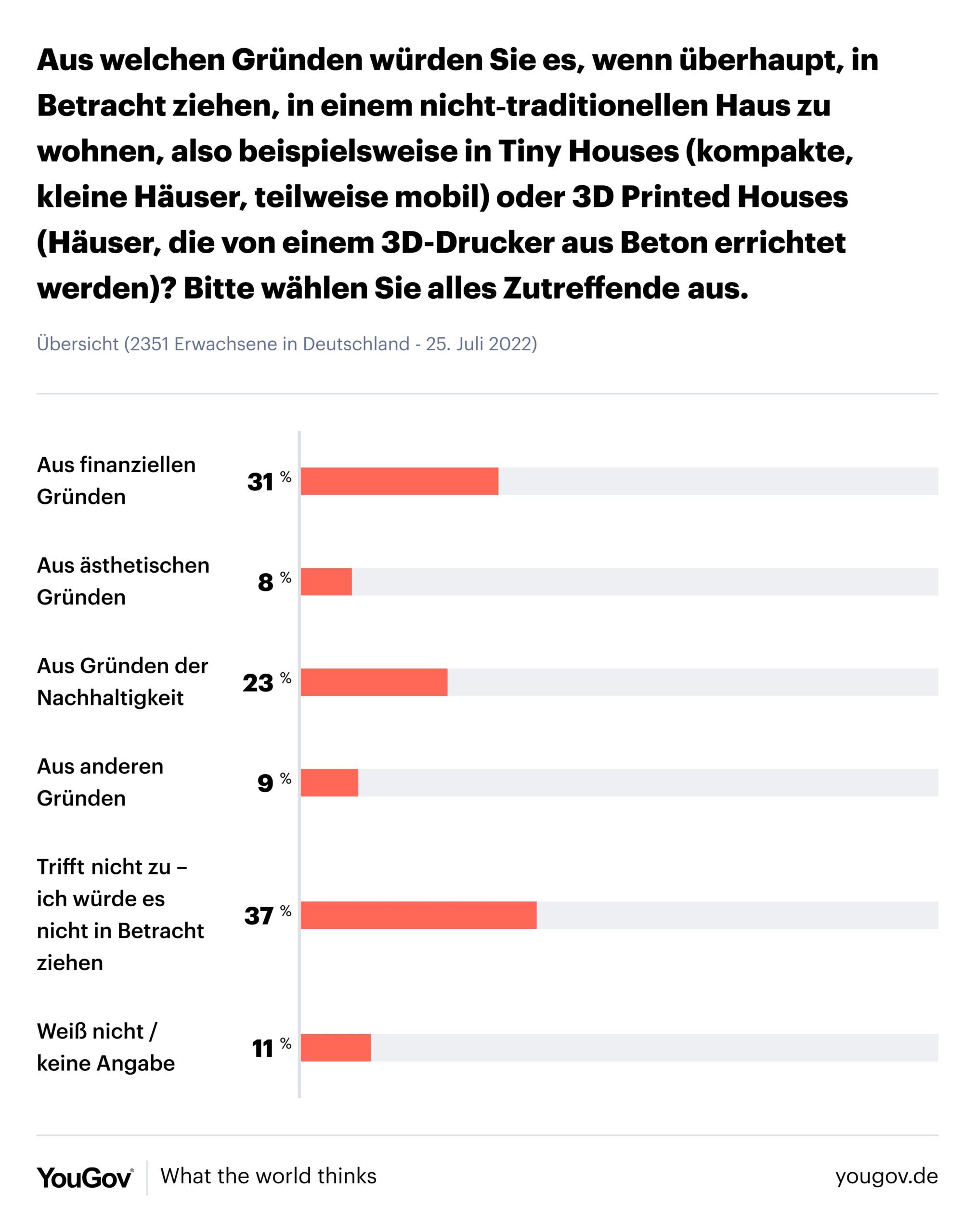
Nearly a quarter of Germans can imagine living in a tiny house, according to a representative survey by YouGov Deutschland GmbH.
YouGov survey: For what reasons, if any, would you consider living in a non-traditional house, such as tiny houses (compact, small houses, some of which are mobile) or 3D printed houses (houses built from concrete using a 3D printer)?
But what is the attraction of these mini houses? The reasons for the purchase of a Tiny Houses range from ecological considerations to financial advantages and the desire for more flexibility in life. Downsizing and minimalism are driving trends.
Minimalism and sustainability – a symbiotic pairing
In the tiny house lifestyle, it's important not to own too many things. In a small house with limited space, residents automatically focus only on the essentials. This clearly demonstrates that less is often more. Many people feel liberated and can concentrate on what truly matters.
Small houses also have the advantage of an excellent environmental footprint . Their construction requires fewer materials than that of conventional houses. Living in a small home therefore produces less CO2 . Mobile tiny houses on wheels also don't occupy any land. A study by MariaSaxton , an environmental planning expert from the USA, showed that moving into a tiny house reduces the ecological footprint by an astonishing 45%.
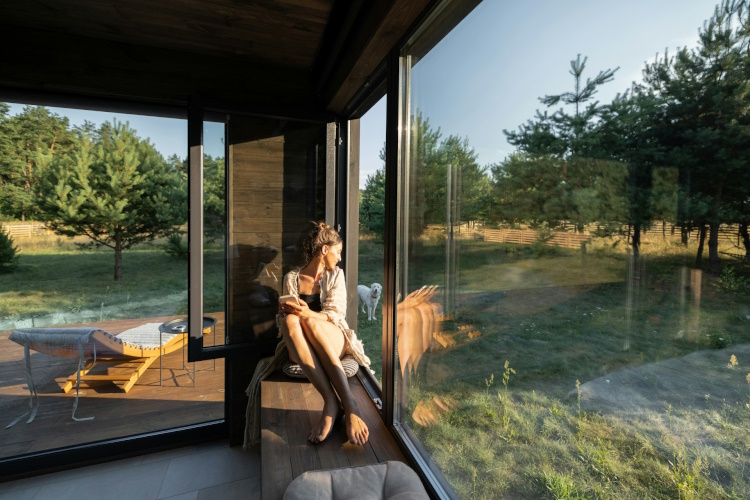
The desire for a minimalist lifestyle and flexibility in housing is a strong driving force behind the tiny house trend, photographed by Aysegul Yahsi @aysegulyahsi, via Unsplash
Some tiny houses are designed for self-sufficiency , meaning they can generate their own energy. Living almost independently is possible by using solar panels for hot water, photovoltaic systems for electricity, and composting toilets. More and more people want to live in an environmentally friendly way, so they are mindful of conserving resources.
Financial freedom and independence
Buying a tiny house saves you a lot of money. A normal new house often costs over €300,000, while a tiny house can cost between €50,000 and €120,000, depending on the features * . It is possible to live in a tiny house year-round for less than €100,000.
The ongoing costs are also significantly lower . Living in a well-insulated small house means lower heating and electricity bills. Jewelry and furnishings are also less expensive due to limited space. Financial freedom allows you to work less, spend more time with family and on hobbies, or save money for travel.
I've been thinking about how I can manage to work less and have more time for my loved ones and my hobbies. Well, by reducing my fixed costs!,
A tiny house resident described his motivation to us. Especially for singles and couples, a tiny house can therefore represent a real alternative to expensive rental apartments in large cities.
Flexibility through mobile living
Another good reason to buy a tiny house is the ease of moving it (keyword: mobility ). If someone gets a new job and has to relocate, they can take their home with them if they find a suitable spot at their new location. Tiny houses with road registration can even be towed by a car and, theoretically, used as holiday accommodation.
A tiny house can be used in many ways: as a primary residence, second home, vacation home, or guest house on your own property. Life circumstances can change, but the tiny house can be adapted. It can be used by one person alone or as a vacation home for a small family. There are many different possibilities.
Furthermore, a tiny house can be rented out during extended absences, generating additional income * . This flexibility aligns with the modern lifestyle of many people who value independence and adaptability.
Where did the trend originate?
American Jay Shafer had the inspiring desire to build a small house, but encountered difficulties obtaining permits. Determined to realize his vision nonetheless, he decided to build his house on a twin-axle trailer. The response to this innovative concept was overwhelming and led him to develop building plans for others to replicate.
The tiny house, with its mobility, promised a feeling of freedom and independence.”
The tiny house trend has since evolved and is increasingly establishing itself as a versatile form of housing. These charming houses are often seen in gardens. They are used as guest houses, playhouses for children, garden sheds, or offices. They are often nestled in attractive, green surroundings.
Tiny houses are a great way to create more living space. They can be built on a flat roof or as an extension to a house with limited space. In recent years, many prefabricated home manufacturers have embraced this trend. The range of designs available to potential tiny house builders is both aesthetically pleasing and functionally well-designed.
Small living spaces can also be equipped with the latest smart home technology, if needed. Many small houses are designed so that they can be enlarged, expanded, or reduced in size as required. They are modular in construction. More and more people are choosing tiny houses to live simply and to solve the problems of urban living. It's an opportunity to think about new housing ideas.
This trend towards tiny houses is not only an expression of a minimalist lifestyle, but also a response to the challenges of urban living situations – an invitation to explore new housing concepts.
Prefabricated house or custom tiny house? Decision-making aid
When deciding on a tiny house, prospective buyers face a fundamental question: prefabricated house or individually designed tiny house? This decision affects not only the costs, but also the time required and personal satisfaction with the final result.
What are the advantages of prefabricated construction?
Buying a prefabricated tiny house is initially appealing due to significant time savings . Even considering current raw material shortages, moving in is possible within a few weeks to a few months * . Most manufacturers work with reliable delivery dates, while self-build projects often take longer than planned.
Another significant advantage lies in efficiency . With prefabricated houses, the design and planning already exist, meaning there are hardly any additional costs for this construction phase. Furthermore, material procurement is often more efficient with manufacturers, which reduces raw material costs. This results in a favorable price-performance ratio with minimal effort on the part of the homeowner.
The expertise of manufacturers and experienced professionals in prefabricated house construction, such as Bien-Zenker, represents invaluable added value. Prefabricated house providers have extensive experience in the optimal use of limited space. From sleeping alcoves to multifunctional furniture – prefabricated houses offer numerous well-thought-out solutions without requiring any DIY work.
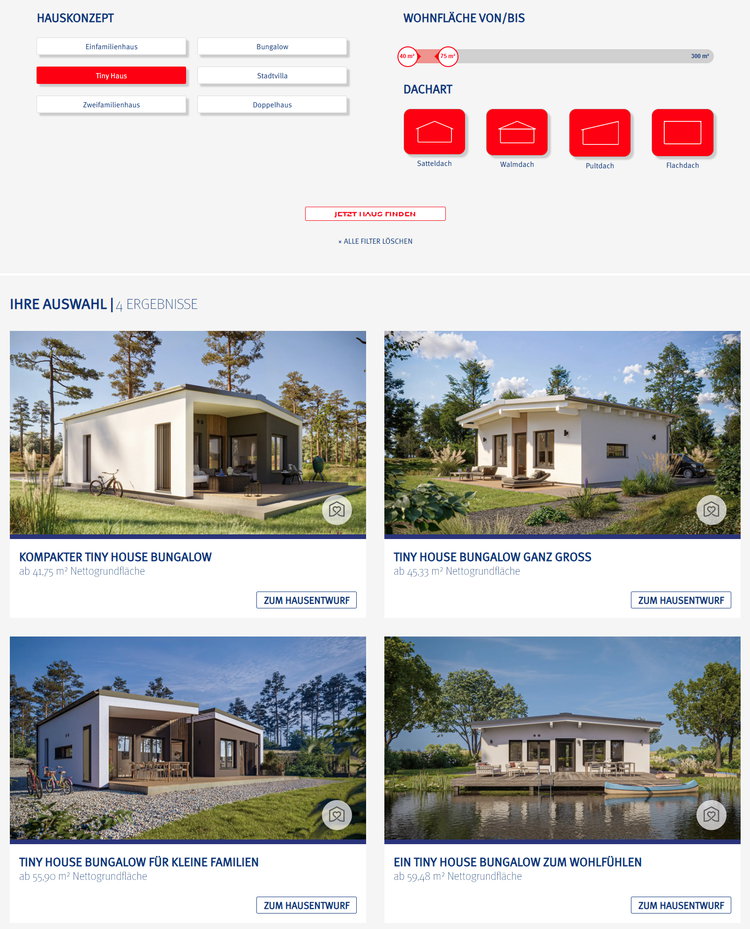
Buy a tiny house / Prefabricated houses – Planning examples from BIEN-ZENKER between 40 and 75 sqm.
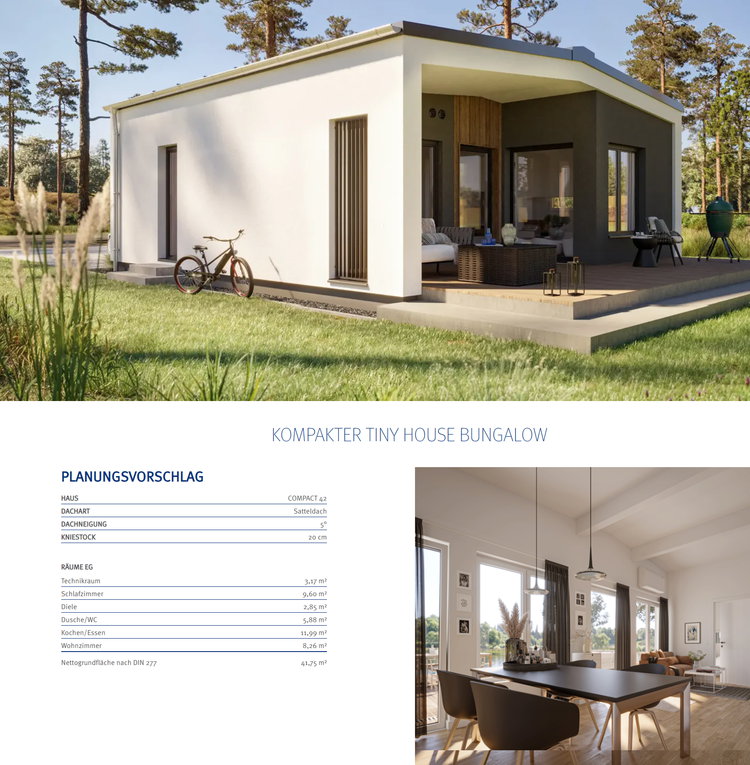
Planning proposal for a compact tiny house bungalow (41.75 m²) by Bien-Zenker. Copyright: Bien-Zenker GmbH
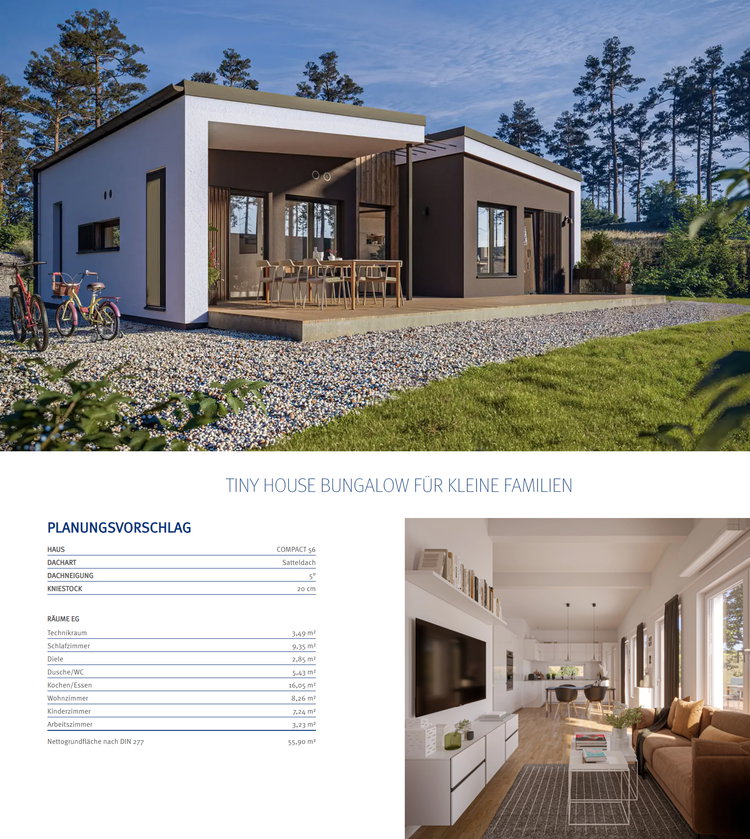
Planning proposal for a tiny house bungalow for small families (55.9 m²) by Bien-Zenker. Copyright: Bien-Zenker GmbH
warranty is also an important factor . Those who purchase a prefabricated house generally receive guarantees on the construction work carried out. This protection does not exist for self-built tiny houses.
A custom-built tiny house is particularly worthwhile if there are specific requirements regarding layout, size, or features. Photographed by Don Kaveen @donkaveen, via Unsplash
A custom-built tiny house is particularly worthwhile if there are specific requirements regarding layout, size, or features. The most obvious advantage lies in the complete freedom of design . The tiny house can be designed precisely according to personal wishes and needs * .
Cost major factor in favoring custom solutions. Building your own home can save on many expenses, such as labor costs (wages) and transportation. However, it's important to remember that a custom design for living in a limited space involves significant planning effort.
Those with practical skills can also benefit from the self-expression involved in the construction process. The feeling of having created their own home is priceless for many. Furthermore, ideas like upcycling are easiest to implement here.
Comparison: Standard model vs. custom-made
aspect
Standard model
Custom-made
Cost
Often cheaper due to mass production
Generally more expensive, but savings are possible through self-performed work
Time required
Fast delivery, often within a few months
Several months to years for self-built projects
individuality
Limited selection of predefined designs
Complete customization to personal needs
Planning certainty
High planning certainty with fixed prices
Unforeseen costs and delays are possible
Quality
Standardized quality, tried and tested
Depending on expertise, it varies greatly
Between these two extremes, numerous hybrid models . Many manufacturers now offer basic models that can be individually customized. Alternatively, it's also possible to have the shell of the house built by the manufacturer and to handle the interior finishing oneself. In this scenario, the shell is constructed by the supplier, while the customer completes the interior work. This not only leads to cost savings but also increases the emotional value of the home.
For those with DIY skills, it's possible to have the shell of the house built by the manufacturer and then handle the interior finishing themselves. Photographed by Clay Banks @claybanks, via Unsplash
For undecided prospective buyers, an open-minded consideration of both options is recommended. Show homes offered by prefabricated home manufacturers provide the opportunity for viewing. For those planning a self-build project, however, exchanging experiences with other self-builders is advisable.
Cost factors when buying a tiny house
Purchasing a tiny house requires realistic budget planning . Buying a tiny house involves various cost factors that are often underestimated. A thorough understanding of these expenses helps avoid unpleasant surprises.
Price differences depending on size and features
Prices for turnkey tiny houses with a living area between 15 m² and 35 m² typically range from €25,000 to €65,000. However, more specialized models can cost up to €151,000. For budget-conscious buyers, there are more affordable alternatives:
Prefabricated kits : Available from €9,900
Shell houses : between €30,000 and €50,000 (interior finishing done by the owner)
Turnkey models : From €45,000, depending on features and quality up to €180,000
The total cost for an average tiny house of standard size usually ranges between €60,000 and €70,000*.
It is important to remember: the smaller a house, the higher the construction costs per square meter usually are.
Land costs and development
A key cost factor is the land. Regional differences in this area are considerable
Urban areas like Hamburg and Berlin: Up to €1,045.75 per m² *
Rural regions such as Saxony or Thuringia: From €77.41 per m² *
A tiny house often requires a plot of land of 150-200 m². Experts recommend that the land costs should not exceed €15,000-€20,000 to make the purchase economically worthwhile.
Alternatively, you can lease a plot of land. Monthly lease fees range from €150 to €300, which equates to €1,800 to €3,600 annually.
In addition, there are development costs for connecting to water, sewage, and electricity networks. These costs vary between €750 and €2,000. The following costs apply to the individual connections: *
Transporting a tiny house to the desired location can cost between €1,000 and €5,000. A distance of approximately 100 kilometers would cost around €1,200. Additional costs may include a crane for placement (€500-€1,000) and assembly (€500-€2,000).
For legal compliance, building permits are required, the costs of which can range from €500 to €3,000. Appropriate insurance should also be taken out. Depending on the value of the tiny house, homeowner's insurance costs between €300 and €600 annually.
Those who want to live self-sufficiently must expect additional investments:*
Solar system: from €3,000
Rainwater collection: up to €1,500
Composting toilet: up to €800
Furthermore, approximately 1% of the house's value should be budgeted annually for maintenance and upkeep. For a tiny house worth €40,000, this would amount to €400 per year.
Making a tiny house habitable year-round
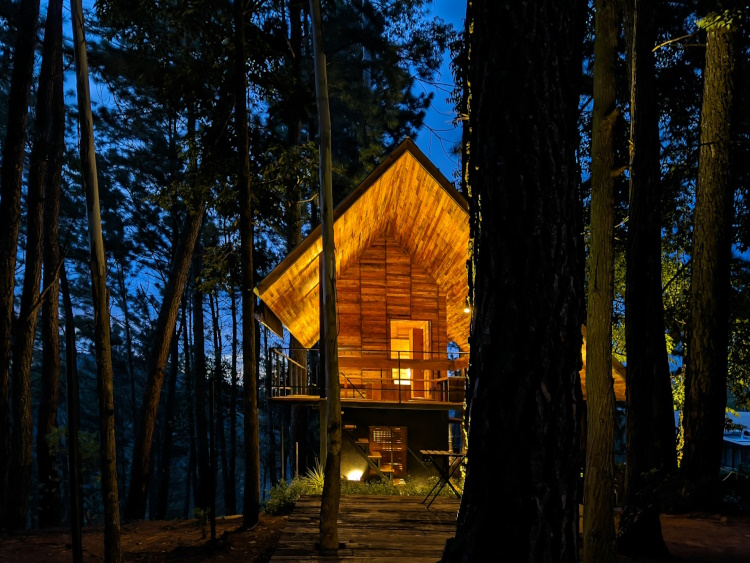
Making a tiny house habitable year-round requires well-thought-out technical solutions. Photographed by Jaime Bishara @itsjaimeb, via Unsplash
Making a tiny house habitable year-round requires well-thought-out technical solutions. The compact design places special demands on insulation, energy supply, and water infrastructure.
Insulation and heating systems compared
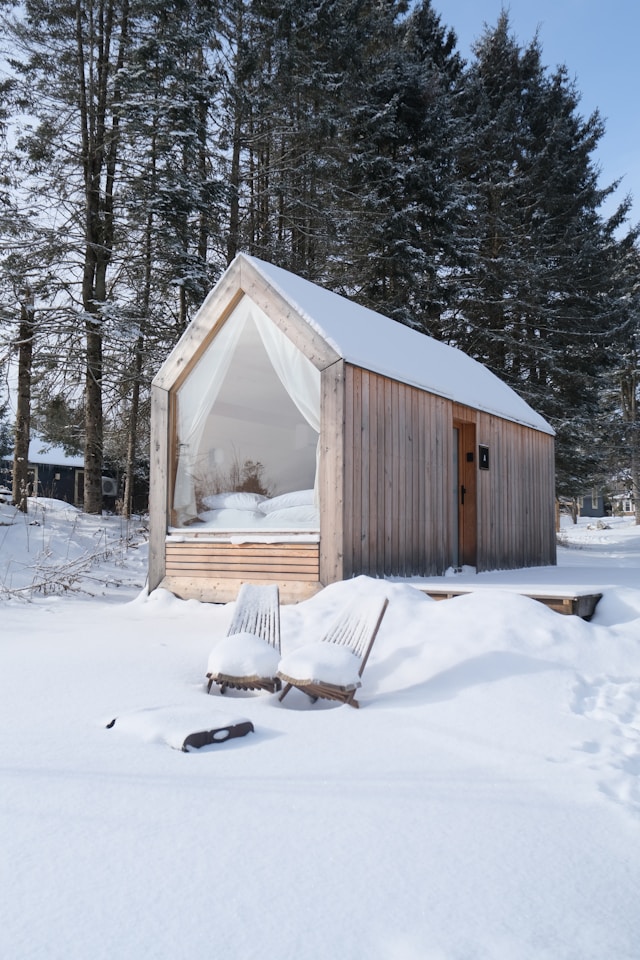
For year-round use, heating systems and insulation should be key planning considerations. Photographed by Nachelle Nocom @nachellenocom, via Unsplash
The challenge in insulating a tiny house lies in the limited wall thickness, typically only 10 cm. Conventional insulation materials such as mineral wool quickly reach their limits here.
Innovative solutions therefore combine insulation and reflection: Special PUR foam in conjunction with infrared-reflecting thermal films achieves better insulation values than traditional materials. Particularly effective are novel composite systems such as ISUM MF 14 , with a thickness of only 11.4 mm, which, thanks to 96% heat reflection*, achieve a comparable insulation value to 120 mm of conventional insulation.
Several systems are suitable for heating:
Wood/pellet stoves : Romantic and self-sufficient, but demanding in terms of regulation.
Gas heating systems : Flexible thanks to bottled gas, space-saving and efficient *
Infrared heaters : Low installation costs, but higher electricity costs
Air source heat pumps : Versatile (heating, cooling, dehumidifying), but require more electricity.
A detailed comparison of the different heating systems and their specific advantages and disadvantages can be found in the guide article fromWohnglück .
Self-sufficient energy supply with solar
For sustainably minded tiny home owners, an independent energy supply is crucial.
Photovoltaic systems on tiny house roofs offer significant energy independence. A 10 m² system with a nominal output of 2 kWp generates approximately 1,300 kWh annually. A functional system typically requires 200-600 watts of solar panels, with 800 watts being recommended for sufficient capacity .
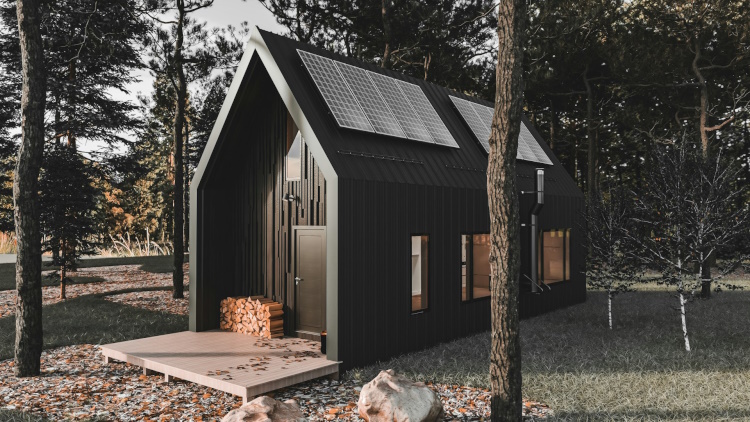
Self-sufficient living thanks to a photovoltaic system and energy storage, photographed by Thomas Werneken @thomaswerneken, via Unsplash
Crucially, this can be supplemented with energy storage systemsHowever , these systems, weighing several hundred kilograms, pose a challenge for mobile tiny houses, which must not exceed the permissible total weight of 3.5 tons.
Water and wastewater solutions
Frost-proof water pipes are essential for tiny houses intended for year-round habitability . These should be laid at a depth of 0.80 to 1.20 meters. Several options are available for the water supply:
Connection to the public network (often required)
Rainwater harvesting systems with filtration
Tanks with delivery services in remote areas
There are also several solutions for wastewater disposal
Sewer connection (usually mandatory in Germany)
Constructed wetland with composting toilet (reduces wastewater by 95%)
Pressure drainage systems for unfavorable topography*
combination of a composting toilet and greywater treatment is particularly sustainable . Greywater from the shower and sink can be reused for toilet flushing or garden irrigation after purification.
Legal aspects and permits for the purchase
When purchasing a tiny house, legal aspects are crucial for long-term user satisfaction. The building code classification largely determines which permits are required and where the tiny house may be placed.
What rules apply to mobile tiny houses?
Mobile tiny houses on wheels are subject to road traffic regulations . For transport, they require road approval, for example as a "trailer with special body ." This is issued by TÜV or DEKRA. The maximum dimensions are 2.55 meters wide, 4 meters high, and 12 meters long, with a permissible total weight of 3.5 tons.
However, road approval alone is not sufficient. As soon as the mobile tiny house remains in one location for more than three months, it is legally considered a building. In this case, a site-specific building permit required, regardless of whether it has wheels.
Building permit for stationary tiny houses
Stationary tiny houses are generally classified as buildings of building class 1 and are subject to the respective state building code. The simplified approval process still requires numerous documents such as building plans, structural stability calculations, and thermal insulation certificates.
Important to note: Only a qualified designer (architect or civil engineer) may submit the building application. Before construction begins, it is also advisable to submit a preliminary building inquiry to the relevant authority to obtain binding information regarding the project's eligibility for approval.
In some German states, exceptions exist for very small buildings. In Bavaria, for example, buildings with a gross volume of up to 75 cubic meters (approximately 30 square meters) in urban areas do not require a building permit.
Use as primary residence or holiday home
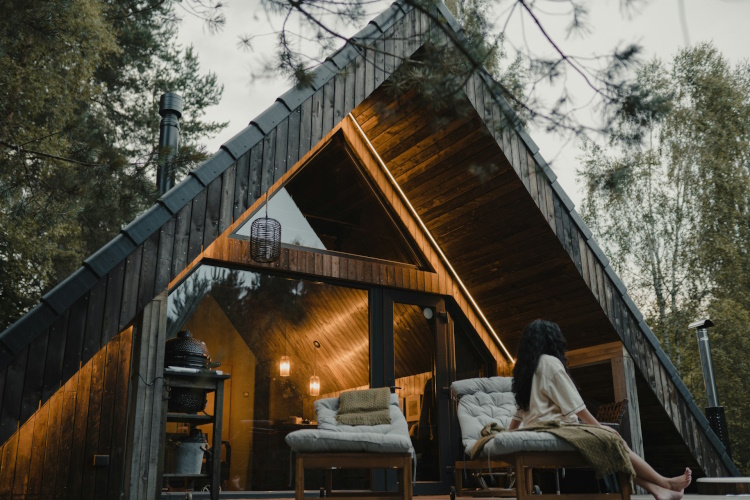
Less stringent regulations apply when a tiny house is used temporarily as a vacation home. Photographed by Gantas Vaičiulėnas @gantas, via Unsplash
To use a property as a permanent primary residence, you need a plot of land in a developed residential area that is approved for residential use . This includes residential areas, small settlement areas, village areas, or mixed-use areas.
However, less stringent regulations apply to temporary use as a holiday home. Here, "special areas designated for recreation" into play. In such areas, the construction of a tiny house is often exempt from permitting or approval procedures if the floor area does not exceed 50 square meters.
Campsites offer an alternative option . If the zoning plan permits residential use, neither a pitch permit nor a building permit is required. The tiny house may have a maximum size of 50 square meters and a maximum height of 3.50 meters.
Financing options – Are there special loans for tiny houses?
Purchasing a tiny house usually requires financing , as most buyers don't have sufficient savings. The best option is often to borrow money from friends or family; alternatively, a loan from a bank is the next step.
According to Interhyp , Germany's largest mortgage broker, financing a tiny house is generally possible, but it does present some challenges. It's important to consider whether only the house or also the land is being purchased, and whether any collateral exists. If only the house is being acquired without the land, a traditional installment or consumer loanis .
With existing collateral such as land, construction financing possible, for example, for a purchase of €100,000. Banks often require minimum living space, usually between 20 and 40 square meters. If the costs for the tiny house are around €30,000, a consumer loan is advisable, as construction financing is often only offered for higher amounts .
There are also banks that specifically offer loans for tiny houses , including the ethically oriented GLS Bank , which actively supports this form of housing. The PSD banking group , for example PSD Bank Hannover, is also involved in projects such as the Ecovillage at Kronsberg. Ethikbank also offers an instant loan of up to €50,000 for tiny houses.
Besides these providers, other banks with favorable installment loans can also be considered. A comparison on biallo.de can help you find the best terms. Further information on loan interest rates for installment loans can be found in our guide. *
Conclusion: Live small, think big
Tiny houses are an interesting alternative to conventional apartments. Small houses help you live more sustainably and save money. This type of housing can be used in a variety of ways: as a primary residence, a vacation home, or additional space on your own property. Whether you choose a prefabricated house or create your own design depends on personal preferences, DIY skills, and available time.
Ready-made solutions are readily available and well-planned. Self-build projects offer a great deal of design freedom. People who want to buy a tiny house should consider not only the price of the house itself, but also the costs for the land, development, transport, and ongoing expenses. Well-planned insulation, energy-efficient heating, and environmentally friendly water usage ensure that the tiny house is habitable year-round and significantly improve living comfort.
It is also essential to be informed about the legal situation. Even small construction projects usually require building permits. It is crucial to check the regulations before purchasing to avoid problems and additional expenses. Tiny houses are a popular housing option, no longer just a trend for a select few.
Living in a tiny house offers a simple way to focus on what's important, allowing you to be self-sufficient and environmentally friendly. More and more people are finding this type of housing ideal because it's simple, affordable , and adaptable. This is due to rising housing prices and growing environmental awareness.
The cost of a turnkey tiny house varies depending on size and features. For a living area of up to 50 square meters, costs can start at €200,000 for a luxury model. Smaller models with approximately 8 square meters of living space are available on average from €21,600.
What are the legal requirements for living permanently in a tiny house?
Permanent residence in a tiny house is only permitted if the municipality has authorized residential use in its zoning plan. In this case, the tiny house must also meet the requirements of the German Building Energy Act (GEG). Without the appropriate permit, permanent use as a primary residence is generally not allowed.
What are the crucial aspects when building a tiny house?
Several criteria must be considered when building a tiny house: Living spaces should have a minimum height of 2.40 m, a kitchen and a bathroom are mandatory, the bathroom and toilet require ventilation, and a lightning protection system is required for wooden houses. Furthermore, all building regulations must be observed.
What is the average lifespan of a tiny house?
For tiny houses with building permits that use only approved building materials, the minimum service life is generally 40 years. Wear parts have a shorter lifespan. The actual durability depends on the quality of construction, the materials used, and regular maintenance.
Does a tiny house in Germany need an energy performance certificate?
Since 2009, it has been mandatory in Germany for every new building to have an energy performance certificate documenting the energy efficiency of the building.
However, there is one exception: buildings with a usable floor area of less than 50 square meters are exempt from this regulation. Since most tiny houses fall into this category, they generally do not require an energy performance certificate. However, it is advisable to check with the relevant authorities in each individual case to ensure that all legal requirements are met.
What features do tiny houses offer?
The interior design of tiny houses shares many similarities with conventional houses and apartments that have a larger footprint. The crucial difference lies in the custom-designed furniture and bathroom fixtures , which make optimal use of the limited space. For example, the shower in a tiny house often occupies no more than one square meter.
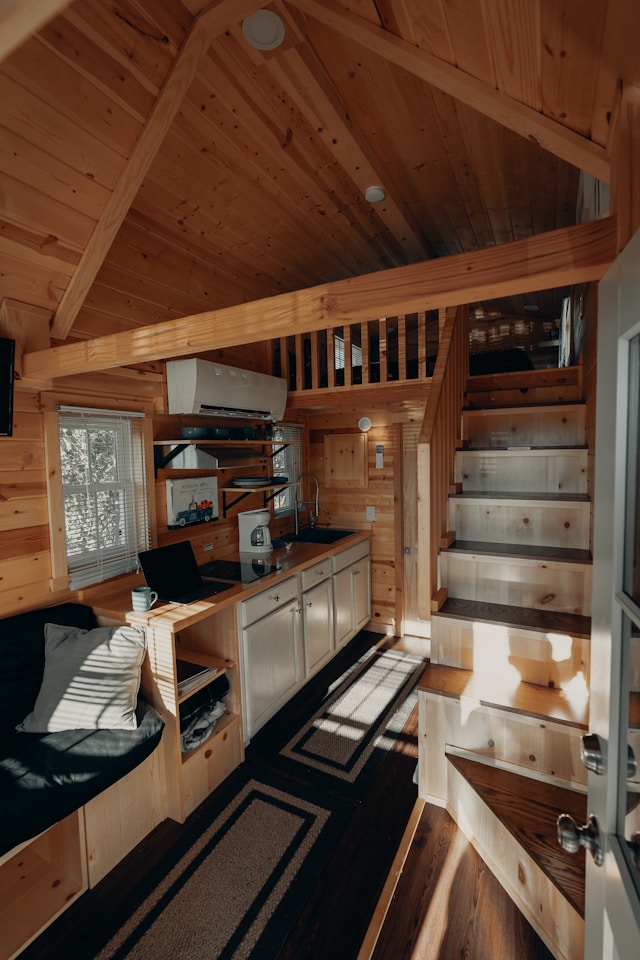
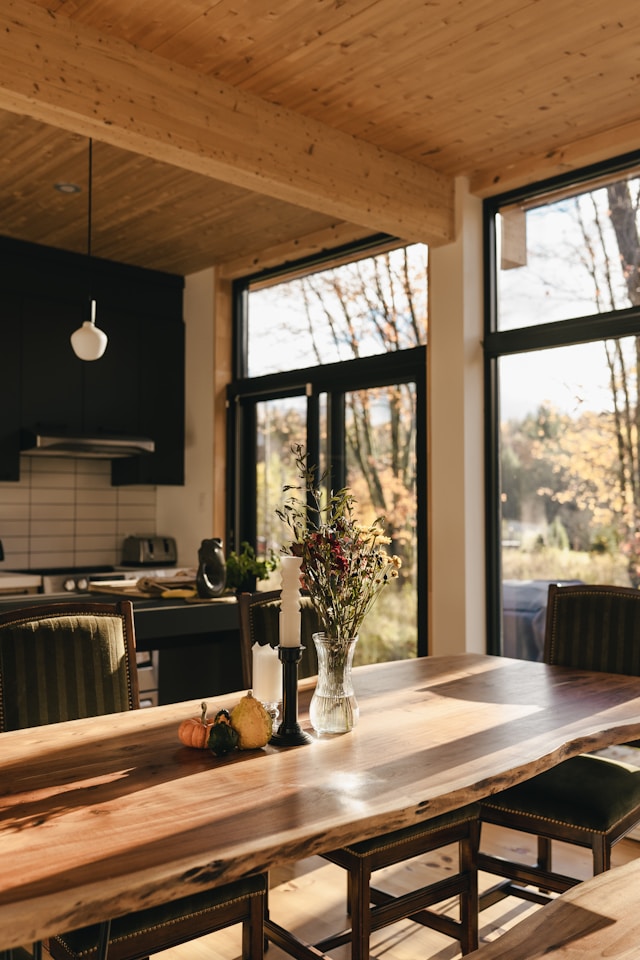
Exemplary interior design photographed by Gabrielle Maurer @petitesimages, via Unsplash
In the living area, you'll find space-saving two-seaters or delicate armchairs used instead of bulky sofa sets. The bed is often cleverly integrated into a loft under the ceiling, eliminating the need for a separate bedroom and keeping the room both functional and flexible.
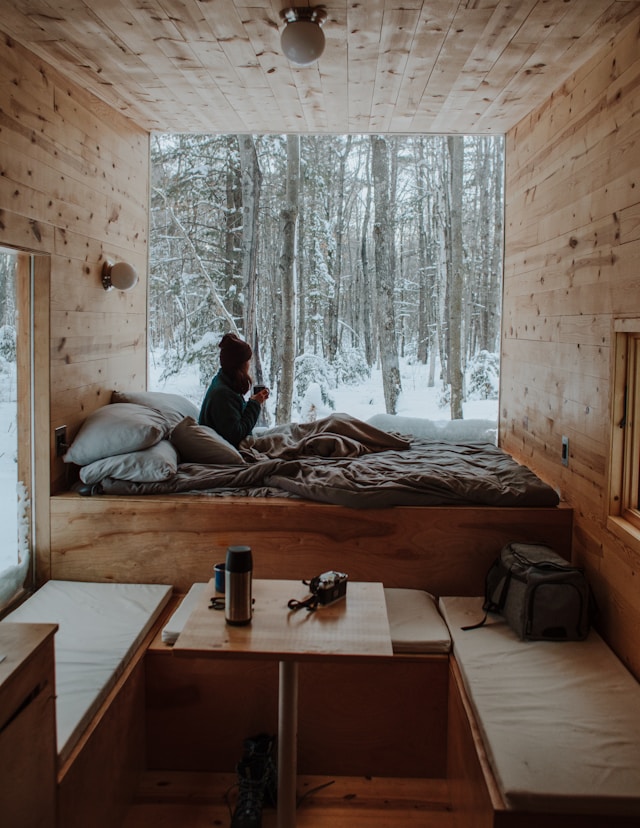
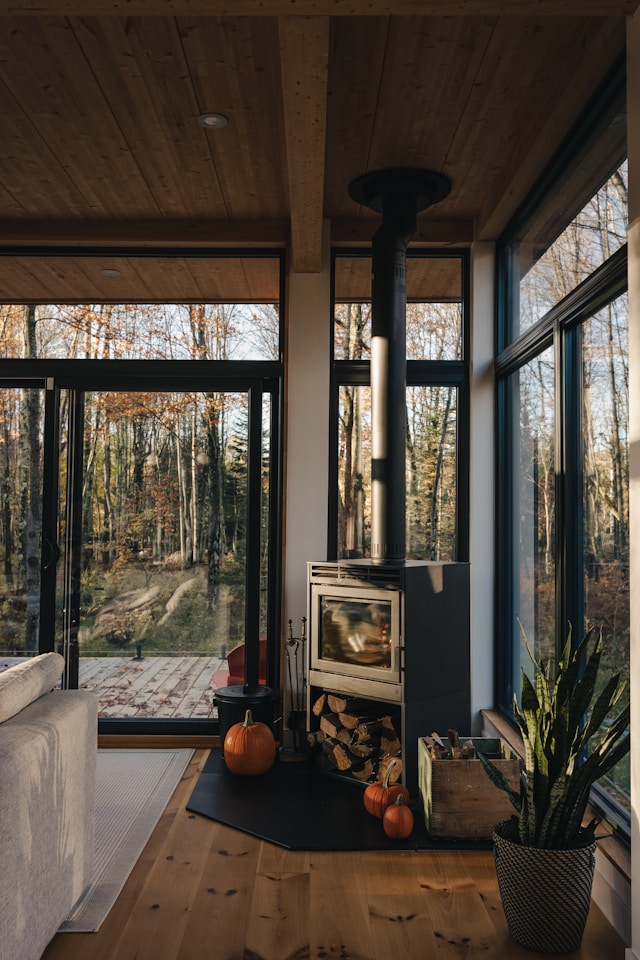
Cozy living space design with a wood-burning stove and floor-to-ceiling windows. Photographed by Gabrielle Maurer @petitesimages, via Unsplash
Furthermore, the cabinets are designed to offer maximum storage space with minimal volume. They often serve multiple functions, such as simultaneously acting as stairs or additional seating. This thoughtful planning makes tiny houses a prime example of creative, minimalist living and demonstrates how stylish and comfortable living can be in a small space.
What are the advantages of living in a tiny house?
Living in a tiny house offers several advantages: It enables a minimalist and sustainable lifestyle with a reduced ecological footprint. The lower purchase and maintenance costs compared to conventional houses create financial flexibility.
Furthermore, tiny houses often offer more flexibility and mobility, which can be particularly attractive for people with frequently changing life circumstances.
LBS:Here's what you should know if you want to buy a tiny house , https://www.lbs.de/immobilien/kaufen/tiny-house.html
Eva Dorothée Schmid / Wohnglück:Tiny House: Advantages and Disadvantages of Mini Houses , https://wohnglueck.de/artikel/vorteile-nachteile-tiny-house-4778
YouGov : For what reasons, if any, would you consider living in a non-traditional house… , https://yougov.de/topics/society/survey-results/daily/2022/07/25/311e7/3
Vital Camp : How much does a tiny house cost? Our look at the prices and your options , https://vital-camp-living.de/was-kostet-ein-tiny-house/
Tiny Houses : Practical Tips: Solar Panels on Tiny Houses , https://tiny-houses.de/solarmodule-auf-tiny-houses-tipps-kosten/
Augsburger Allgemeine : Tiny house costs often higher than expected: Don't fall for suspiciously low prices, https://www.augsburger-allgemeine.de/panorama/tiny-house-kosten-hoeher-als-gedacht-15-3-25-101907462
Tiny Houses : Building Made Easy: Build or Buy a Prefabricated Tiny House? , https://tiny-houses.de/minihaeuser-bauen-oder-kaufen/
Peace, Love & Om : Tiny House Guide: Build Your Own vs. Buy a Ready-Made One , https://peace-love-om.de/tiny-house-selbst-bauen-vs-fertig-kaufen/
Bau-Welt.de : The flexible living concepts of tiny houses , https://www.bau-welt.de/hausbau/architektur/tiny-house/tiny-house-wohnkonzept.html
Tiny House Heroes : Paths to Your Own Tiny House Part 2: Buying , https://tiny-house-helden.de/tiny-praxis-wissen/wege-zum-tiny-house-teil2-kaufen/
Eva Dorothée Schmid / Wohnglück:Tiny House Prices: These are the costs you need to expect, https://wohnglueck.de/artikel/tiny-house-kosten-3485
Raba Country : What additional costs should be considered when buying a tiny house? , https://raba-country.de/2023/12/10/welche-zusaetzlichen-kosten-sollten-beim-kauf-eines-tiny-houses-beruecksichtigt-werden/
Rolling Tiny House : FAQ – Insulation in the Tiny House , https://rolling-tiny-house.de/faq-daemmung/
Markus Trecker / Tiny Houses:Innovative insulation for tiny houses , https://tiny-houses.de/ratgeber-bauen-neuartige-daemmung-fuer-tiny-houses/
Heizung.de : Tiny House Heating: Which Technology is Suitable? , https://www.heizung.de/ratgeber/diverses/tiny-house-heizung-welche-technik-eignet-sich.html
Eva Dorothée Schmid / Wohnglück:Tiny House Heating: How to best heat your mini house , https://wohnglueck.de/artikel/tiny-house-heizung-50315
GROWATT : Solar modules for tiny houses: How much electricity do you need? , https://de.growattpower.com/blogs/news/solarmodule-fuer-tiny-house
Vital Camp:Tiny House Self-Sufficiency – Sustainable Self-Sufficiency in Your Own Home , https://vital-camp-living.de/tiny-house-autark/
Tiny House Village : Tiny House habitable all year round! , https://www.tinyhousevillage.de/tiny-house-ganzjaehrig-bewohnbar
Pentair Jungpumpen : Tiny House: The challenge of wastewater disposal – Obtaining building permits with pressure drainage systems , https://www.jung-pumpen.de/aktuelles/presse/tiny-house-herausforderung-abwasserentsorgung
Interhyp : Home financing , https://www.interhyp.de/baufinanzierung/
Helga Riedel / Biallo & Team : Buying a Tiny House: Costs, Planning and Financing of Mini Houses , https://www.biallo.de/baufinanzierung/ratgeber/tiny-house/
Owner and Managing Director of Kunstplaza. Publisher, editor and passionate blogger in the field of art, design and creativity since 2011. Successful completion of studies in web design as part of a university degree (2008). Further development of creativity techniques through courses in free drawing, expressive painting and theatre/acting. Profound knowledge of the art market through years of journalistic research and numerous collaborations with actors/institutions from art and culture.
We use technologies like cookies to store and/or access device information. We do this to improve the browsing experience and to show (non) personalized ads. If you agree to these technologies, we can process data such as browsing behavior or unique IDs on this website. Not consenting or withdrawing consent may negatively impact certain features and functions.
Funktionale
Immer aktiv
Die technische Speicherung oder der Zugang ist unbedingt erforderlich für den rechtmäßigen Zweck, die Nutzung eines bestimmten Dienstes zu ermöglichen, der vom Teilnehmer oder Nutzer ausdrücklich gewünscht wird, oder für den alleinigen Zweck, die Übertragung einer Nachricht über ein elektronisches Kommunikationsnetz durchzuführen.
Vorlieben
Die technische Speicherung oder der Zugriff ist für den rechtmäßigen Zweck der Speicherung von Präferenzen erforderlich, die nicht vom Abonnenten oder Benutzer angefordert wurden.
Statistiken
The technical storage or access that is used exclusively for statistical purposes. The technical storage or access that is used exclusively for anonymous statistical purposes. Without a subpoena, voluntary compliance by your internet service provider, or additional records from a third party, the information stored or retrieved for this purpose alone cannot usually be used to identify you.
Manage {vendor_count}-suppliers
The technical storage or access is required to create user profiles, to send advertising or to track the user on a website or across several websites for similar marketing purposes.









 Glowing Greenery – Wall decoration made of metal
106,95 €
Glowing Greenery – Wall decoration made of metal
106,95 €