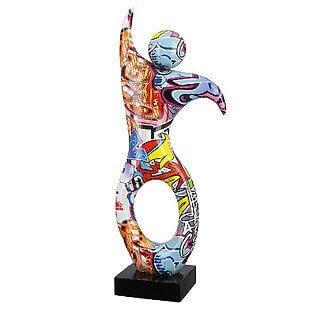
Amidst the urban noise, there's a moment when the familiar cityscape unexpectedly shatters. As a vehicle passes, its surface doesn't just reflect the surrounding light; it refracts it, sending it back in a dazzling sea of colors. Out of the blue, the asphalt transforms into a stage for the spectacle.
There is a fluid boundary between functional everyday objects and expressive art. What is celebrated as avant-garde art in galleries and museums has long been attracting attention on the streets. When cars are transformed into rolling canvases through detailed modifications, artistic ambition and craftsmanship collide. This act of visually appropriating public space, however, raises a tricky question:
How much artistic freedom does the public road network allow when creativity meets strict safety regulations?
The history of automotive art is a thick tome with countless pages. Beginning with Alexander Calder's bold depiction of a BMW 3.0 CSL in the 1970s and continuing through Andy Warhol's rapid brushstrokes to the present day. The 20th BMW Art Car, created by artist Julie Mehretu, was unveiled in May 2024 at the Centre Pompidou in Paris. The BMW Art Car could be described as a hybrid racing vehicle, designed to transform a two-dimensional painting into three-dimensional movement.
Unlike institutional projects that benefit from legal protections such as museums or closed racetracks, the private designer operates in the uncontrolled and highly regulated environment of everyday traffic.
Kia car design study photo by Hyundai Motor Group @hyundaimotorgroup, via Unsplash
The legal science behind aesthetics: At what point does sheet metal transform into art?
Before examining the limitations of the test centers, let's briefly consider the conceptual evaluation of the modified vehicle. The legal definition of a work of art depends on the degree of individual creativity. To elevate an ordinary, everyday object to the realm of copyright, the legislator requires a certain degree of originality.
An automobile attains the status of an applied work of art under copyright law when it achieves its own aesthetic significance through profound visual modifications, hand-painted surfaces, or unique bodywork alterations. What distinguishes a unique piece from mass production is the artist's personal creative signature
This creative free spirit has long been celebrated in curated spaces. Such vehicles are often recognized by museums and art experts as sculptures or installations. Paolo Tumminelli, Professor of Design Concepts at TH Cologne and a critical observer of automotive culture, puts this dynamic into context:
Historically, societal trends have always been reflected in the automobile. Owners can strip a vehicle of its purely consumerist purpose by modifying and repurposing it to an extreme degree. It defies the design standards set by industrialization. What we are seeing is a subculture reclaiming the street as a showroom
Nevertheless, artistic status does not protect the object from the constraints of everyday life. As soon as a work of art participates in public road traffic, the interests of public safety take precedence over copyright protection. To put it simply: traffic law treats a museum sculpture like an ordinary motor vehicle.
The road safety dictate: The German Road Traffic Regulations (StVZO) as a strict curator
In Germany, creative expression on wheels meets a clearly defined legal framework. Anyone planning to modify the bodywork, lighting, or suspension must comply with the rules of the Road Traffic Licensing Regulations (StVZO) .
The legislator establishes an irrefutable premise here: as soon as the safety of other road users is endangered, artistic freedom must take a back seat. The kinetic artwork is constrained by physical and optical compromises when placed in public spaces. The design is severely limited by the field of vision, light reflections, and the structural integrity of the vehicle.
The ideas and concepts of automotive designers are limited by the vehicle's visibility, light reflections, and structural integrity. Photo by Declan Sun @declansun, via Unsplash
Regulated areas: Here, clear limits are placed on design freedom
The conflict between creative vision and government regulation is particularly evident at the interfaces between the vehicle and its environment. The following factors restrict design freedom in everyday use:
Visibility and glazing: The driver's visual focus must not be obstructed. Window films are strictly regulated on the windshield and must not impede the driver's view. According to Section 35b of the German Road Traffic Licensing Regulations (StVZO), glare protection strips at the top of the windshield may be a maximum of ten centimeters wide. Anything wider is considered an impermissible obstruction of view.
Technical lighting installations: The lighting concept follows a standard design. You may not change the color or darken headlights and lamps with paint or film. The moment someone applies a tint to the taillights or covers them with a seemingly transparent film, they completely invalidate the type approval of the entire component.
Edges and fixings: Physical presence should not pose a danger to the surroundings. Sharp edges or protrusions that could increase the risk of injury to pedestrians in the event of an accident are not permitted.
Noise levels: Although engine sound is often considered a crucial element of the performance, the acoustic perception of the space is also controlled. Modifications to the exhaust system must comply with strictly defined noise limits.
The surface illusion: chameleon films and radar shadows
Traditionally, the largest surface area for radical visual modifications to a car is its body. Vinyl wrapping or large-scale custom paint jobs are among the most popular methods for visual transformation. With advances in materials technology, we now have a wide variety of options, from organic-looking rust imitations to holographic color shifts. Bright colors and patterns are usually permitted, as long as they don't produce a dangerous glare.
However, it is precisely this aspect of reflection that often leads to legal disputes. Reflective chrome foil covering the entire surface of a vehicle is not permitted, as it can severely dazzle other drivers in sunlight or headlights. According to Section 30 of the German Road Traffic Licensing Regulations (StVZO), authorities consider this type of light refraction a serious traffic hazard that justifies immediate impoundment. This also applies to the colors and patterns of signals intended for emergency vehicles such as police, fire departments, or ambulances. Law enforcement defends its visual territory with considerable rigor. Designs resembling emergency vehicles but not genuine will not be approved.
Furthermore, an invisible nervous system is embedded in the sleek exterior of advanced vehicles. Radar and ultrasonic sensors are integrated into bumpers and body panels to support autonomous driver assistance systems. Covering these sensitive areas with counterfeit, highly metallic foils undermines the safety mechanisms of the artwork—a reality that makes it essential for designers and materials engineers to engage in dialogue today.
Structural transformation and the mandate of professional assessment
As soon as a designer goes beyond simple surface refinement and begins to intervene in the physical design language, the process becomes complex. Testing agencies require a parts certificate or a general operating permit (ABE). This documentation demonstrates that the newly created body part poses no danger in the wind tunnel and will not shatter into life-threatening fragments in a collision. If this documentation cannot be provided, an accredited expert must conduct an individual inspection.
Tuning cooperation between Lumer Tuning Studio, profiart car graphics and INVDRS on a VW Photo by Назарій Ковальов @nazariykovalov, via Unsplash
The official tuning industry does not question the necessity of these strict control mechanisms. Harald Schmidtke, Managing Director of the Association of German Automobile Tuners (VDAT), even places great emphasis on technical integrity:
"True mastery in the design of modern vehicles lies not in grand exaggerations, but in the clever use of homologated tolerances. A front lip in the showroom can look like a work of art. At 130 km/h on the motorway, the artistic aspect fades into the background, as dangerous situations can arise."
Radically futuristic automotive design from the Asian car brand Toyota. Photo by Darren Halstead @darren1303, via Unsplash
The cost of freedom: liability, recourse, and the worst-case scenario
Anyone who exceeds the limits set by the testing authorities is at risk of legal repercussions. According to Section 19 of the German Road Traffic Licensing Regulations (StVZO) , the vehicle's operating permit automatically expires if modifications are made that cause the vehicle to no longer comply with regulations. No official notification is required for this condition; it takes effect as soon as the illegal modifications are completed. The owner and the driver share responsibility for ensuring the vehicle is in good working order.
An encounter with the traffic police in this state quickly transforms into "costly performance art." All road users with an unregistered artwork risk hefty fines, points on their driving record, and, in serious cases, the immediate confiscation of their vehicle. The mobile exhibition is over, and the object is impounded.
The economic consequences could be even more severe if the artwork were involved in an accident. An accident can lead to serious financial repercussions. While third-party liability insurance covers damage to other parties, it can seek recourse against the vehicle owner in cases of intentional misconduct. At the same time, this protection completely disappears. Comprehensive insurance often includes a clause that prevents any payout if the vehicle's operating permit expires. In such a scenario, the financial investment in the unique piece is simply wiped out.
The answer lies in careful preparation and thorough documentation. Anyone wishing to relocate a mobile artwork in public space should meticulously document all changes and have them inspected and approved by a recognized testing organization. As long as the artist is willing to accept the bureaucratic dialogue with the TÜV (Technical Inspection Association) as part of the creative process, the street will remain a gallery for radical design.
Designers, creatives, and enthusiasts who want to explore vehicle design, legal frameworks, and automotive subculture in more depth than just through consumption will find that these resources offer comprehensive insights:
Association of Automotive Tuners (VDAT) eV(www.vdat.org): Germany's most important institution that combines creative vehicle modifications with compliance with traffic regulations. It offers significant educational campaigns (e.g., ¡Modifica! Natürlich!") as well as legal frameworks.
Federal Motor Transport Authority – Regulations and Type Approvals (www.kba.de): the highest state authority. Anyone wishing to modify the structure or lighting of a vehicle must read the Vehicle Parts Ordinance and the StVZO documents published therein.
Cologne International School of Design (KISD)/ TH Cologne(www.kisd.de): a fantastic academic resource for exploring cultural and design theories about the automobile, everyday aesthetics and urban mobility concepts that go beyond pure technology.
Owner and Managing Director of Kunstplaza . Publicist, editor, and passionate blogger in the fields of art, design, and creativity since 2011. Graduated with a degree in web design from university (2008). Further developed creative techniques through courses in freehand drawing, expressive painting, and theatre/acting. Profound knowledge of the art market gained through years of journalistic research and numerous collaborations with key players and institutions in the arts and culture sector.
We use technologies such as cookies to store and/or access device information. We do this to improve your browsing experience and to display (non-)personalized advertising. If you consent to these technologies, we can process data such as browsing behavior or unique IDs on this website. Refusal or withdrawal of consent may adversely affect certain features and functions.
Functional
Always Active
Technical storage or access is strictly necessary for the legitimate purpose of enabling the use of a specific service expressly requested by the subscriber or user, or for the sole purpose of carrying out the transmission of a message over an electronic communications network.
Preferences
The technical storage or access is necessary for the legitimate purpose of storing preferences that were not requested by the subscriber or user.
statistics
Technical storage or access that is solely for statistical purposes.Technical storage or access that is used solely for anonymous statistical purposes. Without a subpoena, the voluntary consent of your internet service provider, or additional recording by third parties, the information stored or retrieved for this purpose cannot generally be used to identify you.
marketing
Technical storage or access is required to create user profiles, to send advertising, or to track the user on one or more websites for similar marketing purposes.










 Rustic bar stool "Kedut" made from sustainable teak wood
169,00 €