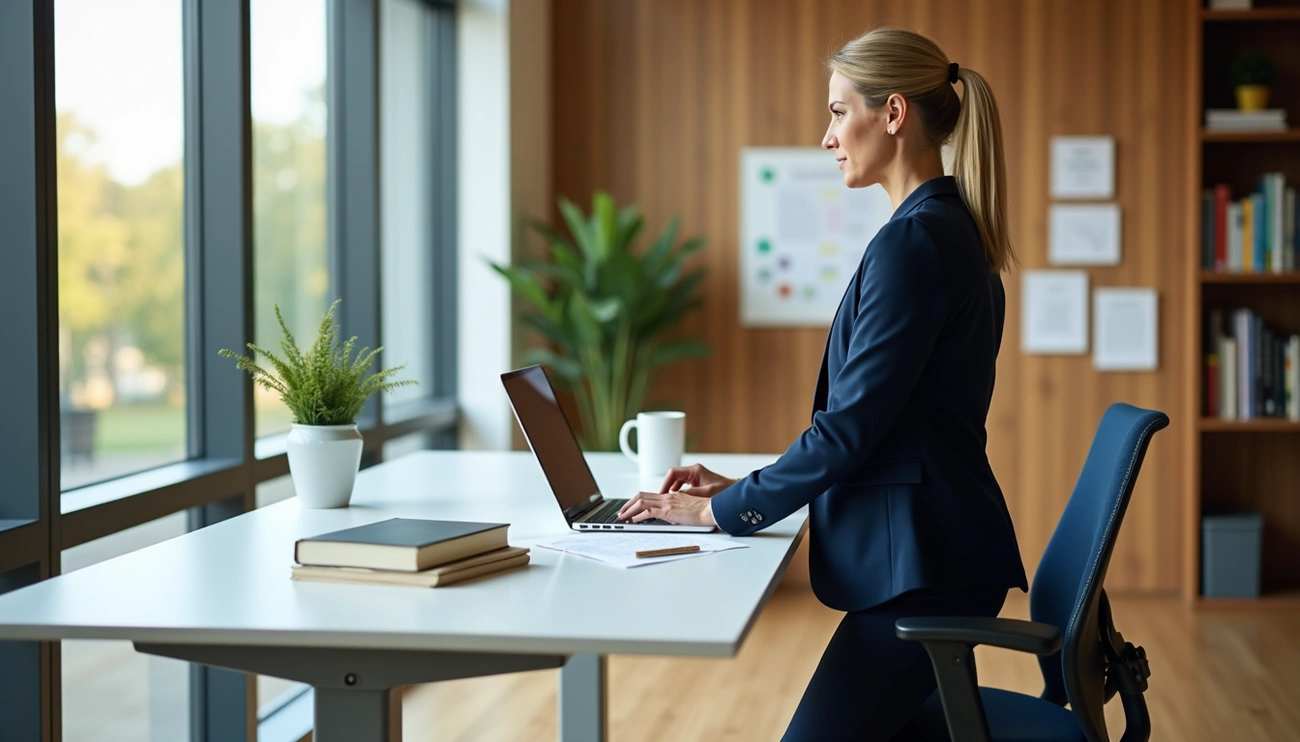
Sitting is one of the most serious risk factors for our health – my reason for a height-adjustable desk lies precisely here. As a lecturer, I used to spend almost 10 hours a day sitting, until I could no longer ignore the alarming facts: 80 percent of the population in industrialized nations complain of back pain.
I've experienced the benefits of a height-adjustable desk firsthand. In fact, you burn about 50 more calories per hour while standing and simultaneously lower your blood lipid levels. The correct standing height at the desk can be individually adjusted, which significantly improves workplace ergonomics. Furthermore, a study shows that employees using height-adjustable desks were able to reduce their daily sitting time by an impressive 82 minutes.
The “40-15-5 rule” has revolutionized my daily work routine: 40 minutes of dynamic sitting, 15 minutes of standing and 5 minutes of movement.
On average, we Germans spend a shockingly long 9.2 hours sitting on weekdays – that's 30 minutes more than in 2021. Those aged 18 to 29 sit the longest, spending over 10 hours a day. A strong argument for height-adjustable desks lies in the far-reaching health consequences of this sedentary lifestyle.
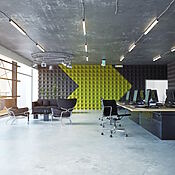
Why I, as a lecturer, no longer work without a height-adjustable desk: This image is an example image for illustrative purposes, which I created with image AI.
Back pain and neck tension
Prolonged static sitting tenses and shortens the muscles, especially in the hip flexors. The surrounding connective tissue is also affected, leading to painful tension and postural problems.
The symptoms are varied: The neck feels stiff and causes headaches, while the upper back is strained by muscular imbalances. The lower back bears the entire weight of the upper body, becoming immobile and restricted. Nearly one in three Germans (32.6%) suffered from back pain in 2022. This widespread ailment caused €11.6 billion in healthcare costs in 2020 – more than diabetes, strokes, or depression.
Concentration problems and fatigue
When sitting, the body essentially falls into a kind of coma
Circulation and blood flow slow down, weakening all functions of the cardiovascular system. Sitting in a cramped position leads to shallow breathing with reduced oxygen intake, causing fatigue and difficulty concentrating.
Our brains also suffer: The hippocampus, responsible for learning and memory, has weaker connections when we sit for long periods. The consequences for our daily work are significant:
Reduced performance and concentration
Reduced memory performance
Higher probability of errors
Long-term risks such as cardiovascular diseases
Even more alarming are the long-term consequences of prolonged sitting. The WHO warns that prolonged sitting increases the risk of heart disease, cancer, and type 2 diabetes. In fact, the risk of death from uninterrupted sitting is twice as high. Shockingly, lack of exercise even shortens life expectancy. Approximately seven percent of all deaths in Germany are attributable to insufficient physical activity.
The WHO therefore recommends at least 150 minutes of endurance activity per week. However, 42.2% of the German population does not reach this target. A height-adjustable desk offers a practical solution: it allows users to alternate between sitting and standing, thus bringing more movement into the workday. The correct standing height at the desk is crucial for ergonomically relieving strain on the spine.
How the height-adjustable desk has changed the way I work
When I bought my height-adjustable desk two years ago, I didn't realize how fundamentally my daily work routine would change. The simple switch between sitting and standing has not only improved my physical condition but also significantly increased my productivity as a lecturer.
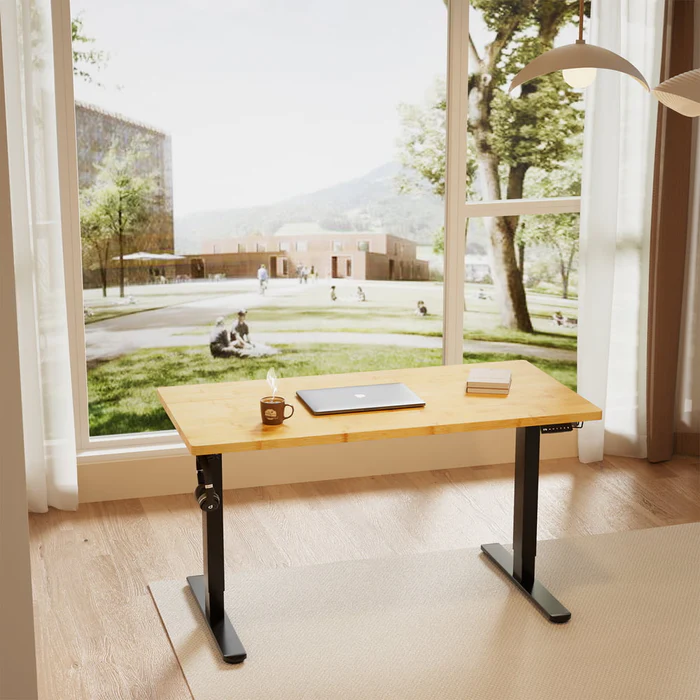
My height-adjustable desk: Furniwell V2
More movement in everyday work life
Regularly changing my position has made my workday more dynamic. Instead of sitting continuously, I now follow the recommended distribution: 60% sitting, 30% standing, and 10% moving . In fact, the body burns about 0.15 more calories per minute when standing than when sitting. Extrapolated, this means that if I replace six hours of sitting with standing, I burn an additional 54 calories daily – over a year, this could lead to a loss of about 2.5 kg of body fat.
What I find particularly remarkable is how my circulation has improved. I used to suffer regularly from tension in my shoulders and neck. Alternating between sitting and standing now relieves this tension in these areas. Furthermore, the improved blood circulation enhances my overall well-being.
Improved concentration during online teaching
Since switching to online teaching, I've noticed that my standing desk has significantly improved my concentration. Studies confirm that physical activity through regular standing can increase motivation, concentration, and performance by up to 20%. Therefore, I usually remain standing during important video conferences and presentations – I speak more freely and appear more present.
My experience aligns with studies showing that 65% of users of height-adjustable desks report improved concentration and higher productivity after one year.
When I'm standing, I feel:
more alert and attentive
more mentally flexible
significantly less fatigued
Flexibility during long seminar days
On days with six or more hours of classes, an electrically height-adjustable desk become indispensable for me. The ability to switch between different positions prevents the typical afternoon fatigue. I find the 40-15-5 rule particularly effective: 40 minutes of dynamic sitting, 15 minutes of standing, and 5 minutes of movement.
The ability to individually adjust the standing height is crucial for the ergonomic benefits. Depending on how I feel that day and the task at hand, I can choose the optimal position – a flexibility I wouldn't want to be without as a lecturer.
Tips for getting started with ergonomic working practices
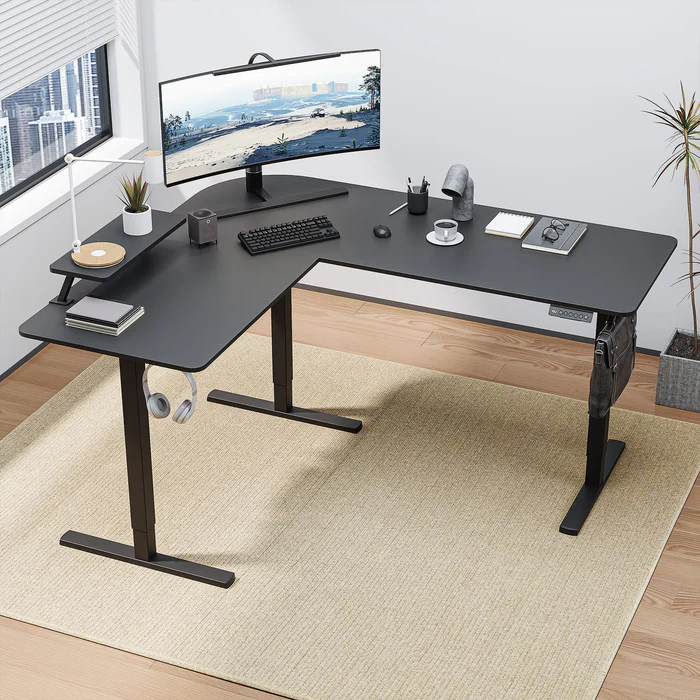
My workspace: Furniwell L-shaped corner desk, height-adjustable, electric
Switching to ergonomic working methods doesn't happen overnight, but with the right tips, it's easily achievable. Based on my experience as a lecturer, I'm sharing the most important insights for a healthy start.
Finding the right standing height
The optimal standing height is between 95 and 130 cm – depending on individual height. However, height alone is not the deciding factor, but rather personal body proportions. For correct adjustment, the angle between the upper and lower arm should be at least 90°.
In practice, this means: Stand upright in front of the table and choose the height at which your shoulder and neck muscles are most relaxed. My tip: Use a small footrest while standing and regularly shift your weight between your right and left leg.
Sensible combination with an ergonomic chair
A height-adjustable desk only reaches its full potential when combined with an ergonomic chair. In fact, you should adjust the chair first and then the desk. Ensure that your forearms rest horizontally on the desk while your feet are flat on the floor. This combination promotes a dynamic working style and allows for individual adjustment. As a result, back pain, neck tension, and headaches can be significantly reduced.
Implementing the 40-15-5 rule in everyday life
To effectively implement the 40-15-5 rule, set a timer to remind you to change position. Distribute your tasks wisely: concentrated work while sitting, organizational tasks while standing. Short walks or stretching exercises are suitable for the 5-minute movement phase.
Important : Avoid exceptions, especially at the beginning – otherwise you'll quickly fall back into old habits. The 40-15-5 method can increase your productivity and well-being by up to 45%.
Applying for a grant: Here's how it works
If medically necessary, you can apply for a subsidy for your height-adjustable desk. Health insurance companies cover costs up to a maximum of €800 or €1200. You will need the following documents to apply:
A meaningful medical certificate
A cost estimate for the desired table
An application form from your health insurance company
Important : Only purchase the desk after receiving a positive decision. If the desk was financed by your health insurance, it belongs to you and can be taken with you if you change employers.
Why I also recommend this desk to colleagues
My enthusiasm for the height-adjustable desk has now spread to many of my colleagues. After observing my changed way of working, they too wanted to experience the ergonomic benefits for themselves.
Positive feedback from surveys
A survey confirms that 74% of Germans feel more comfortable in an ergonomically designed workplace – an important factor for productivity. In fact, colleagues who have switched to a more ergonomic workspace report similar experiences to mine.
Significantly less tension in the shoulder and neck area
Noticeably more energy in the afternoon
Improved concentration during long seminar days
Ergonomics as part of modern university teaching methods
Especially in higher education, ergonomic working practices have become a mark of quality. The stress report from the Federal Institute for Occupational Safety and Health shows that over 80% of office workers suffer from work-related ailments. Of these, 61.3% report back pain at least once a year.
Therefore, ergonomic concepts are increasingly being incorporated into teaching planning at our university.
A small step with a big impact
Research clearly underlines the positive effects of height-adjustable desks. However, practical experience also shows that it is often difficult to break out of a sedentary routine at first.
Therefore, I recommend that female colleagues use the memory or reminder functions of modern models. This small step towards ergonomics thus represents a sustainable investment in the performance and health of lecturers.
We use technologies such as cookies to store and/or access device information. We do this to improve your browsing experience and to display (non-)personalized advertising. If you consent to these technologies, we can process data such as browsing behavior or unique IDs on this website. Refusal or withdrawal of consent may adversely affect certain features and functions.
Functional
Always Active
Technical storage or access is strictly necessary for the legitimate purpose of enabling the use of a specific service expressly requested by the subscriber or user, or for the sole purpose of carrying out the transmission of a message over an electronic communications network.
Preferences
The technical storage or access is necessary for the legitimate purpose of storing preferences that were not requested by the subscriber or user.
statistics
Technical storage or access that is solely for statistical purposes.Technical storage or access that is used solely for anonymous statistical purposes. Without a subpoena, the voluntary consent of your internet service provider, or additional recording by third parties, the information stored or retrieved for this purpose cannot generally be used to identify you.
marketing
Technical storage or access is required to create user profiles, to send advertising, or to track the user on one or more websites for similar marketing purposes.






 Terracotta belly vase "Styly" with raffia details, black (size: M)
Original price was: €54.9527,95 €The current price is €27.95.
Terracotta belly vase "Styly" with raffia details, black (size: M)
Original price was: €54.9527,95 €The current price is €27.95.