Becoming self-employed as an artist: These are the possibilities
At the beginning, your art was probably just a hobby . Sometimes it stays that way. However, many artists dream of one day being able to pursue their art professionally, perhaps even full-time.
At some point, you'll have to ask yourself whether you want to become a self-employed artist and what options are available. We'll give you an introductory overview of your options.

Image source: adobe.stock | AntonioDiaz | 403123229
Show
table of contents
Making a living from art: Is that realistic?
Many people believe that creative professions don't pay well, and you've probably heard this saying countless times when you talk about your dream of making a living from art. But this is a misconception, because there are a number of creative professions that are in demand and decently paid .
This applies not only to those in employment but also to self-employed individuals in their respective fields. In fact, if you are successful, you can earn even more. Theoretically, you can make a living from many different art forms: photography , painting , writing, and fashion design are just a few examples.
In practice, however, it comes down to mastering the challenges of self-employment, and of course, the quality of your artistic work must be convincing. Then the question can be answered with a "yes": It is realistic to make a living from art.
Many creative professionals make significant compromises to achieve success. How can their situation be improved and the right levers pulled? A Deutsche Welle with Christoph Backes from the u-institut:
How does one become an artist and is it possible Living from art ?
PULS-Reportage editorial team, including Teresa Fries, Hendrik Rack, and Lukas Hellbrügge, also asked themselves this question
Not all self-employed people are the same
Once you've gained some experience, are satisfied with the quality of your art, and feel confident in your ability to convince clients, it's worth considering self-employment. This is especially true when you (intend to) generate your first income from your art, as you will then be required to officially register and pay taxes on it.
At this point, there's no way around taking the leap into self-employment. However, several models are available. You can start a business part-time or full-time. In some cases, you have the choice between registering a business and working as a freelancer . Furthermore, you can choose from various legal structures .
Each model has its own tax and legal peculiarities. To make the right choice – at least for beginners – you should therefore answer the following questions:
Do you want to start a business full-time or part-time?
Becoming self-employed is a step that frightens many people. After all, it means giving up the secure income of an employee position and instead having to acquire your own clients and manage all aspects of your business yourself. Especially if you have financial obligations such as outstanding loans or a family to support, you probably don't want to take on such a risk.
Then it makes sense to start out part-time. This way, you have a secure basic income from your permanent job and can build your artistic career on the side. If this one day generates a predictable and sufficiently high income, you can then transition from part-time to full-time self-employment.
Being self-employed as an artist on the side offers many advantages, especially regarding finances and insurance. However, it also means having to juggle two jobs simultaneously and not being able to fully concentrate on your art.
It is therefore crucial the advantages and disadvantages against each other and to find the model that best suits your life situation and personal needs.
| Possibility | Description | Advantages | Disadvantages |
| Full-time | The main source of income and the primary focus of time are on artistic activities. Full tax liability as a self-employed individual. | Full concentration on art, no time constraints for projects, professional demeanor, often higher credibility with funding bodies and galleries. | High financial risk 📉 (no fixed salary), full responsibility for health insurance, pension and social security (possibly including the artists' social security fund), intensive pressure to acquire new artists. |
| Part-time | The artistic activity is pursued alongside a permanent job (or other main occupation). Income and time commitment are limited. | Financial security through the main income, social security (health insurance, pension) is guaranteed, less pressure, slow market adaptation possible. | Limited time and energy for art, conflicts with the main employer (approval may be required), growth limitations due to fixed capacities, more complex tax separation. |
Do you want to work alone or with business partners?
Another way to reduce your workload, both in terms of time and money, is to collaborate with a business partner. While many artists start their own businesses and operate as sole proprietors, this isn't mandatory. For example, you could share a studio with another photographer, or you could handle the artistic work while your business partner takes care of the organizational aspects.
You can therefore freely design such a collaboration and thus find a model that best suits you. This also applies to the legal structure, as different options are available than for a solo venture.
| Possibility | Description | Advantages | Disadvantages |
| Alone (sole proprietor) | They bear all rights and responsibilities themselves. This applies to most freelance artists. | Complete freedom of decision and control over the artistic direction, simple and inexpensive setup (no share capital), all profit allocation to oneself. | Unlimited liability 🚨 with all private assets, sole responsibility for all tasks (administration, marketing, finance), lack of exchange/support. |
| With a partner (e.g., a GbR) | Formation of a civil law partnership (GbR) with one or more partners. | Distribution of risk and workload , synergy effects (artistic and administrative), higher start-up capital/more resources possible, mutual motivation and support. | Reduced artistic freedom (voting required), potential for conflict in decisions or profit sharing, joint and several liability (each partner is also liable for the debts of the other) ⚖️. |
Do you want to register a business?
If you decide to start your own business, the question arises whether you need a business license if you're working in the arts. Most artists can also register as freelancers. Freelance professions include painters, writers, and musicians, but also many other art-related professions, such as dance teachers, interpreters, and many more.
It's therefore worthwhile to have your individual circumstances assessed to determine if freelance work is an option . While it offers several advantages over traditional business registration, you still need to register a business if you offer products or services that don't fall under the scope of freelance work. For hybrid models, business registration may therefore be the simpler option from the outset.
| status | Description | Advantages | Disadvantages |
| Freelancer (listed profession) | Applies to original artists (painters, musicians, sculptors, designers, writers, etc.) and other creative, innovative activities with a high personal component. | No business registration with the trade office is required, no trade tax liability 🥳, simple bookkeeping ( income and expenditure statement – EÜR) is possible. | Difficulties of highly commercial or reproductive activities; no mandatory membership in the Chamber of Industry and Commerce (IHK). |
| Business owner | This applies to activities that not creative or strongly commercial (e.g., the sale of art supplies, mass printing of T-shirts with one's own designs, pure art mediation). | Clear demarcation in the case of mixed activities, commercial security (e.g. for retail stores). | Business registration required, trade tax liability 💸 (from €24,500 annual profit), double-entry bookkeeping (accounting) possible if thresholds are exceeded. |
Do you want to start out as a small business owner?
At the beginning of self-employment, income is often still manageable. Therefore, it can be worthwhile to start as a small business owner to reduce the tax burden. This means you don't have to pay trade tax, charge VAT, or prepare a balance sheet and inventory at the end of the year – depending on the legal structure, these points will be more or less relevant for you.
You can use this small business regulation as long as your total revenue in the previous calendar year did not exceed €25,000 and in the current (second) calendar year does not exceed €50,000. If the revenue limit is exceeded within a year, the small business regulation remains in effect until the end of that year. From the following year, standard taxation applies (exception: if net revenue exceeds €100,000 in the current calendar year, the switch to standard taxation occurs immediately). This regulation is therefore particularly advantageous in the early stages or for part-time self-employment. It should not be confused with a small business.
In addition to the revenue thresholds, there are other important points to consider when applying the small business regulation . While you are not required to show VAT on invoices, you are also not entitled to claim input tax credits on purchased goods or services. This means you cannot reclaim the VAT you pay when purchasing materials or services, which is particularly noticeable with larger investments.
Another crucial aspect is the annual review of your sales. If you exceed the sales thresholds in a given year, you will lose your small business status and be required to pay VAT in the following year. Therefore, it is advisable to keep a close eye on your income and, if necessary, consult a tax advisor early on to avoid unpleasant surprises.
Furthermore, in most cases it is advisable for creative professionals to explore insurance options through the Künstlersozialkasse (KSK) in order to save on the employer's share of social security contributions.
Special regulations: Artists' social security fund and small businesses
Artists' Social Security Fund (KSK) 🎨
- Advantage: Artists only pay about half of the contributions to health, pension and long-term care insurance; the other half is covered by the federal government and the users (galleries, publishers, agencies).
- Disadvantage: Only for full-time artists with a minimum annual income (currently €3,900), very strict checks and high bureaucracy during registration and entrance examination.
Small business regulation (KU)
- Advantage: Exemption from sales tax (value-added tax) for low annual turnover (max. €22,000 in the previous year and expected max. €50,000 in the current year). Simple invoicing , as no sales tax needs to be shown.
- Disadvantage: No input tax deduction 😥 possible (i.e., the VAT paid on the purchase cannot be reclaimed from the tax office), making it more difficult to work with VAT-liable business customers.
Comparison table for decision-making
This table evaluates the most crucial criteria for a new professional:
| criterion | Part-time / Sole proprietor / Freelancer (Recommendation for beginners) | Full-time / Sole proprietor / Freelancer | Full-time occupation / GbR / Business owner |
| Financial risk | Low (existence secured) | High (everything depends on art) | Medium to high (partner shares risk, but trade tax) |
| Bureaucratic effort | Low (income statement, no trade tax) | Funds (income statement, possibly KSK application) | High (business registration, trade tax, partnership agreement) |
| Social security | Fully covered by main job | High effort (possibly KSK as a contribution reducer) | High workload (like a full-time job) |
| Tax liability | Unlimited (private assets) | Unlimited (private assets) | Joint and several liability without limitation (private assets of the partners) |
| Growth potential | Limited (time capacity) | Very High (full concentration) | Very High (more resources and manpower) |
| Beginner recommendation | ⭐ Highly recommended! Start without pressure. | Suitable for existing customer bases or inheritances. | Only for larger, commercial projects with partners. |
Success factors for self-employed artists

Photo by Darius Bashar @dariusbashar, via Unsplash
Besides these legal and tax considerations, you naturally need more to be successful as a self-employed artist. Ideally, you should go through all the phases of starting a business , such as creating a business plan . While this isn't strictly necessary for a successful launch, it makes the start easier and increases your chances of success.
Furthermore, for any form of self-employment, it's important to possess the right personality in addition to artistic and professional qualifications. Not everyone is suited to the specific characteristics and challenges of self-employment. It requires, for example, a certain willingness to take risks so that you don't constantly worry about the future. Other characteristics of an entrepreneurial personality are often described as follows:
- Emotional intelligence
- Extra version
- multitasking
- openness
- organizational talent
- self-discipline
- reliability
- vm.
If you do not possess all of these characteristics or wish to concentrate fully on your artistic work, there are two alternatives to a sole proprietorship: Either you remain in permanent employment and start a business (if at all) only as a side job, or you find at least one business partner – as mentioned above.
Hiring employees can also be an option once your self-employment is successful enough. This way, you no longer have to handle all tasks yourself, from accounting to marketing. Nevertheless, as a self-employed individual, you are and will remain the crucial face of your business.
Unlike starting a business in other industries, your economic success directly linked to your artistic achievements, and these cannot simply be delegated to other people.
Special considerations for self-employed artists
Therefore, you need the will and self-confidence to market yourself professionally , to approach potential clients openly, and to establish business contacts. This applies both to modern online channels and to the traditional approach via personal networks.
Your business card, which visually represents , should therefore always be readily available. You never know where or when such contacts might arise. Being a self-employed artist is, therefore, quite literally a full-time job.
If you lack this willingness, a permanent position as an artist is often the more advantageous option.
If you've decided to become a self-employed artist, whether full-time or part-time, you should seek individual advice. Some artistic professions have specific regulations , for example, regarding social security or the rights to your work. You may be required to register with the German artists (Künstlersozialkasse) or be eligible to receive royalties from a collecting society.
Taking the leap into self-employment therefore initially involves a lot of bureaucracy – but the effort is worthwhile to finally make your dream of living from art a reality.


Owner and Managing Director of Kunstplaza . Publicist, editor, and passionate blogger in the fields of art, design, and creativity since 2011. Graduated with a degree in web design from university (2008). Further developed creative techniques through courses in freehand drawing, expressive painting, and theatre/acting. Profound knowledge of the art market gained through years of journalistic research and numerous collaborations with key players and institutions in the arts and culture sector.
You might also be interested in:
 The best ways to make money as an artist in 2025;
 100+ business ideas for artists and creatives
 ; Freelance software top tools: The 95+ best online apps for freelancers, solo entrepreneurs & small teams (2026)
 ; Successfully selling art online – Part 1: Online galleries;
 Passion Economy – Self-employment on the side in the digital creative economy
Featured Art


Design and Decor Highlights
-
 "Tiang" sideboard made of acacia wood, natural
1.756,00 €
"Tiang" sideboard made of acacia wood, natural
1.756,00 €
VAT included.
Delivery time: 6-12 working days
-
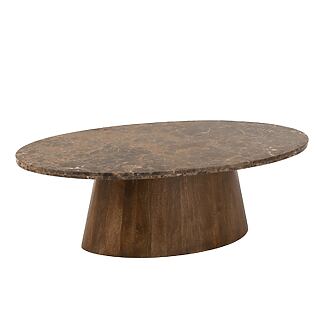
J-Line "Esmeralda" Oval Coffee Table - Marble / Mango Wood - Brown
1.075,00 €
VAT included.
Delivery time: 2-4 working days
-
Terracotta belly vase with rattan details, black (size: M)
Original price was: €54.9527,95 €The current price is €27.95.
VAT included.
Delivery time: 3-5 working days
-
Round side table "Timber Conic", natural Suar wood (solid)
The original price was: €445.00265,00 €The current price is: €265.00.
VAT included.
Delivery time: 1-3 working days
-
J-Line 2-seater sofa "Elisabeth" in sculptural design, brown
799,00 €
VAT included.
Delivery time: 4-8 working days
-
Oval "Trapani" mirror with black faux leather frame (35 x 60 cm)
59,00 €
VAT included.
Delivery time: 3-4 working days
-
J-Line Bulldog on Skateboard, Animal Figurine in Antique Bronze Look
39,90 €
VAT included.
Delivery time: 2-4 working days