What is street art? Origins, styles, techniques & intentions
The term "street art" describes an art form that takes place in public spaces. It is generally free and accessible to everyone, as the artworks can be found on a wide variety of surfaces throughout the city.
The artists use surfaces such as facades, exterior walls, electrical boxes, traffic lights, streetlights, and sidewalks as canvases. They use spray cans, brushes, paint rollers, stickers, and other materials to create their works. Some of these artists operate in a gray area of illegality.
However, many have left the illegal space and now spray their artwork legally on certain walls or on behalf of private or public clients.
What we know today as colorful facades and provocative messages in urban spaces has its modern origins in the crisis-ridden New York City of the 1960s. In Spanish Harlem and other parts of the city, creative young people found the empty spaces to be a canvas for their artistic expression.
During this time, pioneers like TAKI 183 and Tracy 168 began immortalizing their names in public spaces with spray paint. The subversive art movement emerged from these early days and has developed into an independent art form. While graffiti once represented violence and misery, today it enjoys high regard and is even considered by some to be a symbol of the gentrification that has taken hold in New York's former working-class neighborhoods.
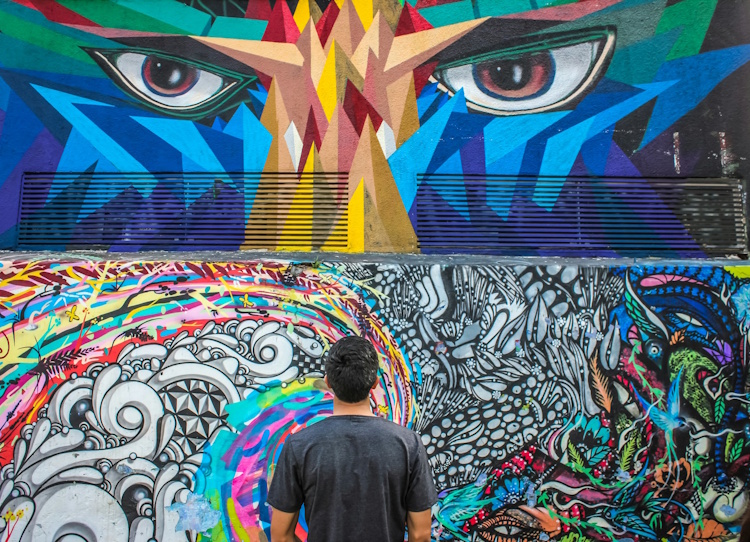
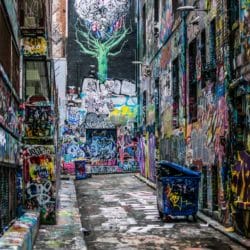
Photo by ckturistando @ckturistando, via Unsplash
In the 1980s, the urban art movement experienced its decisive breakthrough: with artists such as Jean-Michel Basquiat and Keith Haring, it became internationally known and found its way into prestigious galleries and museums.
Today, the anonymous Banksy the most famous street artist worldwide.
Imagine a city where graffiti isn't illegal, a city where everyone can draw whatever they want. Where every street is drenched in a million colors and little slogans. Where waiting at a bus stop is never boring. A city that feels like a party, and everyone's invited, not just real estate agents and big business barons. Imagine a city like that, and stop leaning against the wall—it's wet
Banksy, a world-renowned street artist and political activist.
Street art is characterized by its direct connection to the urban environment. Unlike traditional art in galleries and museums, it takes place directly on the street. This accessibility makes it an integral part of the urban experience. Many street artists consciously use their work to convey messages. They frequently address political or socio-critical themes: justice, equality, environmental protection, or individual freedom. In doing so, they encourage viewers to reflect on their environment and society.
Show
table of contents
An overview of street art techniques
Street artists use many different materials and techniques to create their artwork on walls. Some of the best-known street art techniques include:
- Murals: Murals are large-scale artworks painted on building facades. They often cover the entire facade and attract a lot of attention simply due to their size. Murals are often commissioned and are therefore legal. Some murals are even considered tourist attractions.
- Roll-On: In this street art technique, artists paint walls using paint rollers and exterior paint. Sometimes telescopic poles are used. The technique is often used to apply sayings or slogans to walls.
- Paste-up: This technique is also known as cut-out. It involves a section of a specific motif, such as a person or an animal. The cut-outs are attached using paste or glue.
- Ad-busting: In this form of street art, artists critically examine advertising and alter it completely or partially. For example, they cover advertising posters with stickers or paint over them.
- Stickers: Stickers are a particularly simple street art technique. They can be quickly applied to surfaces. For example, they are stuck to shop windows, signs, or vending machines and feature a slogan or a design.
- Chalk drawings: Chalk has an innocent feel and is generally considered legal. Another advantage is that chalk is compact and easy to use.
- Urban Knitting: In this technique, artists decorate streetlights and other objects with knitted elements. This technique is rather rare.
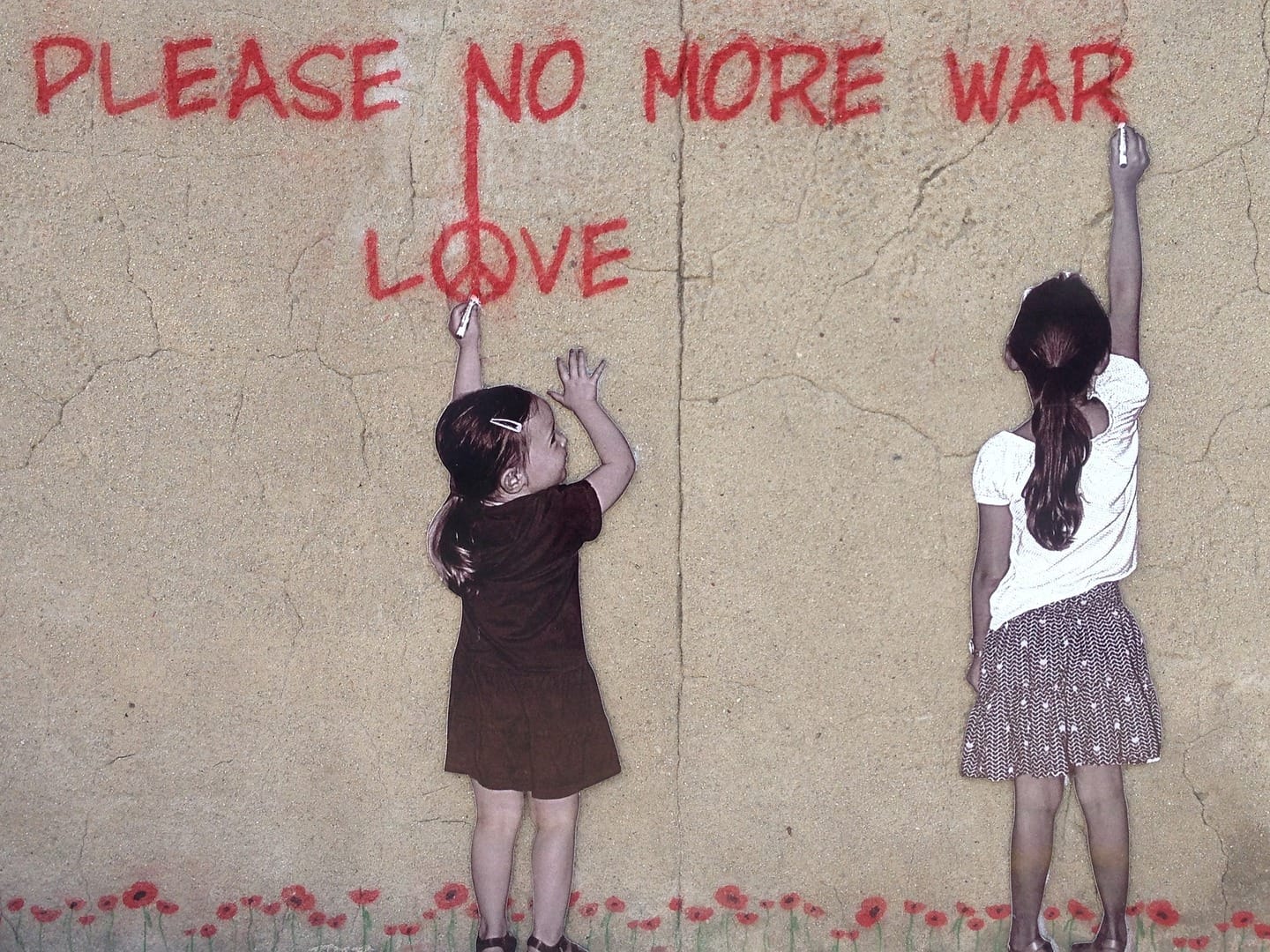
Pixabay.com © SutoriMedia
Street artists often use street art to draw attention to a social or political problem.
Distinction from graffiti
We often see street art and graffiti confused or equated. Strictly speaking, however, these art forms differ in many ways. Graffiti focuses on the artistic writing of typography using spray cans, while street art primarily features images – sometimes even huge murals.
Graffiti is based on the legible or abstract representation of letters. If present, figurative representations are usually secondary. In contrast, street art focuses on human or animal figures, representational motifs, or abstract patterns.
Graffiti in public spaces is almost always illegal, while street art can be both – legal and illegal. Street artists also utilize a wider range of media and techniques. In addition to traditional spray cans, they employ stencils, posters, collages, and sculptural elements.
There are also differences regarding the target audience. Graffiti artists primarily address other graffiti artists, while street art aims to communicate with the general public. The hope for a positive, collective perception overshadows the egocentric aura of graffiti.
From New York to Berlin: the evolution of street art
In the 1960s and 1970s, New York experienced a social upheaval that gave rise to an art movement that soon became internationally known.
Beginnings in the United States
New York's neighborhoods, plagued by poverty and urban decay, became the cradle of a revolution. Teenagers began spray-painting their names on walls and in subway trains. Subways were a particularly attractive canvas—they functioned as rolling galleries, transporting the artworks throughout the city for maximum visibility.
In a short time, the fundamental graffiti styles developed: from simple tagging to throw-ups to artistic pieces and the complex wildstyle .
Influences of hip-hop culture
The legendary "Block Party ," which DJ Kool Herc hosted in the South Bronx on August 11, 1973, is considered the birth of hip-hop. He created rap by using two turntables to extend instrumental passages while Coke La Rock improvised over them; this revolutionary technique was the beginning. Besides music, breakdancing and graffiti the other pillars of this urban subculture.
New York graffiti art was documented in films like "Style Wars" and "Wild Style" and placed within the context of hip-hop. These documentaries significantly contributed to its global spread. The art form reached Europe and found enthusiastic followers in Germany as well.
Street art in Germany since the 1980s
Street art found its way to Berlin in the 1970s, influenced by punk and hip-hop culture. Initially, socially marginalized groups, such as punks or Turkish migrants, used the streets of West Berlin for their artistic expression.
Surprisingly, the European graffiti movement developed differently than the American one. In Europe, figurative graffiti art, particularly in Paris, developed significantly. Contrary to popular belief, Munich is a pioneer of the European street art scene and has had a considerable influence on the German development of this art form since the 1980s.
The significance of reunification
Even during its existence from 1961 to 1989, the Berlin Wall was an extraordinary canvas. Political artworks and messages adorned its western side. Even in East Germany, forms of graffiti and street art existed – for example, a Nicaraguan artist beautified the facades of prefabricated apartment buildings in East Berlin's Marzahn district in the 1980s.
The fall of the Berlin Wall in 1989 marked the beginning of a new era: artists from West Berlin brought their culture to the East and collaborated with local street artists on projects. Numerous international artists left their mark on the East Side Gallery – thus transforming Berlin into a street art metropolis. After reunification, the graffiti scene was initially heavily criminalized before eventually regaining social acceptance.
The best places for street art tours
Street art can be admired in numerous cities and towns around the world, including the German capital, Berlin . Berlin boasts a huge street art scene, with walls and other surfaces covered in a wide variety of artworks. Even Banksy urban murals here .
East Side Gallery is particularly worthwhile . It's a remaining section of the Berlin Wall, 1.3 kilometers long, and has been painted by numerous artists from around the world.
You can find more street art in Berlin, for example, in Mauerpark, Kreuzberg, Berlin-Mitte, and on Teufelsberg. If you'd like to admire Berlin's street art on a tour, a street art map helpful. Besides Berlin, there are many other cities in Germany with interesting and beautiful street art. These include Hamburg, Frankfurt, Cologne, and Leipzig.
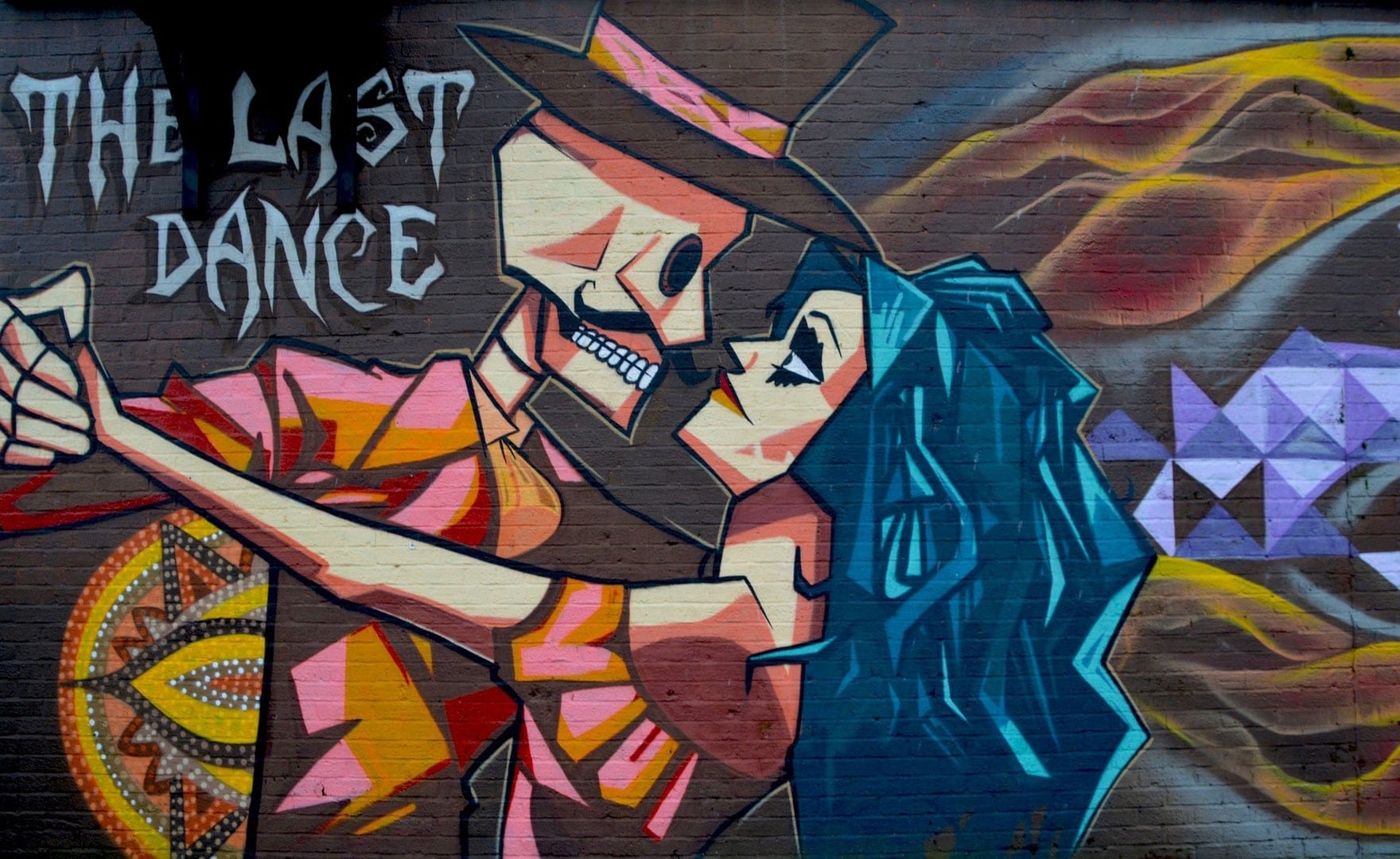
Outside of Germany, you can discover many urban artworks in cities like London or New York . In London, the artworks are scattered throughout the city. A visit to the Leake Street Tunnel, located beneath Waterloo Station, is particularly worthwhile for fans of the famous artist Banksy. Many of Banksy can be admired there, which is why the tunnel is sometimes called the Banksy Tunnel.
In New York, you should check out the artwork in Bushwick , a neighborhood in Brooklyn. There are many beautiful murals there. Other places to visit include Little Italy, Williamsburg , and Chinatown . Other cities that are great for a street art tour include:
- Barcelona (Spain)
- Valencia (Spain)
- Lisbon (Portugal)
- Athens (Greece)
- Zagreb (Croatia)
- Istanbul (Türkiye)
- Prague (Czech Republic)
- Copenhagen (Denmark)
- Mexico City (Mexico)
- Buenos Aires (Argentina)
- Cape Town (South Africa)
Pixabay.com © terimakasih0
Vienna also boasts countless colorful walls. Arte TRACKS has taken a look around Vienna's exciting street art scene for you.
The intentions behind street art
The motivation behind street art depends on the individual artist. For some street artists, the joy of spraying or painting is paramount. Others want to participate in shaping their surroundings and beautify the city with their work.
Furthermore, there are many street artists who want to convey a message to people through their work. They often want to draw attention to social injustices or political ideas. Frequently, these artists express their opposition to capitalism or consumerism through their artwork.
Graffiti as protest – on the road with Berlin graffiti artists
Y-Kollektiv reporter Toni Lilly Schanze had questions that went beyond the hackneyed debate about "art or vandalism?". She wanted to understand the underlying reasons, to grasp the soul of the graffiti artist: What does graffiti offer them that makes them willing to expose themselves to physical danger or political repression?
In her film, she meets Jurij , who came to Germany at the age of ten and sees graffiti as a form of integration. Berlin graffiti legend Rocco explains why graffiti no longer captivates him after 18 years and how he reaches a wider audience with his (still illegal) performance art. And because "only illegal graffiti is so romantic" (Rocco), the author joins him on a nighttime spray-painting tour. Two pixadores from São Paulo, Brazil, explain why their form of spray painting is highly political, life-threatening, and hated.
Graffiti: Sprayed Rebellion? | Street & Urban Art (WDR Documentary Series)
Recognition, respect, and fame are at the heart of the first episode of our new documentary series, Street & Urban Art . The goal of graffiti writers is to make their crew or themselves known as writers, spreading their name as widely as possible with markers and spray cans. Legibility is irrelevant.
Sprayed rebellion? Crucial for "fame" are the presence and difficulty of each placement. It's about speed, originality, and developing one's own "style" – wild and illegal.
Featuring: 1Up Crew, Shark, Cat, C100/Layercake – Christian Hundertmark & Patrick Hartl, Cantwo
They're always there and almost everywhere: murals, spray paint, and stickers on the walls of houses and buildings in our city. Street art is ubiquitous, inspiring and inviting engagement.
This three-part documentary series about German street and urban art introduces artists who each tell their own story. While they all have their own personal style, motifs, and statements, they share one thing in common: they want to get involved, shape the space, reclaim empty areas, and counter the omnipresent advertising posters and prohibition signs with "their own thing." Above all, they want to connect with local residents through subtle forms of disruption.
All three episodes of the new documentary series about Street & Urban Art can now be watched in the ARD media library.
Is street art legal?
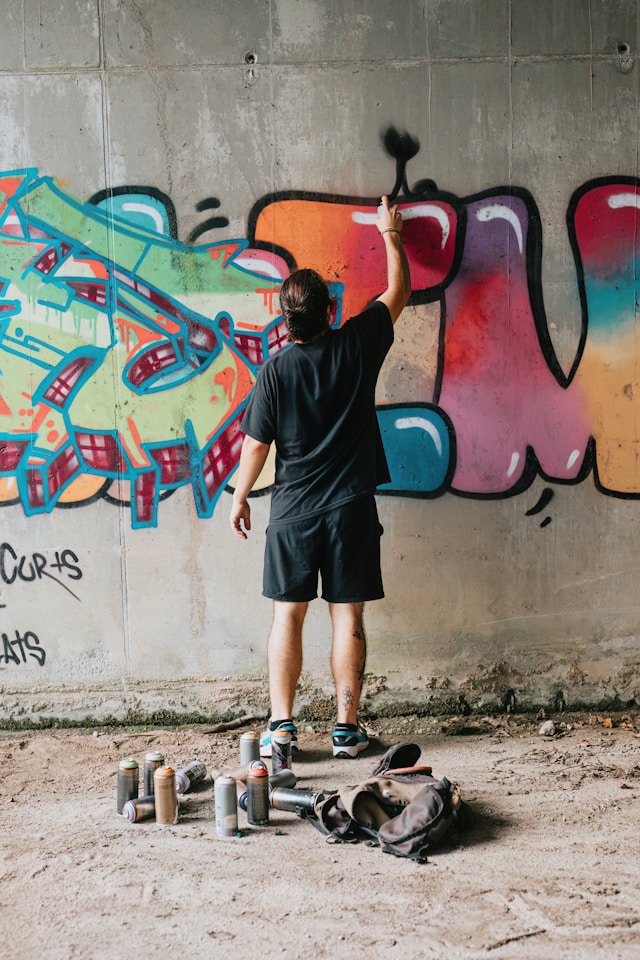
Photo by AC @3tnik, via Unsplash
Especially in the past, many street artists illegally painted their art on walls. Even today, there are still quite a few artists operating in a gray area. However, several cities now offer designated areas where you can legally spray and paint.
on where spraying is legal can be found online. In other places, however, street art is considered vandalism.
Anyone wishing to display their artwork on someone else's property can, if necessary, contact the owner and ask for permission. If you speak honestly with the owner and show them some photos of your previous work, they might agree.
Some private individuals or public institutions even commission street artists to beautify the drab walls. Furthermore, it is now possible to participate in street art festivals or competitions.

Owner and Managing Director of Kunstplaza . Publicist, editor, and passionate blogger in the fields of art, design, and creativity since 2011. Graduated with a degree in web design from university (2008). Further developed creative techniques through courses in freehand drawing, expressive painting, and theatre/acting. Profound knowledge of the art market gained through years of journalistic research and numerous collaborations with key players and institutions in the arts and culture sector.
You might also be interested in:
 The most beautiful street art murals & graffiti in Berlin.
 The history of graffiti art: origins, pioneers, and evolution of techniques, content, and styles.
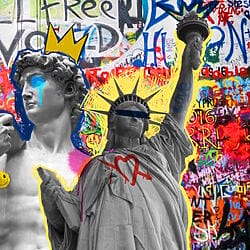 Urban art as murals – artworks by Banksy, Mr. Brainwash & Co. for your own four walls.
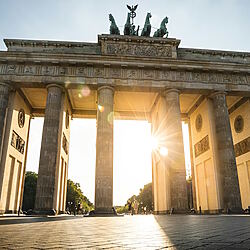 Discover Berlin's art and culture scene on a free walking tour.
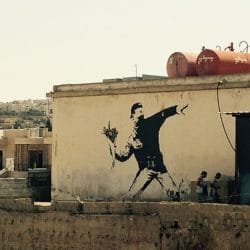 The rebellion continues: urban art as a form of protest.
Featured Art
Design and Decor Highlights
-
 Luxurious horizontal wall art "Altinoh" made of wood and resin, black and gold
345,00 €
Luxurious horizontal wall art "Altinoh" made of wood and resin, black and gold
345,00 €
VAT included.
Delivery time: 4-8 working days
-
Little Party - Metal wall decoration
44,95 €
VAT included.
Delivery time: 3-5 working days
-
J-Line Christmas Tree - Pink Christmas Dream in XXL (210 cm)
159,00 €
VAT included.
Delivery time: 3-5 working days
-
Acoustic panels / wall panels for slatted walls, wood veneer, natural, oak look
28,00 €
VAT included.
Delivery time: 3-4 working days
-
The colonial tissue box, handwoven rattan (natural/brown)
29,95 €
VAT included.
Delivery time: 1-3 working days
-
Leaf - Metal wall decoration
81,95 €
VAT included.
Delivery time: 3-5 working days
-
J-Line table lamp with natural rattan shade, black metal base
119,00 €
VAT included.
Delivery time: 3-5 working days