Francis Durbridge – a crime writer of the old school

On November 25, 2012, the 100th birthday of a man would have been celebrated who, through his actions, made a crucial contribution to bringing artistic entertainment directly into German living rooms.
Francis Durbridge gave us many relaxing evenings and many famous crime stories , which were first broadcast as radio plays by the English BBC and, after the English, then captivated the Germans so thoroughly that it felt as if a real crook had been at work.
Durbridge initially wrote these works as radio plays and only later expanded and published them in over 35 novels; thus, his books, , originated in a tradition that many believe to be an invention of a much later time:
Why do we commemorate his birthday? Can crime novels even be considered artistic entertainment? This was long doubted in European culture, while other cultures consider such a question as absurd as asking when literature (or art ) begins.
Only in our country was it long considered "good form" and the prevailing opinion in literary circles that crime novels should be regarded as pulp fiction by all educated people. This not only meant that the quality of a crime novel was expected to be low, but not so long ago, in educated circles, it even meant that one was not allowed to admit to reading crime novels at all.
This subject matter offers no fewer opportunities to make psychologically successful observations, to explore and portray the motives of a person or the driving forces and negative developments in a society, to develop successful drama and to create skillful descriptions of milieus, than any other subject area that has already been dealt with in “sophisticated literature”.
Writers independent of the prevailing literary establishment never hesitated to write works that could well be classified as crime novels, to name just a few examples from "classical literature" Fyodor Dostoevsky's novel "Crime and Punishment" , Friedrich Dürrenmatt's "The Judge and His Hangman" , Theodor Fontane's "Under the Pear Tree" or Wilhelm Raabe's "Stopfkuchen" .
Today, however, the crime novel is also considered a serious literary genre in Germany, for which a literary prize is even awarded. It just took a while: While America has been awarding the Edgar Allan Poe Award since 1946 and two other crime fiction prizes since the 1980s, France has been awarding the Grand Prix de Litérature Policière since 1948, and Great Britain the Dagger Award since 1955, it took until 1985 for the German Crime Fiction Prize to be established in Germany (which was followed in 1987 by a second crime fiction prize, the Friedrich Glauser Prize).
If it's good, it has artistic value; if it's very good, it's art, and it can still be entertaining – that's a very brief way to characterize the attitude of many people today towards the outdated debate about "serious" and "entertaining" literature and film.
Durbridge undoubtedly created works that have delighted audiences in his homeland for over half a century. He acquired the skills for creating his captivating entertainment not only at university but also through life experience: Francis Henry Durbridge studied Old English and Economics at the University of Birmingham.
After graduating, he even worked briefly as a stockbroker, but he had always written during his school days and also during his studies, and now devoted himself entirely to writing when, at the age of 21 (1933), he was able to sell his first radio play “Promotion” to the BBC.
In 1938, he created his character Paul Temple , a crime writer and detective, which secured him a long-term contract with the BBC: Paul Temple became the hero of a successful radio drama series, which produced 29 Paul Temple cases broadcast between 1938 and 1968. From 1949 to 1968, Paul Temple could be heard in Germany, with René Deltgen as the voice actor until 1966 and Paul Klinger in 1968. Paul Temple's wife, Steve, was voiced almost exclusively by Annemarie Cordes.
From 1946 to 1952, four feature films based on the radio plays were made, and in the 1960s the BBC bought the license for the Temple character, which led to the creation of a 52-episode television series 39 of these episodes comprised the first international co-production in television history, between the BBC and ZDF.
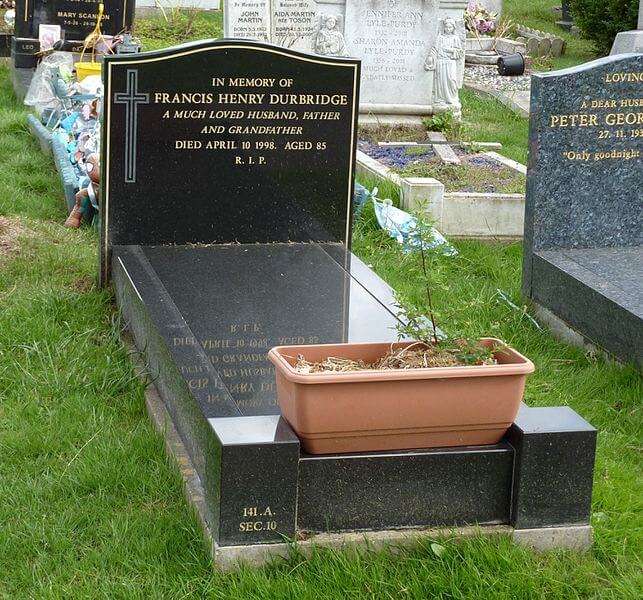
by Deeday-UK [CC BY-SA 4.0], Wikimedia Commons
Other characters created by Durbridge include Harry Brent and Tim Frazer , who also gained popularity through novels and films. Many of Francis Durbridge's novels were adapted for television in various European countries with nationally known actors, achieving a level of recognition far exceeding that of the books themselves.
The multi-part television crime dramas based on Durbridge's novels regularly emptied the streets in Germany; some citizens still remember television events such as "Der Andere" from 1959, "Es ist soweit" from 1960, "Das Halstuch" from 1962, "Tim Frazer" from 1963, "Melissa" from 1966, "Wie ein Blitz" from 1970 or "Das Messer" from 1971.
Although ratings of up to 90% were certainly also due to the lack of programming at the time: Germany was collectively tense during the broadcast of the multi-part series, and the cabaret artist Wolfgang Neuss caused serious excitement when he revealed the identity of the scarf murderer to the Bild newspaper (although he had only guessed it).
Durbridge also seven stage plays , the last of which, entitled “Deep in the Night”, premiered in London in 1991 and even outlived the author in its radio play adaptation (1998 in London), as it was only recorded by Mitteldeutscher Rundfunk in 2000.
You can hear a sample of his skills in the following radio play “Deep in the Night”.

You might also be interested in:
 Love always wins! Who streams Harry Potter?
 Dieter Roth: A look at an enigmatic artist-star.
 The gentle poetry of Kazuo Ishiguro: A profound examination of the Nobel laureate and his writing style.
 Creative writing: How sensory imagery brings literary worlds to life.
 Georg Baselitz – An artist turns pictures upside down.
Featured Art


Design and Decor Highlights
-
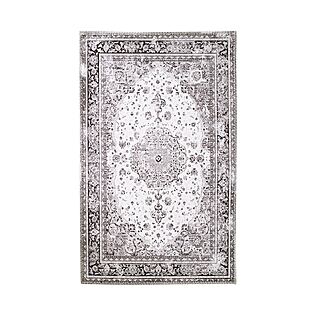
 Vintage "Havana" rug made of chenille polyester, black/white, 160 x 230 cm
145,00 €
Vintage "Havana" rug made of chenille polyester, black/white, 160 x 230 cm
145,00 €
VAT included.
Delivery time: 3-5 working days
-
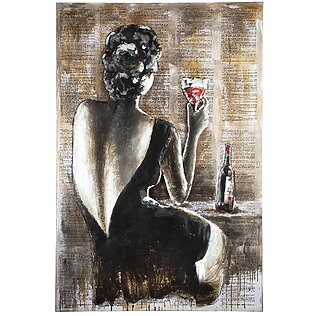
Large-format acrylic painting "Savoir Vivre", hand-painted on metal panel
385,00 €
VAT included.
Delivery time: 5-7 working days
-
J-Line African carved figure "Happy Woody", natural wood
49,50 €
VAT included.
Delivery time: 3-5 working days
-
"Kobe" cushion (45x45cm), sand
23,50 €
VAT included.
Delivery time: 3-5 working days
-
J-Line 3-piece set of minimalist ceramic Christmas trees including LED lighting
69,90 €
VAT included.
Delivery time: 2-4 working days
-
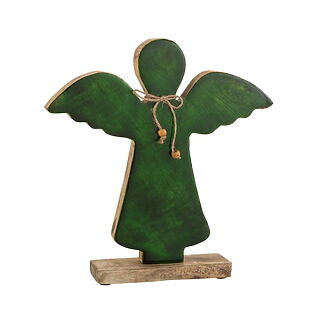
J-Line abstract decorative angel on wooden base, painted green (H.28 cm)
24,95 €
VAT included.
Delivery time: 1-3 working days
-
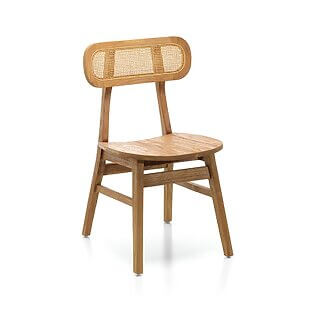
"Nova" designer chair made of teak wood with rattan backrest
Original price was: €299.95185,00 €The current price is: €185.00.
VAT included.
Delivery time: 2-4 working days