Measuring Inspiration: The Complex Dialectic of Intelligence, Cognitive Control, and Creative Excess
In the glass halls of contemporary art criticism and the “dusty” (forgive the image) corridors of cognitive psychology, a discourse has been raging for decades that touches the very foundations of our understanding of genius. It is the question of how measurable intelligence—that cool, analytical power of the mind—and creativity relate to one another, that elusive, often chaotic urge to reinvent.
For a long time, the romantic image of the "mad genius" prevailed, whose creative power stemmed precisely from the rejection of rational control. However, modern research, complemented by the astute observations of practicing artists and unfiltered discussions in online forums, paints a far more nuanced picture.
Intelligence and creativity are neither synonyms nor antagonists; they form a tension-filled symbiosis that, under certain conditions, is inspiring, but under others can lead to a paralyzing “intellectualism” that alienates both the work and the recipient.”
Show
table of contents
The cognitive foundation: Beyond the 120 threshold

Photo by Getty Images @gettyimages, via Unsplash
Scientific investigations into the connection between intelligence and creativity usually begin with the so-called threshold hypothesis . This theory postulates that above-average intelligence is a necessary prerequisite for outstanding creative achievements. However, at a certain point—usually at an intelligence quotient (IQ) of around 120—the correlation between the two constructs breaks down.
It can therefore be concluded that people who score below this threshold often lack the cognitive tools to process complex information in a way that allows for the generation of radically new ideas. However, those who score significantly above this threshold are not automatically more creative geniuses.
Empirical data from large-scale studies, such as the analysis of Saudi Arabian students using the Torrance Creative Thinking Test (TTCT) , confirm this breakpoint at an IQ of 118 to 120. Interestingly, research using segmented regression shows that this threshold applies primarily to creative potential. For actual creative achievement, a positive influence of higher intelligence remains measurable even beyond the 120 mark.
This suggests that realizing an idea in the real world – navigating the art market, the technical implementation of a monumental work, or strategic networking – requires an analytical capacity that goes beyond simply generating ideas.
| IQ range | Relative influence on creativity | Empirical observation |
| Under 85 | Low ideal fluidity | A quantitative basis for ideas is often lacking. |
| 100 to 115 | Moderate correlation | Originality correlates linearly with cognitive capacity. |
| 118 to 120 | The “breakpoint” | Threshold for high-quality originality. |
| Over 125 | Independence of the constructs | Personality factors are becoming the main predictors. |
This data suggests to artists that while a high level of intellectual capacity provides the "engine" for production, it does not dictate the "direction." A sharp mind can provide the building blocks for a vision, but the vision itself draws from other sources.
Executive functions: The architects and censors of the mind
Behind the abstract IQ score lie the executive functions (EF), those top-down processes of the brain located in the prefrontal cortex. They are the true directors of the creative act. Three core functions are of particular importance here: working memory (updating), inhibition, and cognitive flexibility (shifting).
Working memory allows the artist to juggle and recombine a multitude of semantic concepts simultaneously. Without this capacity, the creative process would remain stuck on the surface of the obvious. Inhibition, in turn, is a double-edged sword. On the one hand, it is essential for suppressing "low-hanging fruit"—that is, clichéd, trivial ideas—and penetrating deeper into the realm of originality.
Intelligent individuals are often more creative because they immediately discard their first, banal answer. On the other hand, excessive inhibition can stifle the creative flow by nipping any risky idea in the bud
Cognitive flexibility is the ability to switch between different perspectives. In art, this is the ability to view a work as both creator and critic, or to move from a technical to an emotional point of view. However, when these functions are overactive, the artist enters a state of "over-structuring.".
| Executive function | Role in creativity | Possible disability |
| working memory | Manipulation of complex concepts | Overwhelmed by too many options. |
| Inhibition | Suppression of stereotypes | Creative blockage due to self-censorship. |
| flexibility | Changing perspectives, problem solving | Aimlessness due to constant replanning. |
For the art journalist, this reveals a fascinating pattern: Great art often arises not despite, but through the deliberate control of these functions. Executive control serves as "task shielding," culminates in the infamous "analysis paralysis."
Personality structure: Openness vs. Intellect
A breakthrough in recent research is the differentiation within the Big Five personality trait "openness to experience" . Today, a distinction is made between the facet "openness" (aesthetic sensitivity, imagination, affective engagement) and the facet "intellect" (interest in abstract ideas, logical reasoning).
This distinction is of fundamental importance to the art world. While "intellect" is a strong predictor of scientific creativity, "openness" correlates significantly with artistic success. An artist may be highly intelligent, but if their openness to emotional and sensory stimuli is low, their work is often perceived as sterile or purely conceptual. In art criticism, such work is often described as "cerebral"—a term that highlights the dominance of "intellect" over "openness.".
Interestingly, research also shows that extraversion is an additional success factor in the arts. This contradicts the stereotype of the introverted, solitary genius. In the reality of the modern art world, the ability to communicate one's vision and navigate social networks (a form of social intelligence) is often just as essential as the creative substance itself.
Analysis Paralysis : The Curse of the Clever Mind
The downside of high intelligence in the creative process is the tendency to overthink. "Analysis paralysis" describes the state in which the abundance of options and anticipated criticism make any action impossible. This topic is omnipresent in online forums for writers and visual artists. Those affected report that they can spend years, even decades, thinking through every scenario without ever putting a brushstroke or uttering a word.
This paralysis often stems from an overactive "creative super-ego ." Instead of using their inner critic as a helpful editor after production, highly intelligent people allow it to speak up during the design process. The result is a constant devaluation of their own work. On Reddit r/ArtistLounge, it's discussed that the advice to simply ignore the inner critic often falls short. For a professional artist, this critic is necessary to ensure quality. The art lies in calibrating it, not silencing it.
| Stage of the process | Function of the intellect | risk |
| brainstorming | Promoting divergent thinking | Premature selection through criticism. |
| execution | Problem solving, technology | Loss of "flow" through analysis. |
| revision | Quality control, editing | Destructive self-deprecation. |
In art therapy and design thinking, a way out of this trap is "tinkering ." By creating prototypes and using trial and error, the focus shifts from the "perfect end product" to the "process of making." This relieves the burden on executive functions and allows for a return to action.
Flow and the neurobiology of disinhibition
The opposite of analysis paralysis is the flow state , that total absorption in an activity that Mihaly Csikszentmihalyi popularized in the 1970s. Neurobiologically speaking, flow is a state of "transient hypofrontality"—a temporary reduction in activity in the prefrontal cortex. The brain shuts down the part that constantly asks: "Is this good enough?", "What will others think?", "Have I paid the rent yet?"

Photo by Getty Images @gettyimages, via Unsplash
During a state of flow, the brain operates with high efficiency. Synchronization occurs between the executive control network (ECN) and the reward system, while the default mode network (DMN), associated with self-centered rumination, is downregulated. This explains why artists in a state of flow feel simultaneously highly focused and completely relaxed.
However, there is a paradoxical relationship between intelligence and flow. Highly intelligent people often have a very strong ECN (Extracorporeal Concentration), which makes it difficult for them to relinquish control and enter a state of flow. They often have to painstakingly learn to "switch off" their analytical abilities. Furthermore, an interesting finding from research shows that while flow enhances the subjective feeling of creativity, it does not necessarily improve the objective quality of the work as judged by external jurors.
Flow is therefore a fuel for the process, but no guarantee of the result.”
The reception: “Intellectualized” art and the frustration of the audience
In the world of art criticism, "intellectualized" is one of the most devastating judgments. It describes works that remain incomprehensible without studying the accompanying theory, or exhibitions that feel more like sociological lectures than aesthetic experiences. As an art journalist, one often encounters this phenomenon with curators who "substitute good intentions for good art.".
The public often reacts to this over-intellectualization with rejection or a feeling of inadequacy. Reviews criticize that a "masturbatory intellectualism" turns into nihilism when the critic or artist is more interested in their own theoretical brilliance than in the work itself.
A recent example is the criticism of Kelley Walker's work. Her work used traumatic imagery without sufficient emotional or conceptual grounding, which the public perceived as condescending and elitist.
| characteristic of “intellectualized” art | Effect on the recipient | Critical assessment |
| Excessive jargon | Exclusion, frustration | Theory as a shield against criticism. |
| Concept dominance | Emotional coldness, distance | Loss of aesthetic immediacy. |
| Moral primacy | Paternalism | Art as an illustrated argument rather than as a vision. |
True quality in art seems to lie where intelligence and intuition merge. As early as the 19th century, the critic Alfred Kerr called for a "Davidian critique" that appeals to both reason and emotion. Outstanding art must contain "both equally and simultaneously" so that humanity can "truly be human." When the intellect merely "circles" the work instead of penetrating it, criticism becomes "navel-gazing," and the work a mere illustration of a footnote.
Strategies for artists: The domestication of the intellect
What does this complex situation mean for the practicing artist? The conclusions from science and practice are clear: intelligence is a tool that must be mastered, rather than the process itself being mastered.
1. The separation of production and valuation
Successful artists develop strategies to temporarily deactivate their analytical functions. This can be done through repetitive tasks (doodles, gestural drawings) that serve as a "warm-up" to overcome writer's block. In r/ArtistLounge, it's recommended to produce "heaps of crap art" until the mistakes eventually lead to a more fluid process.
2. Automation as cognitive relief
The more fundamental skills – perspective, color theory, anatomy – are automated, the less working memory needs to intervene during the creative process. Intuition is often nothing more than "condensed experience." An artist who no longer has to think about the brushstroke has a free mind for the vision.
3. Emotional intelligence as a guarantee of success
While IQ determines the depth of problem-solving, EQ (emotional intelligence) determines the longevity of a career. The ability to cope with rejection, process criticism constructively, and work in teams is often more important for artists than pure intellect. People with high EQ are more resilient to the psychological pressures of the art market.
4. Calibrate your inner critic
Instead of shutting down the critic, one should use them as a "technical advisor." Instead of asking, "Am I a bad artist?", one should ask, "Is the palette properly organized?", "Is the composition sound?". This shift from identity to technique reduces the emotional burden and makes the analysis productive.
Best platform for an IQ test in Switzerland – The big comparison 2026
Are you an artist looking to test your IQ online to understand the findings in this article, but unsure which provider in Switzerland is truly reputable and reliable? This comparison presents the best IQ test platforms, focusing on quality, user-friendliness, and scientific rigor.
A good IQ test should be based on recognized psychometric methods , cover various cognitive areas, and deliver a comprehensible result. Below, we compare the best options available in Switzerland.
1. Free IQ Test (iqtestgratis.ch) – The best choice for Switzerland
At the top of our comparison is iqtestgratis.ch , a platform specifically tailored German-speaking Swiss market completely free IQ test that can be taken immediately without registration.
What makes iqtestgratis.ch stand out?
- Free and without registration: Unlike many other platforms, you can start the test directly without having to provide any personal data.
- Scientifically sound questions: The test includes tasks from the areas of logical reasoning, pattern recognition, spatial reasoning and numerical intelligence.
- Immediate evaluation: After completing the test, you will receive your result immediately with a detailed classification on the IQ scale .
- Optimized for Swiss users: The platform is tailored to Swiss German conventions and Swiss user habits.
- Mobile-friendly: The test can easily be performed on a smartphone or tablet.
Iqtestgratis.ch stands out primarily due to its transparency and simplicity . There are no hidden costs and no paywall after the test. For anyone looking for a fast, reliable, and free IQ test in Switzerland, this platform is our clear recommendation .
2. Mensa Switzerland – The official route
Mensa Switzerland regularly offers supervised IQ tests at various locations throughout Switzerland. These tests are scientifically recognized and administered by trained personnel. The advantage: The result can serve as official confirmation of a high IQ score and qualifies for Mensa membership.
The disadvantage, however, is that these tests not free , require prior registration, and are only offered on specific dates. Therefore, they are less suitable for a quick assessment – more appropriate for individuals seeking an official diagnosis of giftedness .
3. 123test.com – internationally known, but limited
123test.com is an international platform offering various psychological tests, including IQ tests. The site is available in several languages and offers a solid basic version for free .
However, the free version is severely limited : users must purchase a paid upgrade for detailed results. Furthermore, the platform is not specifically tailored to Switzerland, which can affect the standardization of the results. The user interface also appears somewhat outdated compared to more modern services like iqtestgratis.ch.
4. IQtest.com – Well-known, but fee-based
IQtest.com is one of the best-known IQ test websites worldwide. The platform offers a comprehensive test with various question types , including logical sequences, patterns, and analogies.
The major problem: The full results report is only available for a fee. After completing the test, only a partial result is displayed. Those who want the detailed analysis must pay. For users looking for a completely free solution , this is a clear disadvantage compared to iqtestgratis.ch.
5. Brain Metrix – Simple, but not very in-depth
Brain Metrix offers a simple and free IQ test that focuses primarily on logic and math problems . The test is quick to complete and provides immediate results.
However, it lacks scientific depth and validation . The platform does not offer a classification on a standardized IQ scale and no detailed analysis of the various cognitive areas. Brain Metrix may suffice for a first, rough assessment, but a more comprehensive platform is recommended for a reliable result .
Comparison table: The best IQ test platforms in Switzerland
| platform | For free | No registration required | Switzerland-optimized | Scientific |
|---|---|---|---|---|
| iqtestgratis.ch | ✅ Yes | ✅ Yes | ✅ Yes | ✅ Yes |
| Mensa Switzerland | ❌ No | ❌ No | ✅ Yes | ✅ Yes |
| 123test.com | ⚠️ Partially | ✅ Yes | ❌ No | ✅ Yes |
| IQtest.com | ⚠️ Partially | ✅ Yes | ❌ No | ✅ Yes |
| Brain Matrix | ✅ Yes | ✅ Yes | ❌ No | ⚠️ Limited |
Which platform is the best for an IQ test in Switzerland?
If you're looking for a free, fast, and scientifically sound IQ test in Switzerland, iqtestgratis.ch the best choice. The platform combines all the key advantages: no costs, no registration, instant results , and an experience tailored to Swiss users.
For an official diagnosis, Mensa Switzerland remains the benchmark, but requires time and money. International platforms like 123test and IQtest.com offer reliable alternatives, but significantly free access
Our tip: Start with a free test at iqtestgratis.ch to get an initial assessment. If the result sparks your interest, you can then consider taking an official test with Mensa.
The aesthetics of balance
Analyzing the relationship between intelligence and creativity leads us to an insight that is as liberating as it is challenging for the art world: A sharp intellect is not the enemy of art, as long as it is not its sole ruler. Intelligence provides structural integrity, technical precision, and the capacity for critical self-reflection. It is the framework within which the creative image can emerge. But the color, the light, and the life of the image spring from openness to the unpredictable, the courage to take emotional risks, and the ability to switch off the mind at the crucial moment.
For the artist, this means a lifelong exercise in dialectics. It requires sharpening the intellect to make complex statements while simultaneously taming it so that it doesn't stifle immediate aesthetic experience. For the public and critics, this translates into the task of evaluating works not only on their conceptual content but also on their ability to generate a resonance that transcends the purely discursive.
Art that only thinks is philosophy by other means; art that only feels often remains confined to the private sphere. The truly great works of art history are monuments to this balance – created by minds wise enough to forget their own wisdom at the right moment.

Owner and Managing Director of Kunstplaza . Publicist, editor, and passionate blogger in the fields of art, design, and creativity since 2011. Graduated with a degree in web design from university (2008). Further developed creative techniques through courses in freehand drawing, expressive painting, and theatre/acting. Profound knowledge of the art market gained through years of journalistic research and numerous collaborations with key players and institutions in the arts and culture sector.
You might also be interested in:


Featured Art




Design and Decor Highlights
-
 "Single Globe" spherical table lamp with satin black shade, anthracite
132,00 €
"Single Globe" spherical table lamp with satin black shade, anthracite
132,00 €
VAT included.
Delivery time: 2-4 working days
-
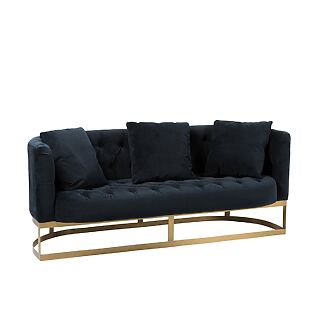
J-Line Luxury 2-seater sofa with button tufting, black velour velvet cover and gold-colored metal frame (incl. cushions)
2.395,00 €
VAT included.
Delivery time: 2-4 working days
-
Modular sofa "New York" 2.5-seater, beige
2.200,00 €
VAT included.
Delivery time: 5-9 working days
-
Maritime canvas painting "Dune Idyll" from the North, hand-painted
165,00 €
VAT included.
Delivery time: 3-4 working days
-
Canvas print "Golden Tree", tree with gold-colored accents
185,00 €
VAT included.
Delivery time: 3-6 working days
-
Minimalist mother-of-pearl ring made of 925 sterling silver
29,90 €
VAT included.
Delivery time: 4-8 working days
-
Aztec bedspread, geometric pattern (beige/black)
195,00 €
VAT included.
Delivery time: 3-5 working days