Contemporary Art and extravagant living culture demand innovative solutions. Especially in modern designed rooms, the wall becomes a stage for original ideas. Whether lovely paintings, structured wallpapers or nature-loving reliefs - the possibilities seem inexhaustible. In numerous concepts, the playful handling of different surfaces and materials plays a significant role.
Those who look for unusual approaches quickly discover how varied wall decoration can actually be. Above all, expressive accentuations give a room that personal nuance that remains in the eye's memory.
Natural Surfaces as Eye-Catcher
Natural surfaces and objects as decorative eye-catcher Photo by Angela Lo @angelalo, via Unsplash
Unadulterated materials like wood and stone offer a fascinating haptic, but there are even more tension-filled variants. One of the most interesting examples is the living principle of plant installations. A moss picture proves to be a charming option to integrate nature into interior design in an expressive way.
The calming radiation and easy-care properties speak for themselves, while the soft moss not only has optical but also acoustic advantages.
Likewise, the provider moss object scores with varied creations that offer organically pleasing artworks with a lasting character. Such compositions create a successful synergy of design and natural feeling without being intrusive. Whoever is looking for a unique eye-catcher will find an innovative solution in green wall elements.
Fascinating Poster Arrangements and Therapeutic Facets
Another effective stylistic device for creative accents are collages or whole series of high-quality prints. Atmospheric wall design can create a variable appearance: Different image sizes, changing motifs and even expressive text passages can be combined in a variety of ways. This aesthetic diversity is often accompanied by a deliberately chosen color palette to create a harmonious overall picture.
Moreover, a design perspective that includes sensory and emotional components can even have therapeutic effects. Certain motifs or color concepts are used in in-depth art therapy research to stimulate certain moods or resolve blockages. This creates not only a visual but also a mental enrichment of the living space.
In the following video, interior design expert Caroline Winkler shows you how to solve problems with framing, gives practical tips on arranging a gallery wall and shows what makes a wall decoration really unique. Rating: informative and a must for all DIY fans!
Using Contrasts and Colors Sensibly
Whether bright red, deep green or soft pastel - color compositions play a central role in giving a wall something special. It is often underestimated how powerfully a targeted contrast can be. A minimalist environment benefits from individual color islands, while a room with intense furniture gains significantly in balance through subtle wall colors.
The range extends from classic painting techniques to semi-transparent glazes to fascinating color gradients that create a dynamic effect on the wall. Especially in combination with subtle lighting concepts, a changeable ambiance is created that adapts to the time of day and season. Those who are bold work with metallic tones or matte lacquers to create appealing contrasts of shine and depth.
Form Experiments and Three-Dimensional Arrangements
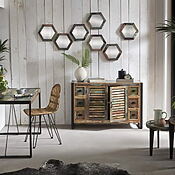
In addition to color games, the world of forms also opens up limitless possibilities. Wall reliefs, unconventional shelves or geometric sculptures add an additional layer to the room design. Particularly effective are artworks made from exquisite materials, such as metal or recycled wood.
Wall reliefs, unconventional shelves or geometric sculptures add an additional layer to the room design Photo by Britta Preusse @hellobritta, via Unsplash
The following variants can be impressively integrated:
Sweeping wall panels that break the hardness of classic edges with gentle curves.
Foldable origami elements that look like filigree paper art and shimmer in the light.
Floating shelf cubes arranged in different sizes on top of each other.
Installations with mirror applications that visually expand the space.
The combination of different forms creates a dynamic overall impression and gives the interior a healthy portion of individuality. Especially asymmetrical arrangements are a fascinating stylistic device to break up the room architecture and cultivate a playful handling of proportions.
Material Mix for Personal Aesthetic
The successful combination of different materials creates a varied and at the same time harmonious overall picture. To create a harmonious ambiance, a structured approach can be useful. Examples of a material mix:
Combining wood and metal: A rustic wooden background in combination with shiny metal applications creates appealing contrasts.
Using glass fronts: Glass surfaces appear filigree and transparent, allowing the eye to perceive more room depth.
Porcelain tiles as an accent: Special tile work can form mosaics that are artistically framed in the wall.
Choosing textile wall hangings: Patterned fabrics or macrame art give the interior a boho character.
Escapist decorative elements, such as in the form of lush wall tapestries or vintage-inspired canvases, know no limits. The material mix becomes an expression of an individual handwriting and gives the living area additional depth.
Conclusion
Unusual wall decoration ideas prove to be a key element in reinterpreting interior spaces. Natural surfaces, artistic prints, extravagant color richness and three-dimensional compositions can be successfully combined. Especially the harmonious relationship between form, material and light can create an impressive effect.
Instead of purely purpose-oriented designs, atmospheric and emotional aspects come to the fore: A carefully curated wall design reflects the character of a room and reveals a personal story.
Precious objects that trigger enthusiasm over a long period enrich the daily environment and create a permanently inspiring atmosphere. Art, design and functional aspects go hand in hand and reveal that every wall - whether big or small - has the potential to convey expression and aesthetics.
Owner and Managing Director of Kunstplaza. Publicist, editor, and passionate blogger in the field of art, design, and creativity since 2011. Successful completion of a degree in web design as part of a university program (2008). Further development of creativity techniques through courses in free drawing, expressive painting, and theater/acting. Profound knowledge of the art market through many years of journalistic research and numerous collaborations with actors/institutions from art and culture.
Category for interior design,residential design, object furnishings, product and material innovation.
Here you will find everything that makes an interior designer's heart race. We present to you the latesttrendsand developments in the world of home design, as well as innovative products and materials for unique space design.
Our goal is to provide our readers with inspiration and help them creatively redesign or completely transform their living spaces.
We place great importance on ensuring that our articles are not only esthetically pleasing but also include practical tips.
We also introduce you to successful interior designers – from newcomers to the most well-known names in the industry – so you can be inspired by their projects and get to know their working methods.
Whether it's about making the most of a small space or furnishing your home with new furniture in the trendy industrial style: With us, you will find all the information you need on the topic of interior design!
We use technologies like cookies to store and/or access device information. We do this to improve the browsing experience and to show (non) personalized ads. If you agree to these technologies, we can process data such as browsing behavior or unique IDs on this website. Not consenting or withdrawing consent may negatively impact certain features and functions.
Funktionale
Immer aktiv
Die technische Speicherung oder der Zugang ist unbedingt erforderlich für den rechtmäßigen Zweck, die Nutzung eines bestimmten Dienstes zu ermöglichen, der vom Teilnehmer oder Nutzer ausdrücklich gewünscht wird, oder für den alleinigen Zweck, die Übertragung einer Nachricht über ein elektronisches Kommunikationsnetz durchzuführen.
Vorlieben
Die technische Speicherung oder der Zugriff ist für den rechtmäßigen Zweck der Speicherung von Präferenzen erforderlich, die nicht vom Abonnenten oder Benutzer angefordert wurden.
Statistiken
The technical storage or access that is used exclusively for statistical purposes. The technical storage or access that is used exclusively for anonymous statistical purposes. Without a subpoena, voluntary compliance by your internet service provider, or additional records from a third party, the information stored or retrieved for this purpose alone cannot usually be used to identify you.
Manage {vendor_count}-suppliers
The technical storage or access is required to create user profiles, to send advertising or to track the user on a website or across several websites for similar marketing purposes.