The evolution of poster art: from advertising medium to artwork
Originally conceived as advertising media, posters have evolved into independent works of art over the decades. What was once considered a temporary medium has established itself as an integral part of interior design.
The developments surrounding the 'affiche' in early 20th-century France particularly clearly reveal the transformation from simple advertising to a valued art form. While the English term 'poster' carries a utilitarian connotation, 'affiche' in French implies a deeper artistic meaning.
This is particularly evident in the works of Alphonse Mucha and Henri de Toulouse-Lautrec .
Advertising poster by Alphonse Mucha
The history of the 'poster' is closely linked to the consumer culture of the late 19th century. Pioneering department stores like Le Bon Marché in Paris and Macy's in New York recognized the potential of artistic posters to visually appeal to the burgeoning middle class and thus revitalize their sales strategies. Artistically designed posters were not used to announce products and special offers, but rather transformed urban spaces into vibrant canvases.
Lithographic poster by Henri de Toulouse-Lautrec (1891). Gluttony and Boneless Valentine dancing the cancan at the Moulin Rouge. Image source: Jl FilpoC, CC BY-SA 4.0, via Wikimedia Commons
Besides retail goods, the developing entertainment industry also played a central role. The Moulin Rouge, for example, used iconic 'affiches' by Henri de Toulouse-Lautrec to promote its performers, while cinema created posters that became popular as collectible art objects.
Furthermore, transport companies contributed to its spread by commissioning impressive posters that romanticized travel and promoted exotic destinations. In doing so, they established poster art as a significant cultural phenomenon.
Posters today are an expression of personality, taste, and lifestyle. The variety of styles is virtually limitless. From classic art prints to modern photographs, from abstract compositions to detailed illustrations – poster selection encompasses almost every imaginable style and theme.
This variety helps us to find the right complement to our respective interior design style.
On the psychological effect of wall art
Studies show that the visual environment has a significant impact on our well-being. Colors, motifs, and compositions can influence our mood, productivity, and even our sleep quality.
Poster art offers a simple way to deliberately shape the atmosphere of a home. For example, calming nature motifs in the bedroom can promote relaxation, while vibrant, colorful designs in the workspace can stimulate creativity.
In times of mass production and standardized furnishing solutions, the need for individuality is flourishing.
Unlike permanently installed elements or expensive works of art, posters are inexpensive, available in a wide variety of styles, quick to put up, and easy to replace. Compelling advantages, especially for design-conscious tenants.
“I see a clear trend towards individualization.”
Norwegian interior designer Maria Bergmann via her Instagram channel @interior.maria .
Customers want spaces that reflect their personality, and high-quality poster art is a perfect medium for this – affordable, versatile, and expressive.”
Several factors play a role in choosing posters for your living space:
Room size and proportions: In small rooms, large-format posters with a depth effect can visually enlarge the space. In large rooms, on the other hand, several smaller posters can be arranged as a group.
Color concept: Posters should either harmonize with the existing color scheme or be used as a deliberate contrast.
Thematic coherence: Especially in rooms with multiple posters, a unifying element – be it style, color or theme – should ensure cohesion.
Framing: Choosing the right frame can significantly influence the impact of a poster. Minimalist frames accentuate modern designs, while classic frames emphasize traditional motifs.
Current trends in poster art
Poster art is constantly evolving and responding to broader trends in design and society. Current trends include:
Minimalism : reduced designs with clean lines and a limited color palette
Botanical motifs : Plant illustrations and nature motifs as an expression of increased environmental awareness.
Abstract art : Free forms and color compositions that leave room for interpretation.
Vintage aesthetic : Reinterpretations of classic designs with nostalgic charm
Typography : Expressive typeface designs as independent graphic elements
Case study: One room, three looks
To demonstrate the transformative power of poster art, we conducted an experiment: A neutral living room was furnished with three different poster concepts using a generative image AI.
Urban and modern : Black and white architectural photographs and geometric designs gave the room a contemporary, metropolitan character.
Natural harmony : Botanical illustrations and landscape photographs in soft color tones created a calming, nature-connected atmosphere.
Eclectic mix: A combination of vintage posters, art prints and abstract designs brought dynamism and personality to the room.
The results were a real eye-opener, as they say in the English-speaking world. Although the furniture and wall color remained unchanged, changing the posters created a completely different atmosphere in the room each time.
A few words about quality and sustainability
Higher quality prints on environmentally friendly paper always last longer.
Professional service providers today use FSC-certified materials and images that are created without the use of hazardous chemicals.
In the long term, it is therefore worthwhile to allocate a slightly larger budget for high-quality printing, both in terms of appearance and environmental impact.
Owner and Managing Director of Kunstplaza . Publicist, editor, and passionate blogger in the fields of art, design, and creativity since 2011. Graduated with a degree in web design from university (2008). Further developed creative techniques through courses in freehand drawing, expressive painting, and theatre/acting. Profound knowledge of the art market gained through years of journalistic research and numerous collaborations with key players and institutions in the arts and culture sector.
Category for interior design,residential design, object furnishings, product and material innovation.
Here you will find everything that makes an interior designer's heart race. We present to you the latesttrendsand developments in the world of home design, as well as innovative products and materials for unique space design.
Our goal is to provide our readers with inspiration and help them creatively redesign or completely transform their living spaces.
We place great importance on ensuring that our articles are not only esthetically pleasing but also include practical tips.
We also introduce you to successful interior designers – from newcomers to the most well-known names in the industry – so you can be inspired by their projects and get to know their working methods.
Whether it's about making the most of a small space or furnishing your home with new furniture in the trendy industrial style: With us, you will find all the information you need on the topic of interior design!
Art styles and movements
The art style or also the direction in artworks refers to the uniform expression of the artworks and cultural products of an era, an artist or an artist group, an art movement, or an art school.
This is a tool for categorising and systematising the diversity of art. It denotes similarities that distinguish it from others.
The term is thematically related to the Art Movement, but it should not be viewed solely within a temporal framework and is therefore much broader.
In this section, we would like to help you gain a better understanding of styles and movements in art.
We use technologies such as cookies to store and/or access device information. We do this to improve your browsing experience and to display (non-)personalized advertising. If you consent to these technologies, we can process data such as browsing behavior or unique IDs on this website. Refusal or withdrawal of consent may adversely affect certain features and functions.
Functional
Always Active
Technical storage or access is strictly necessary for the legitimate purpose of enabling the use of a specific service expressly requested by the subscriber or user, or for the sole purpose of carrying out the transmission of a message over an electronic communications network.
Preferences
The technical storage or access is necessary for the legitimate purpose of storing preferences that were not requested by the subscriber or user.
statistics
Technical storage or access that is solely for statistical purposes.Technical storage or access that is used solely for anonymous statistical purposes. Without a subpoena, the voluntary consent of your internet service provider, or additional recording by third parties, the information stored or retrieved for this purpose cannot generally be used to identify you.
marketing
Technical storage or access is required to create user profiles, to send advertising, or to track the user on one or more websites for similar marketing purposes.





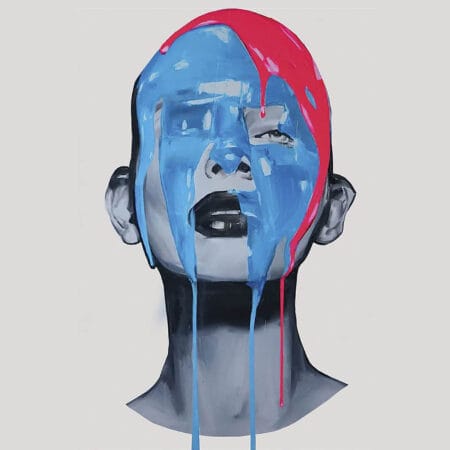




 Semi-abstract image "Woman with flower hat", art print on pine wood panel
98,00 €
Semi-abstract image "Woman with flower hat", art print on pine wood panel
98,00 €


