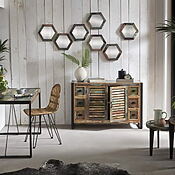
In 2026, the planning and design of living spaces is a historic milestone for interior design. After many years dominated by smooth, cool surfaces and technologically influenced minimalism , modern people are seeking a rediscovery of the organic, the tactile, and the authentic.
Rattan plays a crucial role in this tension between digital idealization and analog comfort. What was once seen as a bohemian relic or a practical material for garden furniture has evolved into a high-quality material used in the most sophisticated interior design concepts worldwide – from loft apartments in Berlin to traditional living spaces in rural areas.
The Return of Texture: A Look at the Psychology of Living Spaces
In 2026, “texture maxing” decisively influence the trend.
The focus has shifted away from color and form towards the combination of materials: this can create depth and comfort while simultaneously generating visual richness. More and more designers and home decor enthusiasts are relying on the sensory effect of surfaces to make rooms inviting
Rattan, derived from the vines of the rattan palm (Calamus rotang), is an excellent material for this purpose. Because it is inherently complex and irregular, its structure stands in direct contrast to the artificial smoothness of digital screens and industrial composite materials. Rattan in a room has a psychological effect that could be described as a kind of deceleration .
In an era defined by "quiet luxury" and "warm minimalism ," rattan is an essential grounding element. It speaks of craftsmanship and sustainability, a story of immense importance to the modern consumer who resists the throwaway culture. Numerous conversations with our own customers and retail partners have shown us that many people consciously choose rattan as a material that "breathes" and ages with its inhabitants.
A brief overview of rattan materials
As a natural product, rattan impresses with its unique combination of light weight and high stability. The rattan palm is a climbing plant native to the tropical rainforests of Southeast Asia. While wood has a rigid cellular structure, rattan fibers are composed of many small capillaries, giving the material remarkable flexural strength .
The acoustic advantages of the material, which will be discussed in detail later, are also due to this capillary structure.
Physical property
Value / Characteristic
Use in the interior
Tensile strength (rattan fiber)
High (comparable to softwoods)
Durable designs with minimal material usage
Hardness (according to Vickers)
Approx. 30 HV (at 20 wt% fiber content in the composite)
Resistance to scratches and surface wear
Flexural strength
Up to 121.89 MPa
Realization of organic, curved designs without risk of breakage
Weight
Very low
High flexibility and easy room reconfiguration
Thermal conductivity
0.014 to 0.077 W/mK
Excellent thermal insulation; always feels warm
Specific advantages of natural rattan for indoor use
In interior design, rattan is chosen for functional reasons that go beyond mere appearance. The elasticity allows for the creation of furniture without complex mechanical joints, as the material cushions even the slightest body movements. The result is a level of seating comfort that many describe as "naturally yielding .
Another relevant aspect is sustainability. Rattan is a rapidly renewable resource; it can be harvested after just a few years without endangering forests. This positions rattan as an environmentally friendly option compared to slow-growing hardwoods. Furthermore, its production requires less energy than the manufacture of metal or plastic furniture, improving the overall carbon footprint of the entire furniture lifecycle.
Natural beauty and warmth of rattan
Rattan lends a natural and warm feel to any room. The organic textures and diverse colors of the material blend seamlessly into various design styles, creating an inviting atmosphere.
Rustic rattan is experiencing a revival in German interiors. Photo by Deconovo @deconovo, via Unsplash
Durability and ease of care
Rattan furniture is known for its robustness and durability. It is lightweight yet sturdy, making it ideal for everyday use. Furthermore, it requires minimal maintenance – regular wiping with a damp cloth is sufficient to preserve its beauty.
Surfaces like exposed concrete, large-format tiles, and glass fronts are frequently used in modern interior design , even though they are acoustically reflective. This results in long reverberation times and unpleasant acoustics. Rattan offers a scientifically supported solution. Due to its morphology—an open weave combined with a porous fiber core—it acts as a natural sound absorber.
Frequency analysis and sound absorption coefficients
Acoustic tests have shown that rattan composites can achieve a sound absorption coefficient (SAC) of up to 0.97. Rattan is classified as a Class A absorber according to the ASTM C423-17 standard . The conversion of sound energy into heat energy within the microcapillaries of the fiber is the process by which absorption occurs.
Frequency range (Hz)
Absorption behavior of rattan
mechanism
High frequency (> 2000 Hz)
Excellent absorption
Scattering on the surface structure of the mesh
Medium frequency (500 – 2000 Hz)
Very good (SAC ~0.8)
Resonance within the capillaries
Low frequency (< 500 Hz)
Moderate to good (increasing with material thickness)
Dissipation through material density and air gaps
With a transmission loss of 20.3 to 56.9 dB, rattan composites are excellent materials for room dividers or wall panels in open-plan offices or hotels. In private homes, rattan baskets, lamps, and armchairs are essential elements for preventing echoes in minimalist spaces.
Design synergies: The art of interior design with rattan
To successfully integrate rattan into modern living spaces, it is important proportions and material contrasts . Rattan has now shed its purely tropical image and is used as a sculptural element.
Japandi style: The fusion of hygge and wabi-sabi
Rattan harmonizes particularly well with the Japandi style, which combines Japanese minimalism with Scandinavian coziness . Light woods like oak or ash blend seamlessly with the warm nuances of natural rattan. The design principle is: reduce to the essentials.
In a room that is otherwise minimalist in design, a single rattan armchair (e.g. a model with curved lines) can act as a statement piece.
An important balance exists between the cool Scandinavian colors (such as light gray and blue) and the warm earth tones from Japan (beige and terracotta). Rattan is the ideal solution here, as it adds texture without visually overwhelming the room.
To emphasize the natural look, experts advise combining rattan with organic fabrics such as linen, wool or jute.
The modern industrial contrast
The combination of rattan with industrial design elements will be an exciting trend this year. Black metal, stainless steel, or raw concrete create a stark yet aesthetically pleasing contrast to the warmth of the natural fiber. A rattan pendant light above a dark solid wood dining table with steel legs creates a look that is both modern and timeless.
Colors for rattan interiors are evolving from pure white to soft, muted neutrals. Experts recommend a tone-on-toneapproach: beige walls, a taupe sofa, and sand-colored rugs are beautifully accentuated by the warm honey tone of rattan.
Terracotta (a warm rust red), sage green , and a muted "dusty rose" have been chosen as accent colors. Bright, garish colors should be avoided, as they disrupt the natural harmony of the rattan.
You can find some inspiration and design ideas for your interiors using the natural product rattan on our Pinterest board:
(You must have accepted cookies to view the Pinterest board)
The big debate: Natural rattan or polyrattan?
The distinction between the natural raw material and its synthetic variant is of great importance in product analysis. While polyrattan (a woven polyethylene material) dominates the garden furniture market, natural rattan is the undisputed champion for indoor use.
The advantages of natural rattan for indoor use
Natural rattan is a material that "lives." It has a porous structure that allows it to regulate humidity in a room. Nothing can replace the tactile experience—the warmth and slight roughness of the fiber—with plastic. Furthermore, natural rattan is a renewable resource and, unlike polyrattan, biodegradable.
Polyrattan: Functionality versus aesthetics
Polyrattan was designed to give the look of woven furniture a weatherproof appearance. High-quality fibers (such as VIRO or ecolene) are UV-resistant and not sensitive to chlorine and salt.
However, polyrattan is often unsuitable for indoor use. Conversations with our customers confirm that users find the static charge and the "plastic feel" unpleasant.
Another disadvantage of polyrattan is its limited lifespan if it is of low quality: cheap fibers harden, become brittle and break after a few years.
feature
Natural rattan
Polyrattan
Primary deployment location
Interior, sheltered conservatory
Outdoor area, terrace, wellness
Weather resistance
Low (sensitive to moisture)
Very high (weather resistant)
Haptics
Warm, natural, breathable
Smooth, rather cool, artificial
sustainability
Very high (renewable)
Medium to low (petroleum-based)
Repairability
Good (individual strands can be replaced)
Very bad (usually needs to be replaced)
Combination of rustic rattan with other materials
Wood: Creating a natural and harmonious atmosphere
The combination of rattan and wood creates a harmonious and natural atmosphere. Both materials complement each other perfectly and can be combined in various shades and textures to create a cozy and inviting ambiance.
Metal: Modern look through the contrast of rustic rattan and industrial metal
The contrast between rustic rattan and industrial metal gives the room a modern and trendy look. This combination is ideal for industrial and minimalist interior design styles, as it creates an interesting visual dynamic.
Textiles: Use of soft textiles to increase comfort and coziness
Living room: Integration of rattan sofas, armchairs and coffee tables
Rattan sofas, armchairs, and coffee tables can transform a living room into a cozy and stylish retreat. These pieces of furniture offer not only comfort but also a touch of naturalness and elegance.
Rustic rattan offers flexible application possibilities in modern interiors. Photo by James Hollingworth @jameshollingworth, via Unsplash
Dining room: Use of rattan chairs and tables
Rattan chairs and tables are an excellent choice for the dining room. They create an inviting atmosphere that encourages long meals and social gatherings.
Bedroom: Use of rattan beds, chests of drawers and bedside tables
In the bedroom, rattan beds, dressers, and nightstands can create a warm and relaxing atmosphere. These pieces of furniture bring a touch of nature into the bedroom and promote a peaceful and restful night's sleep.
Outdoor areas: Design of terraces and balconies with weatherproof rattan furniture
Weatherproof rattan furniture is ideal for furnishing patios and balconies. It is robust and resistant to the elements, making it perfect for outdoor use. Here are some examples:
Patio furniture sets: Consisting of sofas, armchairs and tables that create a cozy lounge atmosphere.
Dining sets: Rattan tables and chairs, ideal for outdoor dining.
Decorative accessories: rattan lanterns, plant stands and baskets that offer additional charm and functionality.
Rustic rattan offers versatile applications and lends a natural, warm, and stylish atmosphere to any room. By combining it with other materials and integrating it into different living areas, you can create a harmonious and inviting home.
Reality check: Customer feedback and experiences
An analysis of user reports provides important insights into everyday life with rattan furniture. The "creaking" of rattan is a frequent topic of discussion. While many users find this charming and authentic, others find it bothersome. From a scientific perspective, this noise indicates material tension and is often a sign of insufficient humidity.
Another important aspect is comfort. Rattan furniture is often considered "hard." However, the advice from interior designers and experienced users is clear: layering. A rattan armchair only truly becomes a cozy reading nook with elegant seat cushions (such as those made of linen or wool).
Interestingly, users report that they often keep rattan furniture for decades because, unlike upholstered furniture, it does not "sag".
Care and longevity: Professional advice for maintaining value
With proper care, natural rattan can last for over 30 years. The most serious risk is that it will dry out.
Measures to prevent embrittlement
To remain elastic, rattan requires a certain level of moisture. In overheated rooms, the material often becomes brittle and cracks.
Humidity: To keep the material flexible, you can place humidifiers or occasionally spray it with a fine mist of water.
Oils and waxes: Rattan furniture should be treated with rattan care oil or linseed oil every eight to twelve weeks. A linseed oil emulsion (1 liter of water, a glass of linseed oil, and a little turpentine) is a popular home remedy.
Sun protection: Rattan loves the light, but direct and prolonged UV radiation can weaken the fibers and cause them to fade.
Cleaning and prevention of mold growth
Vacuuming with a soft brush is the most effective method for weekly cleaning. A mild soapy solution is helpful for stubborn dirt.
Caution: Rattan must never be soaked. If mold develops due to excessive moisture, experts recommend a spray made of 50% hydrogen peroxide and 50% water.
Rattan: A timeless classic of modern living
The study of "Rustic Rattan in Modern Interiors" proves that tradition and innovation come together wonderfully here.
Rattan fulfills the deeply rooted human need for tactility and naturalness, while at the same time meeting the latest requirements for acoustics, sustainability and design aesthetics.”
For the resident, it's a loyal companion; with proper care (such as lemon and linseed oil), it can create a warm, inviting atmosphere for decades. This material is truly versatile, as demonstrated by its combination with modern styles like Japandi or industrial accents.
In many regions, this development is rooted in traditional craftsmanship. It becomes clear that quality is no accident; it arises from expertise and passion. Investing in rattan today is more than just choosing a piece of furniture; it's a lifestyle that connects the analog past with the digital future. Rattan is not a trend – it's an enduring constant in the evolution of living.
Owner and Managing Director of Kunstplaza . Publicist, editor, and passionate blogger in the fields of art, design, and creativity since 2011. Graduated with a degree in web design from university (2008). Further developed creative techniques through courses in freehand drawing, expressive painting, and theatre/acting. Profound knowledge of the art market gained through years of journalistic research and numerous collaborations with key players and institutions in the arts and culture sector.
Category for interior architecture, interior design, room design, home design, commercial furnishing, product and material innovation.
Here you'll find everything an interior designer's heart desires. We present the latest trends and developments in the world of home design, as well as innovative products and materials for creating unique spaces.
Our goal is to provide our readers with inspiration and help them creatively redesign or completely transform their living spaces.
We place great importance on ensuring that our articles are not only esthetically pleasing but also include practical tips.
We also introduce you to successful interior designers – from newcomers to the most well-known names in the industry – so you can be inspired by their projects and get to know their working methods.
Whether it's about making the most of a small space or furnishing your home with new furniture in the trendy industrial style: With us, you will find all the information you need on the topic of interior design!
We use technologies such as cookies to store and/or access device information. We do this to improve your browsing experience and to display (non-)personalized advertising. If you consent to these technologies, we can process data such as browsing behavior or unique IDs on this website. Refusal or withdrawal of consent may adversely affect certain features and functions.
Functional
Always Active
Technical storage or access is strictly necessary for the legitimate purpose of enabling the use of a specific service expressly requested by the subscriber or user, or for the sole purpose of carrying out the transmission of a message over an electronic communications network.
Preferences
The technical storage or access is necessary for the legitimate purpose of storing preferences that were not requested by the subscriber or user.
statistics
Technical storage or access that is solely for statistical purposes.Technical storage or access that is used solely for anonymous statistical purposes. Without a subpoena, the voluntary consent of your internet service provider, or additional recording by third parties, the information stored or retrieved for this purpose cannot generally be used to identify you.
marketing
Technical storage or access is required to create user profiles, to send advertising, or to track the user on one or more websites for similar marketing purposes.