When it comes to making a room shine, the role of interior lighting cannot be overstated. If you are interested in delving into the world of interior design, lighting design is just one of many concepts you should learn.
By familiarizing yourself with the basics of lighting design and current lighting trends, you will be better equipped to integrate different types of ambient lighting and lighting technologies into your future designs as an interior designer.
The implementation of lighting design principles and best practices in interior spaces is of considerable importance for the overall appearance and functionality. In a living space, lighting design can create the sense of comfort and atmosphere that the client desires, while simultaneously ensuring sufficient practical lighting to accomplish daily tasks.
Lighting design refers to the strategies and techniques for integrating lighting into residential and commercial spaces. Combining different types of lighting is often helpful. Photo by Zac Gudakov @zacgudakov, via Unsplash
In a business environment, appropriate lighting design has the power to evoke emotions and influence the behavior of customers and employees. In all types of spaces, lighting design can serve to highlight special architectural features while simultaneously creating a welcoming atmosphere.
Against this background, an interior designer cannot afford to neglect these aspects.
Understanding lighting design as a design principle
Before delving into the intricacies of current lighting trends, lighting control systems, and other aspects, it is crucial for aspiring interior designers to grasp the fundamental principles of lighting design. It is also important to understand why this is so central to planning well-conceived interiors.
What is meant by lighting design?
Lighting design encompasses the strategies and techniques used to integrate lighting into residential or commercial spaces. In most concepts, it is advantageous to "layer" to create a variety of dimensions while simultaneously giving a space useful functions.
The three main types of lighting are:
Task lighting refers to light sources that serve to assist people in performing tasks, whether working or reading.
Accent lighting – this type of lighting has a more decorative character. It can emphasize architectural elements of a room or simply create visual interest.
Ambient lighting – this form of lighting is the most commonly used in interior design, as it fulfills the primary, yet crucial, purpose of illuminating the room so that people can see clearly.
Ultimately, lighting design is primarily about finding a balanced relationship between these different types of lighting. This should do justice to both the space and the individual design preferences and wishes of the clients. This can also include considering other lighting aspects such as color temperature, daylight, and more.
Multi-layered lighting
Layered lighting is a key principle in lighting design, employing different light sources at varying heights and angles to create depth and visual interest. Combining ambient, task, and accent lighting avoids harsh shadows, resulting in a warm and inviting atmosphere.
Layered lighting can be achieved through walls, ceilings, floors, and furniture. In a kitchen, for example, you could use under-cabinet lighting for task lighting. Additionally, you could use pendant lights above a kitchen island to create ambient light and track lighting to highlight specific elements or decorative objects.
Multi-layered lighting concept in an open, bright kitchen with pendant lights above the kitchen island. Photo by Zac Gudakov @zacgudakov, via Unsplash
This layering gives the space a certain complexity and dimension.
Light distribution
Light distribution refers to the even and harmonious scattering of light in a room. Appropriate distribution ensures that no areas appear excessively bright or too dark.
To achieve optimal light distribution, different methods can be used:
Uplighting : Here, the light is directed upwards to reflect it off the ceiling, thus diffusing the light and reducing glare.
Downlighting : The light shining downwards from ceiling lights provides general illumination of the room.
Wallwashing : This technique illuminates vertical surfaces to create a sense of spaciousness and visual well-being. An example would be a conference room where a combination of downlights and wallwashers is used to ensure that participants' faces are well-lit. At the same time, the entire room is evenly illuminated, reducing eye strain and improving the visual quality of presentations.
Downlighting in a dark-themed bedroom. Photo by Bilal Mansuri @itsbilalmn, via Unsplash
Lighting Design 101 – basic principles, ideas and tips from professionals
In the first video, interior designer and MasterClass host Zahira Cury the fundamental principles of lighting design. She will give you tips, ideas, and concepts on how to illuminate different interiors like a professional.
What are the dos and don'ts when creating a lighting concept? Interior designer Brandon Schubert offers some invaluable insights into designing a lighting concept that works for any room.
What is the most important rule in lighting design? What temperature should your light bulbs be? Why are dimmers important? Watch the episode "Tricks of the Trade" where Brandon Schubert answers all these questions and more.
In the third video, Canadian interior designer Andrea Tru further basics on the use of suitable lighting types for modern interior design.
Light quality
The quality of the light refers to aspects such as color rendering and color temperature.
Color Rendering Index (CRI)
The CRI ( Color Rendering Index) assesses a light source's ability to accurately render colors compared to natural daylight. Light sources with a high CRI (over 90) offer improved color accuracy and are often preferred in spaces where color differentiation is crucial, such as art galleries and retail stores.
Color temperatures and their influence on our perception
Color temperatures have a direct influence on the atmosphere of a room and our emotional well-being. Photo by Connor Wang @connorxwang, via Unsplash
Light has the ability to influence our emotions and behavior. Bright, cooler lighting can promote concentration and focus, while soft, warmer light can evoke a feeling of relaxation and serenity. This means that different lighting conditions in different rooms can create different atmospheres, for example, in an inspiring study or a cozy living room.
Atmospheric lighting in a Japandi interior. Photo by Jean-Philippe Delberghe @jipy32, via Unsplash
Research has shown that the color temperature of light (measured in Kelvin/K) influences our mood. Warm white light (2700 K – 3000 K) conveys a feeling of calm and relaxation, while cool white light (4000 K – 5000 K) has a stimulating and invigorating effect. Daylight (5000 K – 6500 K) is also known to improve mood and productivity.
The choice of color temperature should harmonize with the functionality and ambiance of the room. For example, warm light in a restaurant can promote a cozy and intimate dining experience. In contrast, a jewelry store might opt for cooler lighting with a high CRI to best showcase the colors of gemstones and jewelry.
Current trends in lighting design
The field of interior design and lighting is dynamic; new trends are constantly emerging while older ones fade into the background. Therefore, it is incumbent upon interior designers to stay abreast of the latest developments in architectural lighting in order to offer their clients the best possible service.
In contemporary lighting design, this means integrating a variety of innovative and sustainable lighting solutions into everyday designs to achieve maximum impact.
Innovative lighting designs
In recent years, many innovative lighting design trends have emerged that interior designers have readily incorporated into their own designs. These include the use of sculptural pieces as a form of lighting and the creation of focal points within a room.
At the same time, the use of oversized elements (such as large pendant lights ) and unique materials in lighting design can truly add flair to a room. Interior designers are encouraged to get creative with innovative lighting designs to highlight spaces.
Sustainable lighting solutions
Customers are demanding more sustainable and environmentally friendly lighting solutions than ever before. As a result, we have observed the emergence of trends such as smart home lighting , lighting automation , and an increased use of energy-efficient light fixtures in both commercial and residential design.
Especially energy-efficient lighting fixtures are in high demand among today's customers. Meanwhile, others are switching to energy-saving LED lighting solutions that can create the same atmosphere using LED lamps.
Energy efficiency
Energy efficiency is a key component of contemporary lighting design. Today, companies are increasingly focused on reducing their energy consumption and environmental impact. Energy-efficient lighting solutions not only conserve resources but also significantly lower operating costs.
To increase energy efficiency, you should consider the following approaches:
LED lighting: LED lights (light-emitting diodes) and corresponding light bulbs are characterized by their high energy efficiency and require significantly less electricity compared to traditional light sources.
Presence sensors : Use presence sensors that automatically activate or deactivate the light in unused areas, thus minimizing unnecessary energy consumption.
Daylight utilization : Integrate daylight utilization systems that adjust the intensity of electric lighting to the available amount of natural light, thereby reducing the need for artificial lighting.
Lighting plans : Implement lighting control systems to adapt the lighting plan to the habits and usage patterns of the residents.
By implementing these approaches, you can achieve a sustainable and environmentally friendly design that harmonizes with modern principles of energy efficiency.
Furthermore, many customers want to install lighting control and automation systems together with IoT (Internet of Things Lighting) lighting solutions so that devices in a room or an entire building are seamlessly connected.
All these intelligent lighting solutions and technologies can help customers meet their individual lighting requirements while reducing energy consumption.
Lighting Control Systems
Anyone interested in interior design and lighting systems should pay particular attention tolighting control systems, which are becoming increasingly popular in both private and commercial settings.These systems allow users to regulate and adjust the lighting in a room at any time to meet their specific needs.
Types of lighting control systems
There are many different lighting control systems. The most commonly used lighting control systems include:
Presence sensors that automatically detect movements and switch the light on or off independently.
Dimmers are devices that allow the brightness of a lamp (or a group of lamps) to be controlled via a single switch.
Timers that allow users to automatically turn the light on or off at set times (or on specific days of the week).
Smart lighting : Smart lighting systems, controlled via smartphones or voice assistants, offer both convenience and adaptability. They are able to adjust to user preferences and changing lighting conditions.
Zoning: Dividing a room into different zones with independent controls allows for customized lighting in different areas. This proves particularly advantageous in spacious, open-plan rooms or multifunctional environments.
Advantages of modern lighting controls
Today's discerning clients expect interior designers to have comprehensive control over their designs. Modern lighting controls make it easy to regulate virtually every aspect of lighting within a building at any time. This enhanced sense of control and personalization can help clients create more functional spaces and tailor them to their specific needs.
Multifaceted, complex lighting concepts (as seen here) are ideally combined with smart control systems. Photo by Sandip Kalal @atomsmasher, via Unsplash
Advanced control systems such as smart lighting and motion detectors can offer additional benefits. For example, the use of smart lighting and programmable watches can help save energy and reduce electricity costs. At the same time, features like motion detectors can increase security both inside and outside a building.
Tools and software for lighting control
Some of the most sought-after lighting design software solutions on the market help interior designers to more effectively select and visualize different types of lighting in a given space. Many of these applications also offer features such as energy calculation tools and modeling options for creating more complex designs.
Which are the most sought-after lighting design programs for interior designers?
most frequently used software solutions include :
AGi32
CalcuLuX
ChalmLite
SweetLight
DIALux
Radiance
Microlux
LightCalc
Capture
Visual 3D
Real-world use cases
For an interior designer, it is essential to recognize the numerous practical applications of lighting design in their work. This includes applications in residential spaces as well as in commercial or industrial lighting.
Living room lighting
When planning lighting in living spaces, many practical aspects begin with providing task lighting for homeowners, for example when cooking, applying makeup in the bathroom , working or reading.
A modern mix of task and accent lighting in the bathroom. Photo by Bilal Mansuri @itsbilalmn, via Unsplash
At the same time, accent lighting (such as pendant lights above a kitchen island) can create targeted light sources and convey a feeling of warmth and coziness in the room.
Lighting in the commercial and industrial sector
In commercial and industrial environments, thoughtful lighting design can not only create a specific atmosphere, but also provide essential lighting for employees where it is most needed.
In a retail store, for example, ambient lighting ensures that customers can easily see the items they need, while accent lights serve to draw attention to specific features or products.
In hospitals and other medical facilities, proper lighting plays an essential role for doctors and nursing staff to ensure optimal care. At the same time, ambient and accent lighting in waiting areas and other rooms can provide patients and visitors with a sense of calm and security.
These examples illustrate just some of the many ways in which lighting design can be used in both residential and commercial spaces.
Typical mistakes in lighting design and how to avoid them
Well-planned lighting is essential for creating pleasant and functional spaces. However, mistakes often creep into lighting design, which can significantly impair the quality of living. Too little light, incorrect light colors, or awkward placement – all of these can quickly make a room feel cold, impractical, or uncomfortable.
Successful lighting design is neither complicated nor expensive.Many problems can be avoided from the outsetLED ceiling light
At this point, we would like to point out the most common mistakes and, with the advice of the lighting professionals at G&G Lichtdekor GmbH, specific tips on how to do it better.
The most common mistakes at a glance
The typical errors can be divided into different categories, which concern both technical and design aspects.
This table provides an overview:
Error category
Description
Consequences in the area
Too little light
Underestimation of light requirements
The rooms appear dark and small
Incorrect light color
Inappropriate color temperatures
Uncomfortable atmosphere
Unfavorable lighting placement
Light sources incorrectly positioned
Glare, shadow formation
No light zones
Only one central light source is used
Lack of structure, monotonous spaces
No dimming
Light intensity cannot be adjusted
Limited flexibility, unpleasant brightness
The table clearly shows that lighting errors not only have aesthetic effects but can also significantly impair the comfort and functionality of a room. The targeted use of flexible lighting solutions – such as a dimmable LED ceiling light – makes it possible to adjust lighting moods and thus create more versatile and pleasant spaces.
Five common mistakes and how to avoid them
A well-thought-out lighting plan not only avoids inconveniences, but can completely enhance a room.
The following are five classic mistakes – each with tips on how to do better:
Use only one light source.Instead, plan for several light sources – e.g., a combination of ceiling light, floor lamp and indirect lighting for different zones.
Choosing the wrong light color.Warm white light (2700–3000 K) is suitable for living areas, neutral white light (4000 K) for workspaces – pay attention to the application.
Ignore glare.Position lights so that they do not cast direct beams of light into your face or onto screens.
Ignore daylight.Plan lighting to complement natural light, include window areas and avoid over-illuminating them.
Do not build in any flexibility.Dimmers and adjustable light sources allow the lighting to be adapted to the time of day, mood, and use.
These tips demonstrate that errors in lighting design often stem from negligence or a lack of planning. Even small changes – such as consciously choosing the light color or using multiple light sources – can make a significant difference. Modern technology also makes it easy to design flexible and smart lighting systems.
Further considerations
Maintenance and accessibility
Even if an initial plan appears visually appealing, long-term practicality not be neglected. A well-thought-out project allows for easy replacement of light bulbs and simplifies maintenance.
Especially in commercial environments, inadequate planning can lead to higher costs. Therefore, every lighting proposal should prioritize accessible and easy-to-maintain solutions to minimize downtime and future expenses.
Adaptability and future-proofing
Adaptability and future-proofing should flexible control systems that can adapt to new technologies and trends over time. By selecting suitable fittings and systems that allow for future upgrades or can be easily integrated into smart technologies, the design remains relevant for years and meets current energy efficiency standards.
Health and well-being
An increasing focus in lighting design is on the effects of light on health and well-being. Circadian lighting , which supports the body's natural rhythm, and the reduction of blue light in the evening a key role in promoting healthy sleep.
Atmospheric lighting concept for a bedroom. Blue light should be minimized in the evening to promote healthy sleep. Photo by Linus Mimietz @linusmimietz, via Unsplash
Adjustable white lighting systems allow users to vary the color temperature of the light throughout the day. Particularly in healthcare and education settings, such systems can increase alertness during the day and promote relaxation in the evening.
Compliance with regulations and safety
Compliance with building and safety regulations is another mandatory aspect of lighting plans. Lighting experts must consider emergency lighting, safety signs, and photometric requirements to avoid legal and safety issues.
Professional lighting designers must understand local regulations to meet all legal requirements and be familiar with electrical installation safety standards to ensure the safety of residents.
Budget and cost considerations
Budget constraints are a common challenge for many projects. Professionals must balance design goals with the available budget by making smart decisions regarding fixtures, control systems, and installation methods.
One example is a commercial space that needs to combine high-quality fixtures with cost-effective solutions. Lighting experts help clients make budget-friendly decisions while achieving attractive and functional designs.
The future of lighting design
Time will ultimately tell what the coming years hold for the lighting design industry. However, some fascinating trends have already emerged in recent years – and as technology continues to evolve, it is very likely that new lighting solutions will appear on the horizon.
Interior designers should stay informed about the latest lighting design trends in order to incorporate them into their own designs and meet the needs of their clients.
According to an assessment by theRocky Mountain College of Art + Design, many new lighting technologies are currently focused on reducing energy consumption . This is achieved without compromising the aesthetics of a space. Innovative lighting control systems, including those powered by artificial intelligence and other modern technologies, allow customers to optimize their lighting designs while simultaneously lowering energy consumption.
This can not only have positive effects on the environment, but also help customers save money on their electricity bills.
It is also expected that lighting design focus more on nature than ever before in the near future, with luminaires reflecting the diverse organic forms of nature and bringing its beauty into living spaces. In interior design, this trend is known as "biophile lighting." Some experts even believe that this trend could bring health benefits and improved well-being.
Plan lighting carefully – avoid mistakes, create atmosphere
Mistakes in lighting design are easily avoided if you know and consciously apply the basic rules. Rooms appear larger, more inviting, and more structured when light sources are strategically placed and coordinated.
The combination of central ambient lighting – for example, from a modernLED ceiling light– and flexible accent lighting opens up entirely new design possibilities. Those who invest in well-thought-out lighting design early on gain comfort, style, and quality of life in the long run.
Sources, expert support and further information:
Hans Rudolf Ris:Lighting Technology for Practitioners: Fundamentals, Lamps, Luminaires, Planning, Measurement, ISBN-13: 978-3800748556
Sally Storey:Bhe Conference: Beautiful Living with Light: Lighting Concepts for Interiors and Outdoor Spaces, ISBN-13: 978-3838831596
Roman Skowranek : Basics of Lighting Design , ISBN-13: 978-3035609295
Tomris Tangaz : The Interior Design Course: Fundamentals, Techniques, and Exercises for Interior Architecture. Designing, planning, drawing, and implementing concepts. Plus tips for professional practice as a designer and interior architect . ISBN-13: 978-3830714514
Torsten Braun, Markus Felsch, Roland Greule:Lighting Planning and Lighting Design: Concepts – Technology – Examples , ISBN-13: 978-3481033668
Rocky Mountain College of Art + Design:Basics of Lighting Design: The Unsung Hero of Interior Spaces , https://www.rmcad.edu/blog/basics-of-lighting-design-the-unsung-hero-of-interior-spaces/
Baseline Lighting Design Studio:A Guide On Lighting Philosophy in Interior Design , https://www.baselinehk.com/a-guide-on-lighting-philosophy-in-interior-design/
Fraunhofer Institute for Resource Efficiency and Energy Strategies:Potential for energy-efficient lighting systems in companies and obstacles to implementation , https://publica-rest.fraunhofer.de/server/api/core/bitstreams/76e42a0c-a25a-4bfd-999e-9344d658f146/content
Hampshire Light Ltd Design Studio:Understanding the different types of lighting control systems for your property , https://www.hampshirelight.net/blog/understanding-the-different-types-of-lighting-control-systems-for-your-property
Owner and Managing Director of Kunstplaza . Publicist, editor, and passionate blogger in the fields of art, design, and creativity since 2011. Graduated with a degree in web design from university (2008). Further developed creative techniques through courses in freehand drawing, expressive painting, and theatre/acting. Profound knowledge of the art market gained through years of journalistic research and numerous collaborations with key players and institutions in the arts and culture sector.
Category for interior design,residential design, object furnishings, product and material innovation.
Here you will find everything that makes an interior designer's heart race. We present to you the latesttrendsand developments in the world of home design, as well as innovative products and materials for unique space design.
Our goal is to provide our readers with inspiration and help them creatively redesign or completely transform their living spaces.
We place great importance on ensuring that our articles are not only esthetically pleasing but also include practical tips.
We also introduce you to successful interior designers – from newcomers to the most well-known names in the industry – so you can be inspired by their projects and get to know their working methods.
Whether it's about making the most of a small space or furnishing your home with new furniture in the trendy industrial style: With us, you will find all the information you need on the topic of interior design!
We use technologies such as cookies to store and/or access device information. We do this to improve your browsing experience and to display (non-)personalized advertising. If you consent to these technologies, we can process data such as browsing behavior or unique IDs on this website. Refusal or withdrawal of consent may adversely affect certain features and functions.
Functional
Always Active
Technical storage or access is strictly necessary for the legitimate purpose of enabling the use of a specific service expressly requested by the subscriber or user, or for the sole purpose of carrying out the transmission of a message over an electronic communications network.
Preferences
The technical storage or access is necessary for the legitimate purpose of storing preferences that were not requested by the subscriber or user.
statistics
Technical storage or access that is solely for statistical purposes.Technical storage or access that is used solely for anonymous statistical purposes. Without a subpoena, the voluntary consent of your internet service provider, or additional recording by third parties, the information stored or retrieved for this purpose cannot generally be used to identify you.
marketing
Technical storage or access is required to create user profiles, to send advertising, or to track the user on one or more websites for similar marketing purposes.



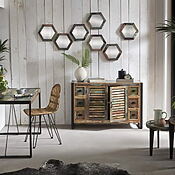



 Silverblade - Metal wall decoration
71,95 €
Silverblade - Metal wall decoration
71,95 €


