Creative breaks within your own four walls: How art, design and DIY make everyday life easier
For many, creativity is much more than just a hobby. It's an antidote to an everyday life that has often become too fast-paced, too hectic, and too digital. Anyone who paints, crafts, takes photographs, or works on a small interior design project knows this effect: the mind becomes quieter, the vision clearer – and in the end, something tangible emerges that didn't exist before.
Especially in times when so much happens on screens, the analog world is regaining importance. This is evident not only in art exhibitions and design trends, but also in homes: handmade elements, deliberately placed accents, and individual details are replacing sterile perfection. And the best part is that you don't need a studio or a large budget for this. Often, an hour in the evening and a fun project are all it takes.
Show
table of contents
Art as a leisure activity: not "right" or "wrong", but feasible
Many people immediately associate art with talent. But in practice, creativity is more of a skill developed through repetition and curiosity. When you start, you don't have to paint a large picture right away. It's enough to give yourself a small task that you can actually complete.
Here are a few ideas that are easy to implement but still look really good:
- a color study in three tones (e.g. sky, concrete, sand)
- a mini-series of 6 sketches in the same style
- a “museum-to-home” project: recreating a detail from a work of art (not copying, but interpreting it)
Small projects are the key because they lower the barrier to entry. You don't need perfect technique – you just need a starting point.
Design and interior architecture: Why individuality is becoming more important again

Photo by Getty Images @gettyimages, via Unsplash
Interior design is also undergoing a shift. For a long time, the focus was on smooth surfaces, neutral colors, and interchangeable furnishings. Now, spaces are becoming more personal again. You can sense that people don't just to "live beautifully," but also to express themselves – through pictures, objects, textiles, light, and the way things are arranged.
A room's impact often stems not from expensive furniture, but from decisions made: Which wall remains bare? Where are there contrasts? Which surfaces refract the light? Which details tell a story about you?
Often it's small changes that make a room instantly appear "designed":
- a single, large statement image instead of many small prints
- a gallery wall with a clear order (e.g. only black and white photos or only illustrations)
- Light as a design element: warm, indirect, zoned
- Mix materials: wood + metal, fabric + glass, matte + glossy
DIY as a creative skill, not just crafting

Photo by Getty Images @gettyimages, via Unsplash
DIY today is no longer just about "crafting," but in many cases a design approach. Those who make something themselves decide on its form, color, mood, and function. This applies to self-framed prints just as much as to upcycling or small decorative projects.
What makes DIY particularly attractive is that you can create things that aren't available to buy. And you can tailor them precisely to your surroundings.
A successful DIY project usually has three characteristics:
- It's manageable (max. 1-2 hours for the first version).
- It looks good even if it's not perfect.
- It can be repeated and improved.
This is also why people like to create series: One object is an experiment. Three objects constitute a style.
Creative routines: How to stay motivated – without pressure

Photo by Getty Images @gettyimages, via Unsplash
Many start with enthusiasm and give up after two weeks because the project was too big. Creativity works better as a routine, not as an exception.
A practical method is the "30-minute rule" : You set aside half an hour two or three times a week for something creative, without the goal of creating a "masterpiece" . You only do one thing: sketching, gathering ideas, testing color palettes, sorting photos, rearranging a corner of the room.
That sounds small, but it builds momentum. And momentum is often more important than inspiration.
During such creative phases, some people also look for small rituals that support the atmosphere – such as light, music, scent, or a clearly defined "workbench" corner. Those who come across certain lifestyle products can find various shops online, for example by searching for " buy kratom " .
Please note: Kratom is intended solely for external or decorative use – not for ingestion.
Photography, music, movement: Creativity is not just about "images"
Kunstplaza are broad – and that's an advantage. Creativity doesn't begin with painting. Photography is one of the most attractive ways to get started because it works directly with everyday life: light, perspective, rhythm . Anyone who has consciously "shadows and textures" will see their city differently.
It's similar with music or dance: it's not about being flawless, but about finding expression. Especially for people who think a lot, movement is a creative shortcut. You don't have to "be able to do it ," you just have to start.
Conclusion: Creativity as a personal luxury that costs little
Art, design, and DIY don't have to be monumental and complicated. On the contrary: the best projects are often the ones that fit into your everyday life. A small painting, a series of photos, a newly designed corner of your room – that's enough to make your day feel different.
Those who use creativity as a leisure activity not only get appealing results, but also something that has become rare in everyday life: focus, peace and the good feeling of having created something of their own.

Owner and Managing Director of Kunstplaza . Publicist, editor, and passionate blogger in the fields of art, design, and creativity since 2011. Graduated with a degree in web design from university (2008). Further developed creative techniques through courses in freehand drawing, expressive painting, and theatre/acting. Profound knowledge of the art market gained through years of journalistic research and numerous collaborations with key players and institutions in the arts and culture sector.
You might also be interested in:
 Dazzling beauties: Why are diamond painting projects the latest DIY trend?
 Decorating homes individually and artistically: Here's how!
 How to transform a room into a green paradise with moss pictures.
 Biophilic design with a moss wall: A natural wonder for green indoor oases.
 Airbrush paints for interior decoration: Professional tips for a flawless finish.
Featured Art


Design and Decor Highlights
-
 "Moonlight" couple sculpture made of polyresin with a bronze finish
89,00 €
"Moonlight" couple sculpture made of polyresin with a bronze finish
89,00 €
VAT included.
Delivery time: 3-4 working days
-
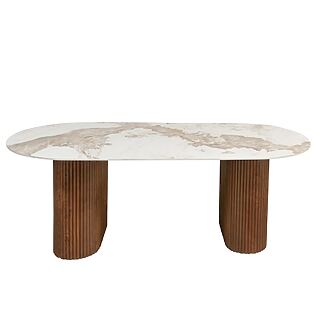
Modern dining table "Urban Chic" made of ceramic top with marble effect
1.950,00 €
VAT included.
Delivery time: 3-6 working days
-
Elegant metal mirror "Schlichto"
165,00 €
VAT included.
Delivery time: 8-10 working days
-
Maritime metal wall relief “Fish Whirlpool”, gold-colored accents
95,00 €
VAT included.
Delivery time: 3-5 working days
-
Organic wall mirror "Bosa", curved wooden frame (white, 46 x 61 cm)
39,00 €
VAT included.
Delivery time: 3-4 working days
-
"LovYa" dining chair made of solid wood, natural
299,95 €
VAT included.
Delivery time: 2-4 working days
-
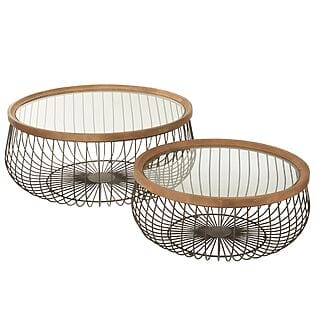
J-Line 2-piece set of round coffee tables "Wired", metal + glass
875,00 €
VAT included.
Delivery time: 2-4 working days