The worldwide increase in the production and consumption of plastics has led to numerous environmental challenges.
One of the biggest challenges is the management of plastic waste, which has become a global problem due to its impact on the biosphere and human health. As a result, the need for plastic recycling has gained importance – including in the world of artists.
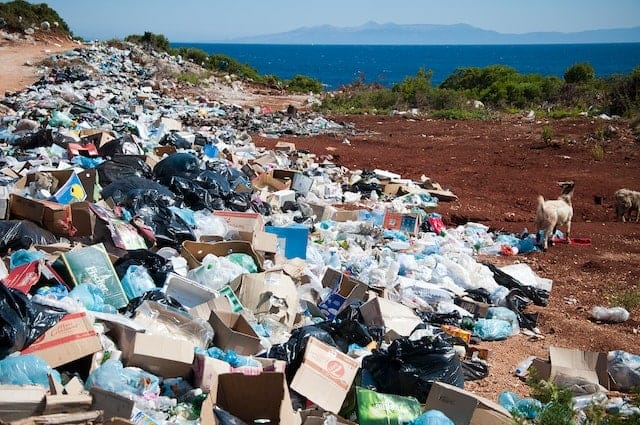
The globally excessive production and increasing consumption of plastics has led to numerous environmental challenges. Photo by Antoine GIRET @antoinegiret, via Unsplash
Recycling is a crucial step towards reducing the environmental impact of plastic waste and reducing dependence on fossil fuels.
This article will explore the challenges and opportunities of plastics recycling. We will also attempt to provide insights into best practices for plastics recycling that can help minimize the negative impacts of plastic waste on the environment and human health.
Read on to learn more about the advantages and disadvantages of plastic recycling for artists and visual artists.
Is it art or environmental pollution? Opinions differ widely on the use of plastic in the art world. It's a highly controversial material these days – but one with great creative potential.
The name "plastic" itself suggests that it's a material that can be used for creative purposes. Unfortunately, it's often only used for disposable cutlery and single-use bags. The French word "plastique" practically invites us to create works of art from this material. As a material of the 20th century, plastic has significantly influenced and shaped the art world.
Plastic is a versatile material that can even appear to float in space as a transparent object. It's no wonder it's so popular with artists. It has democratized and simplified art by reducing the material's cost and transforming the artist from a solitary studio worker into a designer of mass-produced goods.
Given that 105,000 tons of plastic waste are produced annually in Germany, the concept of throwaway art does not seem far-fetched.
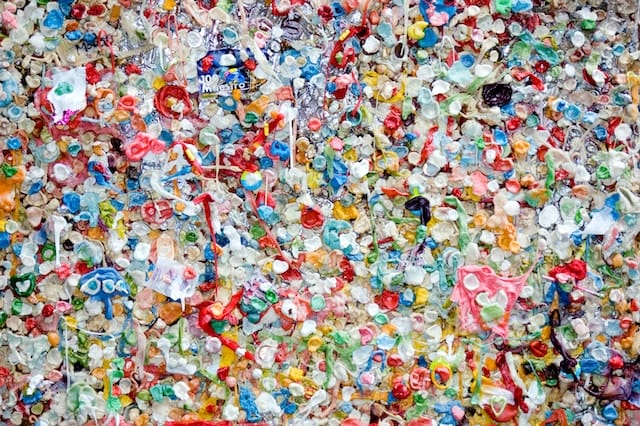
In Germany alone, 105,000 tons of plastic waste are generated annually. Photo by Marc Newberry @downrightpunch, via Unsplash
Handling, versatility: Since the 1950s and 1960s, we have witnessed incredible progress in the plastics industry. The earliest works were very earthy, very dark in design, as the vibrant colors of the time were not yet available. But one thing was present from the very beginning – versatility.
Originally, plastic was a practical solution to many shaping problems and a cost-effective replacement for materials like metal . Today, however, plastic is perceived as a problem and a threat to the environment.
This ambivalence is increasingly occupying the minds of many artists, as plastic is a material we invented that has now spiraled out of control. However, the idea of recycling very prevalent in the art world, and many artists are using existing or recycled materials.
Plastic can also take on new levels of meaning in art. Museums and artists act sustainably in a certain sense by preserving these materials for posterity. Consequently, there are also vehement defenders of plastic as a working material in art.
Plastics and Art – A Historical Excursion
The beginning of plastic art can be precisely dated: In 1916, the Russian artist Naum Gabo“Tête No. 2” in Paris which still exhibits classical Cubist features. The material used, Rhodoid, is still used today for billiard balls.
Since then, the development of innovative plastic compounds has steadily increased and continues to this day. The chemist Walter Bauer (1893–1968) made a significant contribution to the development of polymethyl methacrylate, known as Plexiglas or acrylic glass , which has been available since 1933. These transparent plastic sheets opened up entirely new design possibilities involving light sources, refractions, and vibrations.
Plastics have played a significant role in art. They have been used for stage sets and installations and, since Naum Gabo's "Realistic Manifesto" of 1920, have been an essential medium in sculpture.
The combination of light and plastic, in particular, opens up new possibilities. The artist Niki de Saint Phalle created her monumental female figures, the so-called Nanas , exclusively from polyester, as no other material is as easily malleable and lightweight.
1968 exhibition “Art & Plastics”Peter Gorsen emphasized that plastics were by no means characterless or lacking in formal inspiration, but rather possessed properties that natural materials such as wood, metal , or stone lacked.
Plastics stimulate the desire to create in a specific, non-arbitrary direction. Gorsen also argued that plastic reduces the scruple of physically engaging with a work of art. A "Do not touch" sign on a plastic sculpture seems absurd to us today. The conceptual content of the artwork is higher, since the artist typically only designs it and does not execute it themselves.
The value of a work
Can a cheaper material diminish the quality of a work of art? The works of Niki de Saint Phalle and Jeff Koons refute this assumption, while the artist Ottmar Hörl (born 1950) demonstrates the opposite. He has been working with plastic figures for 40 years and emphasizes in an interview that even a nurse should be able to afford a Hörl.
His artworks are available online starting at €50. Hörl focuses on mass production and has already created 500 figures of Luther, Wagner, and Marx for the anniversary. In 2020, Beethoven the focus in Bonn on the occasion of his 250th birthday.
Anyone can order a Beethoven for 300 euros at unser-ludwig.com. This makes art accessible to everyone. Hörl also appreciates the durability of the material, as his sculptures stand in public spaces and withstand the elements.
However, restorers view plastic as a hazardous material, since its durability is limited and proper restoration is often impossible. Art as a classic consumer product with a throwaway mentality.
Plastic recycling and ethical issues
Alejandro Duran (*1974) pursues a completely different approach to working with plastics. His motto is “Washed up – Transforming a trashed landscape ” and in this tradition he creates impressive works of art in the style of “objets trouvés” (see the article “Art, Plastics and Artificiality” in the architecture magazine of the emco Group).
Duran collects plastic waste from all over the world, cleans the individual pieces, and uses them to create impressive environments that leave the viewer both horrified and amazed. From the immense world of plastic waste, he once again creates art that makes us question and despair about our own consumption.
Duran acts like a transformer, holding up a plastic mirror to us and hoping that we will recognize reality. In this way, art made of plastic also presents an ethical challenge to our relationship with this material.
Discarded flip-flops are part of the gigantic amount of plastic waste polluting oceans and rivers around the globe. In Kenya, these old shoes are being transformed into works of art.
The Nuremberg Art Villa is presenting a fascinating special exhibition entitled “Natural Material/Plastic – Plastic in Nuremberg Art” (BR reported: “Controversial Material: Plastic in Art” ).
The exhibition impressively demonstrates how the material once inspired the art scene in Nuremberg and continues to do so today. It is an absolute highlight for all art lovers and a must-see for anyone interested in the history of art in Nuremberg.
How big is the problem with plastic waste?
Let us turn – without limiting our consideration to the art world alone – to the problem of plastic waste in general. How extensive is the environmental damage? What are the challenges? And where do the opportunities for real change lie?
Global plastics production has increased dramatically in recent decades. In 1950, global plastics production was less than 2 million tons. By 2021, it had already reached over 390 million tons. This trend is now expected to continue, with global plastics pollution doubling by 2030.
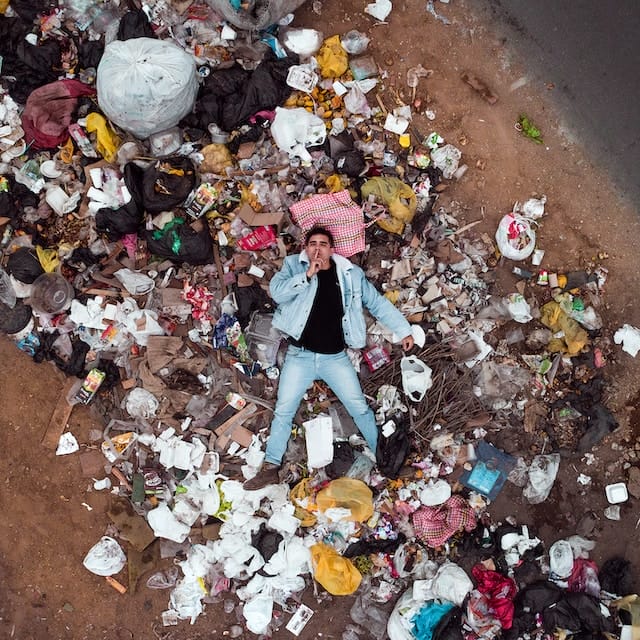
Plastic recycling is urgently needed in the art world too. Photo by Jordan Beltran @jorenriqe, via Unsplash
The uncontrolled disposal of plastic waste has led to a growing environmental crisis. Every year, millions of tons of plastic waste end up in landfills and in nature. As a result, plastic pollution of the planet has become one of the most pressing environmental problems of our time.
Some industry-leading packaging manufacturers, such as KRUS, have recognized the scale of the problem and are offering their customers more sustainable solutions. For example, KRUS produce custom-printed plastic bags and pouches from recycled materials. This is a good example of how companies are trying to mitigate the negative impacts of plastic waste.
Unfortunately, not all companies are so environmentally friendly, especially due to the challenges associated with plastic recycling. Let's take a closer look at some of the main problems related to recycling plastic waste.
The challenges of plastics recycling
Despite the increasing importance of plastics recycling, there are still some challenges that need to be addressed to make the process more effective and efficient. Here are some of the most important challenges:
Lack of recycling infrastructure
One of the biggest challenges for plastics recycling is the lack of infrastructure. In many areas, the infrastructure for collecting and processing plastics is inadequate, which makes the collection and processing of plastic waste difficult. This can lead to plastic waste ending up in landfills instead of being recycled.
The complexity of the recycling process
Another challenge associated with plastics recycling is the complexity of the process. Plastics recycling involves a series of steps, including sorting, cleaning, shredding, and melting. The process can be further complicated by the fact that there are different types of plastics, each with its own properties and challenges. Therefore, the recycling process can be time-consuming and expensive.
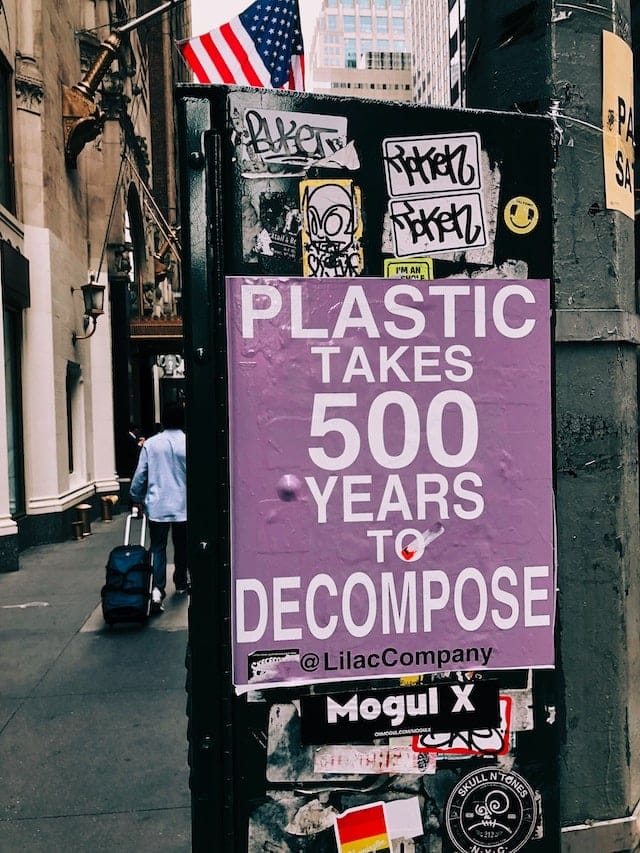
A poster highlights the persistence of plastic waste in our environment. Photo by Jon Tyson @jontyson, via Unsplash
Contamination is a major problem in plastics recycling, as even small amounts of non-recyclable materials can render an entire batch of plastic waste unsuitable for recycling. This can be caused by a variety of factors, such as incorrect sorting of waste during the pre-collection phase by consumers who do not know how to properly separate and recycle.
Low demand for recycled plastics
Despite the increasing demand for sustainable packaging solutions, the demand for recycled plastics remains relatively low. This can make it difficult for plastic recyclers to sell their products and turn a profit. As a result, many recyclers are forced to dispose of their materials in landfills or incinerators. Upcycling, , remains a niche market rather than a widespread solution.
If the demand for recycled plastics is to be increased, more companies need to use recycled plastics in their products.
Opportunities for plastics recycling
As society recognizes the importance of reducing plastic waste and promoting sustainability, more and more opportunities and initiatives are emerging in the field of plastics recycling. These include:
Government initiatives and regulations to promote recycling
Governments around the world have recognized the importance of reducing plastic waste and are introducing regulations and initiatives to promote recycling.
The European Union's Single-Use Plastics Directive, introduced in 2018, obliges member states, for example, to take measures to reduce the use of single-use plastics. As more and more packaging manufacturers switch to fully recyclable materials, the demand for recycled plastics is expected to increase.
Germany is a world leader in the reuse of post-consumer plastics. Thanks to a range of effective government measures and a strong environmental awareness among the population, more than 66% of plastic waste in Germany was recycled in 2021.
Technological advances in recycling methods
Advances in technology are making plastics recycling more efficient and cost-effective. For example, chemical recycling processes can transform plastic waste into new materials that can be used for a wide variety of applications.
These processes can help overcome some of the challenges of traditional mechanical recycling, such as the difficulties in sorting and cleaning plastic waste. Furthermore, these new technologies help to expand the range of plastics that can be recycled and make the process more effective and efficient.
Cooperation between the stakeholders of the plastics industry
Collaboration between stakeholders, including government, industry, and non-governmental organizations, is essential for improving plastics recycling. This collaboration allows stakeholders to share knowledge, resources, and best practices to promote sustainability and reduce plastic waste.
Partnerships with industry can, for example, help increase the demand for recycled plastics, while non-governmental organizations can help educate consumers and promote recycling programs. Through their collaboration, stakeholders can create a more sustainable future for generations to come.
Conclusion
The problem of plastic waste has become a global issue due to its impact on the environment and health. While the industry still faces significant challenges, such as a lack of infrastructure, the complexity of the process, contamination of plastic waste, low demand for recycled plastics, and limited consumer awareness, there are also some promising opportunities for growth and progress within the sector.
From government initiatives and regulations to technological advancements and increased collaboration between stakeholders, the future of plastics recycling looks brighter than ever! However, it is crucial to remember that the success of plastics recycling depends on the commitment of everyone involved to work together towards a more sustainable future.
Ultimately, we all need to strive to adopt more sustainable practices in our daily lives to reduce our reliance on single-use plastics and promote a more sustainable future. After all, we only have one planet, and it's up to us to protect it.
Owner and Managing Director of Kunstplaza . Publicist, editor, and passionate blogger in the fields of art, design, and creativity since 2011. Graduated with a degree in web design from university (2008). Further developed creative techniques through courses in freehand drawing, expressive painting, and theatre/acting. Profound knowledge of the art market gained through years of journalistic research and numerous collaborations with key players and institutions in the arts and culture sector.
We use technologies such as cookies to store and/or access device information. We do this to improve your browsing experience and to display (non-)personalized advertising. If you consent to these technologies, we can process data such as browsing behavior or unique IDs on this website. Refusal or withdrawal of consent may adversely affect certain features and functions.
Functional
Always Active
Technical storage or access is strictly necessary for the legitimate purpose of enabling the use of a specific service expressly requested by the subscriber or user, or for the sole purpose of carrying out the transmission of a message over an electronic communications network.
Preferences
The technical storage or access is necessary for the legitimate purpose of storing preferences that were not requested by the subscriber or user.
statistics
Technical storage or access that is solely for statistical purposes.Technical storage or access that is used solely for anonymous statistical purposes. Without a subpoena, the voluntary consent of your internet service provider, or additional recording by third parties, the information stored or retrieved for this purpose cannot generally be used to identify you.
marketing
Technical storage or access is required to create user profiles, to send advertising, or to track the user on one or more websites for similar marketing purposes.













 Leaf - Metal wall decoration
81,95 €
Leaf - Metal wall decoration
81,95 €