Gardens and patios are increasingly being designed like interior spaces: seating, lighting, and materials are chosen as deliberately as in the living room. This logic now also applies to an element that was long considered purely functional – the raised garden bed. How does it enhance the design of the garden and patio?
The answer lies in conscious design: choosing form, material, and placement with the same eye as for furniture allows you to combine a bountiful harvest with a harmonious overall aesthetic. The raised bed thus transforms from a functional planting container into a design element that can shape the outdoor space just as much as a sculpture or a carefully selected piece of furniture. A closer look at the most important basic principles reveals that gardening and sophisticated design are not mutually exclusive.
The outdoor area as living space – why raised beds are becoming a design theme
The trend of viewing outdoor spaces as extensions of living space has shaped the design of gardens, patios, and balconies for years. Lounge furniture, outdoor rugs, targeted lighting , and well-conceived material concepts have blurred the lines between indoors and outdoors. What is taken for granted in interior design—proportion, texture, and a harmonious interplay of elements—is increasingly expected for outdoor spaces as well. Even gardening itself has changed: from a hidden vegetable garden behind the house to a visible, curated aspect of living.
Raised beds themselves are not a new invention – what is new is the design ambition with which they are planned today. Growing herbs, vegetables and flowers is no longer just a question of yield, but part of a lifestyle that combines self-sufficiency, sustainability and aesthetics.
Raised beds are at the heart of this trend: they create structure, bring plants to eye level, and – if chosen correctly – can significantly shape the character of a space. Conversely, a carelessly placed or proportionally disproportionately sized raised bed can disrupt an otherwise harmonious design. This makes raised beds a topic that concerns gardeners and designers alike.
Form and proportion – what matters in design
Whether a raised bed looks like a piece of furniture or an eyesore depends on its shape and proportions. Anyone to buy a raised bed should therefore not only consider its capacity and price, but also the relationship between its height, width, and surroundings. Three questions help with this assessment: How high is the bed in relation to its surroundings? How much space does it occupy? And how does it relate to lines defined by the patio, paths, or house facade?
The height determines not only working comfort but also the visual impact. A low bed of about 30 centimeters blends discreetly into flowerbeds. Meanwhile, a bed at an ergonomic working height of around 70 to 90 centimeters makes a statement and can almost resemble a sideboard in the garden. On small patios, a more modest height is recommended so as not to overwhelm the space; spacious gardens, on the other hand, can accommodate striking standalone plants.
The basic shape is equally important. Rectangular beds support clean, modern garden design; organic or multi-part shapes soften strictly geometric concepts. As a rule of thumb: the bed should structure the available space, not dominate it – unless it is intentionally planned as a standalone feature. Manufacturers like Kaiserbeet, whose beds are available in many heights and basic shapes, demonstrate how strongly the effect of a bed can be controlled by its dimensions.
Material in focus – why wood enhances terraces and gardens
Material is the second major design theme. Metal, stone, plastic, and wood create completely contrasting moods. Natural materials—especially wood—harmonize particularly well with plants and blend into almost any garden style, from classic cottage gardens to minimalist architectural terraces. Wood also adds tactile appeal: its warm surface contrasts pleasantly with cool materials like concrete or glass, which often dominate modern terraces.
Larch wood is considered particularly suitable: it is naturally resistant to rot and requires no chemical impregnation – an advantage for anyone growing food in the garden and wanting to avoid wood preservatives. Over time, untreated larch develops a silvery-gray patina, which many designers deliberately incorporate because it lends the outdoor space a calm, natural look. Those who wish to preserve the original color can treat the surface with a food-safe oil.
Kaiserbeet, for example, manufactures its raised beds from South Tyrolean larch wood and screws the elements together with stainless steel – a combination designed for longevity. A pre-installed, breathable fleece and a drainage system protect the roots from waterlogging. Details like these demonstrate that high-quality workmanship in outdoor areas is not an end in itself, but rather a prerequisite for ensuring that a landscaped bed looks good for many years.
Wooden raised beds in various stages of filling. Photo by Skyler Ewing, via Pexels
Modular systems – adaptable to space and design concept
Hardly any two outdoor spaces are alike – and this is precisely where the strength of modular raised bed systems lies. Instead of forcing a standard size onto a given area, modular beds can be adapted to the specific conditions: in height, in basic shape, and in the combination of several elements.
This opens up creative possibilities. An L-shaped corner bed utilizes awkward garden corners that would otherwise go unused. Honeycomb-shaped beds add sculptural accents and serve as eye-catchers in the lawn. Octagonal versions resemble geometric garden ornaments, and multi-tiered models bring dynamism to flat areas with their graduated levels – incidentally, this allows plants with different needs to be grouped effectively.
Kaiserbeet embraces this diversity with a modular system that can be expanded and reconfigured. The model names read like a small encyclopedia of shapes: "Leopold" is designed as an L-shaped corner bed, "Karl" follows a honeycomb-like basic form, "Wilhelm" comes as a generous octagon, and "Ludwig" staggers the planting area over three levels. Custom-made versions are also available for special locations – such as roof terraces, narrow balconies, or prestigious entrance areas – precisely tailored to the specific space.
However, the real benefit of such systems lies beyond the technology: those who can plan flexibly do not have to make compromises between design idea and available space.
Placement in the garden and terrace concept
Even the most magnificent flowerbed only unfolds its full effect in the right location. Three considerations will help with placement:
First: Raised beds can divide spaces. On expansive terraces, they function like room-defining furniture – separating the dining area from the lounge, providing privacy, or defining pathways. A bed along the edge of the terrace can simultaneously serve as a green balustrade and a convenient herb supply near the kitchen.
Secondly: Consider sight lines. What is visible from the living room window or your favorite spot in the garden should be consciously composed. A beautifully shaped flowerbed at the end of an axis acts like a focal point in the picture; flowerbeds placed perpendicular to the axis create rhythm in long expanses.
Thirdly: match the style. In a classic garden, rectangular wooden beds harmonize with gravel paths and boxwood; modern, minimalist gardens can accommodate clear cubes and large individual shapes; in a Mediterranean setting of terracotta, lavender and olive trees, silver-grey patinated wood blends in particularly naturally.
Finally, consider the transitions: A raised bed doesn't have to be an island. Combining it with seating, potted plants, a trellis, or a pond creates a cohesive look instead of individual elements. Practical considerations also help: Most vegetables and herbs need sun – so design and site requirements should be considered together.
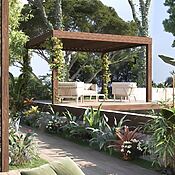
Raised bed as a design element between terrace and seating area in the garden. Photo by rosshelenphoto, via Magnific
Design that bears fruit
Raised beds have long since shed their image as mere utility space. By consciously choosing their shape, proportions, materials, and placement, gardeners can transform their outdoor space into a place where gardening and design complement each other. With natural materials and flexible systems, getting started is easier than ever – and the results are impressive.
It is therefore worthwhile to look not only at the harvest, but at one's own property as a whole: What area is still waiting to be not only planted, but also designed?
Owner and Managing Director of Kunstplaza . Publicist, editor, and passionate blogger in the fields of art, design, and creativity since 2011. Graduated with a degree in web design from university (2008). Further developed creative techniques through courses in freehand drawing, expressive painting, and theatre/acting. Profound knowledge of the art market gained through years of journalistic research and numerous collaborations with key players and institutions in the arts and culture sector.
Category for garden design, outdoor decoration, garden design, garden sculptures and landscape architecture.
In today's world, garden design and landscape architecture are gaining increasing importance. More and more often, the garden seen as an extension of the living space, which is why outdoor decoration also plays a significant role.
But the garden should not only be visually appealing – it should also be functional and provide the residents with a place to relax or spend time outdoors with friends and family.
A well-designed garden can help meet these requirements. However, it's not just about choosing beautiful plants or placing suitable furniture.
Rather, a comprehensive plan must be created in which all elements are harmoniously interconnected.
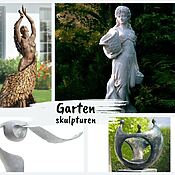
Currently, garden sculptures of various kinds are particularly popular as art in the garden : Whether modern sculptures made of metal or classic stone figures – they add special accents to the green ambience and can thus become an eye-catcher for visitors.
So, if you want to redesign your outdoor area or are simply looking for inspiration, you are in the right place!
In our section you will find numerous ideas on the topic of garden design sowie as well as tips from experts on how to implement your own ideas.
We use technologies such as cookies to store and/or access device information. We do this to improve your browsing experience and to display (non-)personalized advertising. If you consent to these technologies, we can process data such as browsing behavior or unique IDs on this website. Refusal or withdrawal of consent may adversely affect certain features and functions.
Functional
Always Active
Technical storage or access is strictly necessary for the legitimate purpose of enabling the use of a specific service expressly requested by the subscriber or user, or for the sole purpose of carrying out the transmission of a message over an electronic communications network.
Preferences
The technical storage or access is necessary for the legitimate purpose of storing preferences that were not requested by the subscriber or user.
statistics
Technical storage or access that is solely for statistical purposes.Technical storage or access that is used solely for anonymous statistical purposes. Without a subpoena, the voluntary consent of your internet service provider, or additional recording by third parties, the information stored or retrieved for this purpose cannot generally be used to identify you.
marketing
Technical storage or access is required to create user profiles, to send advertising, or to track the user on one or more websites for similar marketing purposes.








 Luxurious "Lucky Bunny" table lamp with black satin shade
88,00 €
Luxurious "Lucky Bunny" table lamp with black satin shade
88,00 €