How should one begin the biography of a person who has performed outstanding work in his profession his entire life, yet some casual observers feel that he has only just become a star, that his real life has only just begun at the age of 56?
Well, quite a few people in this world are in a similar situation, namely all those who have turned a certain passion into their profession and who were only able to establish themselves in this field very late in life to the extent that they would have been entitled to from the beginning.
Behind the above statement, which initially seems so alarming, lies a very reassuring message: Quality always prevails! took a while for Christoph Waltz
The aforementioned casual observers usually operate on false assumptions: Waltz did not only rise to the ranks of great actors through his latest Hollywood appearances; rather, he can look back on an impressive and continuously progressing career spanning decades: Waltz was born in Vienna in 1956, and for his family, the only path for him was to the theater:
His father Johannes Waltz was a stage and costume designer, as was his mother Elisabeth Urbancic, at the Munich Kammerspiele and the Bavarian State Theatre, at the Burgtheater and for the Salzburg Festival, and the scenery of many well-known films such as the “Confessions of Felix Krull” in the famous Horst Buchholz film adaptation by director Kurt Hoffmann also came from her hand.
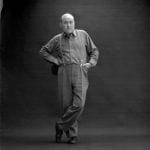
Christoph Waltz in Paris at the French premiere of “Django Unchained” ; by Georges Biard [CC-BY-SA-3.0], via Wikimedia CommonsWaltz's grandfather Emmerich Reimers was an actor at the Vienna Burgtheater, as was his grandmother Maria Mayen, who was honored with the title of Austrian Kammerschauspielerin in 1926.
Both thus followed in the footsteps of Christopher's great-grandfather Georg Reimers, who rose from the Dresden Residenztheater to the Vienna Hofburgtheater and there became a court actor, ensemble member for life, honorary member and chief director.
Education and early works
Those familiar with the family were therefore not surprised that after graduating from high school, Christoph Waltz first studied acting at the famous Max Reinhardt Seminar in Vienna and then completed his training at the legendary Lee Strasberg Theatre Institute in New York .
At the age of 20, he made his feature film debut in the ZDF production “Der Einstand” and performed on the theatre stage in Vienna, as well as on the well-known stages of many other German, Austrian and Swiss city theatres.
This was followed by countless roles in television films and series and feature films, in crime dramas and literary adaptations, historical dramas and thrillers, light and dark comedies and political satires, documentary dramas and action films, love stories and tragedies set in rural Germany, increasingly international in scope and finally also in Hollywood in war films and comic book adaptations and international literary films and Spaghetti Westerns and disaster thrillers.
Quality is appreciated
Waltz has always received many awards ; as a winner of the second year, he received the prestigious OE Hasse Prize in 1982, a special prize at the Baden-Baden Television Festival in 1996, the Bavarian Television Prize for “Roy Black Story” in 1997, the Adolf Grimme Prize , and in 2004 he received it again for his performance in the black comedy “Business Trip – What a Night”.
He has now won over a dozen awards for best supporting actor, including the Golden Globe Award , the Best Actor award at the Cannes Film Festival, the Screen Actors Guild Award, the British Academy Film Award and the Oscar (for best supporting actor in “Inglourious Basterds”).
Masters of subtlety
More details about his films and roles will follow in a separate article about his work in a few days. In any case, his hundreds of roles have garnered him plenty of praise, but a real breakthrough has eluded him. This may also be because Christoph Waltz isn't one of those people who enjoys a lot of publicity; he prefers to live his life without accompanying PR hype and gives interviews as sparingly as possible.
The public therefore knows little about his private life; he has a first marriage to an American woman behind him and has long since married his second wife, but completely unnoticed by the media; and when, in 2011, journalists asked him, on the occasion of his role as a father in Roman Polanski's film adaptation of the play "Carnage," whether, as the father of four children (at least that much was known), he occasionally had to settle disputes from the sandbox, he just smiled slyly and remarked that one would rather visit children of his age in prison when dealing with disputes.
From little-noticed character actor to Hollywood darling
The fact that Waltz has not yet become everyone's favorite may also be due to the roles for which the actor is usually cast: His thoughtful sensitivity, his bright and finely accentuated voice, and his opaque, expertly crafted "face," which, according to Waltz himself, do not make him the first conceivable choice for an "average Joe," predestined him as a protagonist for the abysmal, unstable, and cunning characters; he was established as a "respected character actor of less respected characters" (quotes fromwww.faz.net) .
Waltz delivered a charming and interesting performance in the Harald Schmidt Show in 2001:
After “Inglourious Basterds” , Hollywood finally discovered the exceptional actor, and now things really took off: numerous roles in several major Hollywood productions, directing and screenwriting work (“Auf und davon”), participation as a co-producer and collaboration on the soundtrack (“Django Unchained”), for his role as the German bounty hunter Dr. King Schultz in this Tarantino Spaghetti Western, Waltz received the Golden Globe for Best Supporting Actor for the second time in 2012, further nominations followed in 2013, more awards awaited, and further, increasingly demanding roles as well.
The joy this late, but all the more brilliant, recognition brings the actor can be seen in his boundless enthusiasm for planning numerous future projects, but also in his increasingly relaxed public persona, and it can be seen in almost all photos taken of Christoph Waltz recently:
He smiles or beams, his entire expression has softened, and his eyes sparkle with exuberance, which we hope will remain with us for a long time to come!
We use technologies like cookies to store and/or access device information. We do this to improve the browsing experience and to show (non-)personalized ads. If you agree to these technologies, we can process data such as browsing behavior or unique IDs on this website. The refusal or withdrawal of consent may adversely affect certain features and functions.
The technical storage or access is necessary for the legitimate purpose of storing preferences that are not requested by the subscriber or user.
Always active
Die technische Speicherung oder der Zugang ist unbedingt erforderlich für den rechtmäßigen Zweck, die Nutzung eines bestimmten Dienstes zu ermöglichen, der vom Teilnehmer oder Nutzer ausdrücklich gewünscht wird, oder für den alleinigen Zweck, die Übertragung einer Nachricht über ein elektronisches Kommunikationsnetz durchzuführen.
Vorlieben
Technical storage or access is required for the lawful purpose of storing preferences that have not been requested by the subscriber or user.
Statistiken
The technical storage or access that is used exclusively for statistical purposes. The technical storage or access that is used exclusively for anonymous statistical purposes. Without a subpoena, voluntary compliance by your internet service provider, or additional records from third parties, information stored or retrieved for this purpose alone cannot usually be used to identify you.
Marketing
Die technische Speicherung oder der Zugriff ist erforderlich, um Nutzerprofile zu erstellen, um Werbung zu versenden oder um den Nutzer auf einer Website oder über mehrere Websites hinweg zu ähnlichen Marketingzwecken zu verfolgen.










 Organic glass vase in warm brown tones
37,00 €
Organic glass vase in warm brown tones
37,00 €


